
Last updated November 17, 2026
 Architectural shingles
 Metal roofing
 Tile roofing
 GAF
 Owens Corning
 Flat & low-slope
Free roof inspection with deck photos before we talk money - GAF and Owens Corning certified installation
Gutters & Accessories Warning Signs Every Homeowner Should Know
By the time you see water pouring over the front of your gutter in a rainstorm, the fascia board behind it may already have been absorbing moisture for months. That is the strange thing about gutter failure: the sign homeowners notice first is almost always the last one to show up. The early warnings are quieter, and most of them are visible from solid ground if you know what pattern to look for. This guide walks through the ground-level inspection we do in Spring Valley, the signs that separate repair from replacement, and the specific accessory failures that show up in the Mojave climate. You will learn how to read staining, dead grass, seam separation, and downspout problems before they turn into a structural bill.
Quick Answer
The clearest signs your gutters need to be replaced are: standing water or overflow that happens in moderate rain, not just downpours; rust or separation at the seams; fascia or siding that stays wet or looks stained behind the gutter; and gutters that pull away from the roofline when you press on them. Clogging alone usually means a cleaning. Slope failure, seam separation, and rot behind the gutter usually mean replacement. The distinction matters, and the rest of this guide explains how to tell which one you are looking at.
Styles & brands we work with
- Architectural shingles
- Metal roofing
- Tile roofing
- GAF
- Owens Corning
- Flat & low-slope
Table of Contents
- The Ground-Level Inspection Walk
- Why Seam Separation in the Mojave Is Often Thermal Damage
- Failed Gutter Slope vs. a Clogged Gutter
- Reading Fascia Rot From the Ground
- Spring Valley Accessory Failures: Elbows and Splash Blocks
- Age Signals That Point to Replacement
- Repair or Replace? A Decision Checklist
The Ground-Level Inspection Walk
You can learn most of what matters about your gutters without a ladder. We walk the perimeter of a Spring Valley home before we ever get on the roof, and the ground view usually tells us where to look. Here is what to watch for at eye level.
- Staining on siding below the gutter: vertical streaks or a soft, dark line running down the siding directly under the gutter line means water is escaping the system along the back edge. That water has been running behind the gutter, not out the front.
- Efflorescence on foundation blocks: a chalky white mineral bloom on the concrete or block near the foundation foot signals repeated moisture migration. In Spring Valley’s dry air, that bloom comes from concentrated watering in one spot, which almost always traces back to a discharge point.
- Dead grass strips along the roofline: a clean, straight line of dead or stunted grass under the eaves is not drought. It is overflow spilling at the same point every storm and drowning the soil in one narrow band.
- Rust trails or drip marks on the gutter face: rust streaks on the front edge point to water sitting inside the system against the metal, which happens when a section has lost its slope.
If you have lived in your home for years and see a combination of these, that is more telling than any single one. Two or three together usually means the system has been failing quietly for a season or more. This is why we photodocument every inspection from the actual roof: what you see from the ground tells us where to look, and what we see from up top confirms what the water has been doing. If the roofline has other problems, our Roof Repair in Spring Valley service covers flashing and eave repairs that often show the same water damage from an adjacent angle.
Why Seam Separation in the Mojave Is Often Thermal Damage, Not Age
Metal moves in the desert. Gutter runs in Spring Valley go through daytime swings of 40 degrees or more between a summer afternoon and a summer night, and those swings repeat hundreds of times across a season. The seams that hold sections together are the first place that movement shows up, and a separated seam is not always a sign your gutters are old or cheap. It is often a sign they were not built or secured to tolerate the local heat cycle.
Here is what seam separation looks like, and why it changes the repair-versus-replace conversation.
- You see a gap or drip at a joint during moderate rain. A single failed seam on a run that is otherwise sound is a repair, not a replacement. A section can be resealed or a short run replaced.
- You see multiple open seams along the same run. When three or four joints on one face are separating at once, the run is no longer holding its shape. That is a systemic fix, not a spot patch.
- You see fasteners pulling loose with the seam. When the hangers or spikes have backed out along with the seams, the gutter has lost its mechanical grip, and resealing the seam will not hold for long.
We have seen plenty of homes where a homeowner paid for repeated resealing every couple of years rather than address the root cause. When you are choosing new gutters in this climate, seamless aluminum or a heavier-gauge system with proper slip joints handles the thermal swing better than a light-gauge sectional product. That is one reason we install from established lines like CertainTeed and Tamko: proper material is half the thermal argument. For a full replacement conversation, Roof Replacement & Installation in Spring Valley walks through how gutter runs are matched to the roof edge and fascia.
Failed Gutter Slope vs. a Clogged Gutter: Telling Them Apart
Both a clog and a slope failure cause overflow, and to the person watching from the doorway they look identical. They are not the same problem, and they do not have the same fix. Getting this one distinction right can save you from paying for cleaning after cleaning while the real issue stays put.
Here is how we tell them apart.
- When the overflow happens: a clog usually holds up through light rain and only overflows in a real storm. A failed slope overflows in any rain, because water cannot move to the downspout no matter how heavy the flow.
- When standing water sits afterward: after a rain, look for standing water in a section of the gutter. A clog can leave water trapped, but a failed slope leaves a long pool that never drains, and the puddle sits in the same place every time.
- Where the water comes off: a clog pushes water up and out the back edge or over the front lip at the point of the blockage. A slope failure spills at a low spot, which is often near the middle of a run rather than at the corner.
- What a cleaning fixes: if cleaning the run solves the overflow for a few months and it comes back, your gutters are not clogged. They are sloped wrong or losing their hangers.
A properly sloped gutter moves water to the downspout at roughly a quarter inch per ten feet. That is a small number that matters a lot. When we reset a gutter run, we check the slope from the roofline down and confirm it moves water before we call the job done. If a run cannot be reset because the fascia behind it has lost its strength, that is the case where the accessories and bracket work belong with the larger repair, which is often where the roof and gutter conversation meet.
Reading Fascia Rot From the Ground
The fascia board is the flat board the gutter mounts to, running along the roof edge. When it rots, the gutter loses its anchor, and once that happens no amount of sealing or caulking will keep the gutter in place. The trouble is that most of this happens behind the gutter where you cannot see it. There are still ground-level clues.
- Peeling paint or soft, dark patches at the top edge of the fascia. Paint failure on the fascia board directly under the roof edge, in a horizontal line, usually means the board has been wetted from behind or above.
- Gutter pulling away from the fascia. If you see a gap opening between the back of the gutter and the board, or the gutter has a visible bow, the fasteners have lost their grip in soft wood.
- Sagging or a wavy gutter line. A gutter that dips in one or two spots along the run, especially where the fascia looks dark, is often a board that has swollen and failed at the fastener.
- Gutter hangers no longer holding tension. If you can press up on the gutter and it flexes or moves easily, the hangers are pushing into something soft.
In Spring Valley, fascia rot rarely comes from constant rain. It comes from the dry-wet-dry cycle: a blocked gutter soaks the board, the sun bakes it, and the wood checks and splits a little more each cycle. Left alone, that damage can travel into the rafter tails and turn a gutter job into structural work. We treat it as a priority whenever we find it, because the sooner the wood is repaired and protected, the less of the roof edge is involved. Fascia and eave work is core Specialty Roofing in Spring Valley, and getting it right early is usually the difference between a gutter repair and a section rebuild.
Spring Valley Accessory Failures: Downspout Elbows and Splash Blocks
Gutters are only half the system. The accessories at the bottom do the last and most important job: getting water away from the house. Two accessory failures show up again and again on homes across Spring Valley, and both are easy to spot from the ground.
Disconnected Downspout Elbows From Soil Settlement
The elbow is the angled piece that turns water away from the foundation. Around older Spring Valley neighborhoods, the soil settles after years of irrigation and summer heat, and the ground moves down and away from the elbow. The connection separates, and the water that was supposed to leave the house instead drops right at the base of the wall. Check the elbow connection visually after a rain: if you see a wet patch or a groove worn into the dirt directly under the seam, the joint has pulled apart. In many cases the fix is a simple reconnect with the elbow re-seated on the downspout, but if the soil has dropped far enough you will need an extension or a fresh splash block to bridge the gap.
Splash Block Migration From Monsoon Runoff
A splash block sits at the end of the downspout to spread water out and slow it down. In a strong monsoon rain, water comes off the roof with real force, and the block gets pushed across the yard or tipped. You will find blocks a few feet from the downspout or flipped over after the first big storm of the season. A splash block that has moved is not doing its job, and the water that should be spread across the yard is jetting straight into the soil at the downspout foot. We check the splash block position on every inspection and confirm each discharge point is aimed away from the foundation.
Our technicians have up to 10 years of experience reading these accessory failures, and we know how quickly a moved splash block turns into a foundation moisture problem. If you have had additions, patio covers, or new landscaping since the gutters were installed, the specialty roofing service team can confirm the discharge points still work with the new layout.
Age Signals That Point to Replacement
Age is not a reason by itself to replace gutters, but a few age-related signs are. These are the ones we take as a real signal, not just a number on a calendar.
- Visible rust-through or pinholes. A single pinhole is a patch. A spray of pinholes across a run means the metal has thinned past the point of holding. In a desert climate, the water sitting in the gutter concentrates minerals, and thin metal goes first.
- Repeated resealing without a fix. If seams have been resealed more than twice and they keep opening, the section is asking to be replaced. The cost of resealing every couple of years outpaces the cost of a new run.
- Multiple sections with different sag points. One dip is a repair. A gutter line with a wave in three places along one face is a sign the whole run has lost tension and will not stay put.
- Gutter profile does not match the roof line. A gutter that hangs off-center or sits lower than the roof edge in some spots is often a replacement with a mismatched profile. The fix is a proper run sized to the roof edge and secured to sound fascia.
If you are combining gutter work with a roof project, tell us, so the roof edge, fascia, and gutter run are planned together. Materials make a difference: we install from GAF, CertainTeed, Owens Corning, IKO, Atlas, Tamko, and Boral, and we choose the gutter and accessory system to suit the roofline and the local heat cycle. That matching work is exactly the kind of combined job covered under the Roof Replacement & Installation in Spring Valley page.
Repair or Replace? A Decision Checklist
When a homeowner calls us about gutters, the first question is usually the same: do these need replacing, or can you fix them? Follow this list from top to bottom. The first item that applies usually answers the question.
- Is the overflow fixed by a cleaning? If yes, your gutters are clogged and the fix is maintenance. No replacement needed.
- Is the overflow still happening after a clean, in light rain? If yes, the slope or the hangers have failed. That is a re-slope or re-hang, still a repair in most cases.
- Are there more than two separated seams on one face? If yes, the run is failing as a system and a replacement is the better value.
- Is the fascia soft behind the gutter? If yes, the fascia must be repaired first and the gutter rehung or replaced. Do not let this one sit.
- Is there rust-through, multiple sag points, or a section that keeps failing? If yes, a replacement is the honest answer.
- Are the downspouts and accessories failing too? If elbows are disconnected and splash blocks have moved, the whole system wants a check, not just a spot fix.
We give a written, upfront price on every repair or replacement, and the number on the estimate is the number on the invoice. If we get up there and find a repair will genuinely hold, we will say so. If it will not, we will tell you why, with photos to show it.
Common Mistakes to Avoid
- Treating overflow as a clog without checking the slope. In a lot of Spring Valley homes, the homeowner cleans the gutter, it overflows again next storm, and the real problem is a run that will not drain. Check both.
- Resealing the same seam every year. If a seam keeps separating, the run is moving with the heat. A fresh bead of sealant buys a season, not a fix.
- Ignoring fascia damage until the gutter falls. By the time the gutter separates from the house, the board behind it has usually been soft for a while, and small repairs have become structural.
- Letting splash blocks float after a monsoon. A block that has moved is not doing the job. Look at each discharge point after the first big storm of the season.
- Matching only the price and not the material to the climate. Light-gauge sectional gutters in the desert heat swing more than heavier material. The cheapest bid is often the one you repeat.
- Choosing a storm-chaser after a bad season. A contractor who leaves town is not who you want standing behind a gutter fix. You want someone who answers the phone in the spring after the job.
- Not asking about the written workmanship guarantee. Ask what happens if the seams open again or a bracket pulls. The answer should be a written promise, not a verbal one.
See the difference
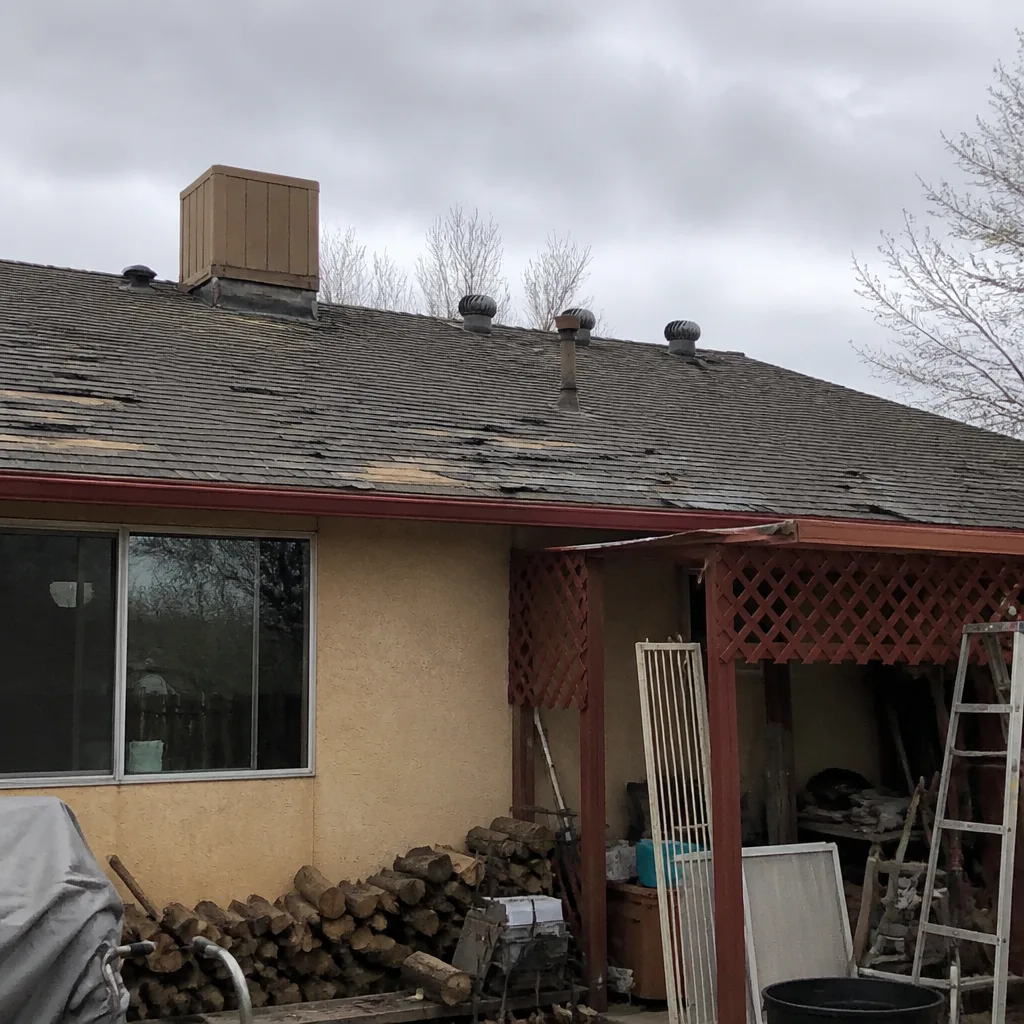 Before
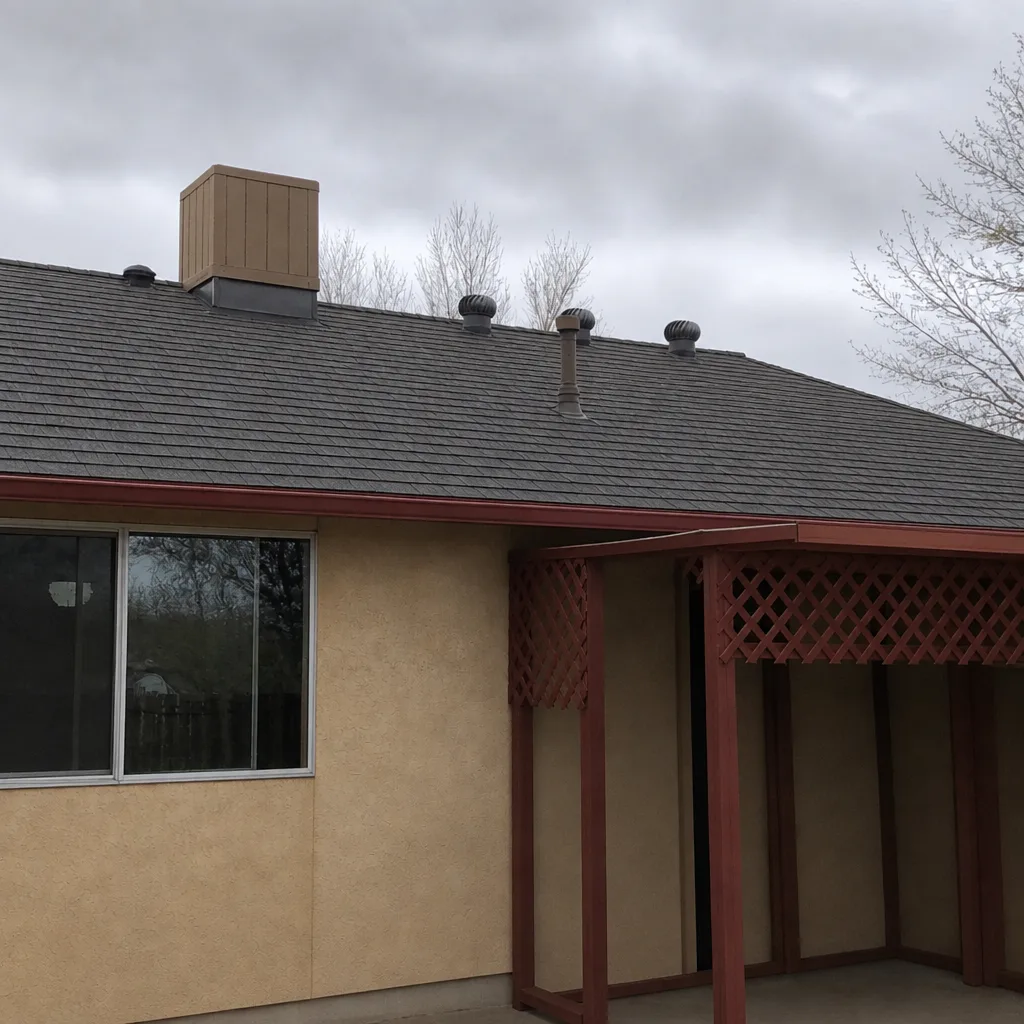 After
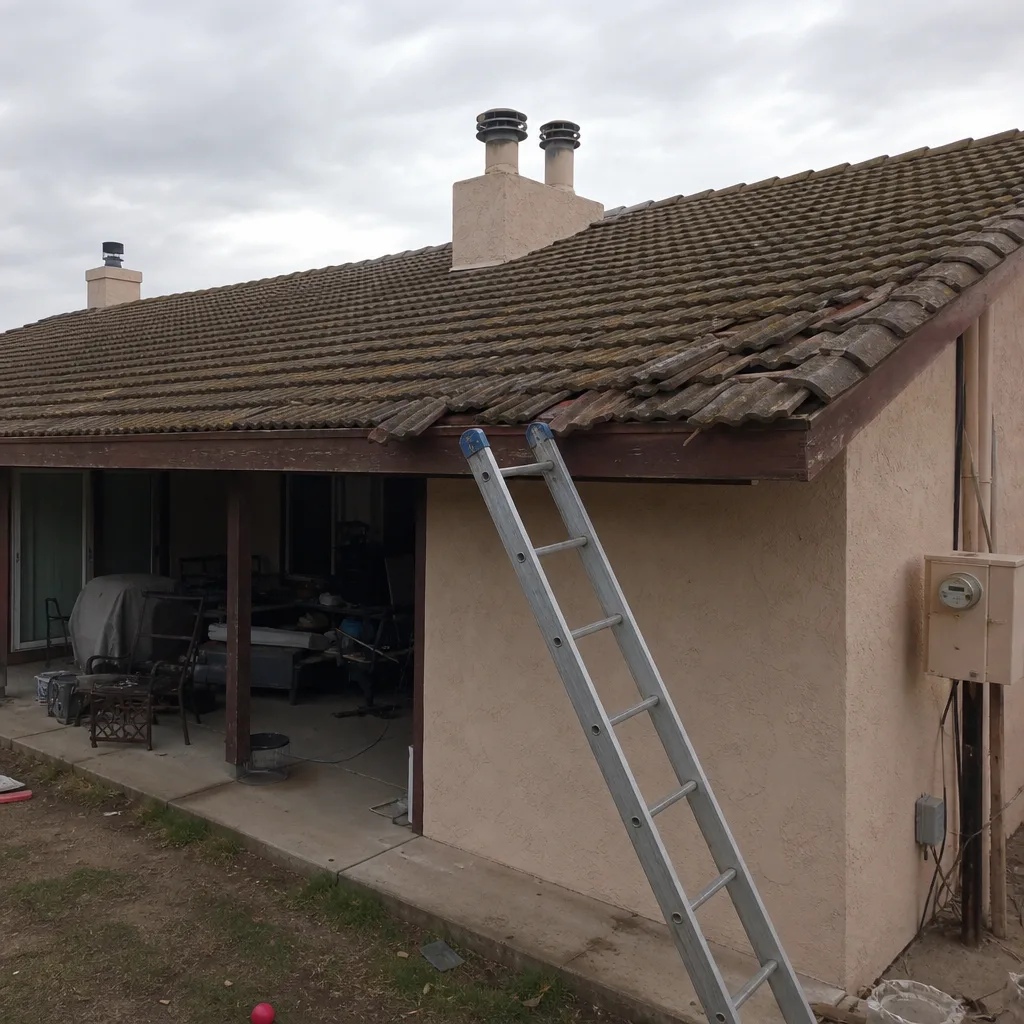 Before
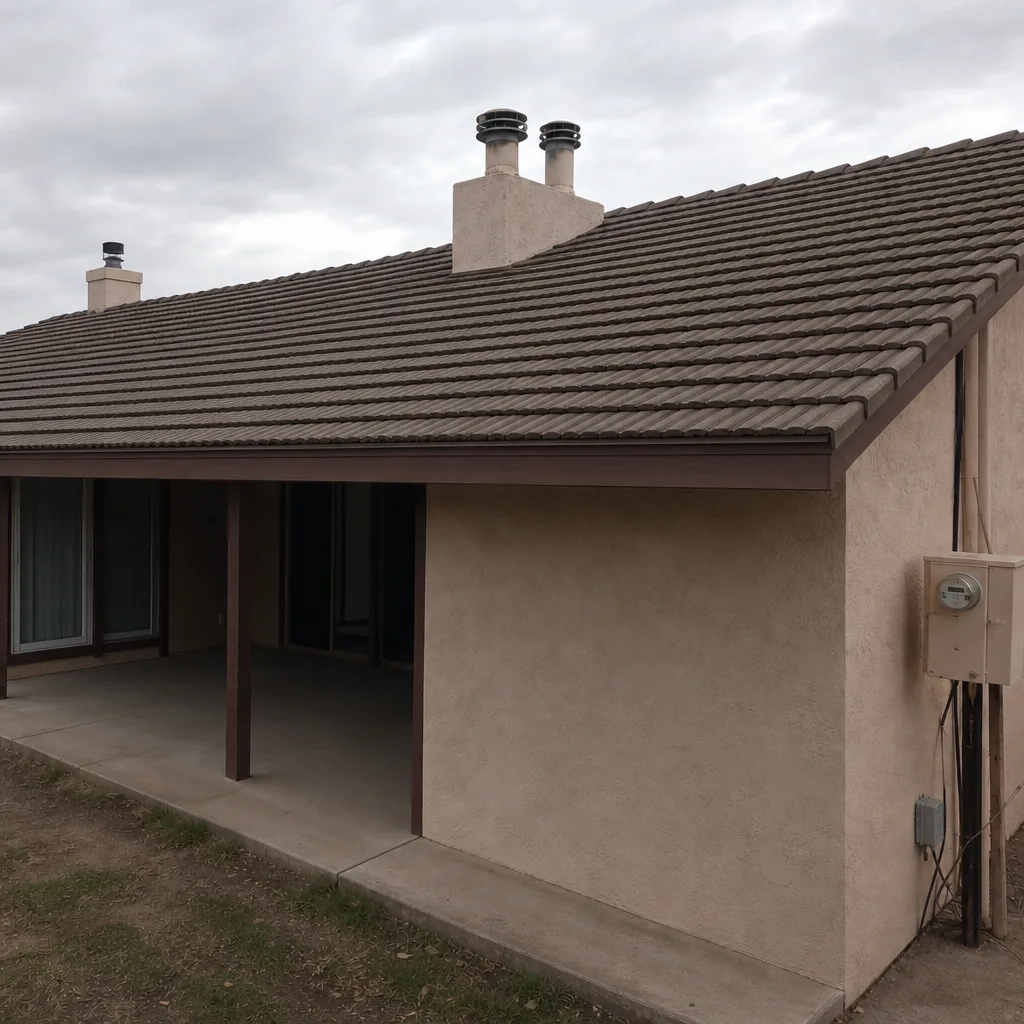 After
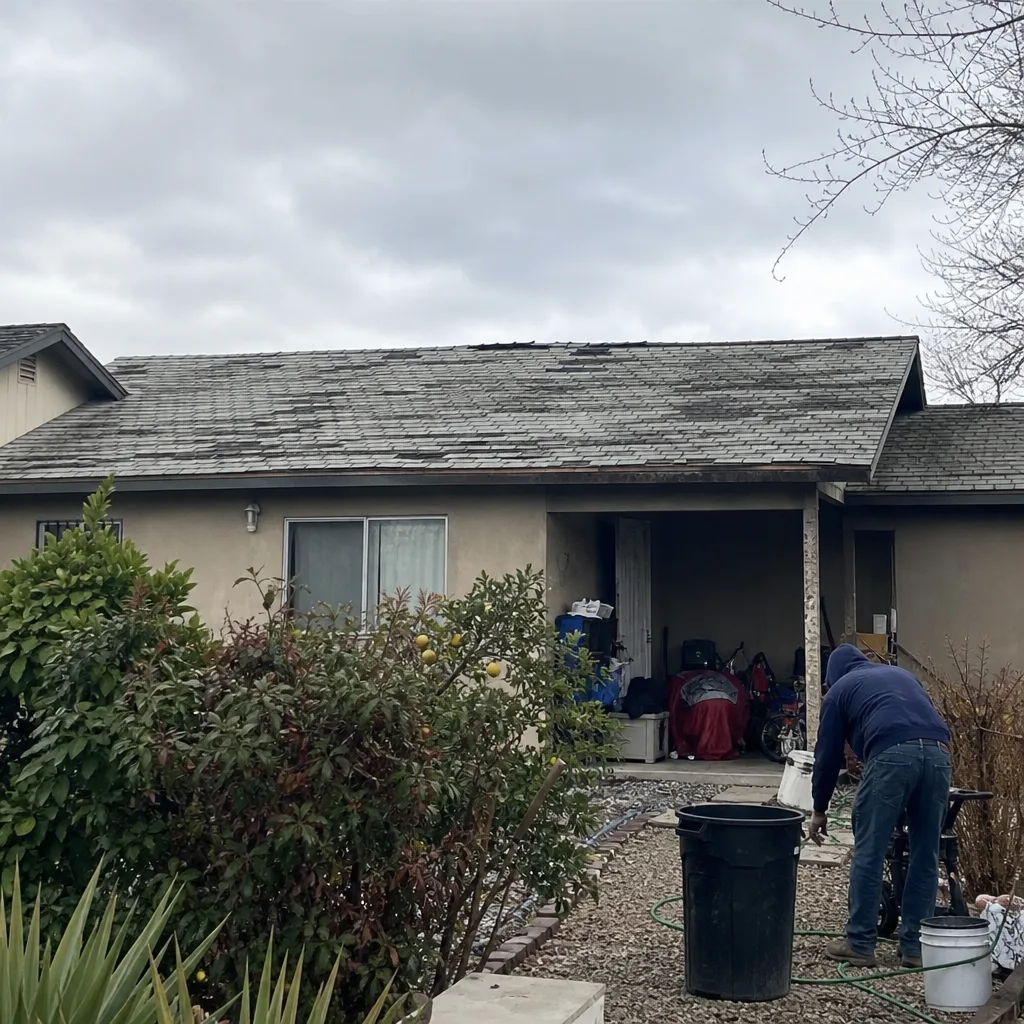 Before
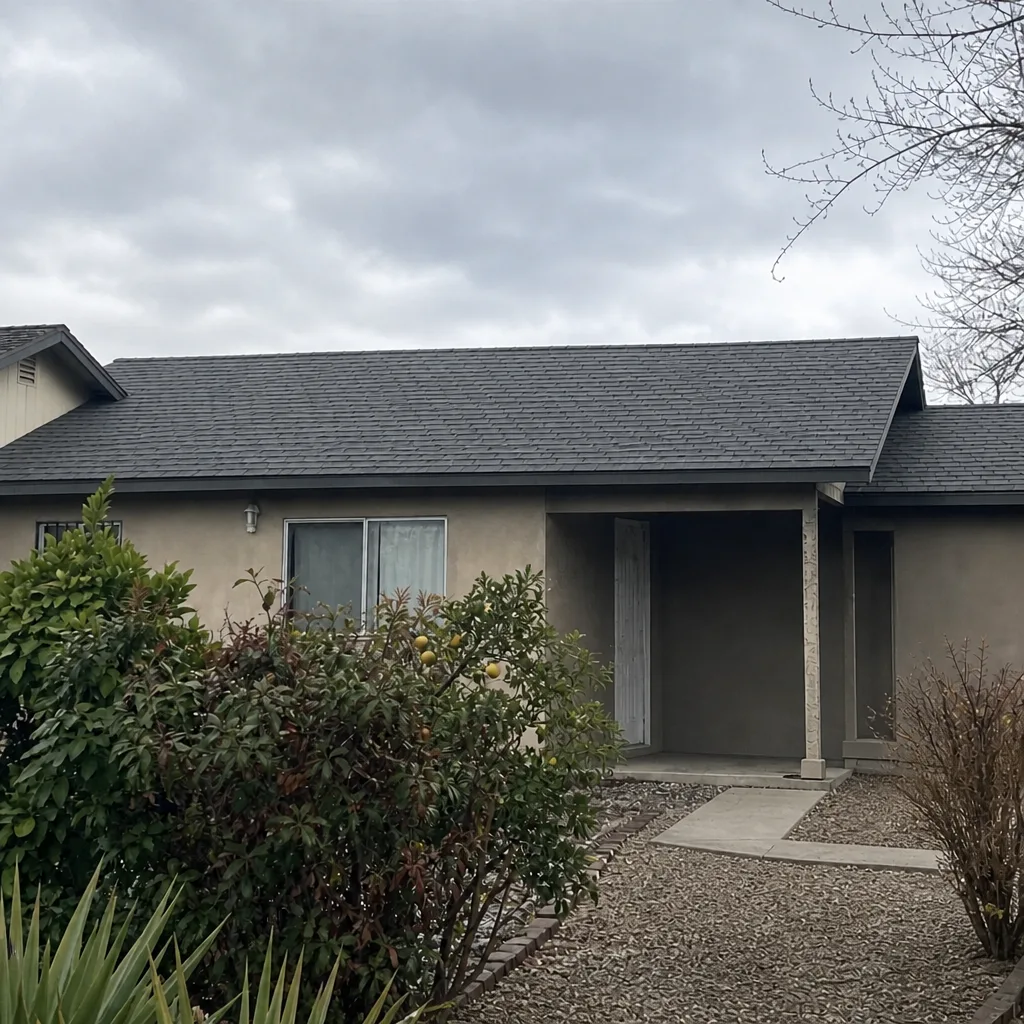 After
When to Call a Professional
Call a professional when you see water coming off the back edge of the gutter, when the fascia looks soft or stained, when a run has separated at more than one seam, or when the gutter moves under light pressure. These point to a system failure, not a cleaning. Getting on a ladder to chase a problem you cannot fully see is also worth a call, because what is visible from the top tells us what the water has been doing for months. Fascia repair, gutter re-slope, and replacement are not jobs to guess at, and the sooner we look, the less of the eave is involved. Ridgeline Roofing Co. Spring Valley offers free estimates in Spring Valley.
Call (855) 908-1590 to schedule yours. Our phones are answered by a live person, day or night, and our technicians are background-checked and arrive in uniform. We have served homeowners since 1984, and every job is backed by the 90-Day Done Right Promise: if it is not right, we come back and make it right.
Frequently Asked Questions
The first reliable signs are usually overflow in moderate rain (not just storms), rust or separation at more than one seam, or fascia that looks stained and feels soft behind the gutter. These show the system has stopped doing its job, while a single clog just needs clearing. If you see more than one of these, call us at (855) 908-1590 for a free estimate.
Pricing depends on the length of the run, the material, and whether fascia repair is needed. We give a written, upfront price on every estimate, and the number on the estimate is the number on the invoice, with no surprise line items after the work starts. Call (855) 908-1590 to schedule a free estimate, and we will walk the perimeter with you and put the number in writing.
Not necessarily. If the gutter itself is sound, we can repair the fascia first and rehang the existing run. In many cases the fascia has failed while the gutter is still good, and that is the cheaper honest answer. Call (855) 908-1590 and we will inspect and tell you which fix is right.
If a cleaning does not fix it, the run has lost its slope or the hangers have loosened, so water cannot reach the downspout. That is a slope or re-hang repair, not a cleaning. Call (855) 908-1590 to schedule a free inspection and we will confirm it on the ground and from the roof.
Check the elbows and splash blocks after the first big monsoon of the season and again at the end of summer. Soil settles, splash blocks migrate, and a separated elbow points water right at the foundation. If you see a wet patch under a downspout, call (855) 908-1590 for a free look.
We handle the permits where a job requires them, and every job is backed by the 90-Day Done Right Promise in writing: if the work is not right, we come back and make it right, no paperwork runaround. If a bracket pulls or a seam opens inside that window, call (855) 908-1590 and we will be back out.
The Bottom Line
The warning signs that matter are the quiet ones: staining under the gutter, dead grass in a straight line, a seam that keeps opening, an elbow that has pulled away, a splash block that has moved. Overflow in a storm is the late signal, not the early one. If you walk your perimeter this weekend and find two or three of these, treat it as a system problem and get it looked at. Our technicians have up to 10 years of experience reading these signals in Spring Valley, and every job comes with a written guarantee and an upfront price. Start with the free estimate. Learn more about our Ridgeline Roofing Co. Spring Valley home page for the full scope of what we do across Spring Valley.
Call (855) 908-1590 to schedule your free estimate. A live person answers every call, night or day, and we will be there when we say.
Written by the team at Ridgeline Roofing Co. Spring Valley.