
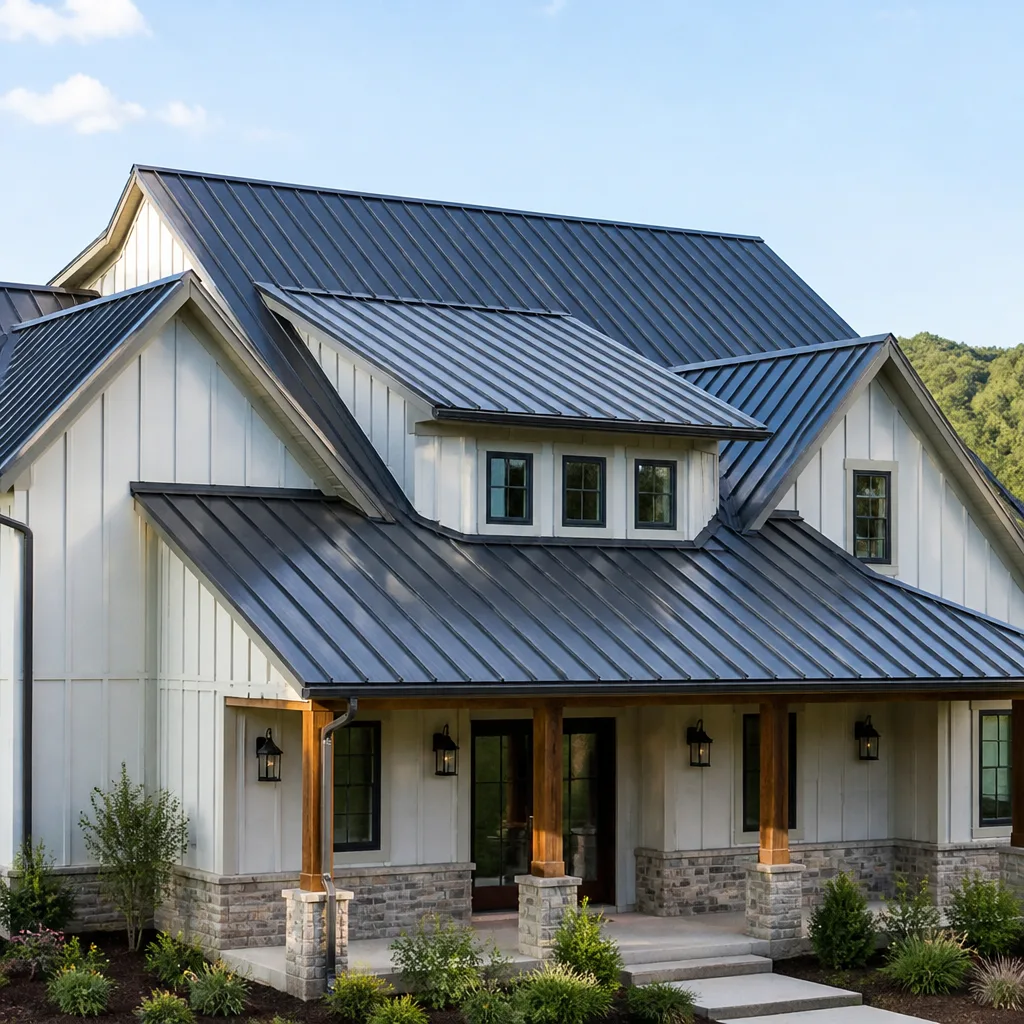
 Metal roofing
 Architectural shingles
 Tile roofing
 GAF
 Owens Corning
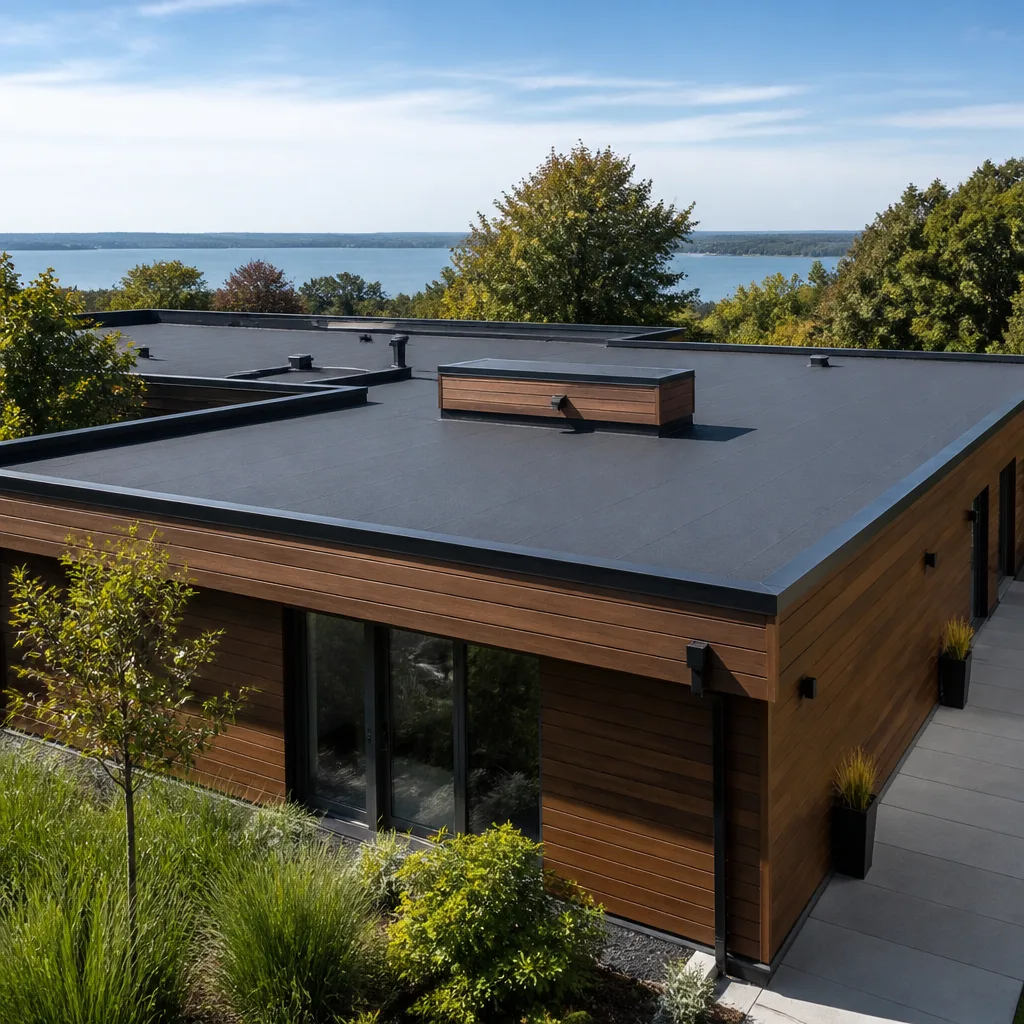 Flat & low-slope
Free roof inspection with deck photos before we talk money - GAF and Owens Corning certified installation
Styles & brands we work with
- Architectural shingles
- Metal roofing
- Tile roofing
- GAF
- Owens Corning
- Flat & low-slope
See the difference
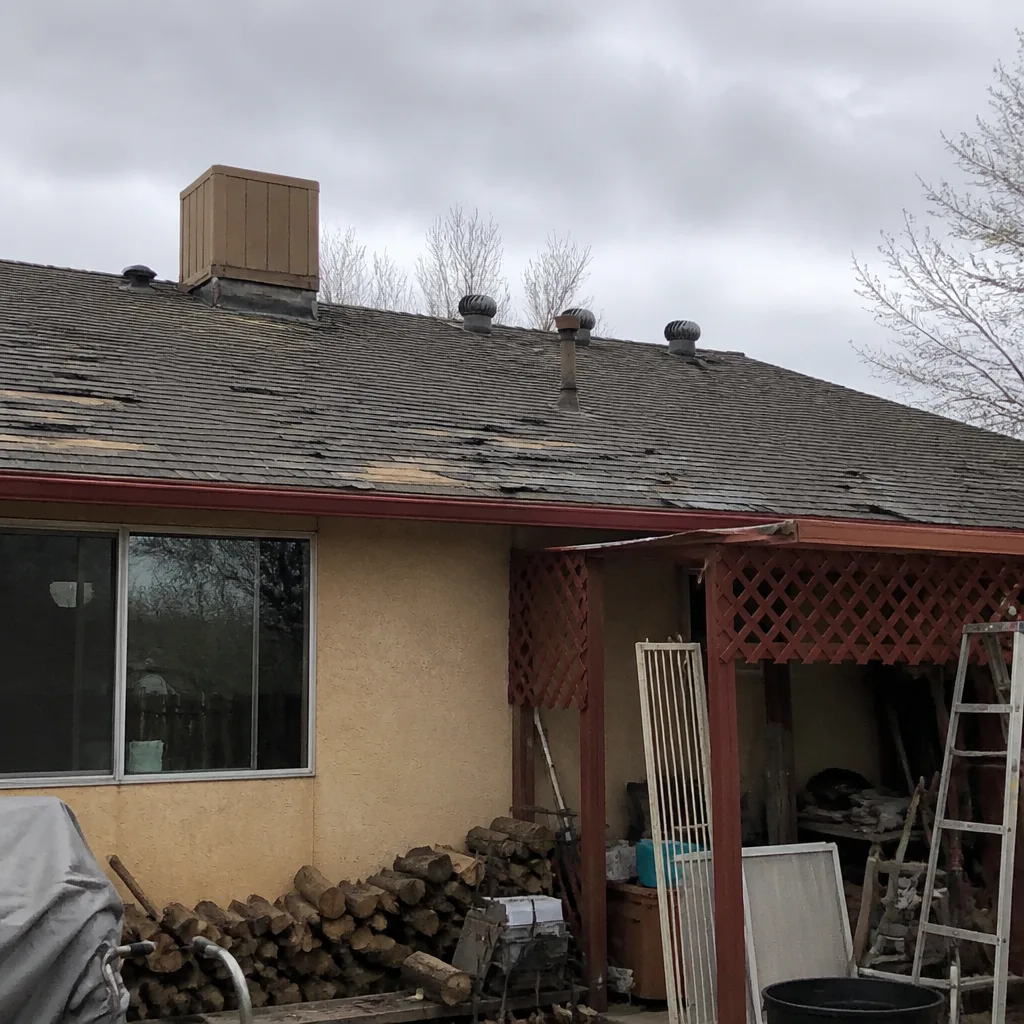 Before
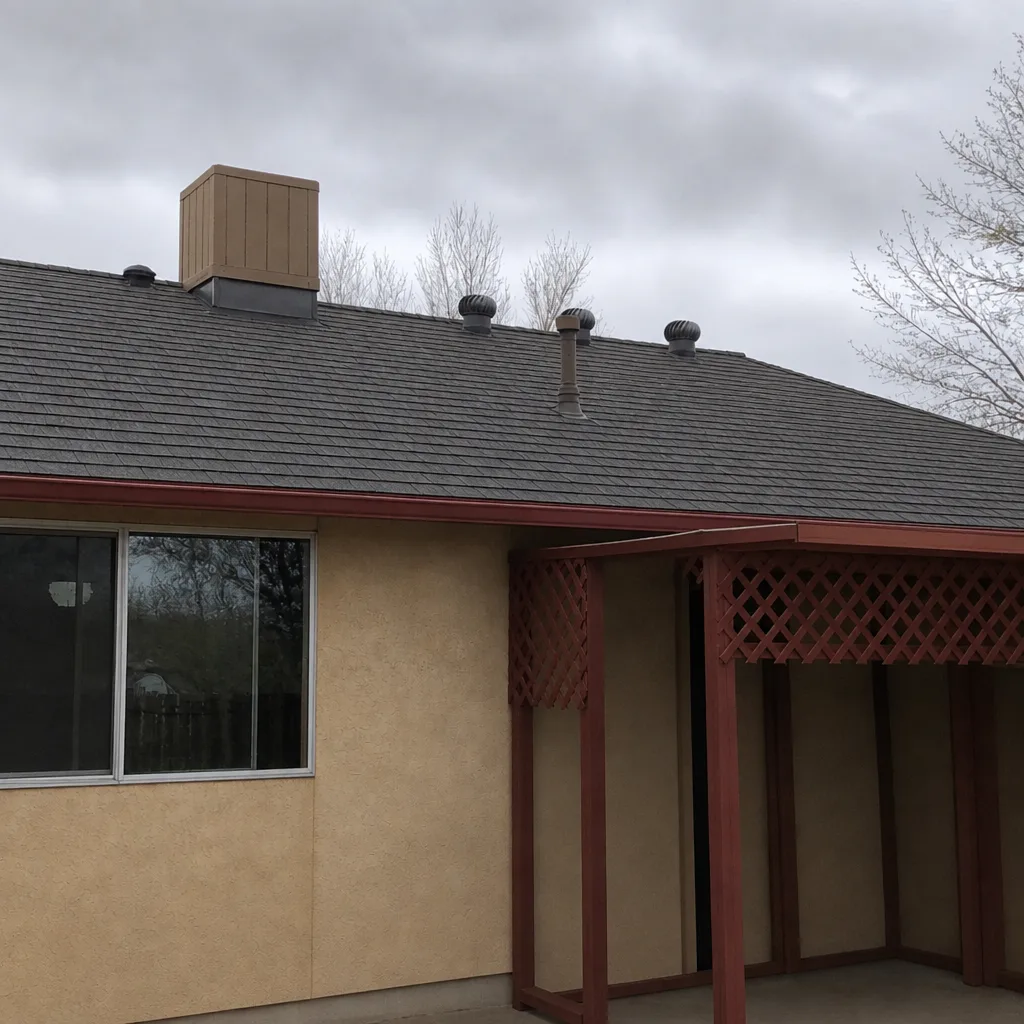 After
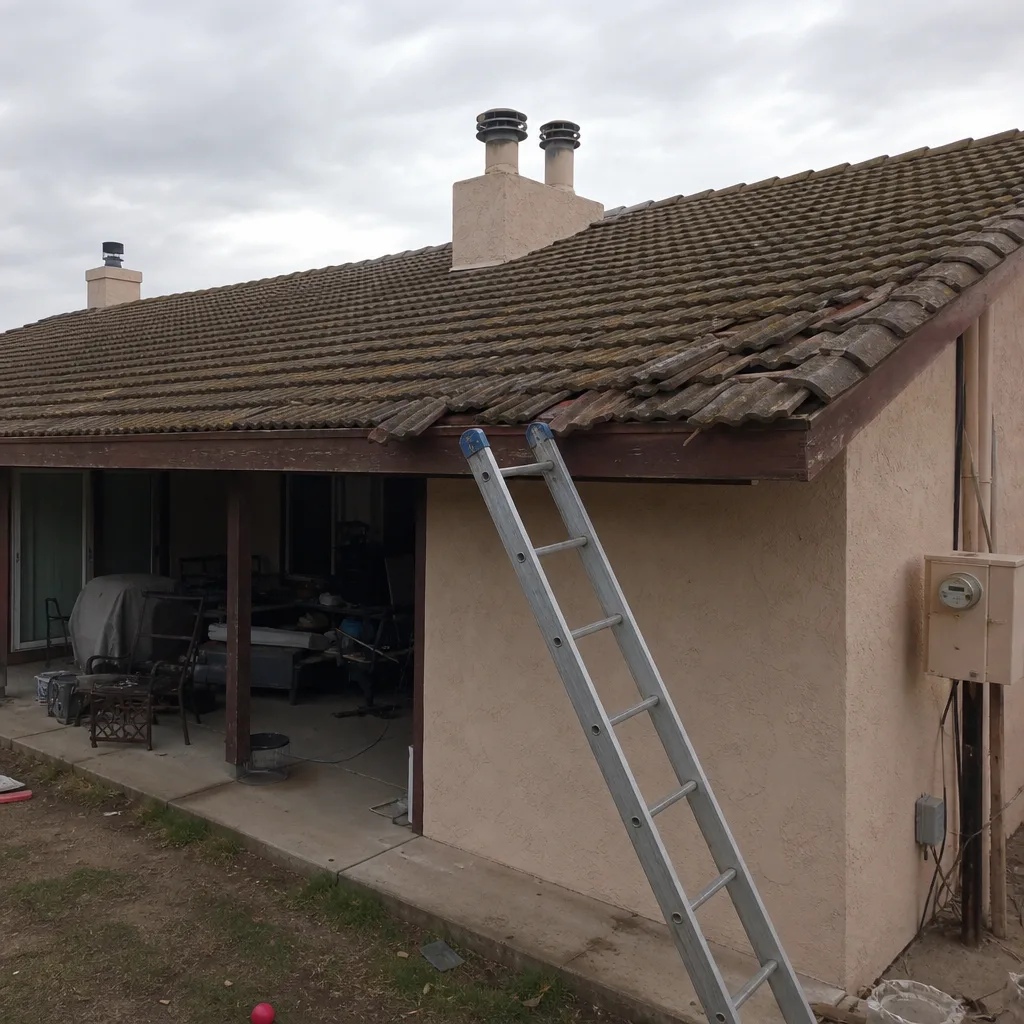 Before
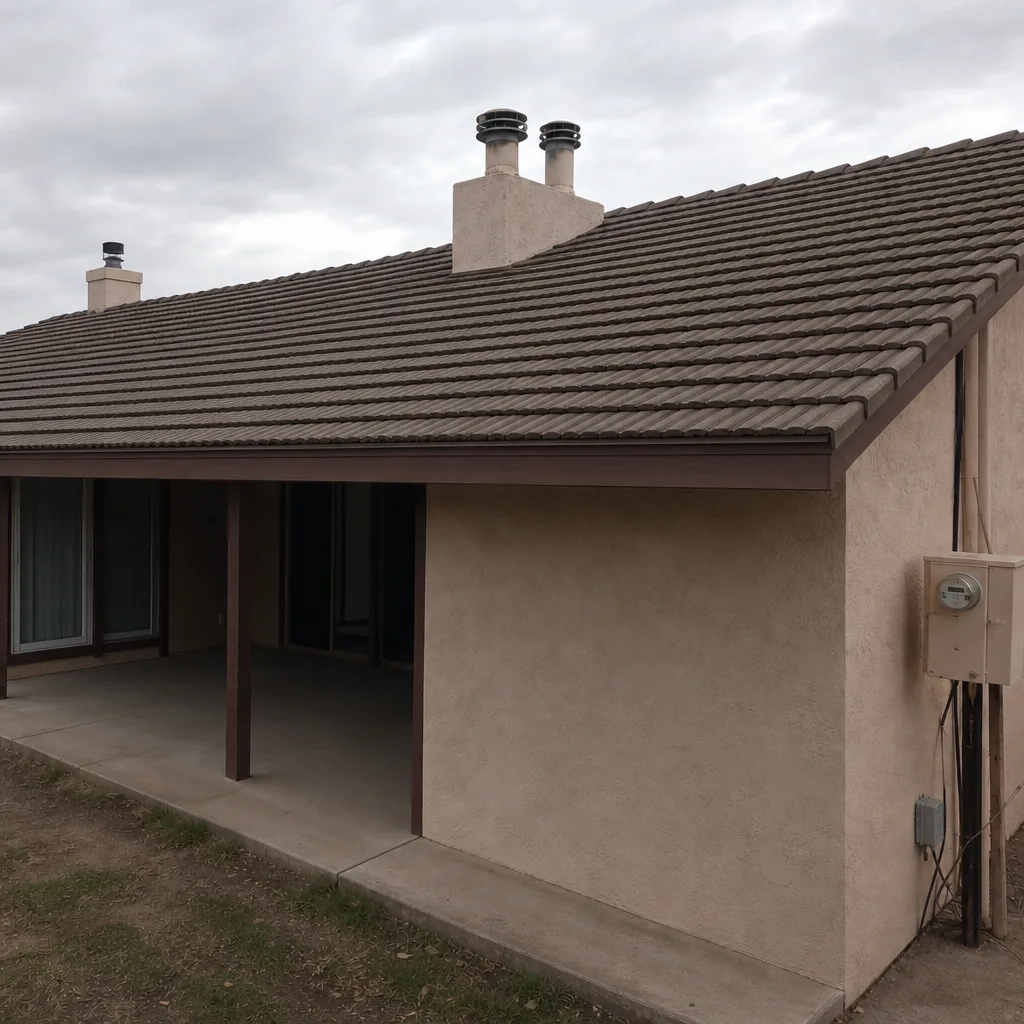 After
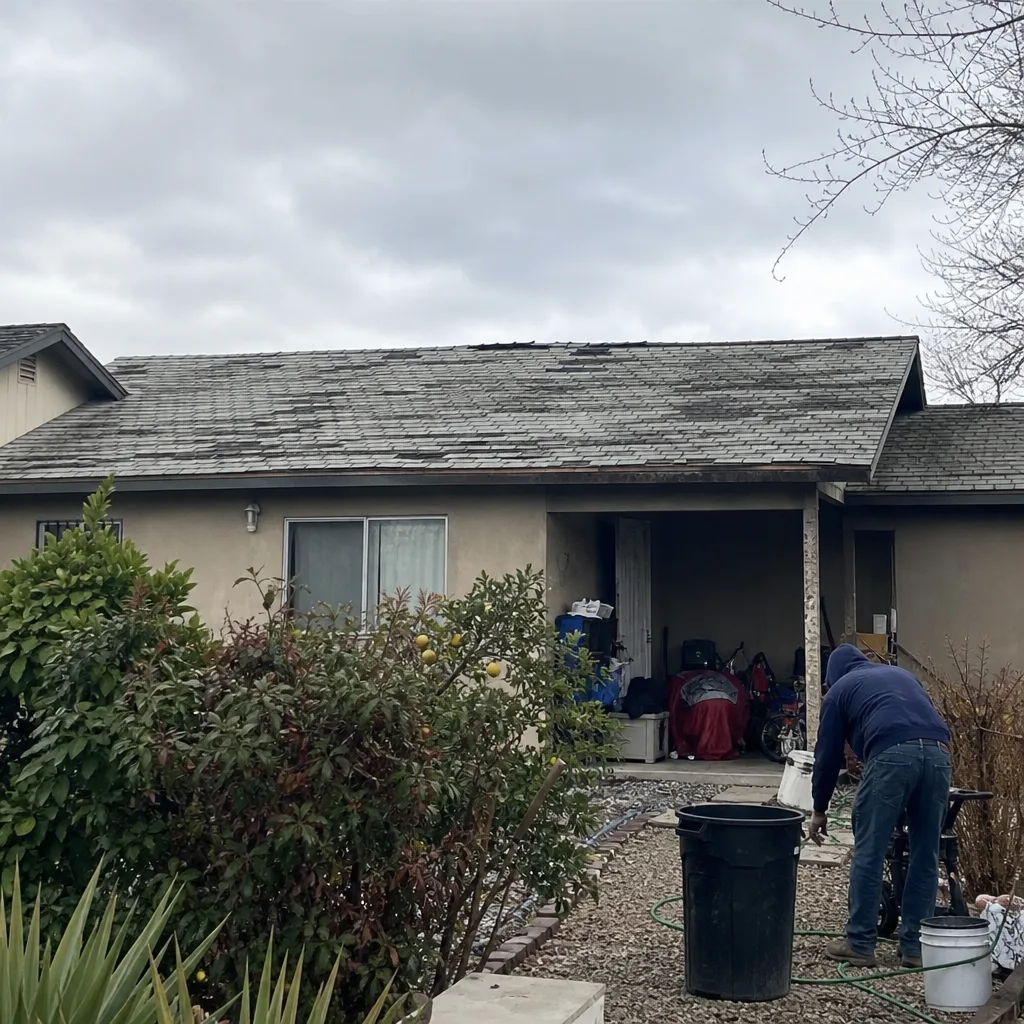 Before
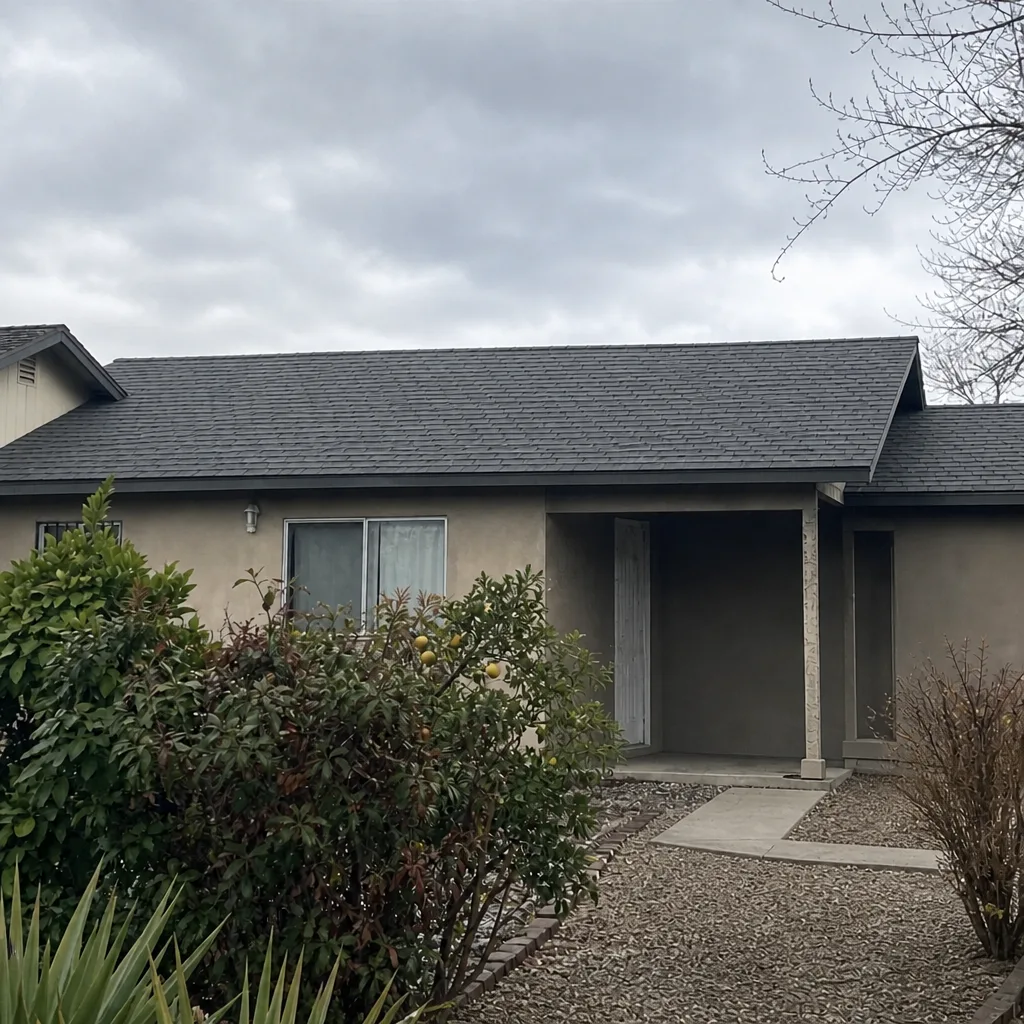 After
How to Find a Roof Leak in Spring Valley, NV: Start Above the Stain, Not At It
The short answer: find a roof leak by tracing uphill from the ceiling stain to every penetration within about 15 feet of it, not by patching the spot directly above the drip. On Spring Valley’s tile homes, water almost always enters higher and farther away than the stain suggests, because cracked underlayment lets it run sideways along the deck before it finds a way through. If you’re seeing a stain right now, call (855) 908-1590 and we’ll send someone to read the roof from the top side, where the real story is.
Here’s the part most homeowners get wrong, and it costs them a second repair. Water enters a cracked-underlayment roof at one point. It runs downhill along the deck, hits a nail, seam, or low spot, and drips onto the ceiling somewhere else entirely. In Spring Valley, following the stain to find the leak is like following the river to find the rain.
Why the Stain Is Rarely Where the Leak Is
Picture a low-slope hip section on one of the 1990s tile subdivisions off Rhodes Ranch. Water gets into a cracked pipe boot collar midway up the slope. It doesn’t drip straight down. It tracks along the felt underlayment, slides under a run of tile, and travels 10 feet before it finds an opening at the hip corner. The stain shows up at the hip. The leak is at the pipe boot. Patch the hip and you’ve fixed nothing.
We see this constantly here. Spring Valley was built almost entirely between the 1980s and 2000s, and the 20-year felt under those 1990s tile roofs is well past its service life. Extreme summer heat bakes tile surfaces past 150°F, and that thermal cycling cracks the underlayment long before a single tile looks broken. So the leak announces itself on a ceiling far from any damage you can see. If you want the full background on how we approach these repairs, our Roof Repair in Spring Valley page covers it.
The Correct Diagnostic Sequence for a Spring Valley Tile Roof
Work in order. Skipping a step is how a homeowner ends up paying twice.
- Mark the ceiling stain exactly. Pencil a circle around it. Note the date. A stain that grows after a monsoon rain tells you something a dry-week stain doesn’t.
- Sketch the roof geometry above it. A rough plan view: ridge lines, valleys, hips, and every penetration you can see from the ground or a window. You’re building a map before you climb anything.
- Look uphill and upslope within a 15-foot radius. On that sketch, circle every pipe boot, vent cap, valley run, and ridge cap above the stain. These are your suspects. One of them is the leak.
- Inspect those penetrations before you touch a single tile. Cracked mastic, missing sealant, lifted flashing. Tile is heavy and brittle and one wrong step on a hot afternoon cracks a field tile. Check the soft parts first.
A note on the garden hose test, because it’s the method everyone reads about. On a shingle roof, a helper on the ground running water while you watch from the attic works reasonably well. On tile, it mostly wastes your afternoon. The tile itself delays water penetration to the underlayment by 30 to 90 seconds, which breaks the relationship between when you apply water and where it drips. You’ll flood one section, see nothing, move on, and the drip shows up 20 minutes later from somewhere you already ruled out. The tile roof masks the evidence the test depends on.
Spring Valley’s Three Most Common Leak Sources
Based on the housing stock and the climate, these three account for the large majority of the leaks we’re called out for.
- Dried and cracked pipe boot collars. The number one source on Spring Valley homes over 15 years old. UV bakes the rubber collar until it splits, and the crack opens at the worst angle to catch wind-driven monsoon rain.
- Valley metal with failed lap sealant. Every valley is a channel, and the sealant at each lap has been doing thermal push-ups for decades. When it lets go, water gets behind the metal instead of running down it.
- Eave-line mastic failure. On many homes here, the first course of tile was set in mortar. Two decades of dry heat dehydrates that mortar until it cracks, and the eave becomes a sieve during a microburst.
All three fail faster here than in milder climates because of the same forces: intense UV that bakes out sealant, monsoon microbursts and hail, and the overnight freeze-thaw of winter cold snaps. When we set a repair, we’re matching materials to that cycle, not to a generic roof. We install CertainTeed, Owens Corning, IKO and Atlas products among the seven lines we’re authorized for, so we’re not substituting whatever’s on the shelf.
What a Photo-Documented Inspection Actually Shows You
An inspection from the roof surface documents three things you cannot see from the attic or the driveway, and those three things are usually where the truth lives.
First, the top-side condition of the valley metal. From below or from the ground, a valley looks fine. From above, you can see the sealant laps and where they’ve failed. Second, the gap between tile and deck at the eave, which tells us whether water is getting under the field or running freely. Third, the state of any exposed felt at the hip and ridge, which is where the underlayment tends to show its age first.
Having those photos before you call Roof Repair protects you. A contractor who quotes a scope from the driveway is guessing. A scope built from roof-surface photos matches the actual problem, and you can compare apples to apples when you get a second opinion. Standing offers worth knowing: a free second opinion on any written estimate, $50 off any repair over $250, and a permanent 5% senior and veteran discount. The price we quote is the price you pay.
Why Ridgeline Handles This Differently
Ridgeline Roofing Co. Spring Valley has been standing behind local roofs since 1984. That’s 42 years of being the opposite of a storm-chaser: local crews, apprentices trained into journeymen, and a plan to still be here in thirty years. Our technicians have up to 10 years of experience, arrive background-checked and in uniform, and document every inspection with photos taken from your actual roof.
Every job is backed by our written 90-Day Done Right Promise. If it’s not right, we come back and make it right, with no paperwork, no arguing, and no runaround. A live person answers every call, 24 hours a day, including the middle of a storm. If you’d rather have someone who reads roofs for a living take the guesswork out, call us at (855) 908-1590 and we’ll get you a free estimate.
FAQs
Most leak repairs in Spring Valley run $250 to $650 depending on access and the source, with a documented inspection typically included in the estimate. Pipe boot replacements sit at the low end. Valley metal resealing runs higher because more tile has to be lifted and reset. Call (855) 908-1590 for an exact number on your roof - estimates are free.
Not reliably on a tile roof. The tile surface hides the leak from above and the attic hides it from below, so the diagnostic clues (failed mastic, cracked collars, exposed felt) live on the roof surface itself. A good inspection walks that surface and photographs it. We don’t recommend homeowners climb their own tile roofs; a fall from height is a far worse problem than a stain.
Because the patch went to the wrong location. If water is traveling 8 to 15 feet laterally along the underlayment, a repair at the stain location won’t touch the entry point. The fix is to trace the source uphill within 15 feet of every penetration and fix the actual failure, not the symptom. That’s the whole reason we document the roof top-side with photos before quoting.
Almost always the underlayment. Tile is a wear surface, not a waterproof membrane. The felt underneath does the real waterproofing, and on Spring Valley’s 1990s tile homes that felt is well past its 20-year life. That’s why we inspect the underlayment and flashing, not just the visible tile. Call (855) 908-1590 if you want a photo-documented read on your roof.
Get a Straight Answer on Your Leak
If you’d rather have it looked at, Ridgeline Roofing Co. Spring Valley offers a no-pressure assessment in Spring Valley. We’ll document what we find, show you the photos, and quote a square deal. Call (855) 908-1590 to get it done right.
Written by the team at Ridgeline Roofing Co. Spring Valley, serving Spring Valley, NV.