
 Metal roofing
 Architectural shingles
 Tile roofing
 GAF
 Owens Corning
 Flat & low-slope
Free roof inspection with deck photos before we talk money - GAF and Owens Corning certified installation
Styles & brands we work with
- Architectural shingles
- Metal roofing
- Tile roofing
- GAF
- Owens Corning
- Flat & low-slope
See the difference
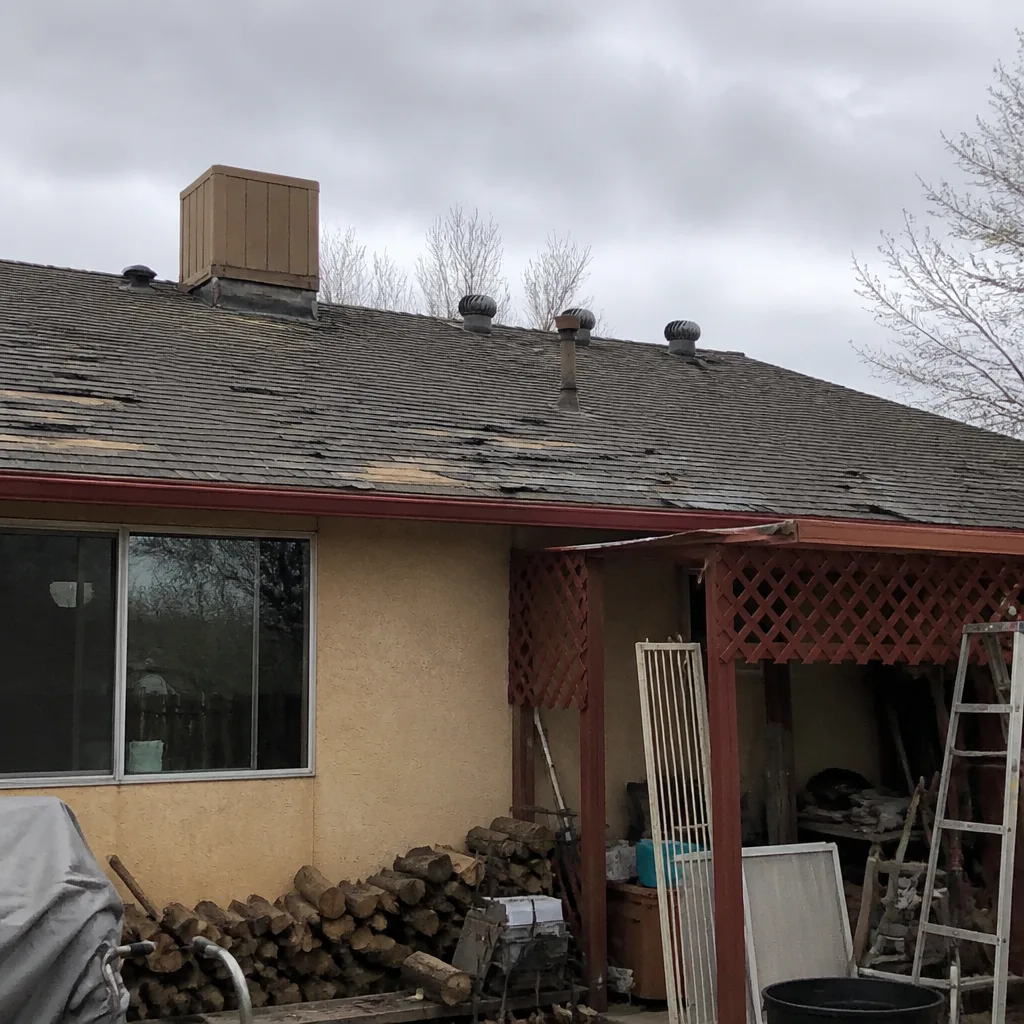 Before
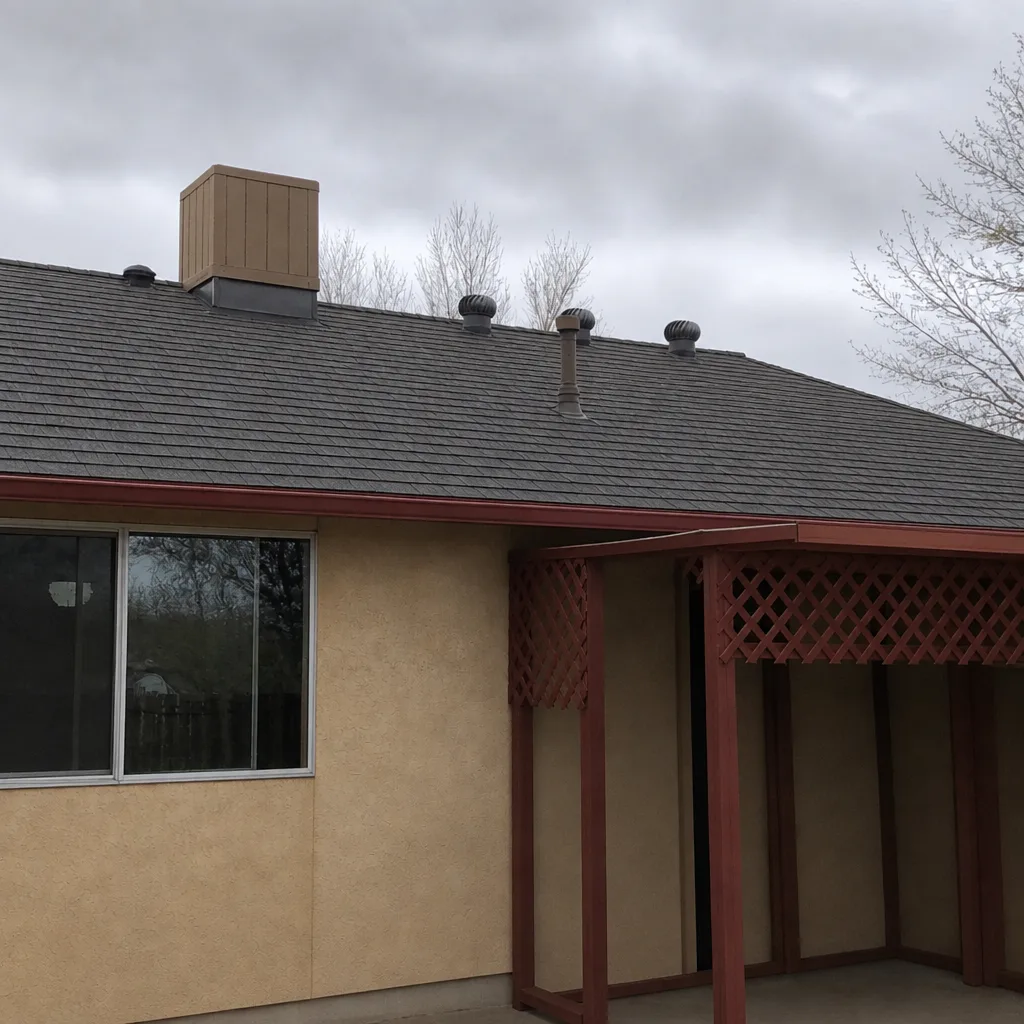 After
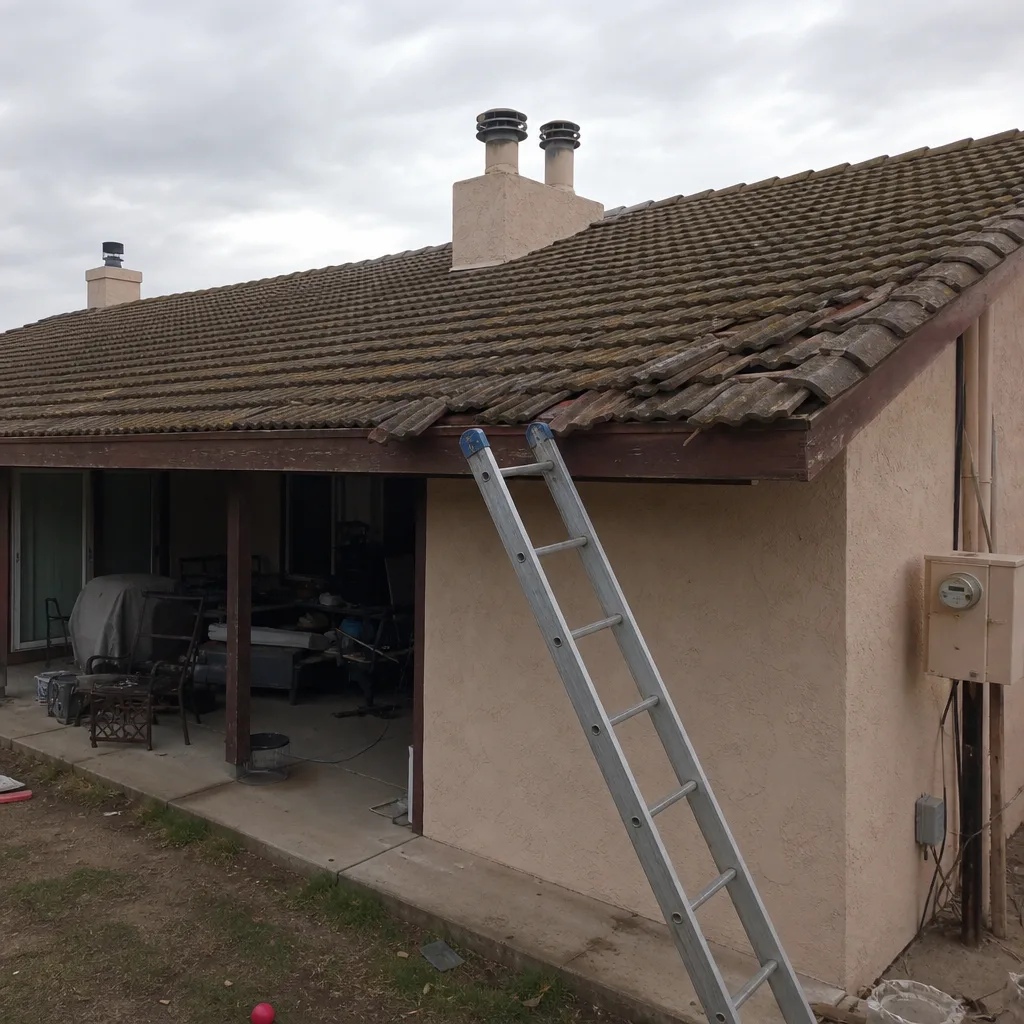 Before
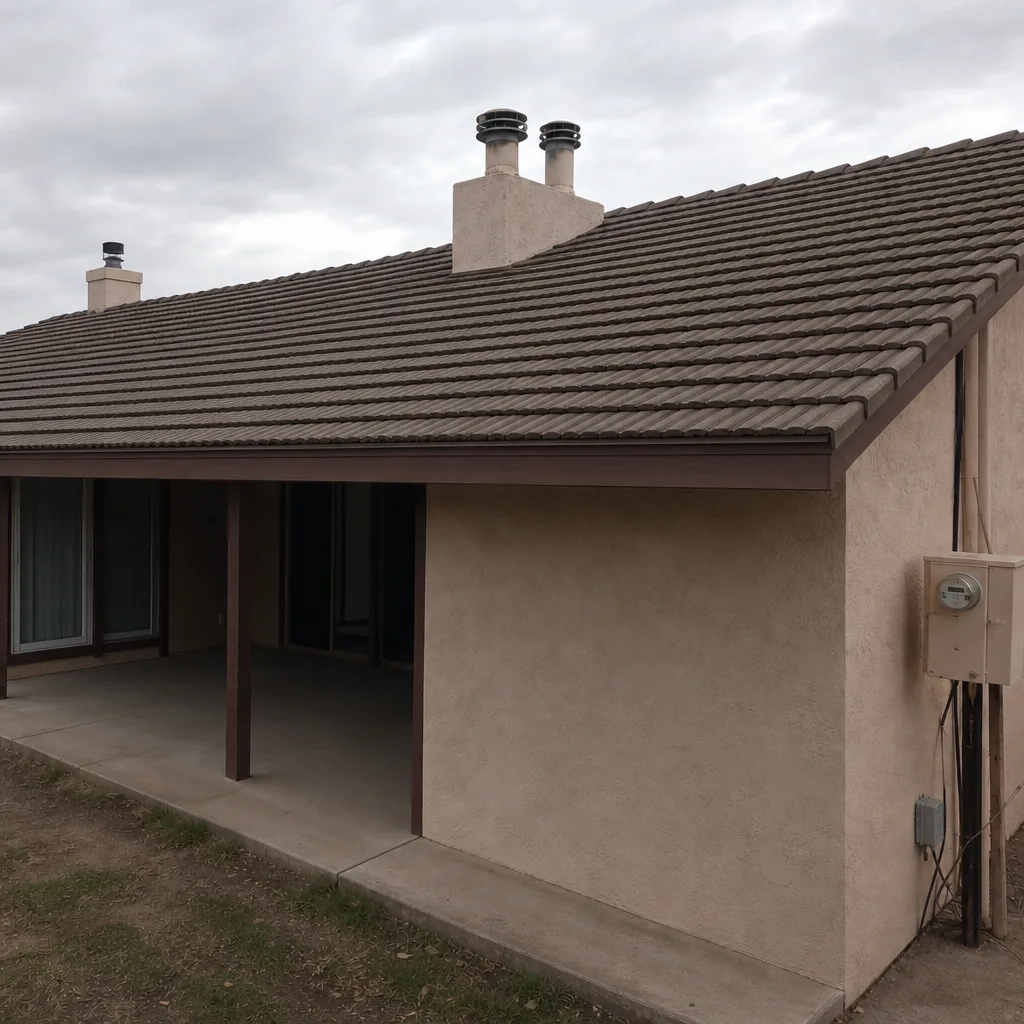 After
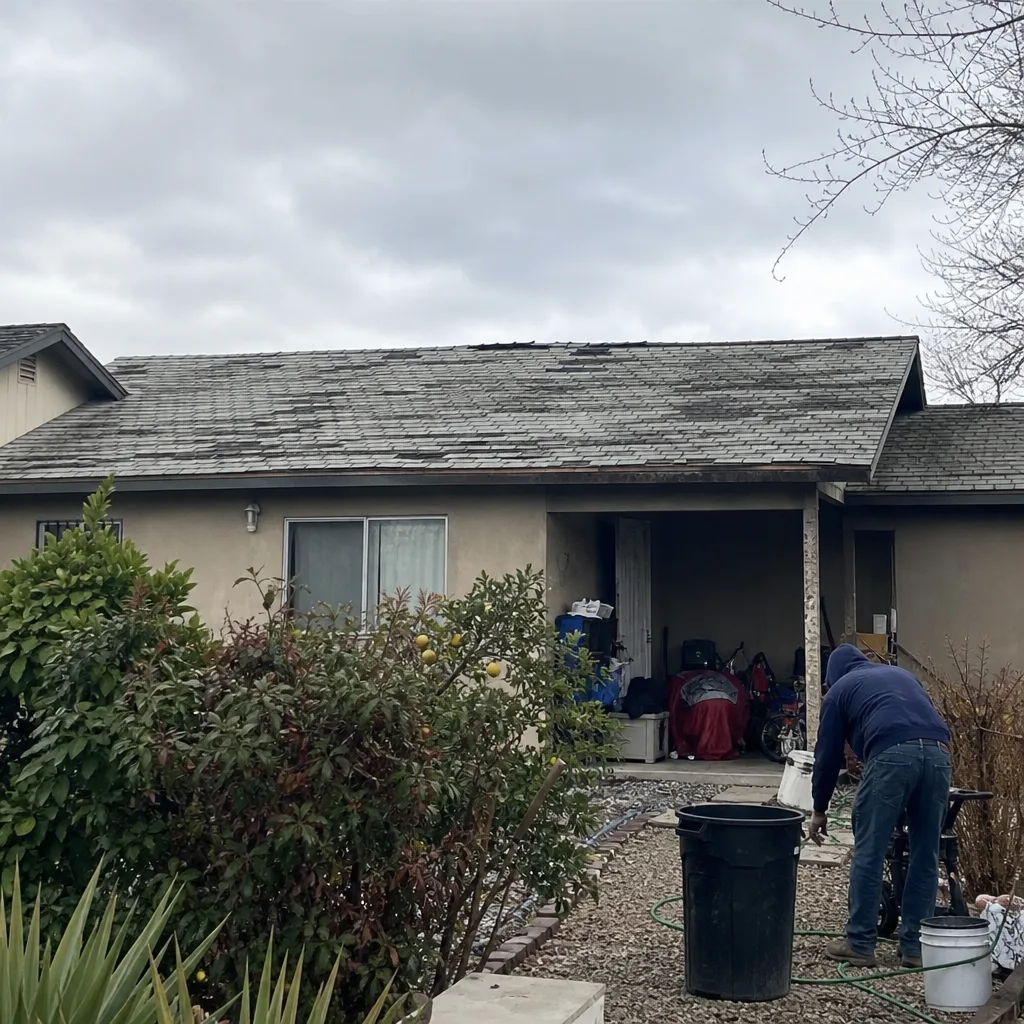 Before
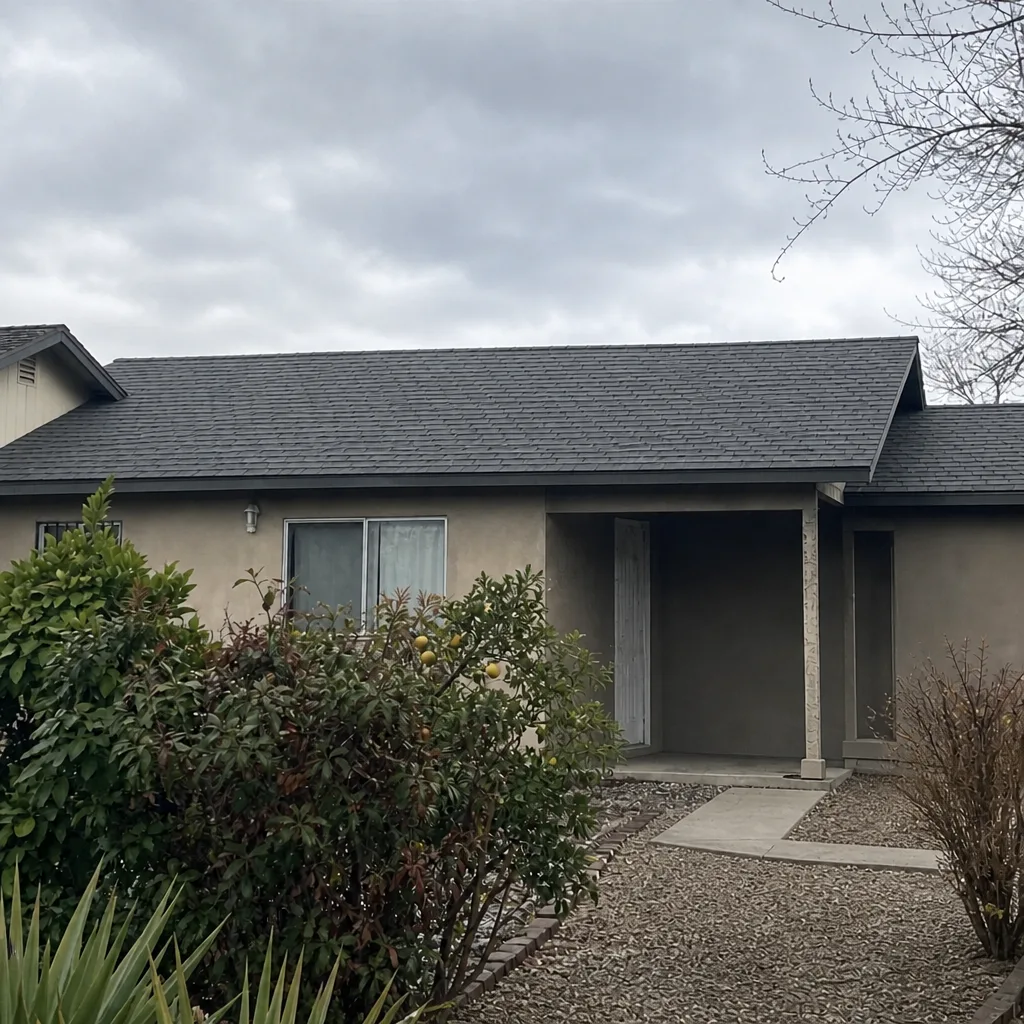 After
How to Clean Gutters in Spring Valley, NV (Where the Problem Is Silt, Not Leaves)
The short answer: in Spring Valley, you clean gutters by mechanically breaking up dry, compacted desert silt with a wet-dry shop vacuum fitted with a right-angle wand or a plumber’s snake at the downspout elbow, not by flushing with a garden hose. Spring Valley gutters don’t fill with leaves the way a tree-canopy climate expects. They fill with windblown decomposed granite, caliche dust, and roofing aggregate that packs like concrete at the downspout throat, sits dry and unnoticed for months, then fails in a single monsoon microburst. If your gutters have gone a season without attention, or you’re not comfortable on a tile roof, call Ridgeline Roofing Co. Spring Valley at (855) 908-1590 for a no-pressure assessment.
Key Takeaways
- Leaf blowers and garden hoses don’t move dessert silt - they turn a dry plug into a cemented mass.
- The debris concentrates at the downspout elbow, not along the gutter run, so you often can’t see it from the ground.
- Spring Valley gets most of its rain in a handful of intense storms, so a clogged gutter is invisible until it overflows into fascia and soffit.
- Low-slope patio and garage sections often have interior drain boxes, not gutters - those need a separate check.
- On flat-profile tile streets, climbing the roof to clear valley flashing and ridge caps risks cracking tile.
Why Spring Valley Gutters Clog Differently Than the Guides Assume
Most “how to clean gutters” advice is written for New England or the Pacific Northwest, where the enemy is wet leaves that pile along the whole gutter run and loosen with a scoop. Spring Valley isn’t that climate. This is unincorporated Clark County sprawl built almost entirely between the 1980s and 2000s, laid out on a desert floor where the wind carries fine particulate year-round. What lands in the gutter is mineral, not organic. Decomposed granite blown off the open desert. Caliche dust. And, on the aging asphalt shingle roofs common in the denser 1990s subdivisions, a steady shed of roofing granules that adds a gritty layer to everything else.
That mix doesn’t distribute evenly. It migrates downhill along the gutter to the lowest point - the downspout outlet - and compacts there. A homeowner standing on the ground in spring sees a clean-looking gutter line and assumes the system is fine. It usually isn’t. The plug is at the throat, wedged tight, and it stays dry through ten months of desert weather.
What to Look For (and What You Can’t See From the Ground)
The inspection window in Spring Valley is small. Our monsoon season delivers the bulk of annual rainfall in a handful of intense storms - a 2-inch-per-hour microburst is not unusual. A gutter with a compacted silt plug at the downspout handles that fine for ten months, then overflows in twenty minutes. The water goes backward under the drip edge, into the fascia board, and up under the soffit. Fascia rot and soffit staining are the two most common consequences we’re called out to assess in Spring Valley, and both start with a clog no one saw.
Here’s what a trained eye checks, in a comparison framing:
- Downspout throat vs. gutter run. A leaf-climate guide tells you to look along the run. In Spring Valley, the run is often clear and the throat is packed. The elbow is where you look first.
- Dry plug vs. wet debris. If you see standing water in the gutter, the clog is downstream and water is backing up. If the gutter looks empty but the downspout doesn’t drain, the plug is dry and compacted - the harder case.
- Gutter line vs. interior drain box. On Spring Valley’s complex hip-and-valley tract homes, low-slope patio and garage sections often drain through interior boxes rather than gutters. Those boxes silt up too, and most DIY guides never mention them.
- Fascia and soffit vs. the gutter itself. By the time the gutter visibly overflows, the fascia may already be soft. Check for staining on the underside of the soffit before assuming the system is sound.
For a full walkthrough of what we install and maintain, see our Gutters & Accessories page. If you want the broader picture of how gutters fit into a whole-home assessment, start at our home page.
The Right Tools, and Why Water Isn’t One of Them
The instinct is to grab a hose and flush. In Spring Valley that’s the worst first move. Adding water to compacted caliche-fine silt before you’ve broken it up mechanically turns a dry, friable plug into a cemented mass that sets up like mortar in the downspout elbow. Now you’ve got a worse problem than you started with, and you may need to cut the downspout to clear it.
What actually works:
- A wet-dry shop vacuum with a right-angle extension wand - the angled nozzle lets you reach into the throat and pull dry material out rather than pushing it down.
- A plumber’s snake for the downspout elbow when the plug is wedged. Run it from the top down, then confirm flow from the bottom.
- A stiff-bristle hand brush to loosen aggregate stuck to the gutter floor before vacuuming.
- Gloves and eye protection - roofing granules and silica dust are not things to breathe, and the dust kicks up as you break the crust.
Then, and only then, do you test with a small amount of water. If it drains freely, the system is clear. If it backs up, the plug is further down and needs a longer snake.
Roof Access, Tile Roofs, and When the Job Belongs to a Technician
This is where most Spring Valley homeowners should stop and think carefully. Climbing a roof to clear debris around valley flashing and ridge caps is not a Saturday ladder project on the west-side communities like The Lakes and the Rhodes Ranch area, where flat-profile concrete S-tile and clay tile roofs dominate. Tile cracks under a misplaced foot. And a cracked tile can open a path for water that shows up as a ceiling stain months later, far from where you stepped.
Two honest cautions:
Tile roofs. Walking a concrete tile field requires knowing where to distribute weight - never on the unsupported span between battens, never on the edge of a valley. Our technicians have up to 10 years of experience on exactly this kind of roof and arrive background-checked and in uniform. That’s a job we’d rather do than have you attempt.
Height and access. If your gutters are more than one story up, or the roof pitch is steeper than you’d comfortably walk on a wet morning, this is genuinely dangerous work. A fall from a two-story roof is not a nuisance injury. Call us instead of improvising.
The dry-climate issue underneath all this: the 20-year felt underlayment on 1990s tile roofs is well past its service life and cracks in summer heat. You may be up there for a gutter clog and notice a soft spot that’s actually underlayment failure. A gutter inspection is often the first place we catch it.
How Much Does Gutter Cleaning Cost in Spring Valley?
Gutter cleaning in Spring Valley typically runs $150 to $375 for a standard tract home, depending on linear feet, roof height, and how compacted the downspout plugs are. Tile roof access and interior drain box clearing add to the job. Here’s a rough breakdown:
| Service | Typical Range |
|---|---|
| Standard single-story gutter cleaning | $150-$250 |
| Two-story or steep-pitch access | $250-$375 |
| Downspout elbow snake-out | $75-$150 |
| Interior drain box clearing | $100-$200 |
| Gutter guard installation (per linear foot) | $8-$18 |
The number on the estimate is the number on the invoice. No surprises. If you’re weighing whether to add guards, IKO, Atlas, and Tamko all make profiles that hold up to desert UV better than the bargain-bin screens - we’re an authorized installer of those lines and will tell you honestly when a guard isn’t worth the spend on your specific roof.
Standing offers that apply: $50 off any repair over $250, a free second opinion on any written estimate, and a permanent 5% senior and veteran discount. If you’d like a photo-documented inspection of your actual gutters, we’re happy to do one.
FAQs
Twice a year is the practical minimum in Spring Valley - once in late spring before monsoon season and once in late fall. Because the debris is mineral rather than organic, it doesn’t rot and announce itself; it sits and compacts. A home near open desert or a newly paved lot may need a third check mid-summer after a wind event. Call (855) 908-1590 if you’re not sure of your last cleaning.
Because water doesn’t break up compacted caliche-fine silt - it cements it. In Spring Valley, the plug at the downspout elbow needs to be broken up dry with a snake or a right-angle vacuum wand before you run any water through the system. Forcing water first turns a fixable clog into a downspout you have to cut open. Call us for an exact quote on clearing it - estimates are free.
Yes, with the right technique. Tile cracks when weight lands on the unsupported span between battens or on a valley edge, so the work is about where you step, not just how carefully. Our technicians have up to 10 years of experience on tile fields and arrive background-checked and in uniform. A cracked tile from a DIY attempt typically shows up as a ceiling stain months later, far from the crack. Call (855) 908-1590 to schedule.
Yes, and most gutter guides ignore them. On Spring Valley’s complex hip-and-valley homes, low-slope patio and garage sections often drain through interior boxes set into the roof deck rather than through gutters. Those boxes silt up with the same mineral debris and need a separate clearing. A standard gutter cleaning won’t catch them. Ask us to include them in the inspection.
We’d Rather Do It Right Than Have You Do It Over
Cleaning gutters in Spring Valley is a different job than the guides describe, and it’s one we’ve done long enough to read the signs before they become fascia rot. If you’d rather have it looked at, Ridgeline Roofing Co. Spring Valley offers a no-pressure assessment in Spring Valley - call (855) 908-1590. Every job is backed by our 90-Day Done Right Promise: if it’s not right, we come back and make it right. A live person answers every call, 24/7. We’re not a storm-chaser; we plan to be here. Explore more about how our Gutters & Accessories in Spring Valley work, and rest easy knowing the square deal you get today is the one that holds for years.
Written by the team at Ridgeline Roofing Co. Spring Valley, serving Spring Valley, NV.