
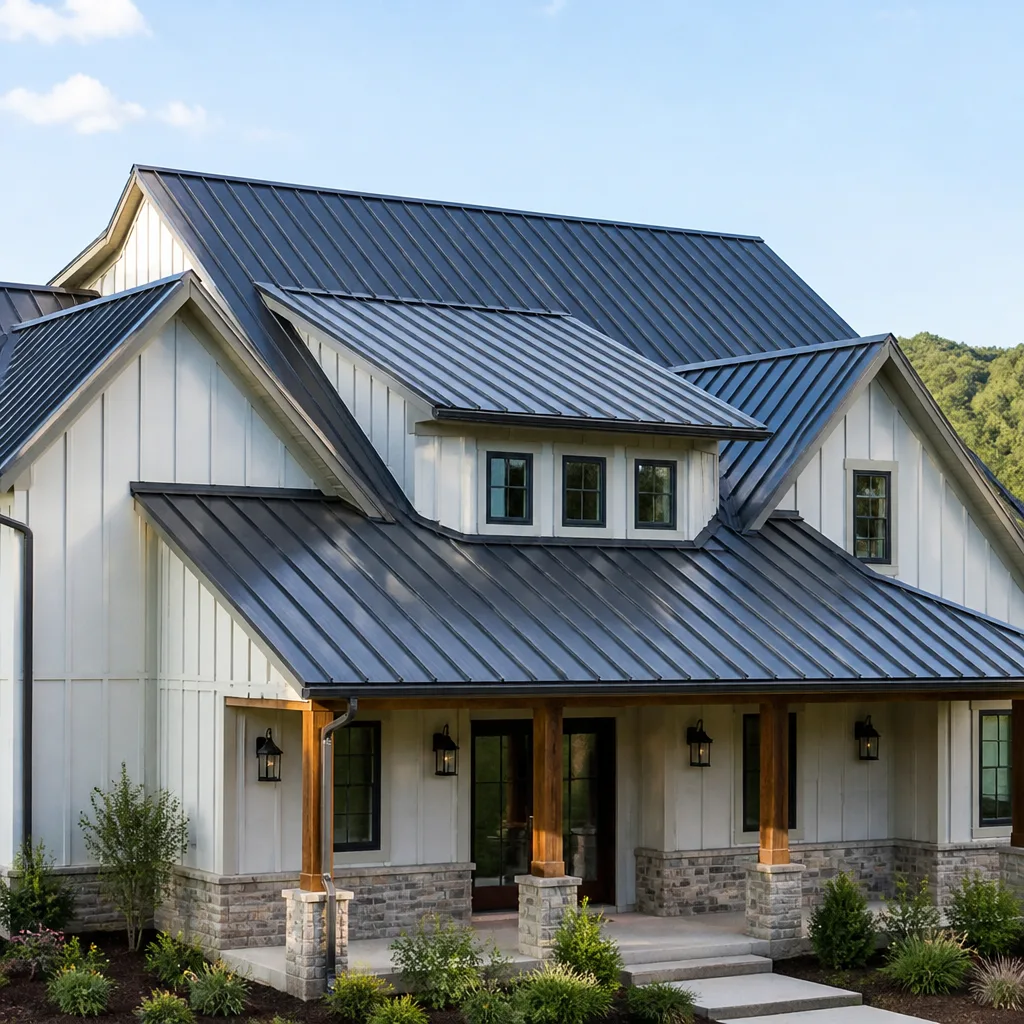
 Metal roofing
 Architectural shingles
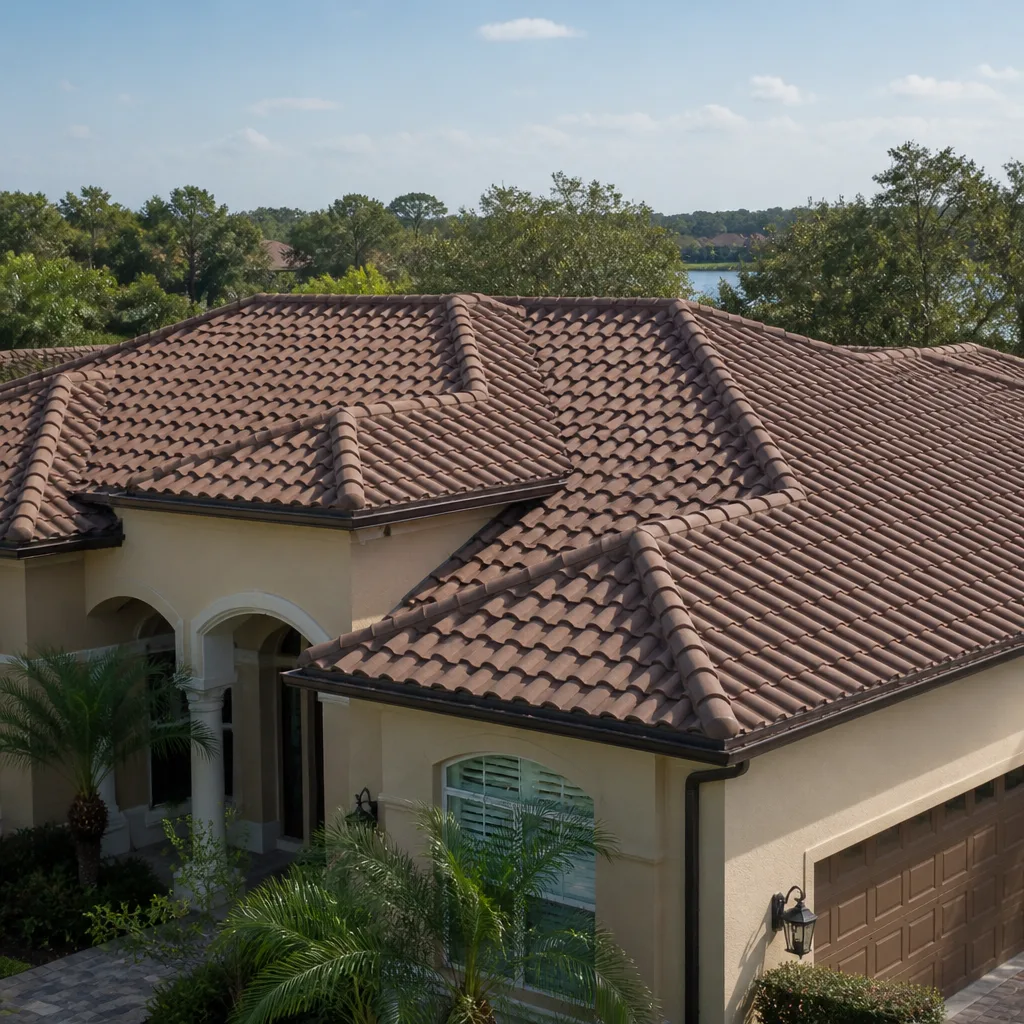 Tile roofing
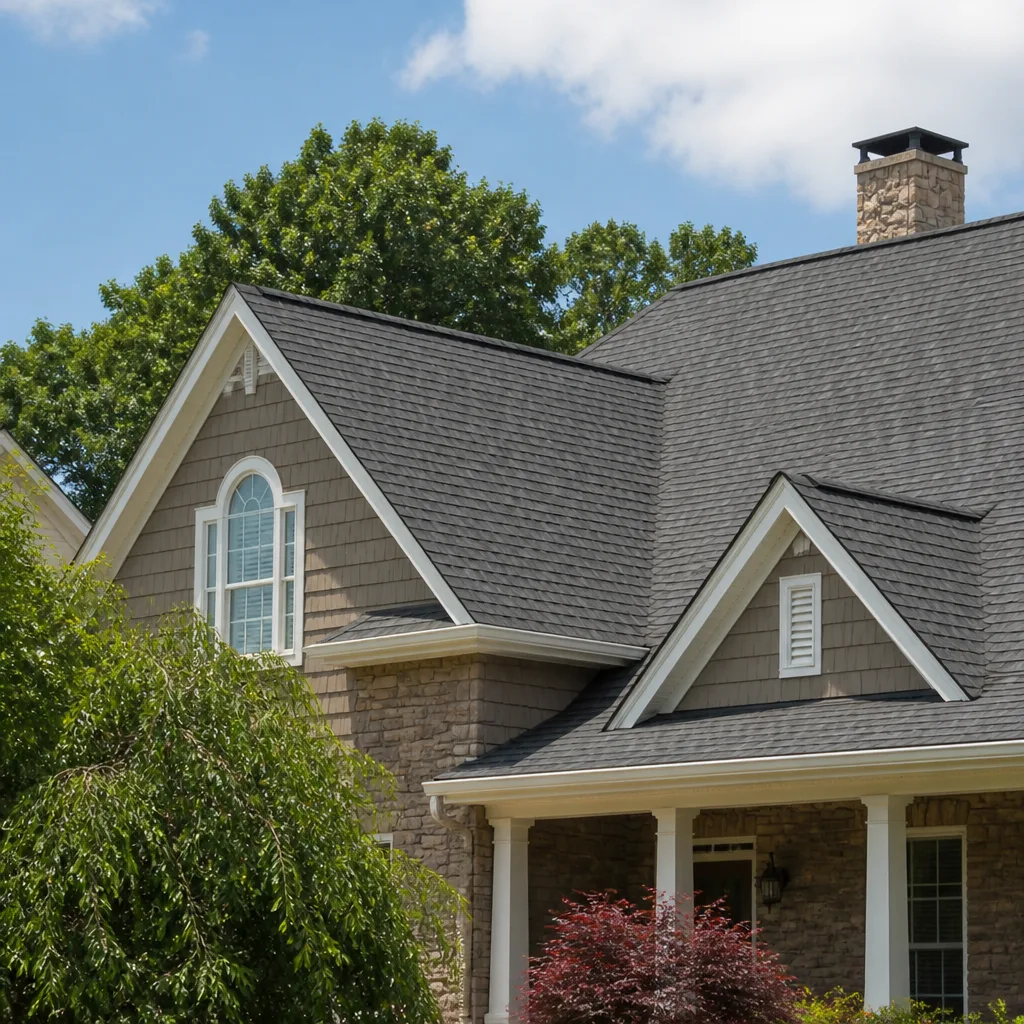 GAF
 Owens Corning
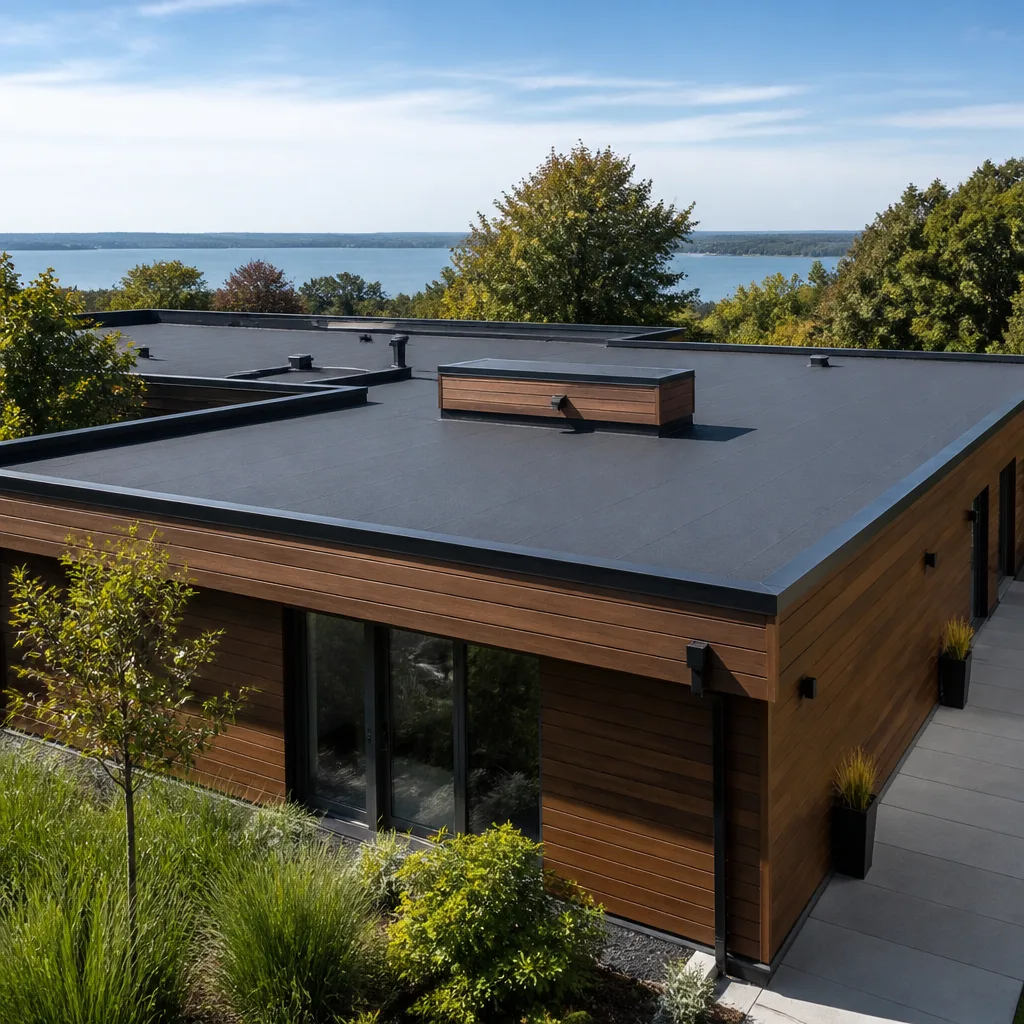 Flat & low-slope
Free roof inspection with deck photos before we talk money - GAF and Owens Corning certified installation
Styles & brands we work with
- Architectural shingles
- Metal roofing
- Tile roofing
- GAF
- Owens Corning
- Flat & low-slope
See the difference
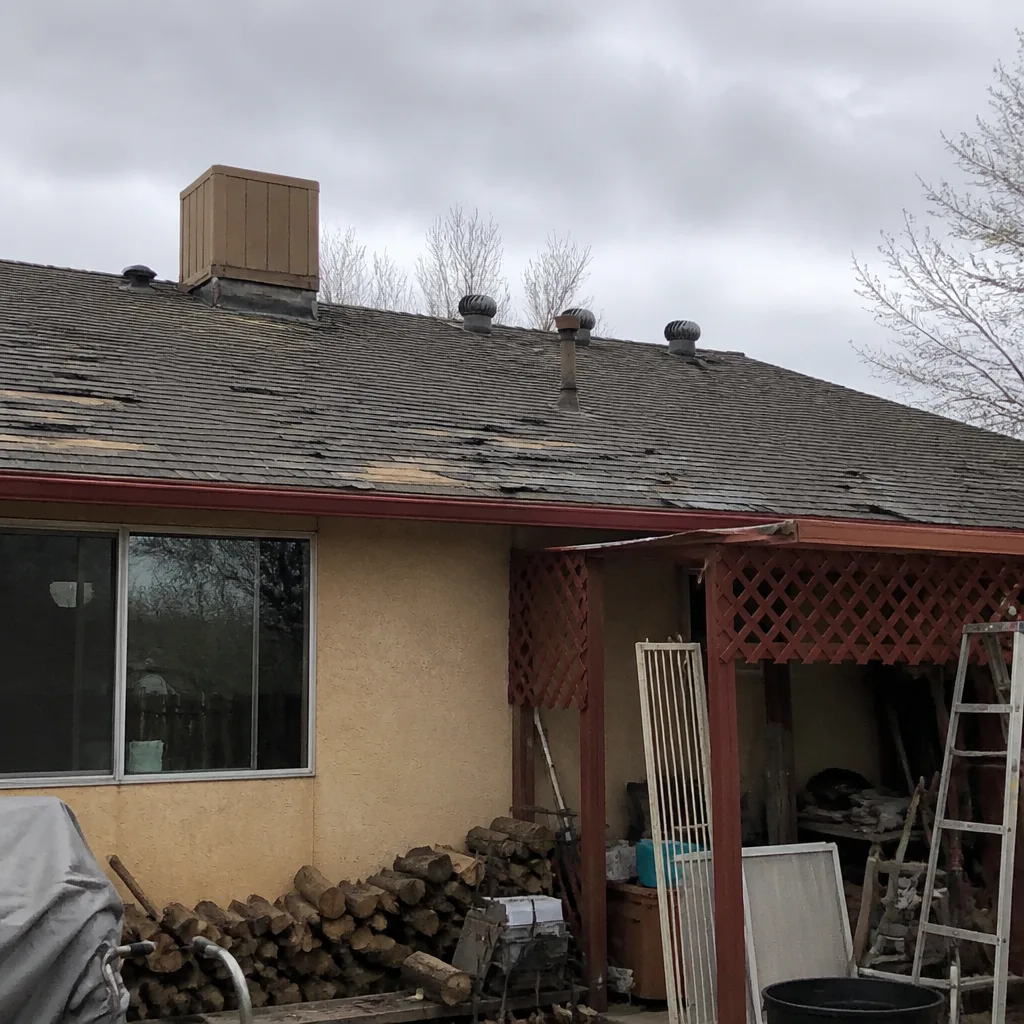 Before
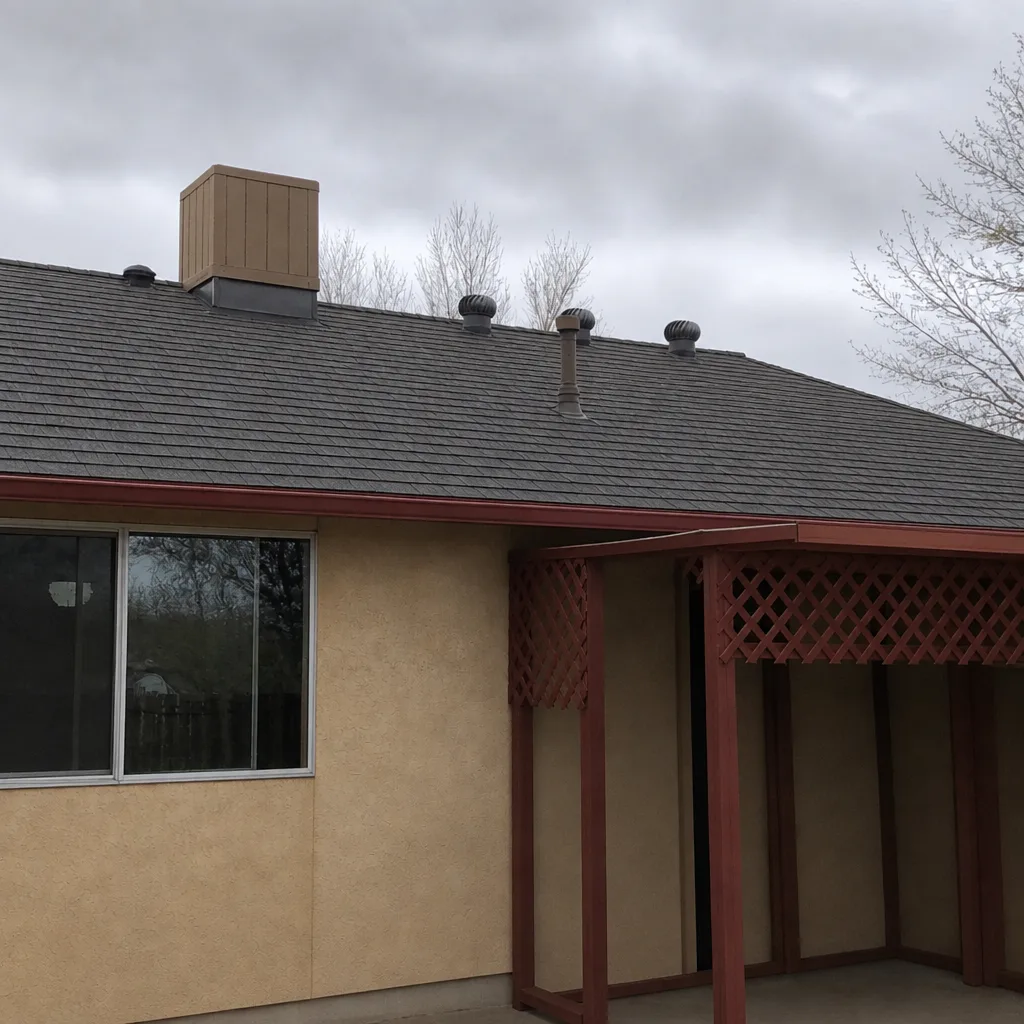 After
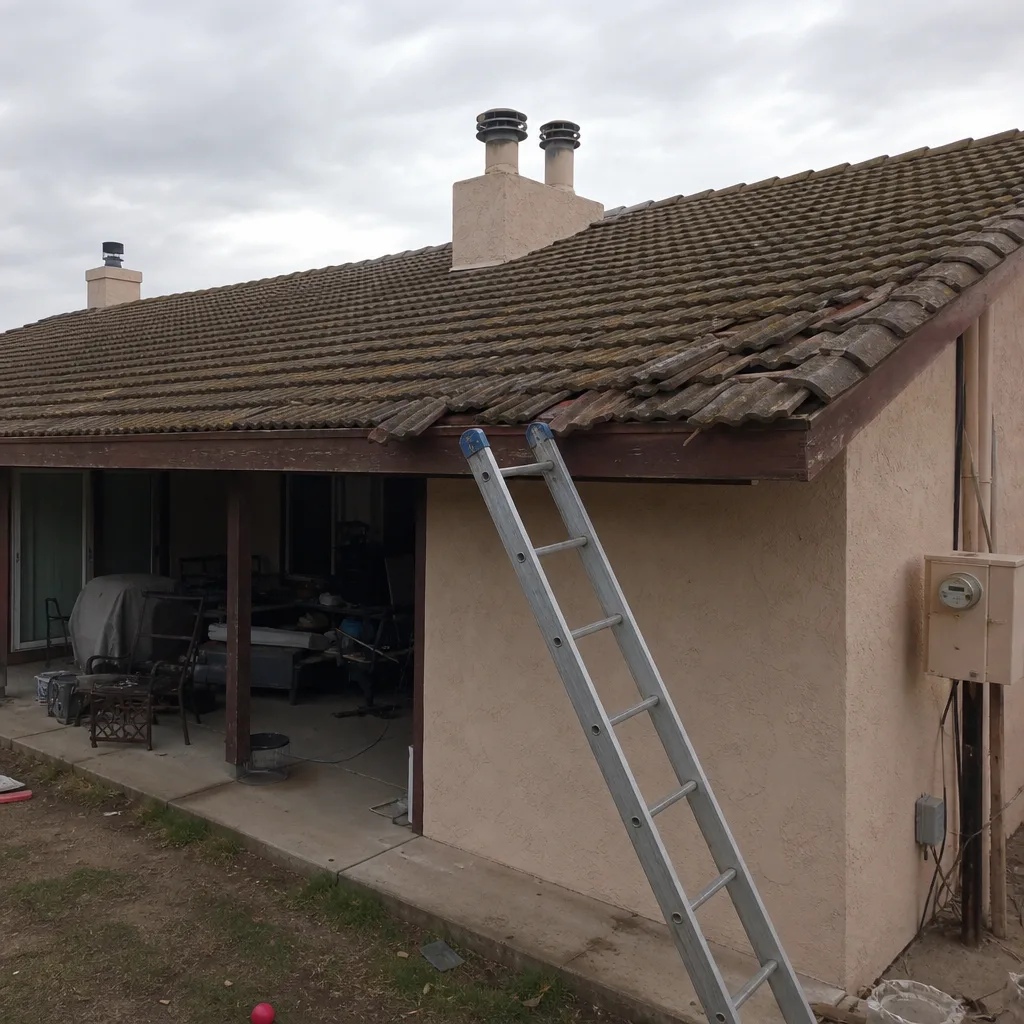 Before
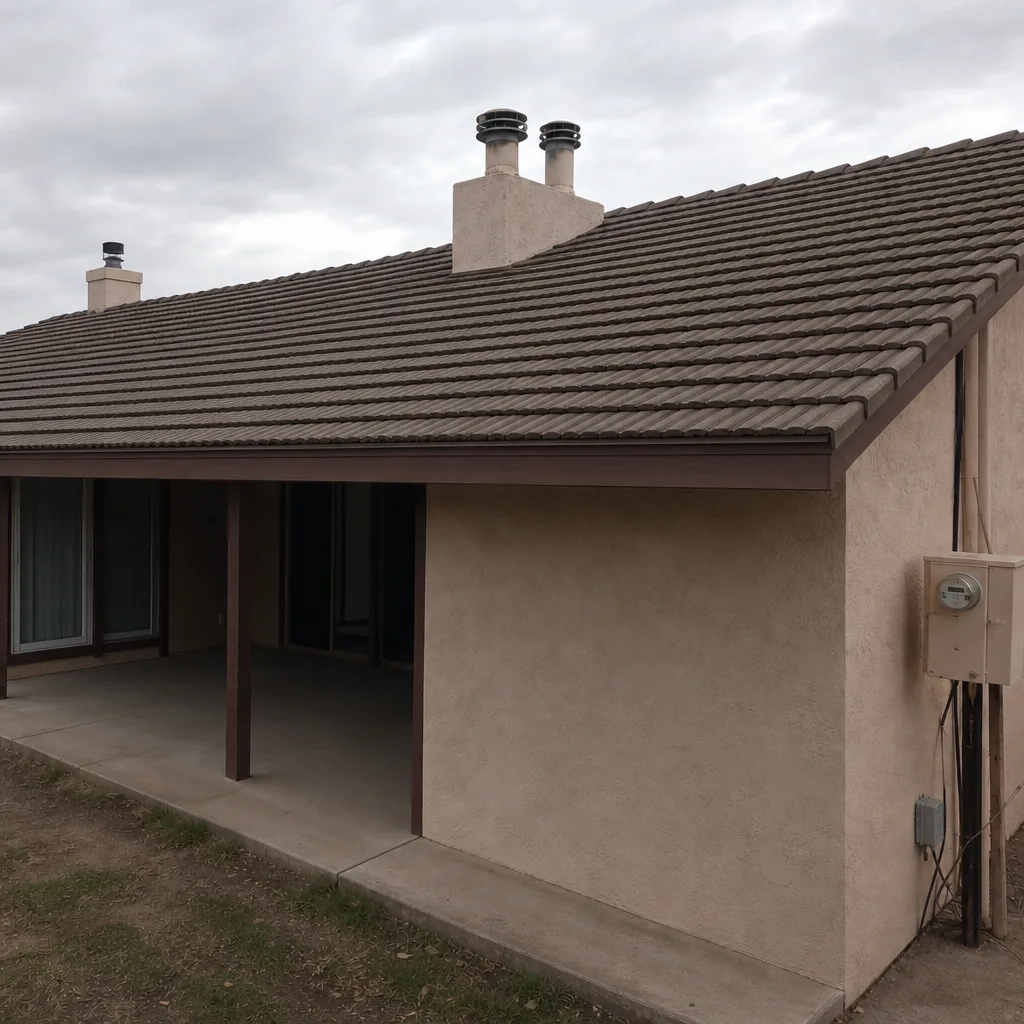 After
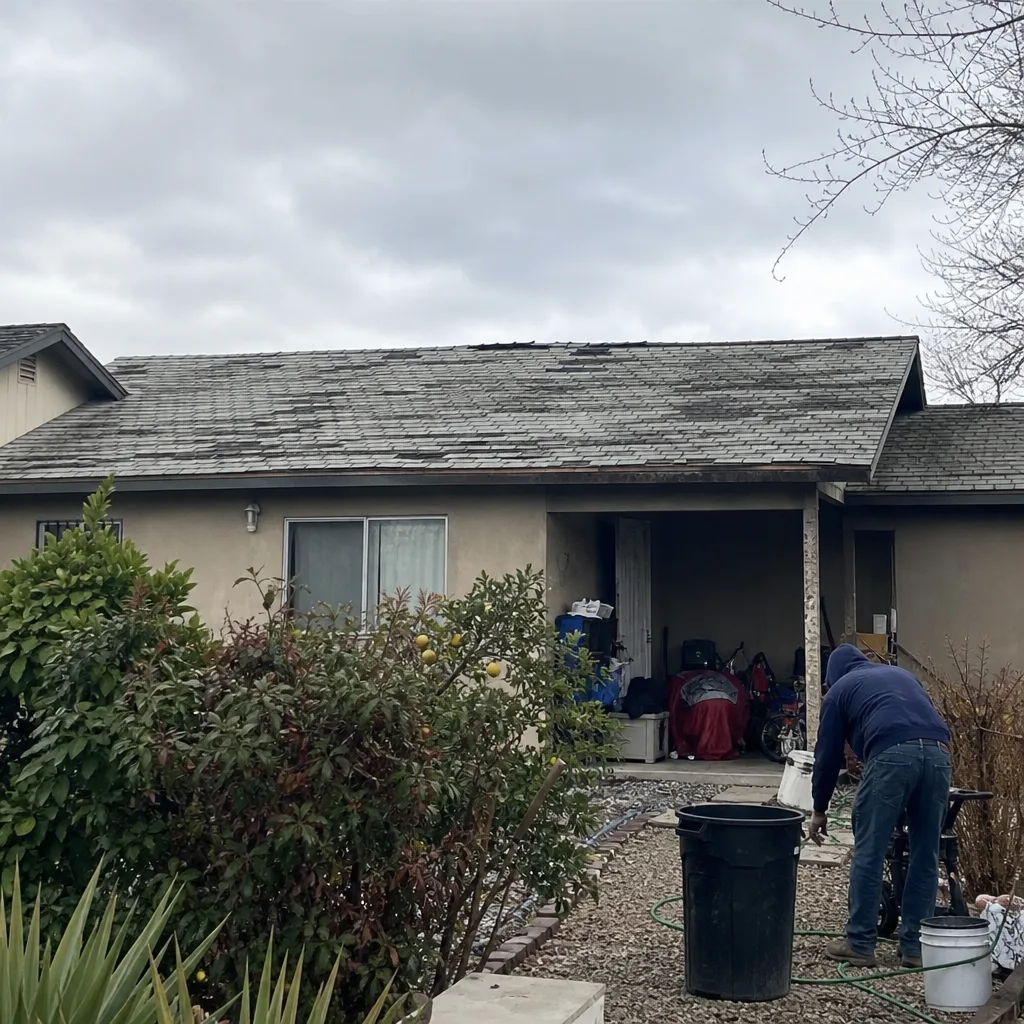 Before
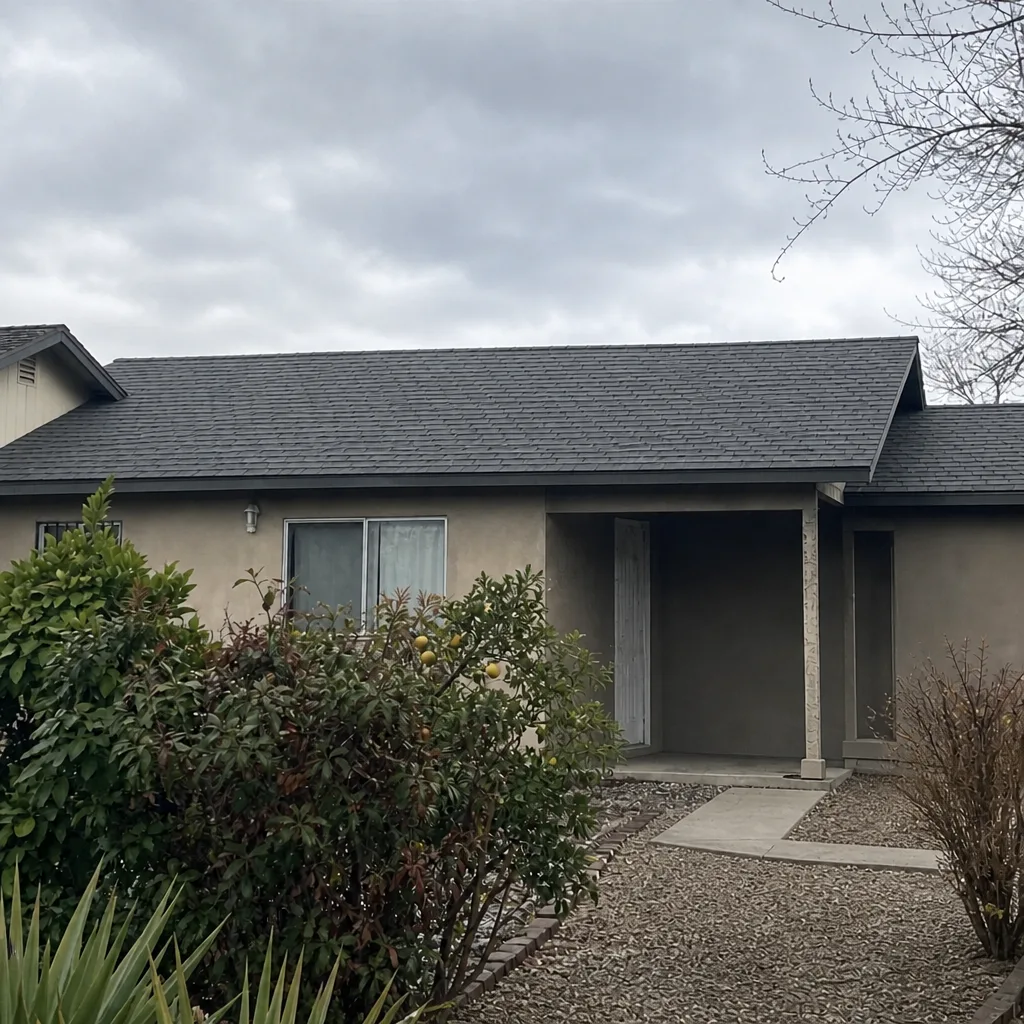 After
Repair or Replace Your Roof in Spring Valley, NV? Read the Underlayment First
Choose repair if your Spring Valley tile roof’s underlayment still has life in it and the damage is limited to a few tiles or one flashing point. Choose replacement if the felt under your tile is at end-of-life - which, on most homes built here between 1988 and 2000, it now is. The tile on a 1992 Spring Valley roof usually looks fine. The layer holding the water out underneath it is what’s failing. Call (855) 908-1590 and we’ll inspect the right layer before recommending either option.
Why the Tile Isn’t the Question in Spring Valley
Here’s the pattern we see over and over in Spring Valley. A homeowner notices a brown ring on the ceiling in a hallway, calls out a roofer, and gets a bid to replace six or eight cracked tiles. The price is modest, the work is quick, and the stain stops spreading for a season or two. Then it comes back, often two rooms over, because the felt underlayment was already cracking before the first tile gave out.
Most Spring Valley homes built in the late 1980s and 1990s went up with 20-year organic felt under concrete S-tile or flat-profile clay tile. That felt is now 25 to 35 years old. It is past rated life in any climate. In the desert it’s worse - summer surface temperatures on tile in Spring Valley routinely pass 150°F, and the daily thermal swing from that heat down to an overnight cold snap works the felt and the mastic seals constantly. UV bakes the oils out of the felt until it turns brittle and tears at the slightest movement.
Which means the honest question on a Spring Valley roof is rarely “how many tiles are broken?” It’s “how much waterproofing life is left under the tile?” That second question cannot be answered from the driveway. It can’t be answered from the ground with binoculars. It gets answered by getting on the roof and looking at the underlayment where it’s exposed - at the valleys, along the eave edges, and under any tile that’s already lifted or slipped.
What a Real Inspection Looks Like (and What to Ignore)
A photo-documented inspection is the only basis for a repair-or-replace call you can trust. At Ridgeline Roofing Co. Spring Valley, our background-checked, uniformed technicians photograph what they actually find on your roof - the exposed felt at the valleys, the condition of the flashing and mastic, the eave edge where underlayment is visible - and show you the pictures. Not a scary speech in the driveway. Not a clipboard and a number. The photos.
Our technicians have up to 10 years of experience reading exactly this kind of damage, and every inspection is backed by our written 90-Day Done Right Promise: if a repair we recommend doesn’t hold, we come back and make it right, no arguing and no paperwork runaround. That promise is what makes our repair recommendations worth something. If we tell you a repair will hold for the season, we’re willing to put that in writing.
Do You Have to Replace the Whole Roof, or Just the Underlayment?
Not always the whole roof. This is the part most Spring Valley homeowners never hear. On many tile roofs, the tile itself is intact - it’s a 50-plus-year product and often survives far past its underlayment. When that’s true, a full re-roof can mean carefully removing the existing tile, laying new synthetic underlayment, and re-laying the original tile. The tile stays. The failing layer underneath gets replaced.
Whether that works on your roof depends on how much of the tile comes up without breaking and how much flashing has to be rebuilt. It’s a real cost saving over new tile, and it’s the option we walk Spring Valley homeowners through whenever the tile inspection supports it. Call (855) 908-1590 to have us take a look at what you’re dealing with.
The Spring Valley Repair-or-Replace Cost Picture
Costs vary by roof size and geometry, and these are ranges to help you weigh the decision - not a quote. The number that matters is the ratio between them.
| Option | Typical Spring Valley Range | What It Covers |
|---|---|---|
| Tile repair, localized | $400 - $900 | A handful of tiles, one flashing point, spot mastic |
| Larger repair with flashing | $1,200 - $2,800 | Valley or penetration rework, matching tile |
| Re-lay existing tile over new synthetic underlayment | Roughly 60-75% of full replacement | New waterproof barrier, existing tile reused |
| Full replacement, new tile and underlayment | Full replacement cost (quoted on site) | New underlayment, new tile, new flashing |
Here’s the tipping point we use with Spring Valley homeowners. If the underlayment is degraded and the flashing needs work, any repair bid that climbs past 25-30% of the full re-roof cost is usually the wrong money spent on the wrong layer. Below that line, a repair can make sense - especially if the underlayment still has years left and the problem is truly localized. Above it, you’re paying to patch a waterproof barrier that’s already done.
How Your Spring Valley HOA Changes the Timeline
Spring Valley’s HOA architectural review committees control tile color and profile. A full re-roof has to be approved by the ARC before work begins. That’s a timeline most contractors from outside the area don’t plan for - and it can add weeks between decision and tear-off. Repairs to existing tile in the same color and profile generally don’t trigger ARC review.
So a homeowner sitting on the fence has an unusual variable to weigh: choosing repair now buys you time to line up ARC approval for the eventual replacement, on your schedule, rather than in a rush after a monsoon leak. We’re glad to lay that out plainly. If you’d like your repair options reviewed without pressure, our Roof Repair team can tell you exactly what we see.
Common Spring Valley Scenarios We See
- The 1994 Rhodes Ranch-area tile roof with a ceiling stain two rooms from any damaged tile. That’s a classic underlayment leak, not a tile leak. The tile is doing its job; the felt underneath has cracked.
- The low-slope patio or garage section under separate cover. These sections often have the original felt and fail before the main tile field does. Worth checking on every Spring Valley inspection.
- The first monsoon-season hail after a summer of heat. Intense UV and heat embrittle flashing and mastic; the wet season finds every seam. A repair now often prevents a much larger one in the fall.
- The home where a 1990s reroof was done with a cheap felt substitute. We’ve seen underlayment fail in half its rated life. When we’re up there, we check the actual felt, not the paperwork from 1998.
What Sets Ridgeline Apart for This Decision
We’ve served Spring Valley homeowners since 1984 and the surrounding communities for over 42 years - long enough not to be a storm-chasing outfit and long enough to have survived more than a few Vegas summers. We install authorized products from GAF, CertainTeed, Owens Corning, IKO, Atlas, Tamko, and Boral, so you get the right materials with no substitutions. And with live people answering phones around the clock, you’re never left in a callback window after a leak finds you at midnight. Full details on the company are on the home page.
FAQs
You know by what the underlayment looks like when it’s actually examined on the roof, not by how the tile looks from the street. If the felt at your valleys and eaves is cracked or brittle and your roof is from the late 1980s or 1990s, replacement (or tile re-lay over new underlayment) is usually the honest call. If the felt still has life and the damage is localized, repair makes sense. We put that judgment in writing - call (855) 908-1590 for a photo-documented inspection.
Often yes, if the underlying felt still has remaining life and the tile damage is limited. But repairing tile over dead underlayment is money spent on the wrong layer - the water will still get through. The right move is to inspect the felt first and then decide. Call (855) 908-1590 and we’ll tell you which option the photos support.
Yes, for a full re-roof, your HOA’s architectural review committee must approve the tile color and profile before work begins. Localized repairs in the same color and profile usually don’t require ARC review. Since the approval can take weeks, that timeline is worth factoring in early. Call (855) 908-1590 if you’d like your repair versus replacement options reviewed before you apply.
The tile itself often lasts 50 years or more; the underlayment beneath it does not. Original 20-year organic felt under a 1990s Spring Valley roof is far past rated life now, and desert heat above 150°F on the tile surface shortens it further. That gap between tile life and underlayment life is exactly why so many Spring Valley roofs leak without a single broken tile visible. Call (855) 908-1590 to have the underlayer checked before it leaks.
If you’d rather have it looked at, Ridgeline Roofing Co. Spring Valley offers a no-pressure assessment in Spring Valley - call (855) 908-1590. We’ll photograph what we find, show you the felt, and give you an upfront number on both options so you can decide without being sold.
Written by the team at Ridgeline Roofing Co. Spring Valley, serving Spring Valley, NV.