

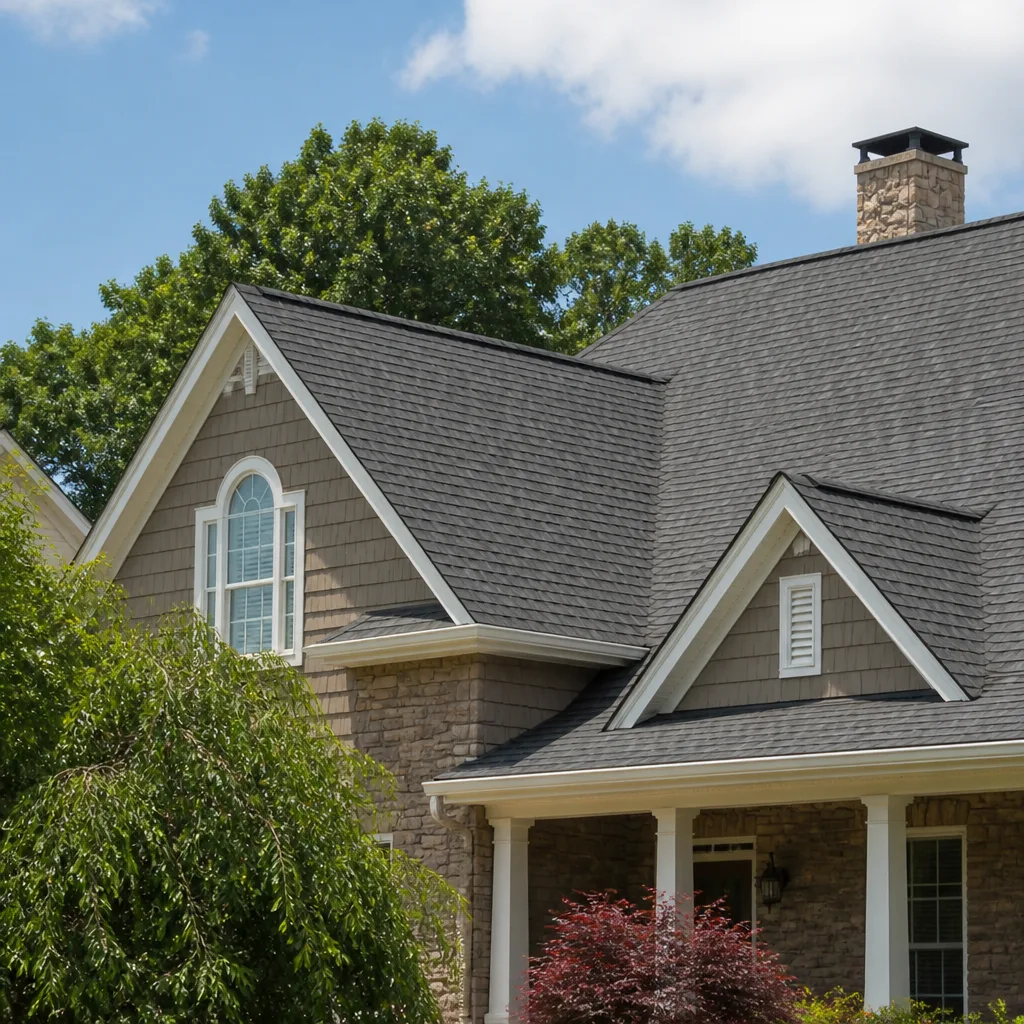
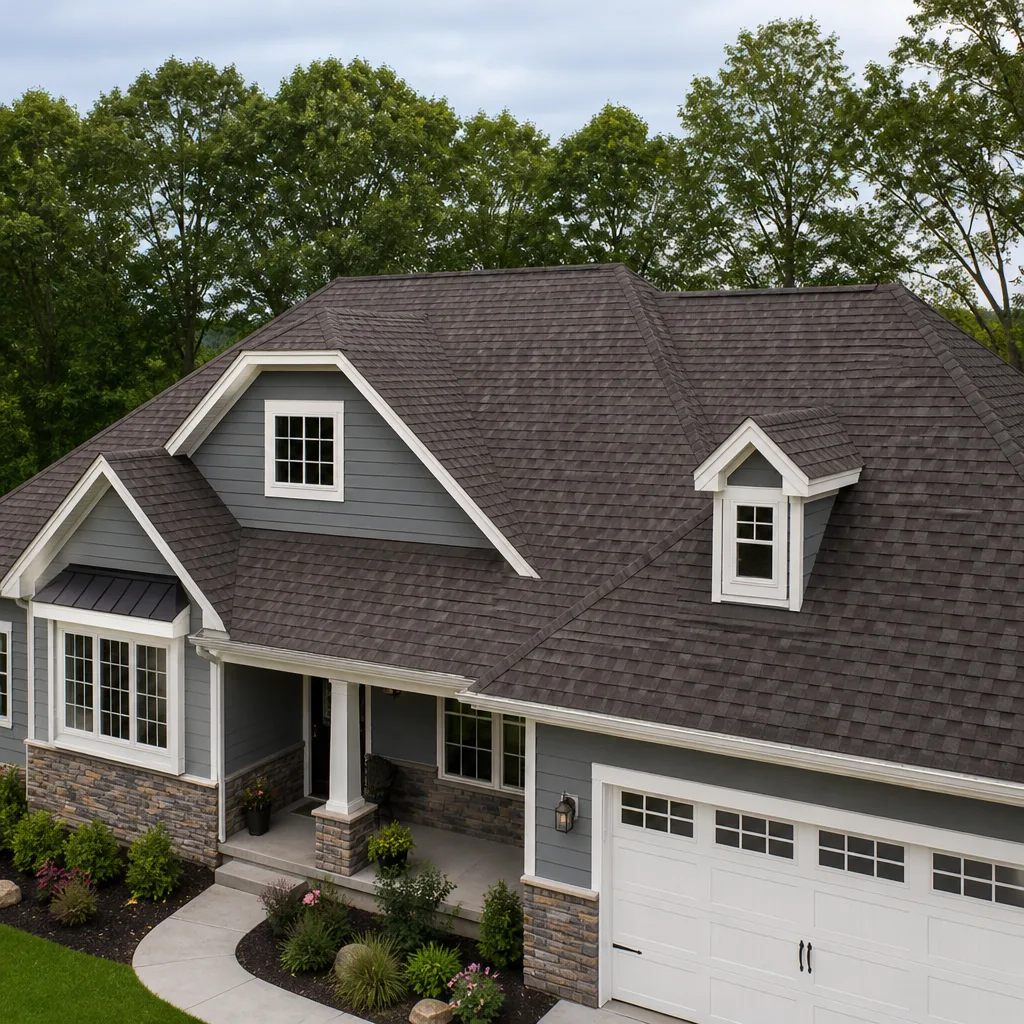
 Architectural shingles
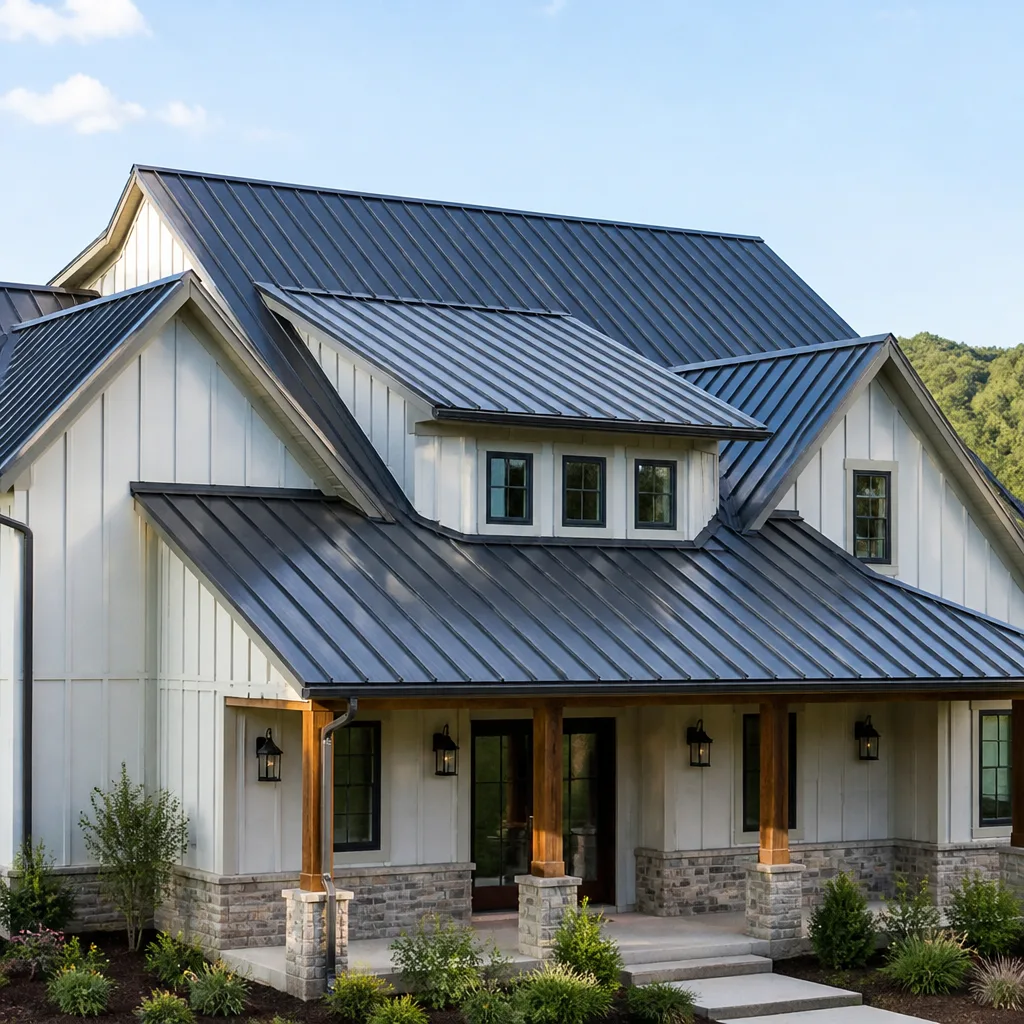 Metal roofing
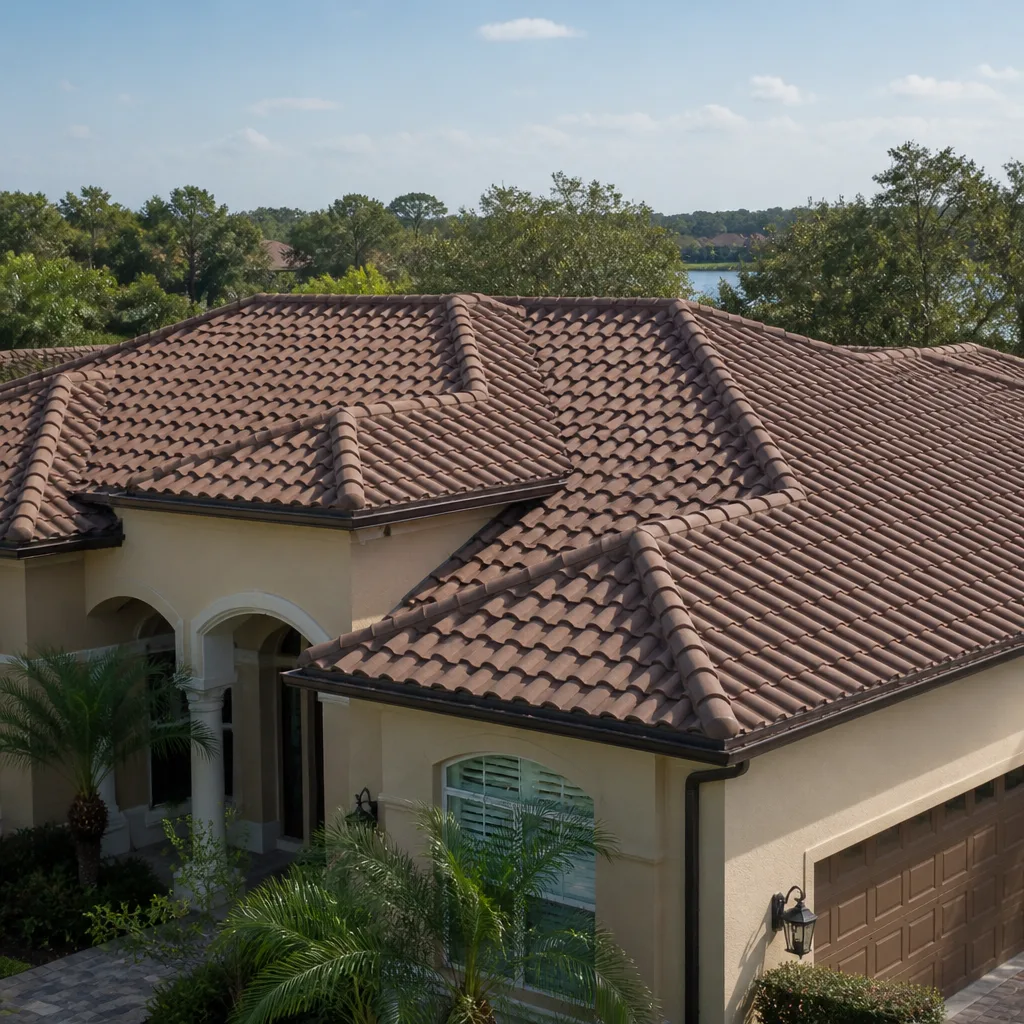 Tile roofing
 GAF
 Owens Corning
 Flat & low-slope
Free roof inspection with deck photos before we talk money - GAF and Owens Corning certified installation
Tamko Gutter Replacement: The Spring Valley Owner’s Guide
Tamko gutter replacement in Spring Valley typically runs $850 to $2,400 for a full run on a single-story home, and $1,600 to $4,200 on a two-story, including tear-off, new hangers, and proper pitch to the downspouts. We’re an independent installer, not affiliated with Tamko, and we work with the Tamko profiles that match what’s already on your fascia so the new sections line up. Most owners discover the failure the same way: a rust streak down the stucco below the seams, or runoff sheeting off one corner during a monsoon and pooling at the foundation two feet from the wall. The drip edge is usually the culprit, not the whole system, but once the profile has separated at the seams in one place it will separate in others. Get it priced before the next rain.
Which Tamko Models This Applies To
Tamko builds gutter in aluminum and steel, and the profile your home carries depends on what the original installer ran in the 1980s through the 2000s. The two you’ll see most on Spring Valley homes are the standard K-style 5-inch and the 6-inch high-capacity run, which is common on the larger single-story roofs out toward Rhodes Ranch where the downspout count is limited. Tamko also produced a fascia-style profile that some older builds used; it’s narrower and the hangers are a different spacing, so measure before you assume a 5-inch K-style replacement drops in.
To identify what you have, take three numbers: the top opening width across the trough, the depth from the back hem to the front face, and, for K-style, the profile height at the front face. The stamped mark on Tamko gutter, when it survives, is on the inside of the trough or on the hanger bracket, not on the fascia. If the label is gone, the measurements are your identification. OEM Tamko sections are available, but for most Spring Valley replacements a comparable-gauge aluminum K-style from GAF, Owens Corning, or CertainTeed does the same job at the same thickness. The decision comes down to color match and gauge, not brand loyalty: .027 aluminum is standard, .032 holds up better around the foothill wind, and Tamko’s own spec sheet will tell you which gauge the original run used.
Styles & brands we work with
- Architectural shingles
- Metal roofing
- Tile roofing
- GAF
- Owens Corning
- Flat & low-slope
Signs Your Tamko Gutter Replacement Is Failing
- Rust bleeding at the seams and hangers. The factory sealant at the end caps and joints is the first thing to go. It’s a sealer failure, not a metal failure, but once water sits in the joint the aluminum pits and the seam opens wider.
- Gutter pulling away from the fascia at one or more points. This is a hanger and spike failure, usually after a wet winter when the trough fills with ice-weighted debris. The fascia behind it may already be soft, which changes the repair from a re-hang to a fascia replacement.
- Water sheeting off a corner instead of down the downspout. That’s the drop outlet or an elbow that has separated, or a downspout clogged below the roof line where you can’t see it. On two-story runs over 20 feet, the clog is almost always in the elbow, not the run.
- Overflow at the middle of a run during heavy rain. Either the pitch has settled and water is pooling in a low spot, or the profile is undersized for the roof’s drainage area. Oversized roofs on undersized runs overflow at the seam every monsoon.
- Staining on the stucco or siding just below the drip edge. The drip edge or the gutter back hem has separated from the fascia and water is running behind the trough instead of into it. This is the one to fix first; behind-the-gutter water reaches the wall and the sheathing.
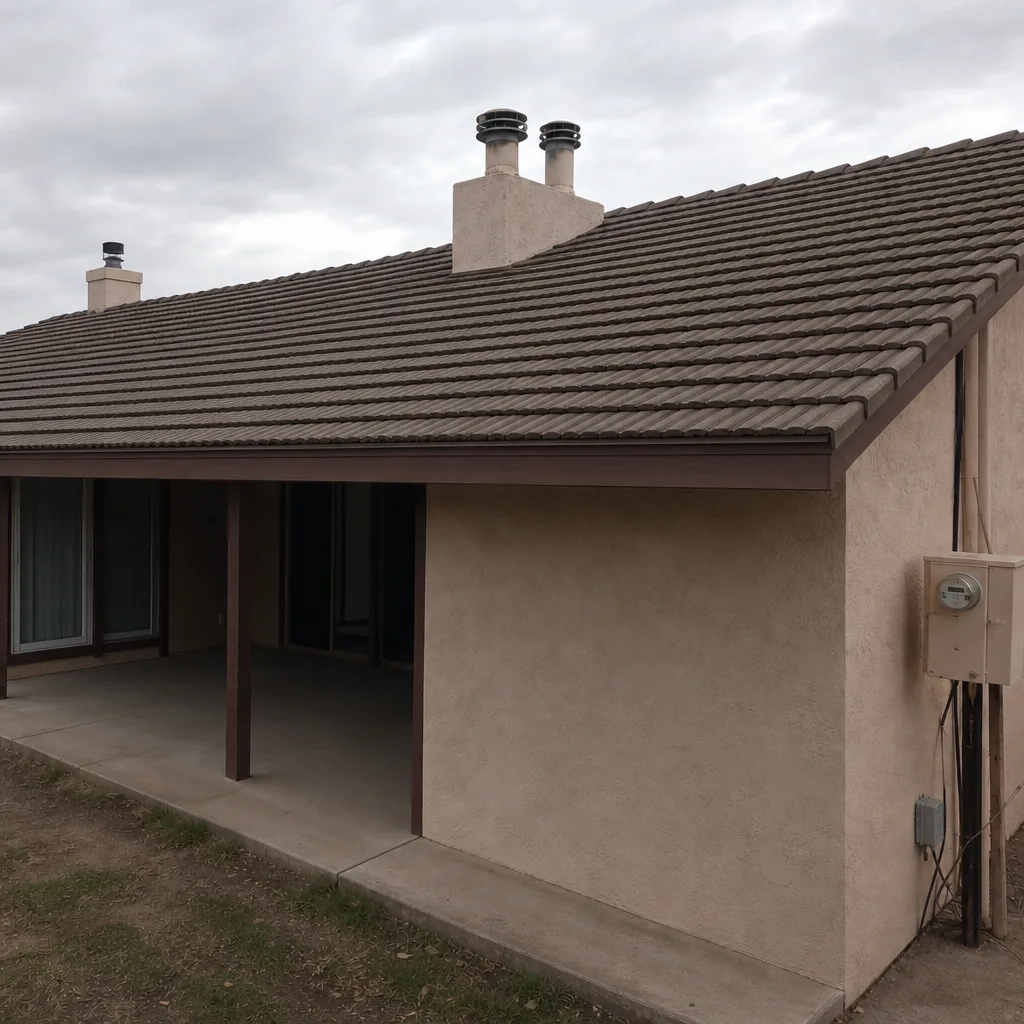
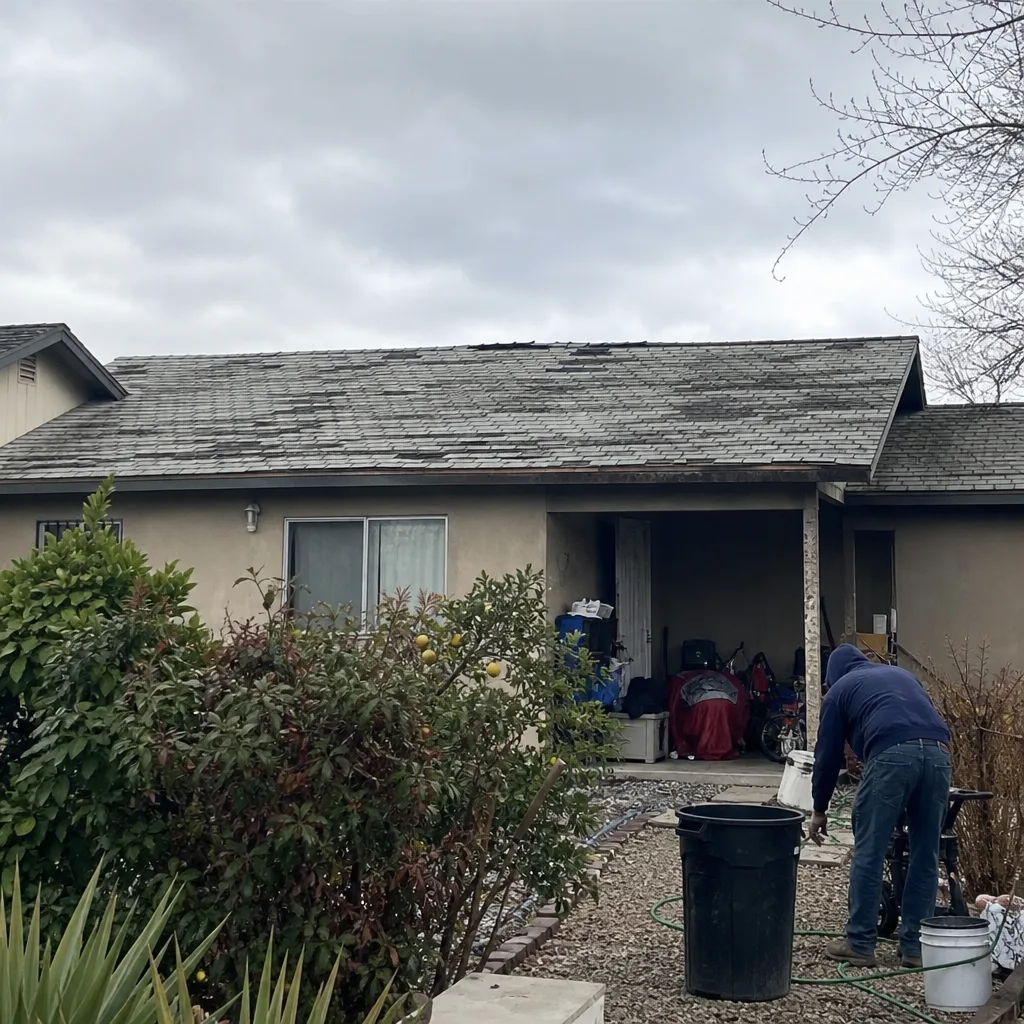
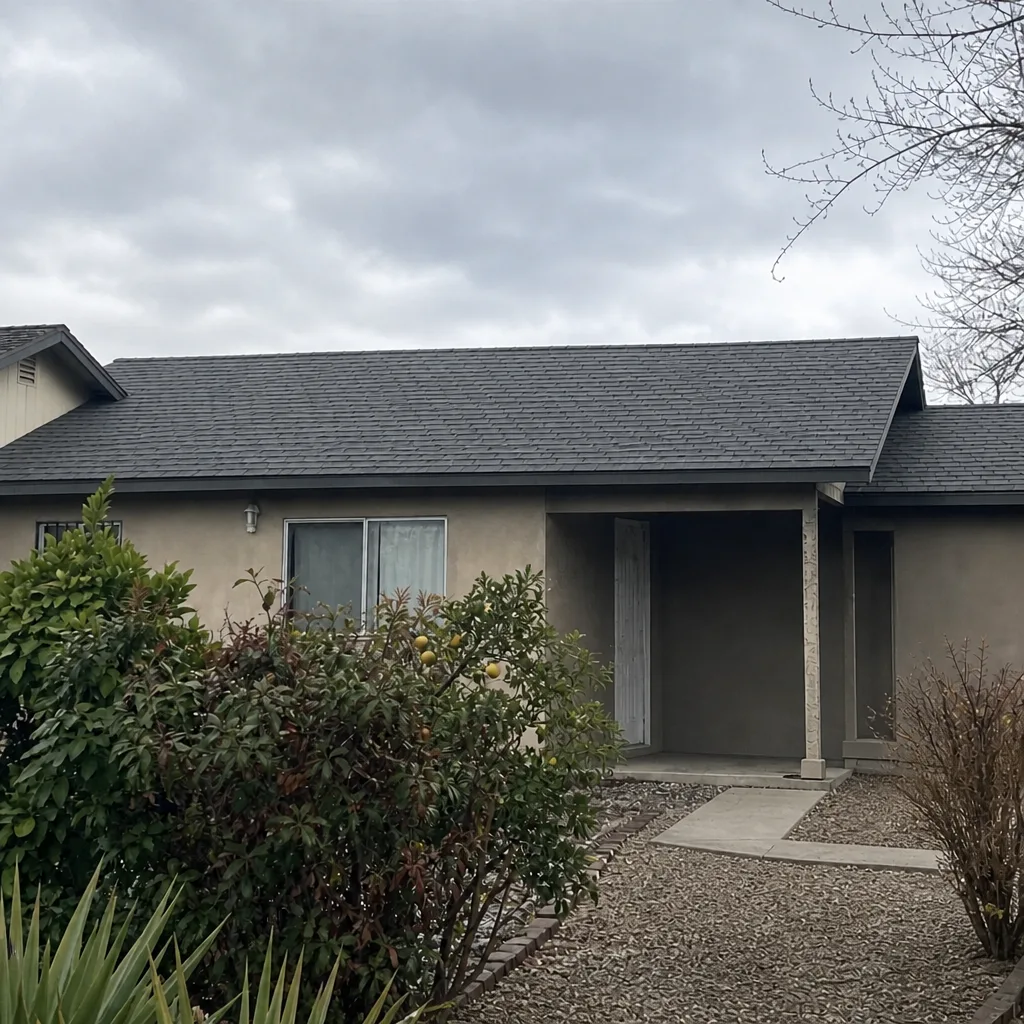
See the difference
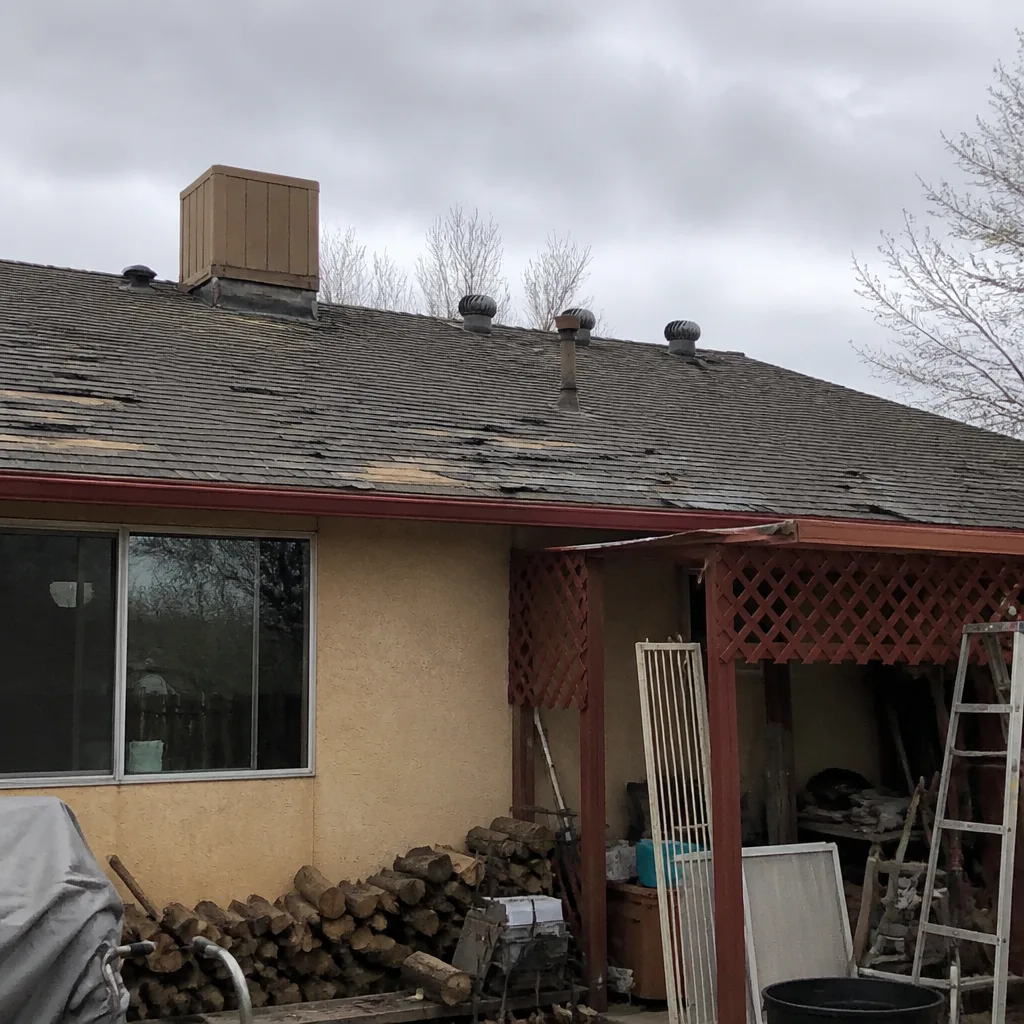 Before
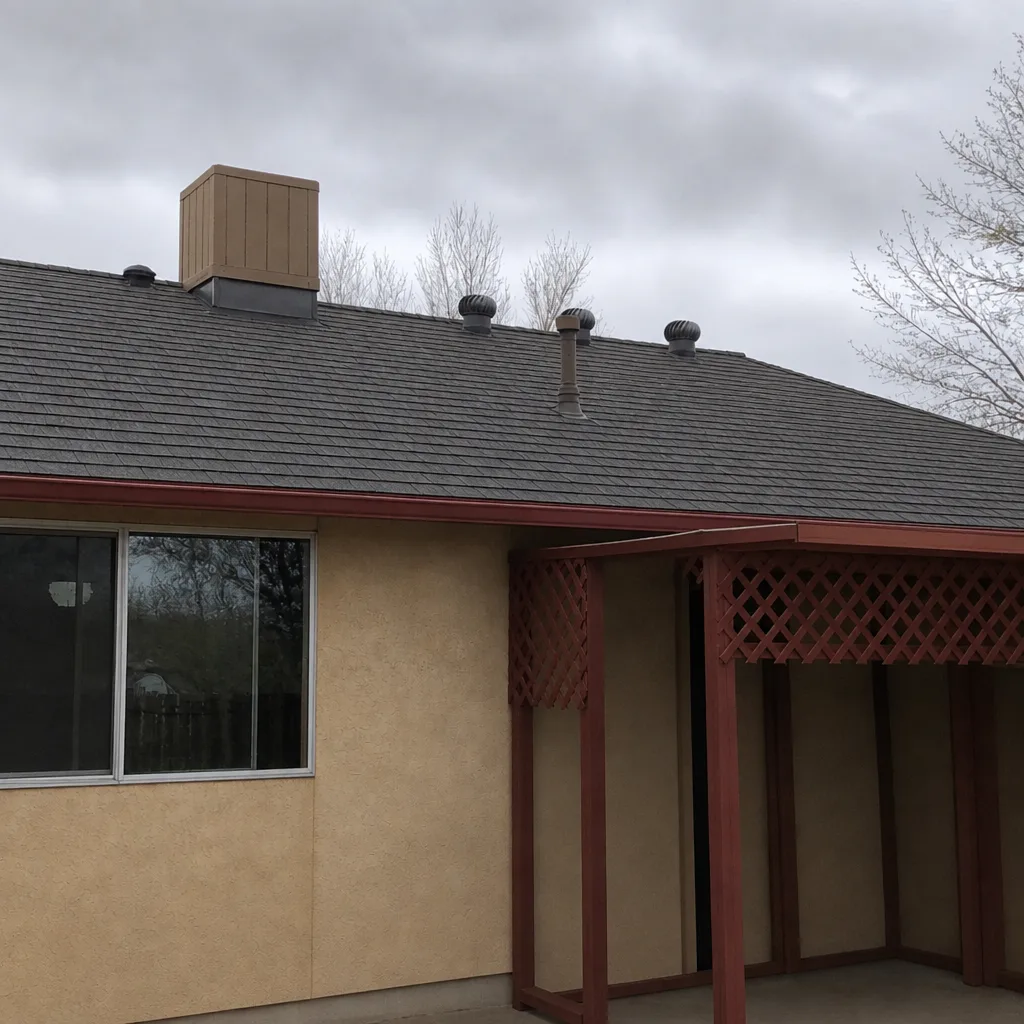 After
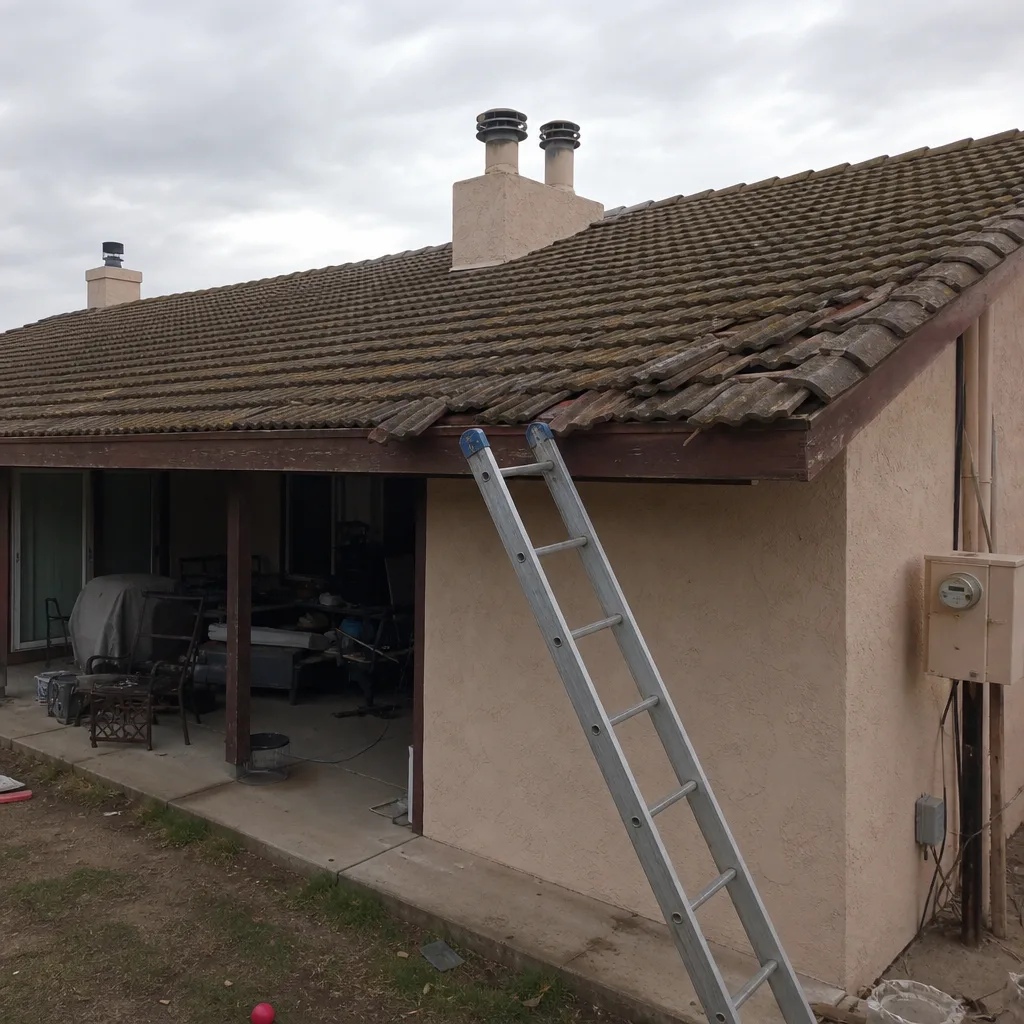 Before
 After
 Before
 After
Replacement Cost & What’s Included
For a Spring Valley home, here’s how the numbers land. A single-story run on a 1,500 to 2,000 square foot house runs $850 to $2,400 installed. A two-story run of the same footprint runs $1,600 to $4,200 because of the lift and the larger downspout count. Fascia repair, where the hangers have pulled and the wood behind is soft, adds $6 to $14 per linear foot. A downspout replacement adds $8 to $18 per foot.
What drives the range: linear footage, one story versus two, whether the fascia is sound, the gauge of aluminum you choose, and how many downspouts the roof actually needs. Our quote is line-item, not a lump number. You’ll see the gutter, the hangers, the sealant, the downspouts, and the fascia repair, each priced separately. The price on the estimate is the price on the invoice. Work is backed by our 90-Day Done Right Promise: written guarantee, no arguing, no paperwork, if it’s not right we come back and make it right. Call (855) 908-1590 and we’ll walk the run with you and quote it line by line.
DIY or Call Us?
There’s a safe check and a safe repair, and then there’s the rest. What you can do: from the ground with binoculars, look for rust at the seams, sagging at the hangers, and white staining on the stucco below the drip edge. What you can do on a ladder you can set on level ground: clear debris from the trough with a garden trowel and flush the downspout with a hose from the bottom up. That’s it. What goes wrong beyond that: re-sealing a seam on a wet or hot day, where the sealer never cures and the seam opens within a season; and the hanger replacement, which requires lifting the trough against the weight of a full run and can pull the ladder if the fascia gives. On a two-story run this is genuine fall-hazard work, and we’d tell you the same thing we tell our own apprentices: get off the ladder.
If the diagnosis is more than debris, call us. Take the photo first, then call (855) 908-1590. The estimate is free and you’ll get a straight read on what needs replacing and what doesn’t.
FAQs
Fifteen to twenty-five years is the honest range in our climate. The variable is the gauge and the sun exposure. Spring Valley sits at high elevation with intense summer UV and monsoon-driven rain, so a .027 aluminum run on a full-south-facing fascia will show sealer failure at the joints by year 12 to 15, while a shaded .032 run will last past 25. The metal itself outlasts the sealer at the seams every time.
Sometimes. A single failed seam, a separated elbow, or a pulled hanger is a repair, and we’ll tell you so. Replacing the whole run is the honest call when you have three or more seam failures, a persistent pool at the low point that pitch correction can’t fix, or behind-the-gutter water staining the stucco. Ask us for the read, and we’ll price both routes so you can see the difference. Call (855) 908-1590 for that free estimate.
A single-story run is a one-day job, and most two-story runs are one day or two. We don’t promise same-day because gutter work is planned work, not emergency work, and rushing it is how the seams fail early. What we do promise is a firm date and a live person on the phone if the schedule moves.
We measure the profile on your fascia: trough width, depth, and front-face height, then match it to a comparable-gauge K-style from Tamko or from GAF, Owens Corning, or CertainTeed. We pull a color sample from a section you can see and confirm it before the order. We don’t claim to carry parts on a truck; the material is ordered to your measurement, not pulled off the shelf, which is why the fit is right the first time.
Written by the team at Ridgeline Roofing Co. Spring Valley, serving Spring Valley and nearby areas.