
Last updated November 17, 2026
 Architectural shingles
 Metal roofing
 Tile roofing
 GAF
 Owens Corning
 Flat & low-slope
Free roof inspection with deck photos before we talk money - GAF and Owens Corning certified installation
Gutters & Accessories Troubleshooting: Common Problems and How to Fix Them
The fascia board rotting behind your gutter has probably been wet for two years. Gutters that overflow during rain events don’t announce themselves loudly. They just drain quietly against the wood every single storm, and by the time the damage shows up inside the house, the repair bill has grown by several zeroes. We’ve watched this sequence play out across Spring Valley more times than we can count: overflow first, then fascia damage, then soffit rot, then foundation moisture. The good news is that stopping it at step one costs a fraction of what step four demands. This guide teaches you to read the early signals before the water does its slow, invisible work.
Quick Answer
Most gutter problems fall into five buckets: overflow from undersized or clogged gutters, pull-away from the fascia, leaking seams on sectional runs, downspout restrictions above or below ground, and water that bypasses the gutter entirely because of a drip edge problem. Each has a distinct fix and a distinct urgency. Diagnosing which one you have before you touch anything is the difference between a $200 repair and a $4,000 fascia and soffit rebuild.
Styles & brands we work with
- Architectural shingles
- Metal roofing
- Tile roofing
- GAF
- Owens Corning
- Flat & low-slope
Table of Contents
- Overflow Diagnosis: Four Causes, Four Fixes
- Gutter Pull-Away in Spring Valley’s Heat
- Leaking Seams: Real Fix or Temporary Delay?
- Downspout Troubleshooting Above and Below Ground
- When It’s Actually a Roofline Problem: Drip Edge and Bypass
- The Damage Sequence: Why Waiting Costs More
- Common Mistakes to Avoid
- When to Call a Professional
Overflow Diagnosis: Four Causes, Four Fixes
Water spilling over the front lip of the gutter during a rain event almost always traces to one of four causes, and they don’t share the same fix. Misdiagnosing overflow is the single most expensive mistake a homeowner can make on their gutter system, because the wrong fix leaves the water running against the fascia for another season.
Start by watching the gutter during an actual rain, not after. Where is the water coming over? When does it start?
- Blockage. Water rises at the downspout outlet first, then backs up along the run. Leaves, granule shed from shingles, and spring pollen from the desert willow and olive trees common in Spring Valley yards all pack the same corners. Fix: clear the run and the downspout. Urgency: moderate; clear before the next storm.
- Downspout restriction. The gutter itself stays mostly clear but water backs up at the outlet. Often a crushed downspout elbow or a nest of debris just inside the top. Fix: pull the downspout, clear the obstruction, re-seat. Urgency: moderate.
- Improper slope. Water sits in the middle of a run and spills over in the low spot, even with a clean gutter. Common on long runs over 30 feet where the original pitch was set too flat. Fix: re-pitch the run to roughly 1/4 inch of fall per 10 feet toward the downspout. Urgency: moderate, but the fix requires a roofer or gutter specialist.
- Undersized gutters. The gutter is clean and pitched correctly but still overflows during heavy rain, especially on a large roof plane that dumps onto a single 5-inch run. Spring Valley’s monsoon bursts in July and August regularly drop an inch of rain in under an hour, and a 5-inch K-style gutter on a 60-foot roof plane simply can’t move that volume. Fix: upsize to 6-inch K-style or install a second downspout on the run. Urgency: high, because this cause repeats every storm indefinitely.
If you can’t tell which cause you’re looking at, that’s the point at which a free inspection beats more guessing. We see the undersized-gutter situation most often on Spring Valley homes built before 1995, where the original 5-inch system was sized for a smaller roof footprint than the addition or patio cover added later.
Gutter Pull-Away in Spring Valley’s Heat
A gutter that has separated from the fascia and hangs half an inch forward at the roofline isn’t just an eyesore. It’s a structural signal. Once the gutter pulls away, water drops behind the back edge and runs directly down the fascia board and into the soffit cavity. That’s the pathway to rot.
Why does it happen here? Spring Valley’s summer heat drives the aluminum gutter through real thermal expansion and contraction every single day. Aluminum expands roughly 1/8 inch per 10 feet for every 50-degree swing, and a July afternoon on a west-facing fascia can push the metal past 140 degrees before cooling overnight. On spike-and-ferrule systems, that daily cycle works the long spikes back out of the wood a fraction at a time. Over five to ten years, the spikes lose their bite and the whole run sags forward.
Spring Valley’s building stock matters too. Many homes in the older neighborhoods were built with fir fascia of a certain age, and once fir has been wet a few seasons it softens enough that a spike loses hold entirely.
The durable fix is to abandon spikes and ferrules in favor of hidden hangers screwed into the fascia. A hidden hanger is a stamped bracket that grips the inside lip of the gutter and screws into the fascia with a pair of structural screws per bracket. The standard is one hanger every 24 inches on center, with hangers set closer at gutter ends and inside corners where water volume is heaviest. That hardware doesn’t rely on a friction fit into wood that has already been wet; it relies on a screw driven into sound wood behind it.
If the fascia is already soft when the hangers go up, the fascia has to be replaced first. Hangers screwed into rotted wood fail in a single season, and that’s money thrown at the wrong layer of the problem. This is exactly the kind of sequential work a good inspection catches before the crew shows up: Roof Repair in Spring Valley and gutter re-attachment belong in the same conversation whenever the fascia is suspect.
Leaking Seams: Real Fix or Temporary Delay?
A leaking seam drips at the joint between two sections of sectional gutter. You’ll see a stain on the fascia below the seam, or a wet band on the gutter face itself after rain. The question every homeowner asks is whether a fresh bead of sealant is a real fix.
Honest answer: sometimes, but rarely with the permanence people hope for.
Seams on sectional gutters fail for three reasons. First, the sections were joined dry with a slip joint that relied on caulk as the only water barrier. That caulk is asked to flex with the aluminum through every temperature cycle in a Spring Valley year – over 100 degrees in July and near freezing on a January night – and after a few seasons the bond gives. Second, the seam has been flexed by a sagging hanger upstream, so the joint opens and closes with every gust. Third, the original installer used a sealant not rated for aluminum and the weather stripped it within two years.
You have two real paths:
- Re-caulk with a proper gutter sealant. A high-grade tripolymer or polyurethane gutter sealant, applied to a dry, cleaned seam, will hold three to five years if the sections themselves aren’t moving. That is a legitimate repair if the hangers upstream are sound. It is also a temporary stop – expect to revisit it.
- Replace with a seamless run. A seamless gutter is extruded at the property in a single continuous length from one corner to the next, eliminating all seams except at inside and outside corners. That is the only permanent fix for seam leakage. Most homeowners who are facing more than two or three failed seams on the same side of the house are better served by a seamless replacement than by playing whack-a-mole with sealant every three years.
The one thing we’d caution against is the “patch with whatever’s in the garage” approach. Silicone caulk on an aluminum gutter seam looks tidy the day it goes on and fails through the first hard cold snap. It also makes the eventual re-seal harder because the old silicone has to be stripped before new sealant will bond.
Downspout Troubleshooting Above and Below Ground
Downspout problems separate into two categories: what’s blocking the pipe above ground and what’s failing in the buried drain line below it. Both show the same symptom at the top of the spout – water backing up and spilling over the gutter above the outlet – but the fix is entirely different, and one of them is a genuine excavation job.
Above-ground blockage is the common, cheap case. Signs:
- Water spilling over the gutter back edge directly above the downspout
- A visible leaf mat or shingle granule pile at the top of the spout
- Downspout elbow packed solid with debris
- Ant nests or wasp nests in the top run
Clearing the top elbow and running a plumber’s snake or a garden hose from the top usually resolves it.
Underground drain line failure is the expensive case, and it announces itself at the surface in one of four telltale ways:
- A wet patch, sinkhole, or greenest-and-fullest patch of grass in the yard along the downspout’s path, especially in dry weather – the classic sign of a buried line that’s cracked and dumping water at that point.
- Water flowing back out of the downspout at the top even after you’ve cleared it – meaning the line is blocked somewhere below grade.
- Water pooling against the foundation right at the outlet end, where the line is supposed to discharge away from the house.
- Foundation cracks or efflorescence on the stem wall on the same side of the house as the downspout, indicating long-term moisture.
Underground lines fail from tree root intrusion, joint separation between sections, or freeze cracks. Some of them can be rodded out or jetted; many of them, especially on older Spring Valley properties with clay drain tile, need to be dug up and replaced with solid PVC. In either case, don’t ignore the four signs above – a buried line dumping water at the foundation is the direct path to the fourth stage of the damage sequence, foundation moisture, and that’s a repair far more costly than the drain line.
When It’s Actually a Roofline Problem: Drip Edge and Bypass
Sometimes the gutter is fine. It’s clean, it’s pitched, it’s hung tight, and it still lets water behind it. When that happens, the problem is almost always at the roofline, and the most common culprit is the drip edge.
Drip edge is the metal flashing at the roof’s eave that lifts the last shingle up and directs water past the fascia and into the gutter. If it’s missing, undersized, or installed with the wrong overlap, water can slip behind the gutter rather than into it. You’ll see water staining on the fascia board above and behind the gutter’s back edge, a streaked fascia, or a wet soffit directly under the gutter at the roofline. In heavy wind-driven rain on a Spring Valley monsoon afternoon, that bypass can add hundreds of gallons of water against the fascia over a single season.
Diagnosing drip edge from the ground is difficult, and this is one of the cases where the honest answer is that you need eyes on the eave. A proper inspection from the roof surface – photo-documented, from the actual roof, not pointed from the driveway – will show whether the drip edge is present, whether it’s been pushed back by thermal movement, and whether the last course of shingles overhangs enough to shed cleanly into the gutter.
A related roofline cause of bypass: an overhanging tree limb or a screen of climbing vines along the fascia, causing water to track sideways across the shingles and past the eave. Less common, but we’ve seen it in older Spring Valley yards where olive and ficus plantings come within a few feet of the roofline.
If your gutter problem is really a roofline problem, the fix usually lives in roof flashing, not gutter work. Knowing which trade you actually need is the fastest way to avoid being sold the wrong repair. Our broader guide to Specialty Roofing in Spring Valley covers drip edge, flashing, and eave detailing in more depth.
The Damage Sequence: Why Waiting Costs More
This is the core of the thesis of this whole guide, and it’s the thing we most wish more homeowners understood before they call us. Gutter damage is not one event. It is a sequence, and each stage in the sequence costs significantly more than the one before it.
Stage one: overflow. Water runs over the gutter front or back and against the fascia board. Cost to fix (clear the gutter, re-pitch, upsize): modest. Cost if ignored: zero today, but the clock starts.
Stage two: fascia damage. The fascia board stays wet through the rainy season and dries slowly through summer. The paint lifts and the wood fibers soften. A soft fascia no longer holds a gutter spike, and the gutter sags, which makes the overflow worse. Cost to fix (replace fascia section, re-hang gutter): several times stage one.
Stage three: soffit rot. Water wicks up into the soffit cavity behind the fascia. The soffit panel softens, the horizontal framing behind it starts to rot, and if it goes far enough, the water enters the attic. Cost to fix (soffit replacement, framing repair, possible attic moisture remediation): several times stage two.
Stage four: foundation moisture. Water that never gets routed away from the house finds the foundation. You’ll see foundation cracks, a signal that the soil has expanded and contracted through a wet-dry cycle, and possibly interior moisture issues. Cost to fix: foundation repair is the expensive tier, and no gutter contractor can solve it after the fact.
The whole sequence takes two to five years to run in Spring Valley’s climate, which is exactly the timescale on which homeowners ignore it. The fascia behind your gutter can be wet for two years and never drip inside the house once. That’s why the damage stays invisible: gutters don’t fail in a day, they fail across seasons. Catching it at stage one is the difference between a modest repair and a full-wall rebuild.
Common Mistakes to Avoid
- Treating every overflow as a clog. If the gutter looks clean and still overflows, the cause is slope, size, or downspout restriction. Clearing a clean gutter solves nothing.
- Hanging a new gutter onto soft fascia. A hidden hanger screwed into rotted wood pulls out in a single season. Replace the fascia first; the gutter hangs last.
- Sealing a leaking seam without checking the hangers upstream. A seam that’s flexing because of a sag upstream will fail again in a year, no matter how good the sealant.
- Assuming underground downspout failures are someone else’s problem. The signs – a wet patch in dry weather, a sinkhole, water pooling at the foundation – mean a buried line is dumping water at the wrong place. This one gets more expensive every season you ignore it.
- Adding a splash block on top of a buried drain line. If the drain line is failing, a splash block doesn’t fix the leak; it just hides the surface evidence and lets the water reach the foundation anyway.
- Cleaning gutters from the roof edge on a two-story house. We’ve seen more injuries from gutter cleaning ladders than from any other home maintenance task. Lean a ladder against the gutter and you’re leaning against a hinge; use a ladder stabilizer and stay off the roof surface unless you know what you’re doing.
- Ignoring drip edge because the gutter “looks fine.” Water bypassing the gutter at the roofline does the same fascia damage as an overflow, only quieter. If the fascia is stained above and behind the gutter, stop blaming the gutter.
When to Call a Professional
Some gutter problems genuinely belong in the homeowner’s hands: clearing a downspout, reseating a splash block, hosing a buried line to check the outlet. But four situations should get a call to a professional before you touch a ladder.
Call a professional when the gutter has pulled away from the fascia by more than a quarter inch, when the fascia behind the gutter is soft to a screwdriver probe, when a buried downspout is showing the underground-failure signs (wet patch, sinkhole, foundation staining), or when the overflow can’t be traced to a simple clog. All four are the situations where the wrong fix costs more than the right one. Add to that any house with a roof pitch above 6/12 or a two-story elevation, where ladder work is genuinely dangerous. Ridgeline Roofing Co. Spring Valley offers free estimates in Spring Valley – call (855) 908-1590 and we’ll send a background-checked, uniformed technician who photo-documents what’s actually happening at the roofline, not a sales speech in the driveway.
See the difference
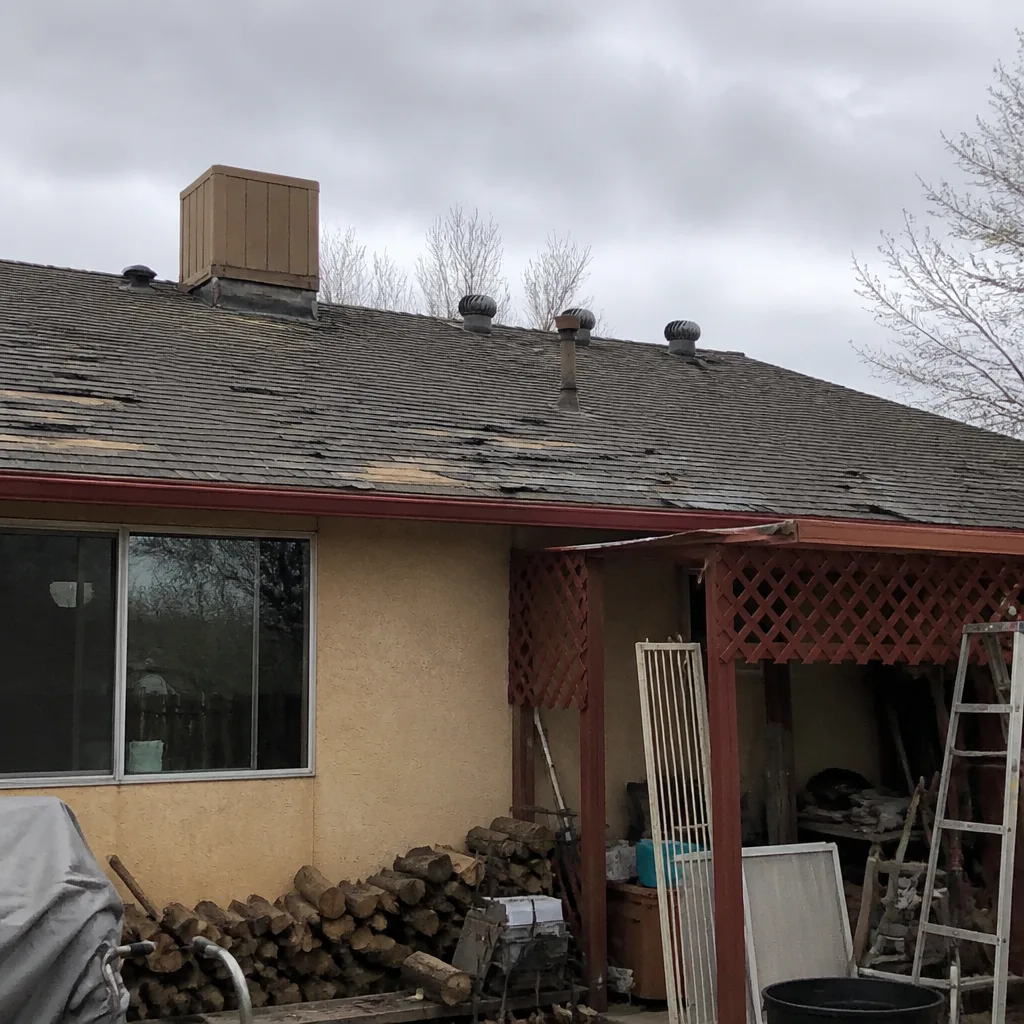 Before
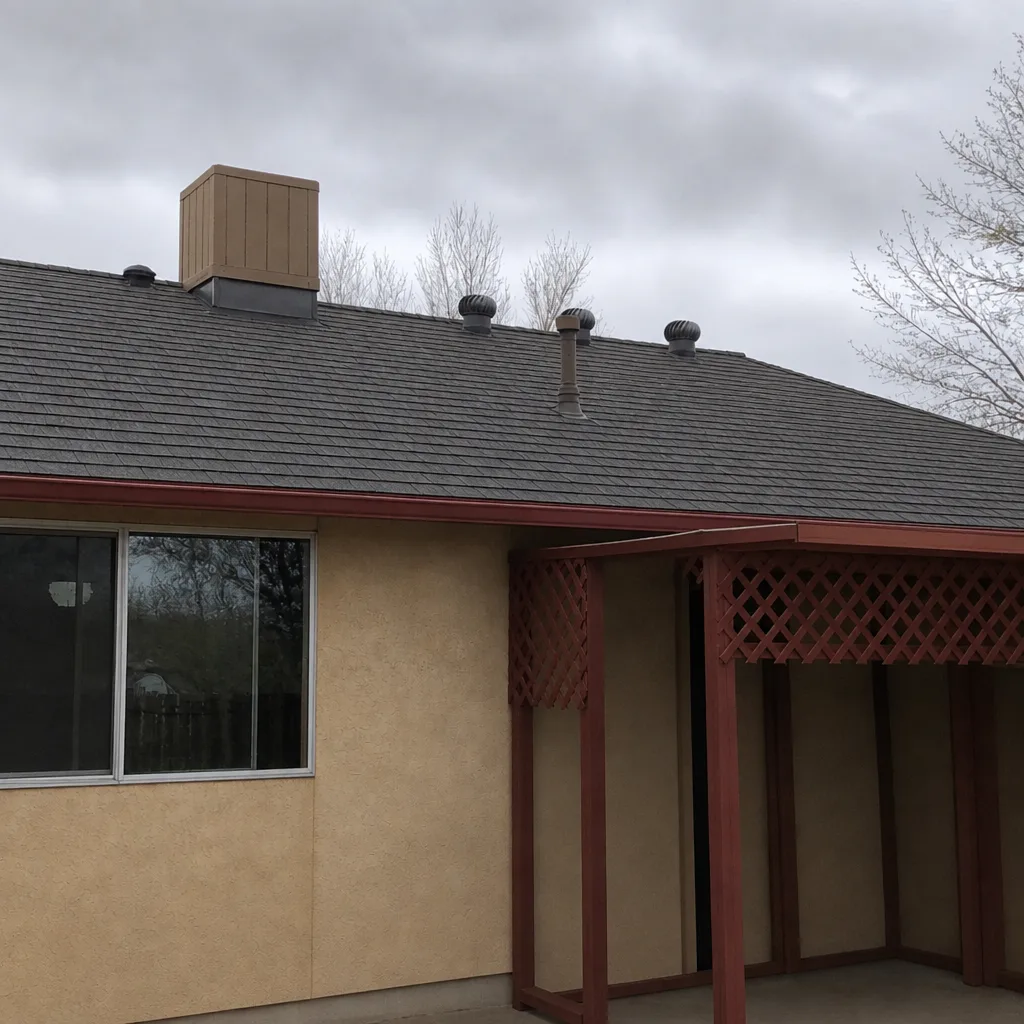 After
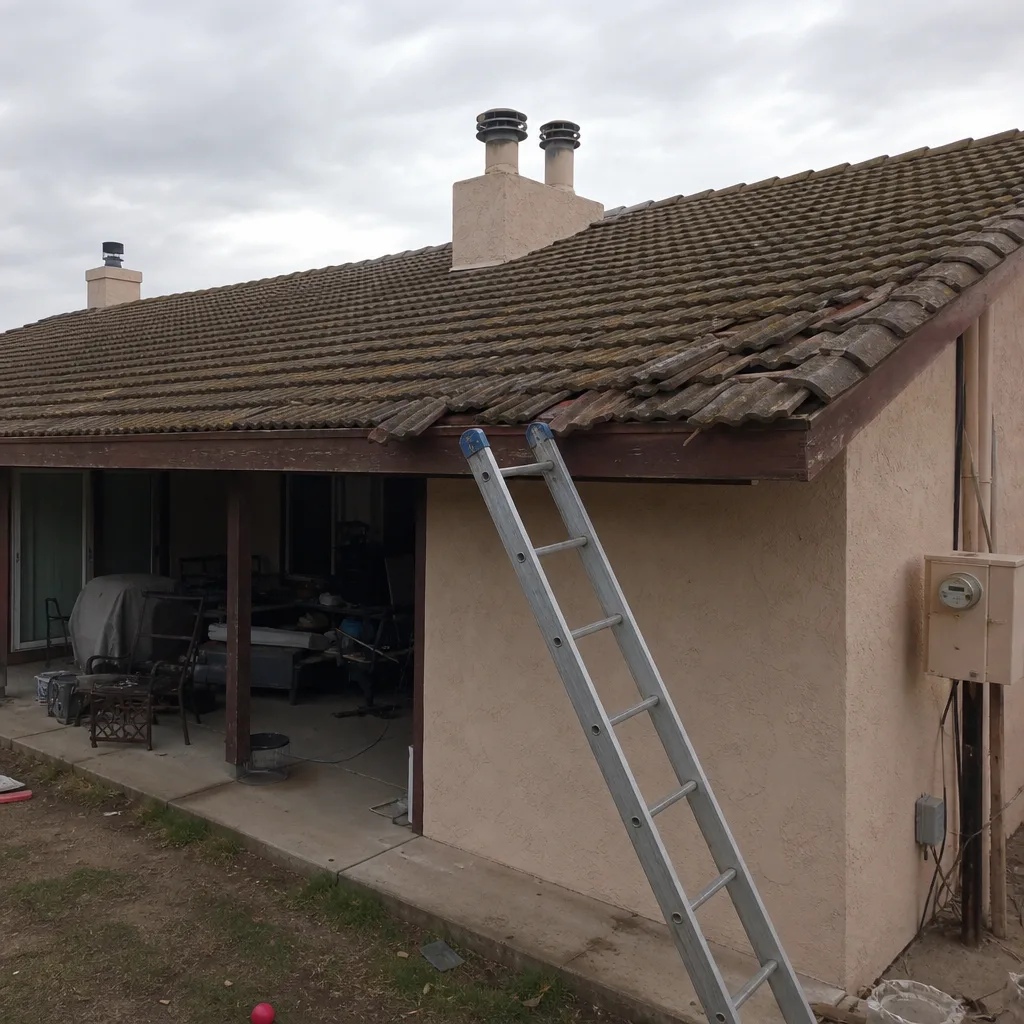 Before
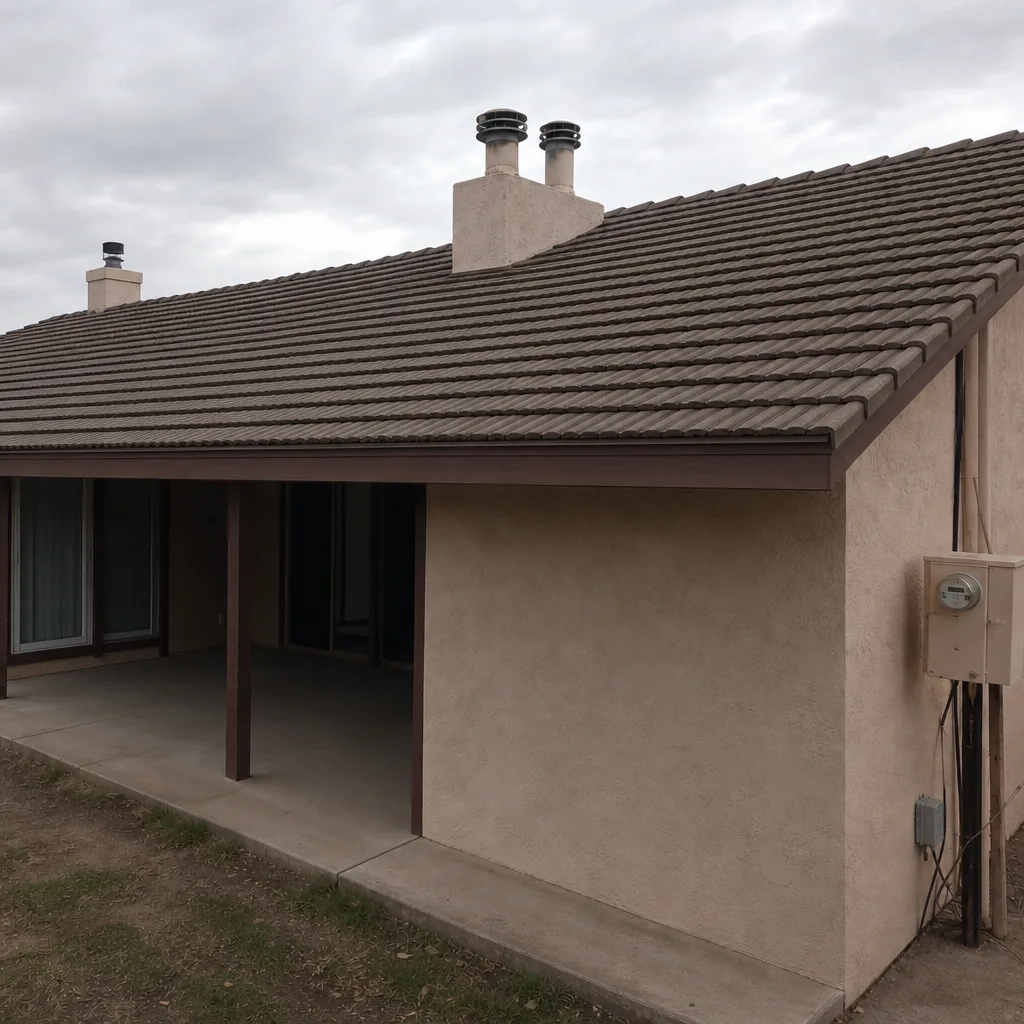 After
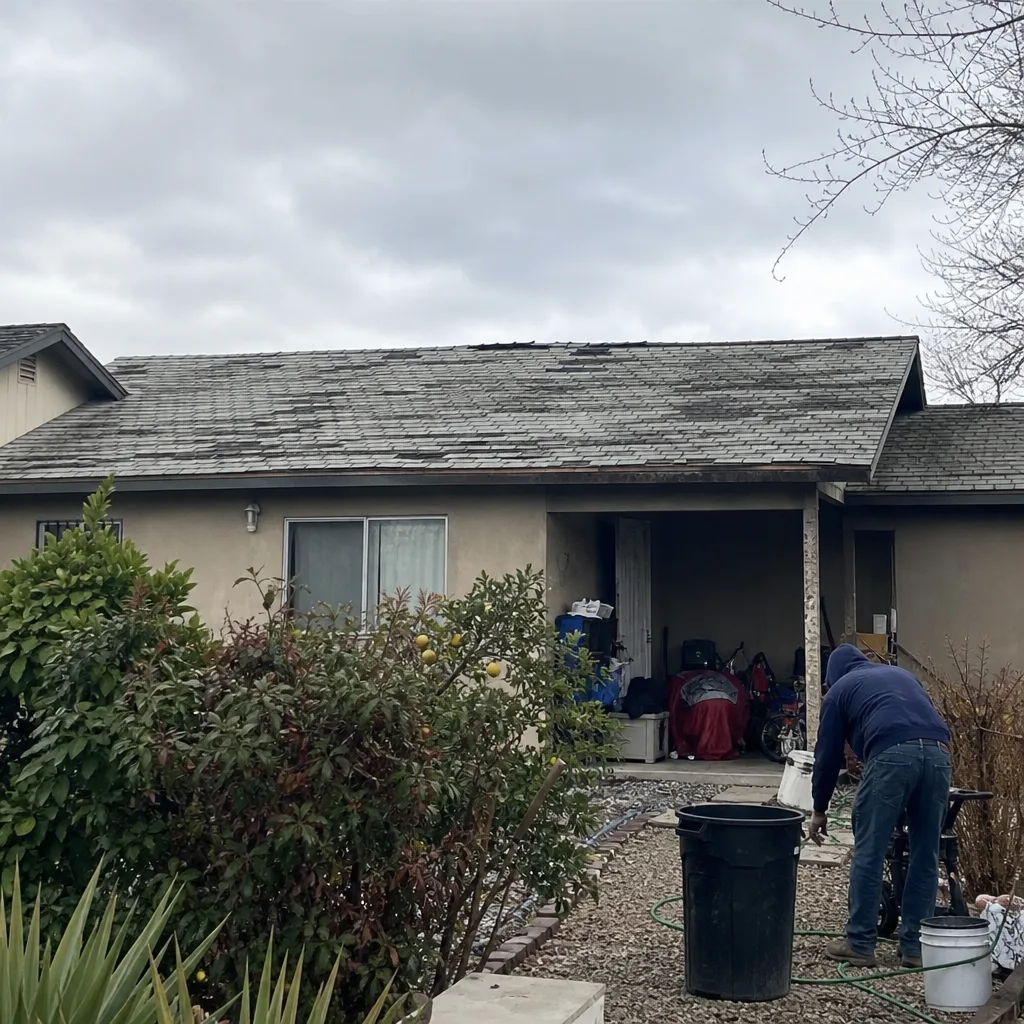 Before
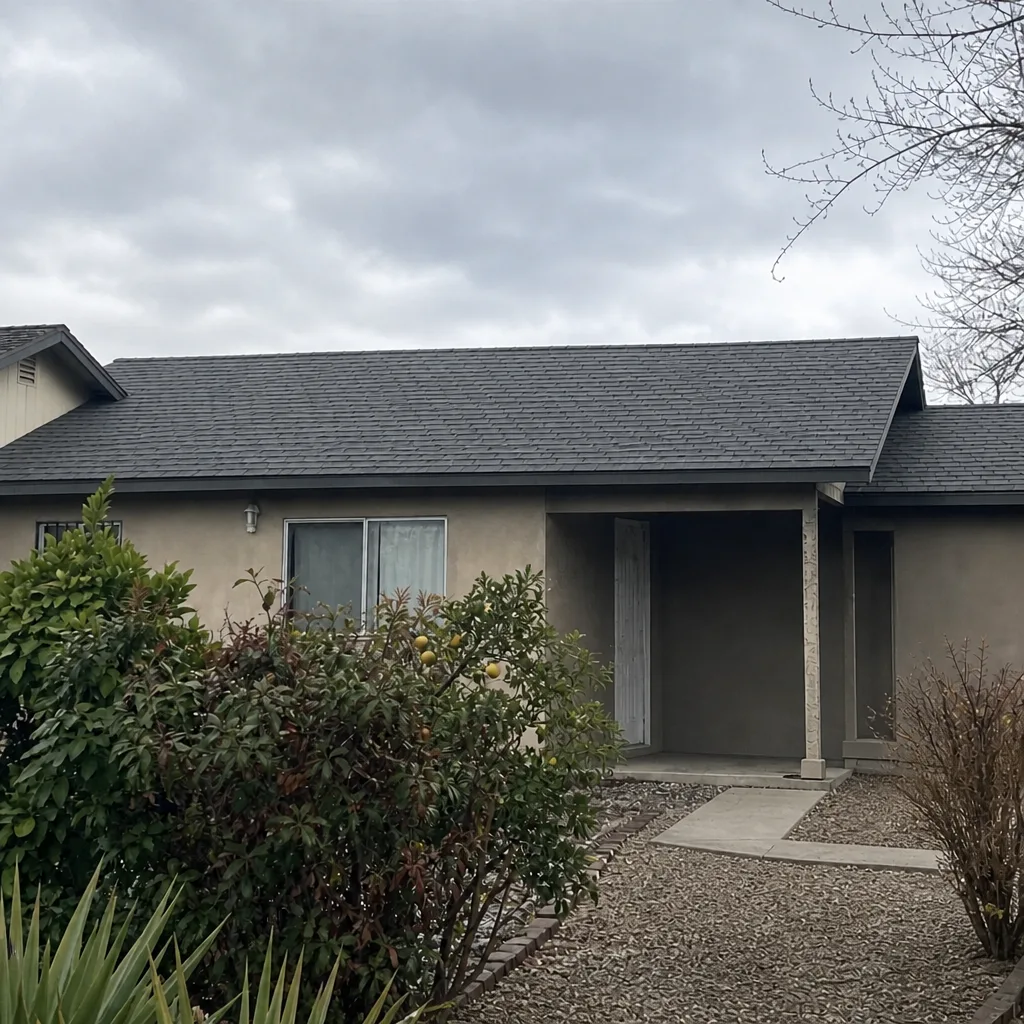 After
Frequently Asked Questions
A clean gutter that overflows is almost always undersized for its roof plane, is pitched wrong, or has a downspout restriction below the outlet. In Spring Valley, the July and August monsoon bursts regularly exceed the capacity of a 5-inch K-style gutter on a large roof, particularly on homes built before the 1990s. Call (855) 908-1590 for a free inspection – estimating the fix from the ground is where most guesses go wrong.
Common gutter repairs run from modest to moderate depending on scope: re-hanging a pulled section is the low end, replacing run section with hidden hangers is middle, and a full seamless replacement of a long run is the upper end. The number that matters most is what generated the damage: a $200 overflow fix beats a $4,000 fascia and soffit rebuild every time. Call (855) 908-1590 for a written, line-item estimate at no charge.
Yes, when the hangers upstream are sound and you use a proper tripolymer or polyurethane gutter sealant on dry, clean aluminum. Expect three to five years from a good re-seal. If the seam keeps leaking after that, or if you have three or more failed seams on the same side of the house, a seamless replacement is the more durable path.
Look for a wet patch, sinkhole, or the fullest patch of grass in the yard along the downspout’s path, especially in dry weather. Add to that water flowing back out of the top of the downspout after you’ve cleared it, water pooling against the foundation at the outlet, and foundation stains on the same side. Any one of those is worth a professional look – the fix ranges from rodding to excavation and replacement.
Spring Valley’s thermal swing works the long spikes of a spike-and-ferrule system out of the wood a fraction with every daily temperature cycle. Over five to ten years, the spikes lose their hold. The durable fix is hidden hangers screwed into sound fascia on 24-inch centers – but the fascia has to be sound first, which is why a proper inspection matters before the crew shows up.
Yes, and it’s the most commonly missed diagnosis. If drip edge is missing, undersized, or has been pushed back by the shingles, water bypasses the gutter entirely and runs behind it onto the fascia. You’ll see staining on the fascia above and behind the gutter’s back edge rather than at the joint. That repair belongs in roof flashing, not gutter work. Call (855) 908-1590 for an inspection that can tell the two apart.
The Bottom Line
Gutters don’t fail in a day. They fail across seasons, and the damage sequence runs overflow, fascia, soffit, foundation – with each stage costing significantly more than the one before. The homeowners who come out ahead are the ones who read overflow as information, not as background noise. Call us before the fascia is soft, and you’ll spend a fraction of what you would have at step four. Call us after, and we’ll still make it right. Every job is backed by our 90-Day Done Right Promise: written guarantee, no arguing, no paperwork. That’s not a slogan; it’s what we’ll answer to. We’ve installed GAF and CertainTeed systems on homes across Spring Valley for years, and we’ll still be here when the next storm comes through. Call (855) 908-1590 to schedule your free estimate.
Explore our other Spring Valley roofing resources: Ridgeline Roofing Co. Spring Valley home, Roof Replacement & Installation in Spring Valley, and our complete specialty work at Specialty Roofing in Spring Valley.
Written by the team at Ridgeline Roofing Co. Spring Valley.