
Last updated November 17, 2026
 Metal roofing
 Architectural shingles
 Tile roofing
 GAF
 Owens Corning
 Flat & low-slope
Free roof inspection with deck photos before we talk money - GAF and Owens Corning certified installation
Specialty Roofing Troubleshooting: Common Problems and How to Fix Them
While writing this guide, we set out to describe what specialty roofing troubleshooting looks like from a journeyman’s perspective. The homeowner patching a bubbled TPO membrane on a Spring Valley flat roof has spent money to delay a larger repair, not stop it. The moisture trapped beneath that membrane is still there, still working its way through the insulation and into the deck. We’ve climbed thousands of tile, metal, and flat roofs across Spring Valley and the surrounding valley, and the pattern is consistent: the repair almost always targets the wrong source. What follows is how to tell the actual source from the symptom on each specialty system, what these roofs do in Spring Valley’s heat and dust, and when the “small problem” is really an installation defect that has been quietly failing for years.
Quick Answer
Troubleshooting a specialty roof means identifying the system first (tile, metal, or low-slope membrane), then tracing the failure to its real source. Cracked field tiles are usually cosmetic; failed mortar hips and ridges are structural. On flat roofs, the water entry point and the ceiling stain are rarely in the same place, so you trace uphill. On metal roofs, fastener leaks and panel-seam leaks have entirely different causes, and caulk is the wrong fix for both.
Styles & brands we work with
- Architectural shingles
- Metal roofing
- Tile roofing
- GAF
- Owens Corning
- Flat & low-slope
Table of Contents
- Why Specialty Roofs Fail Differently Than Shingles
- Tile Roofs: Cracked Field Tile vs. Failed Mortar Hips
- Flat Roofs: Finding the Real Leak Source
- Metal Roofs: Fasteners, Seams, and Why Caulk Fails
- How Spring Valley Dust and Debris Accelerate Failures
- When a “Small Problem” Signals an Installation Defect
- Common Mistakes to Avoid
- When to Call a Professional
Why Specialty Roofs Fail Differently Than Asphalt Shingles
Diagnostic logic for tile, metal, and flat roofs works differently than for a standard asphalt shingle roof, and it starts with understanding that these systems dry out, move, and shed water in their own ways.
With your standard three-tab or architectural shingle, we install a continuous underlayment and overlapping rows. Water sheds off the surface, the shingles take the sun, and the underlayment is the backup. When a shingle roof leaks, the source is usually within a few feet above the stain. Specialty systems don’t give you that convenience.
A tile roof is a series of overlapping pieces over an underlayment, like shingles, but each tile is rigid, which means it cracks instead of tearing. The underlayment below does the actual waterproofing, so a leak can travel far from the visible damage. A metal roof expands and contracts in full sun and cools sharply at night, and that movement works on every fastener and seam. A flat or low-slope roof doesn’t shed water quickly at all; it relies on membrane integrity and correct slope, so water sits and finds the smallest path.
Spring Valley’s climate affects all three. Summer highs push 105 degrees, and night cooling swings dramatically. Dust blows in from open ground, and monsoon rain arrives hard and fast. Our technicians have up to 10 years of experience across these systems, and the one thing that experience teaches is the same on every roof: misidentify the system, and you fix the symptom.
Tile Roofs: Telling a Cracked Field Tile From a Failed Mortar Hip
A cracked field tile is cosmetic and easy to replace. A failed mortar hip or ridge is a structural issue with an urgent leak risk, and a homeowner looking up from the driveway literally cannot tell the two apart because both show a break or a gap in the same course of tile.
Here’s the distinction. Field tiles cover the broad flat runs of the roof. When one cracks, water can still shed off the underlayment below, and a single tile replacement is generally a minor, low-cost fix. Hips and ridges are where two roof planes meet. On most tile roofs in Spring Valley, those lines are set in mortar applied over a ridge board, and that mortar is what keeps the underlayment underneath sealed at the most vulnerable joint on the roof.
Mortar cracks with thermal movement. Spring Valley’s daily temperature swing is hard on it, and eventually mortar separates from the tile or the brick, leaving an open channel straight down into the roof. That’s not cosmetic. It’s an active leak risk.
How to tell them apart from the ground:
- Look for lines of cracking: mortar failure usually shows as cracking along the whole hip or ridge line, not one odd break.
- Look for sagging: a ridge or hip that looks visibly uneven or sagging is a structural signal, not a tile issue.
- Look for displaced pieces: loose ridge caps or tiles that have shifted are a mortar problem.
- Watch for staining or efflorescence in one spot on the ceiling below the hip line: that points to a failed mortar joint above, not a field tile.
If you’re seeing the second or third item, don’t wait for the ceiling stain to confirm it. A hip or ridge repair done early is a whole lot less than the interior damage that arrives later.
Flat Roofs: Locating the Real Leak Source When the Entry Point and Stain Are Far Apart
On a flat or low-slope roof, the entry point and the ceiling stain are rarely in the same place. Water enters at a seam, a penetration, or a failing membrane edge, then travels along the underlayment or the top of the deck before it finds a place to drip through. That means the stain on the ceiling tells you where water fell, not where it got in.
How we trace a flat-roof leak in Spring Valley:
- Start at the ceiling stain and move uphill in the direction of slope to the nearest penetration, seam, or edge. On low-slope roofs the slope can be nearly invisible, so we measure with a level.
- Check every roof penetration first because they are the most common leak source on flat systems: vent stacks, HVAC curbs, skylights, and drain scuppers.
- Check the membrane seams and any areas where the membrane laps under or over trim. Peeled or lifted seam edges are a common cause in valley heat.
- Look for pooled water and debris after rain, which tells you where water is being dammed rather than shed.
- Test with water if needed. A controlled spray test at suspected spots lets us see whether water appears at the stain before we commit to a repair.
That bubble the opening paragraph described is worth returning to. A TPO membrane bubbles because moisture was sealed underneath at installation, usually over a wet deck, or because a seam opened and let water in. Puncturing it to drain is not the fix, and neither is a patch over the top. The moisture is still beneath the membrane, working at the deck and the insulation. If the surface has bubbled in a spreading pattern, the repair has to address ventilation, the deck, and the membrane together. We’ve seen this plenty in Spring Valley’s lower-slope homes where HVAC units sit on curbs and condensation collects. The right repair is not the first one that looks plausible.
Metal Roofs: Fasteners, Seams, and Why Caulk Isn’t the Answer
On metal roofs, fasteners and panel seams fail for entirely different reasons, and caulk isn’t the answer to either. A caulk repair hides the problem for a season or two and leaves the actual movement failure in place, which is why so many metal roof leaks in Spring Valley get re-patched year after year while the real problem keeps working.
Fastener leaks happen at the screws or clips that hold the panels down. The neoprene washer under a screw head compresses over time, and eventually the screw backs out, the washer hardens, or the hole in the panel elongates. The metal is expanding past the fastener, and the hole gets bigger. Caulk over a washer doesn’t restore the compression. The correct repair is to replace the fastener with the correct-size screw and a fresh washer, or in severe cases to move to an oversized fastener.
Panel-seam leaks happen where two panels join. On a standing-seam roof, the seam is a folded crimp and doesn’t need caulk at all; if it’s leaking, the issue is usually a failed sealant inside the seam, a broken clip, or oil-canning from an installation that pulled the panel too tight. On an exposed-fastener panel roof, the seams lap one over the next, and the lap edge is a water path when the edge gets bent or the lap isn’t long enough. Both are metal failures, not sealant failures.
Why caulk fails here specifically: metal moves. Spring Valley’s sun heats a metal panel through the day and the temperature drops fast at night, so a panel that was tight at 8 a.m. can be dramatically longer by 2 p.m. Caulk is a flexible medium that hardens as it ages. It won’t move with the panel, so it peels or splits, and the leak returns. On a properly detailed metal roof, the design keeps water out with geometry and compression, not with sealant.
How Spring Valley Dust and Debris Accelerate Specific Failure Modes
Particulate accumulation in tile valleys creates unexpected water damming that homeowners don’t connect to their roof. Spring Valley’s dry, dusty air and seasonal winds carry fine particulate onto roof surfaces year-round, and it collects in exactly the places where specialty systems are most fragile.
On a tile roof, the most common spot for debris to gather is the valley, the diagonal line where two roof planes meet. Debris accumulates there, and when the winter and monsoon rains come, the debris blocks the natural flow of water down the valley, so water sheets sideways under the field tiles toward the underlayment edges. A tile roof that looks clean from the ground can be damming water two or three courses up a valley.
On a metal roof, dust collects in the pans between the ribs, and it holds moisture against the panels after a rain or a morning dew. On the low-slope side, dust and debris collect behind the penetrations and at the drains, and that’s where the pooled water starts. Debris around a vent curb in Spring Valley holds moisture against the seal for weeks after a storm.
The practical takeaway: on a specialty roof, a routine inspection has to include valley clearing and penetration cleaning, not just a look at the surface. Our technicians document every inspection with photos taken from the actual roof so you can see what’s hiding in the valleys, not just hear about it on the driveway. It’s one reason homeowners in Spring Valley call us out before the rainy season rather than after.
When a “Small Problem” Is Actually an Installation Defect
Some “small problems” on a specialty system are really signs of a larger installation defect rather than normal wear, and that distinction changes the whole nature of the repair. The difference is durability. Normal wear shows up uniformly, eventually, on a roof that’s done its time. An installation defect shows up in a pattern, early, and in the same place over and over.
Signals of an installation defect rather than normal wear:
- Repeat leaks in the same spot after two repairs, which points to the detail that failed during install rather than a local failure now.
- Leaks at every one of a certain type of detail (all the ridge caps, all the vent curbs, all the south-facing fasteners) which points to a method problem, not one bad spot.
- Uniform bubbling across a flat membrane is a moisture-under-membrane problem at install, not a single seam failure.
- Metal panels oil-canning or backing out fasteners across a whole run points to an install that over-torqued or under-clipped the panels.
- Tiles that show the same crack pattern in a line across the roof points to a batten or underlayment problem below, not individual tile damage.
- A ridge or hip that failed within the first years of a new roof is a method problem, not age.
When you see two or more of these signals together, the repair is no longer a patch. It’s a conversation about what the original installation did wrong, and whether the honest fix is to correct the defect at the source. We’d rather have that conversation with you than sell you another patch. That’s also where a free second opinion on a written estimate can be useful: a fresh set of eyes from your actual roof often clarifies whether you’re looking at wear or an installation problem.
Common Mistakes to Avoid
- Patching the symptom before identifying the source. A flat-roof bubble patched from the top leaves the moisture trapped and the deck working. Trace uphill and find the real entry point first.
- Treating a mortar hip as a tile replacement. Replacing the broken-looking tile at the hip doesn’t repair the mortar joint underneath, and the leak continues. The hip is a mortar and underlayment job.
- Caulking metal fasteners and seams. Caulk hides the real fastener or seam failure for a season and then fails again. On Spring Valley metal roofs, a caulk repair in the summer heat often peels within the first year.
- Skipping valley cleaning after the windy season. Debris in tile and metal valleys is a water-damming problem in waiting. Clear it before the rainy season rather than after the stain appears.
- Assuming an early failure is “just a bad roof.” A same-spot leak that came back after two repairs on a young roof is more likely an install method problem than a material problem. Have the details inspected, not just the surface.
- Judging a specialty roof from the driveway. Cracked field tile and failed ridge mortar look alike from the ground. A photo-documented inspection from the actual roof surface is the only way to tell them apart reliably.
- Waiting for the interior damage. A specialty-system leak can travel a long way before it shows on the ceiling. A ridge or mortar repair done early is far less than the interior drywall and insulation repair that follows.
When to Call a Professional
Call a professional when the leak is on a mortar hip or ridge, when the flat-roof stain is more than a foot or two from any visible penetration (meaning the water is traveling and the source is hard to trace), when a metal roof shows backed-out fasteners across a run, or when a leak at a special detail has come back after two repairs. Call sooner if a ceiling has begun to sag, if water is pooling on a flat roof after rain, or if you’ve noticed a bubble or blister on a membrane. These are signals of a source you can’t fix from below, and on a special system, guessing costs more than inspecting. If you’re not sure whether your issue is the one that needs a pro, that’s exactly the call we want to take. Ridgeline Roofing Co. Spring Valley offers free estimates in Spring Valley. Call (855) 908-1590 and a live person picks up, day or night.
See the difference
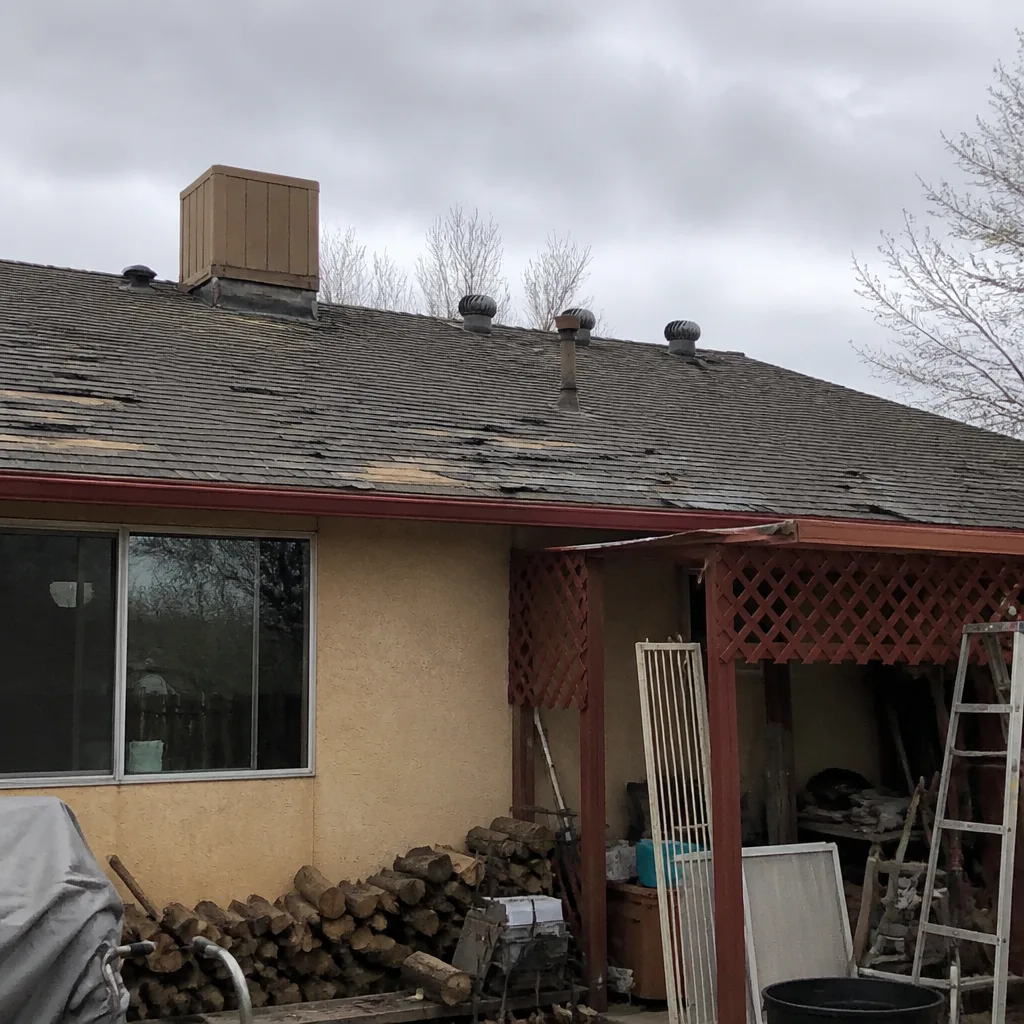 Before
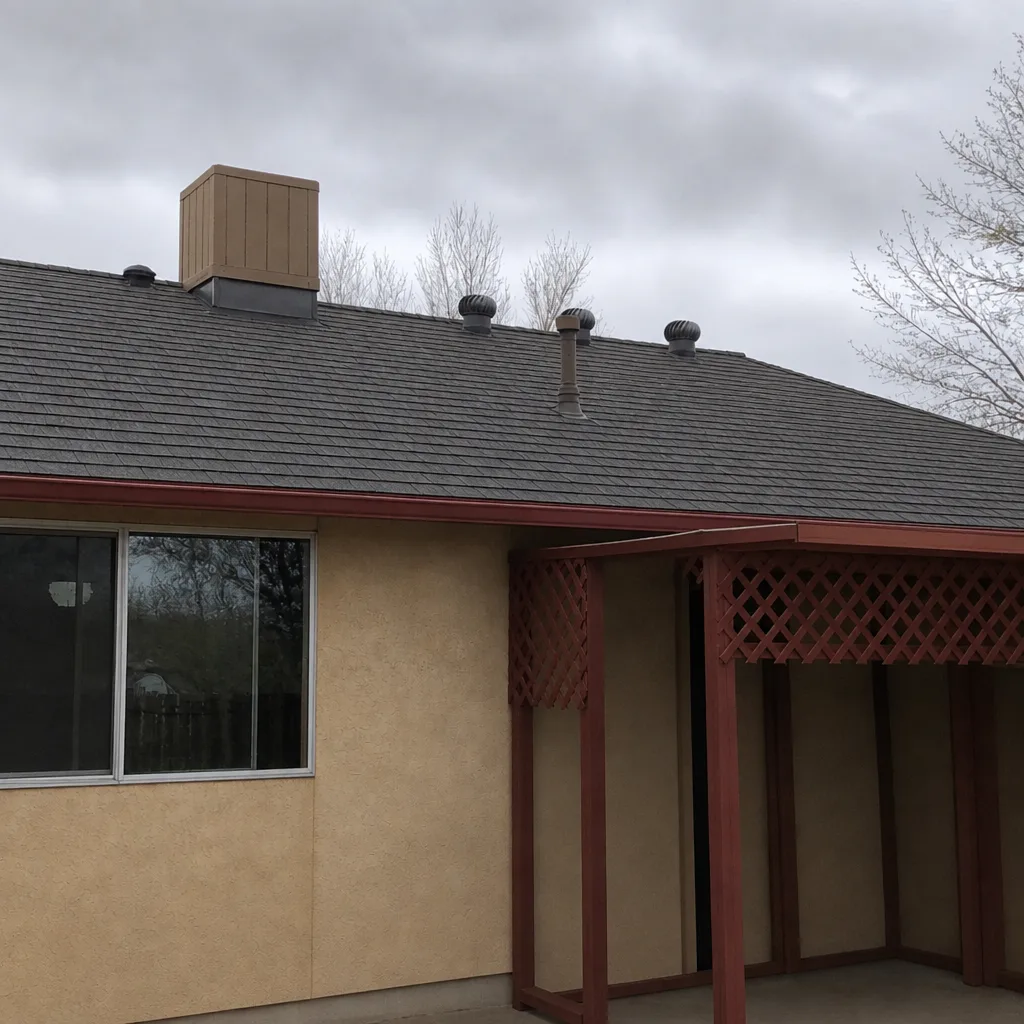 After
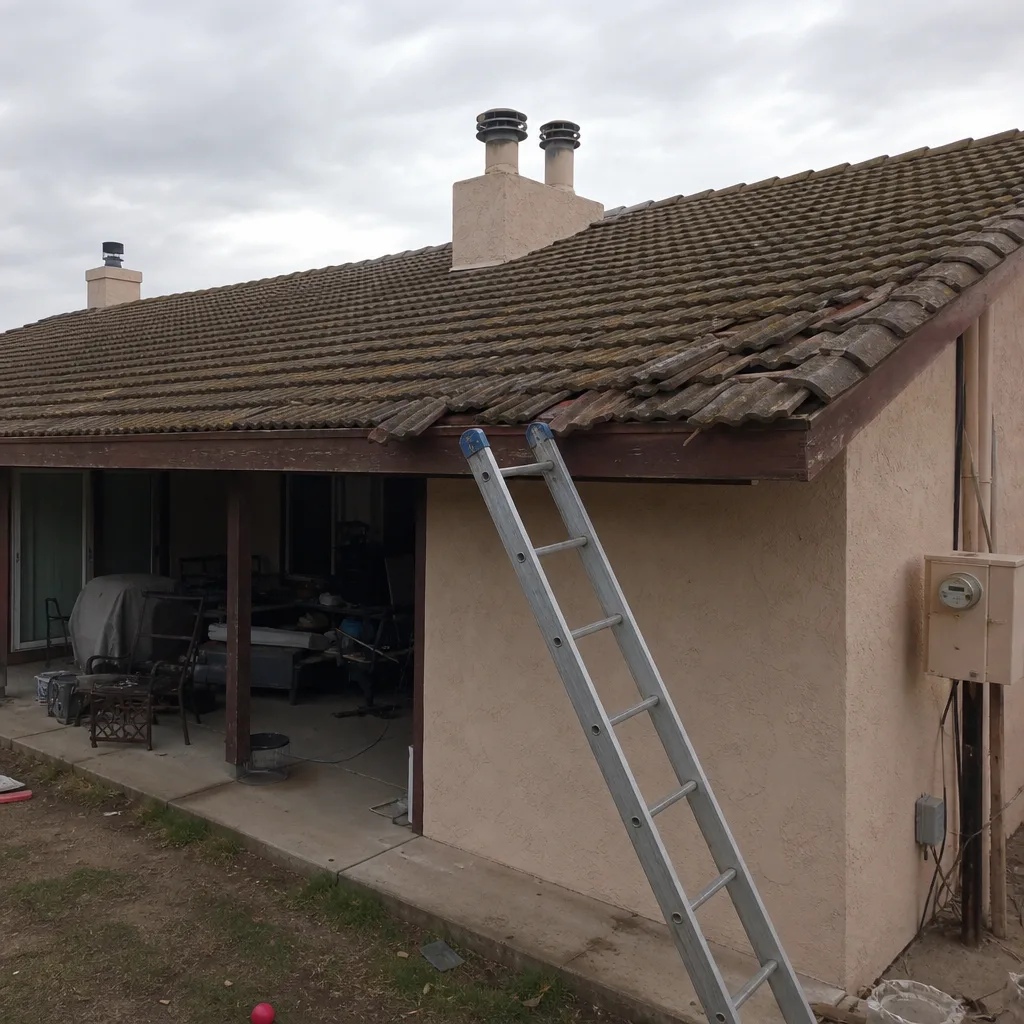 Before
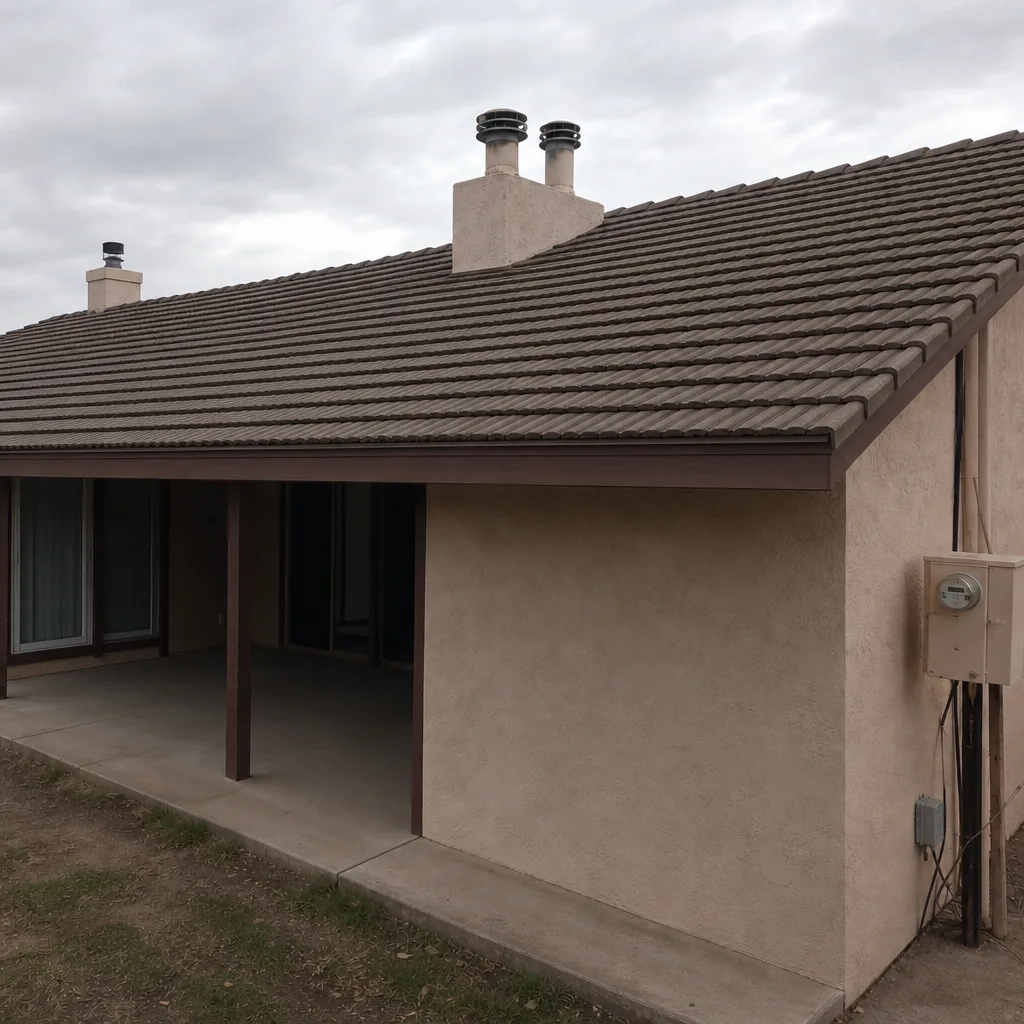 After
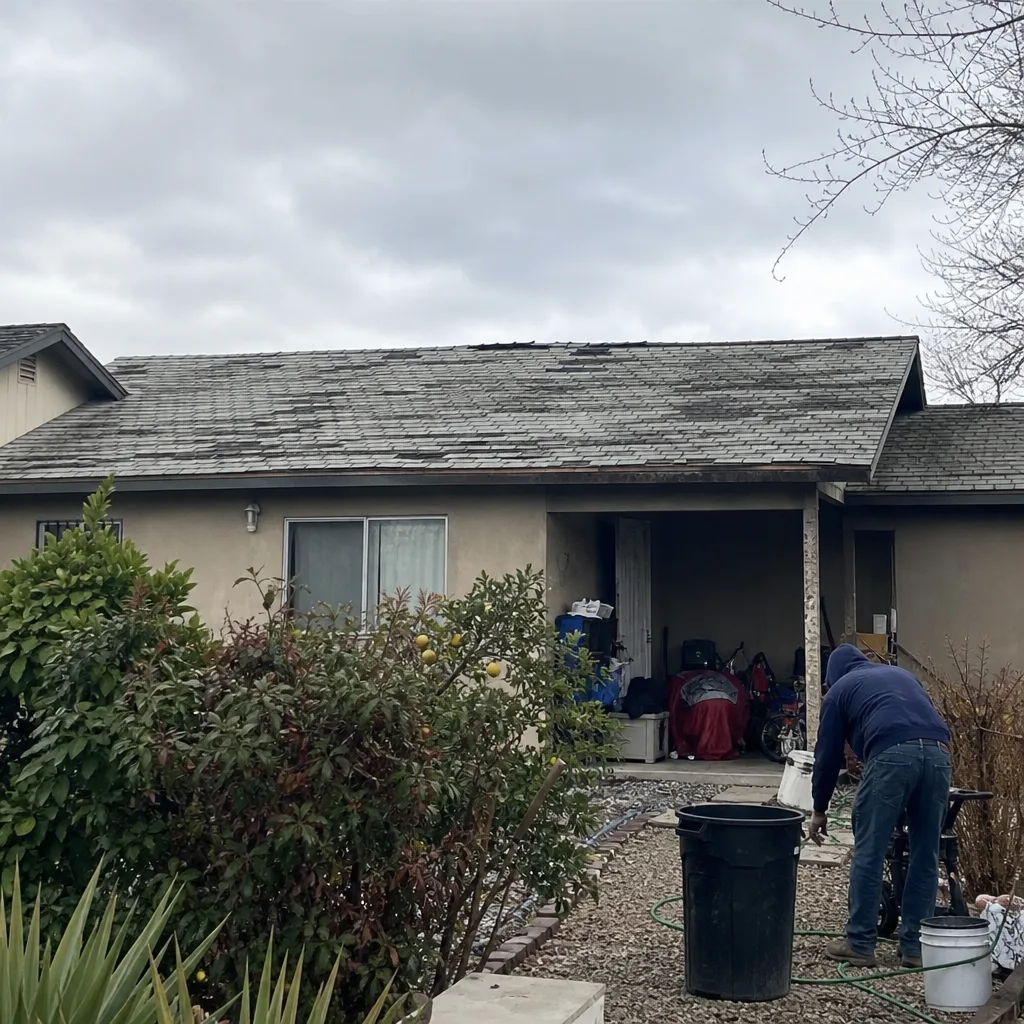 Before
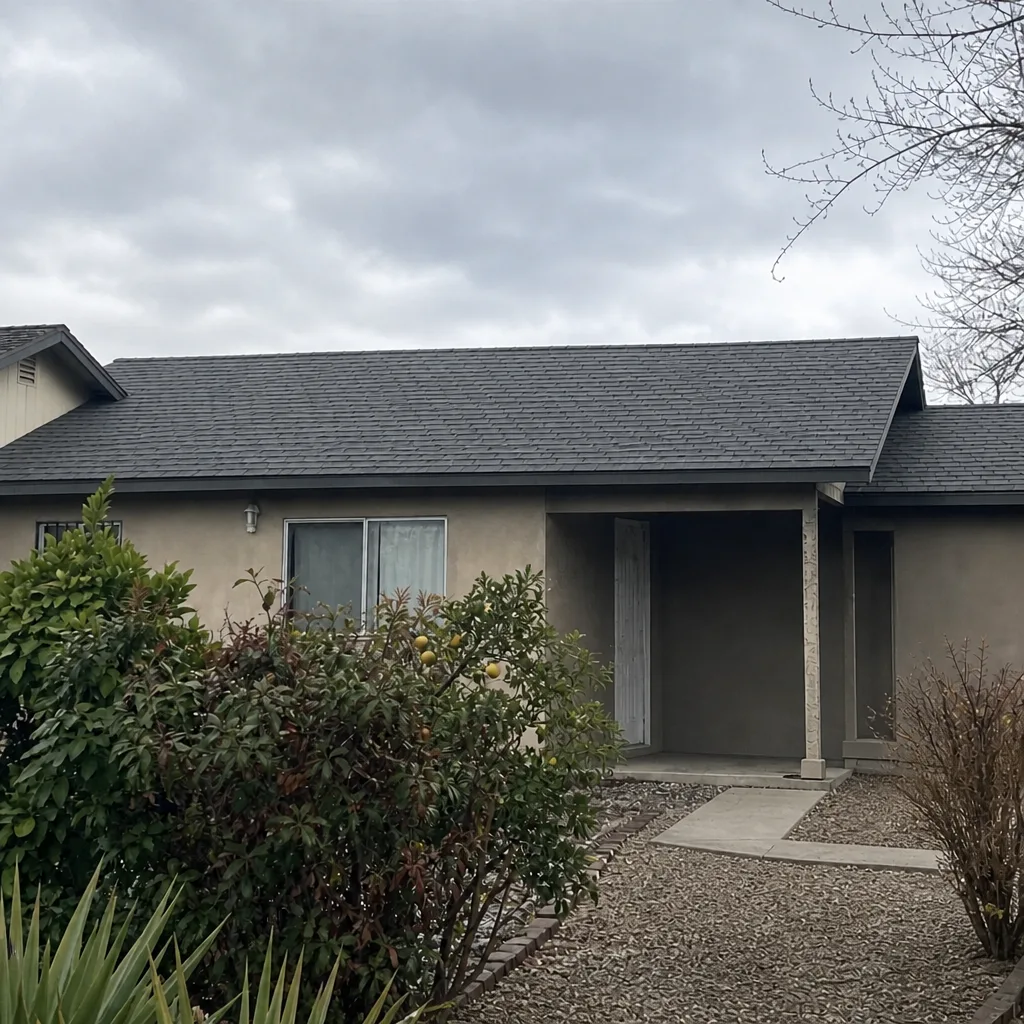 After
Frequently Asked Questions
Look at the pattern, not the single spot. A single broken tile on the field is cosmetic and easy to replace. Cracking that runs the length of a hip or ridge line, sagging along that line, or loose ridge caps means the mortar has failed and you have an active leak risk, so it needs an inspection. In Spring Valley, our technicians document this from the roof with photos, because from the ground the two look nearly identical. If you see a line of cracking along a hip or ridge, call (855) 908-1590 for a free estimate before the next rain.
Because metal roofs move. A caulk repair fixes the look of the leak without addressing why the fastener loosened or the seam opened, and the panel’s daily movement in Spring Valley’s sun-and-cool cycles quickly cracks or peels the caulk. Fastener leaks need the fastener replaced with a fresh washer; seam leaks need the seam’s internal details repaired. Call (855) 908-1590 for an exact quote on a proper metal repair, and the estimate is free.
Patching a bubble leaves the moisture trapped underneath, still working at the deck and the insulation. A growing or spreading bubble is a sign of moisture under the membrane, not a surface problem, so the fix has to address the deck, the moisture, and the membrane, not just the skin. Have it inspected before you spend money on a patch. Call (855) 908-1590 for a free estimate on what the bubble is actually telling you, and we’ll put it in writing.
Start at the stain and move uphill along the direction of slope to the nearest seam, penetration, or edge, because the water usually enters higher up and travels. On Spring Valley low-slope roofs the slope can be nearly invisible, so measuring with a level matters. A controlled water test at the suspected spots confirms the source before you commit to the repair. If you’d rather have a trained pair of eyes trace it, call (855) 908-1590 and estimates are free.
On most tile, metal, and flat-membrane leaks, the diagnostic step is the part that needs a trained eye, and the repair itself often requires working at height on a surface that can be slick or fragile. A mortar hip repair is structural enough that we’d rather see it than guess at it. If the leak has returned after two repairs, or the problem is at a special detail you can’t identify, call (855) 908-1590 for a free estimate. We’ll show you the photos from your own roof and tell you the honest source.
Because it collects where specialty roofs are weakest: valley lines, metal pans, and behind penetrations and drains. Fine particulate reduces the flow of water in the places where slow drainage causes the most damage, and around vent curbs it holds moisture against the seals. Clearing the valleys and penetrations before the rainy season is the one maintenance item we ask Spring Valley homeowners to keep on the calendar. If you’re not sure where your roof collects debris, call (855) 908-1590 and we’ll document it from the actual roof during a free estimate.
The Bottom Line
On a specialty roof, the repair almost always has to go to the source, not the symptom. Cracked field tile is cosmetic; failed hip and ridge mortar is structural. Flat-roof leaks travel, so you trace uphill from the stain. Metal fasteners and seams fail for different reasons, and caulk is the wrong fix for both. Spring Valley’s dust and temperature swing accelerate each of those failure modes, which is why valley cleaning and honest diagnosis matter more here than a quick patch. And when a “small” problem comes back in the same spot after two repairs, you’re most likely looking at an install defect, not normal wear. We wrote this guide from that vantage point: a square deal is knowing what’s actually wrong before you spend a dollar on a fix.
If you’d like a second set of eyes on a specialty roof problem, or you’re ready to schedule a free estimate, Ridgeline Roofing Co. Spring Valley home is the place to start. Our Specialty Roofing in Spring Valley team handles tile, metal, and flat systems every week, and our Roof Repair in Spring Valley service covers the leaks we’ve walked through here. When the honest answer is that a roof has reached the end, our Roof Replacement & Installation in Spring Valley service installs products from GAF, CertainTeed, Owens Corning, IKO, Atlas, Tamko, and Boral, and our team backs every job with the written 90-Day Done Right Promise. Call (855) 908-1590 to schedule your free estimate. A live person answers every call, day or night, and the number on the estimate is the number on the invoice.
Written by the team at Ridgeline Roofing Co. Spring Valley.