
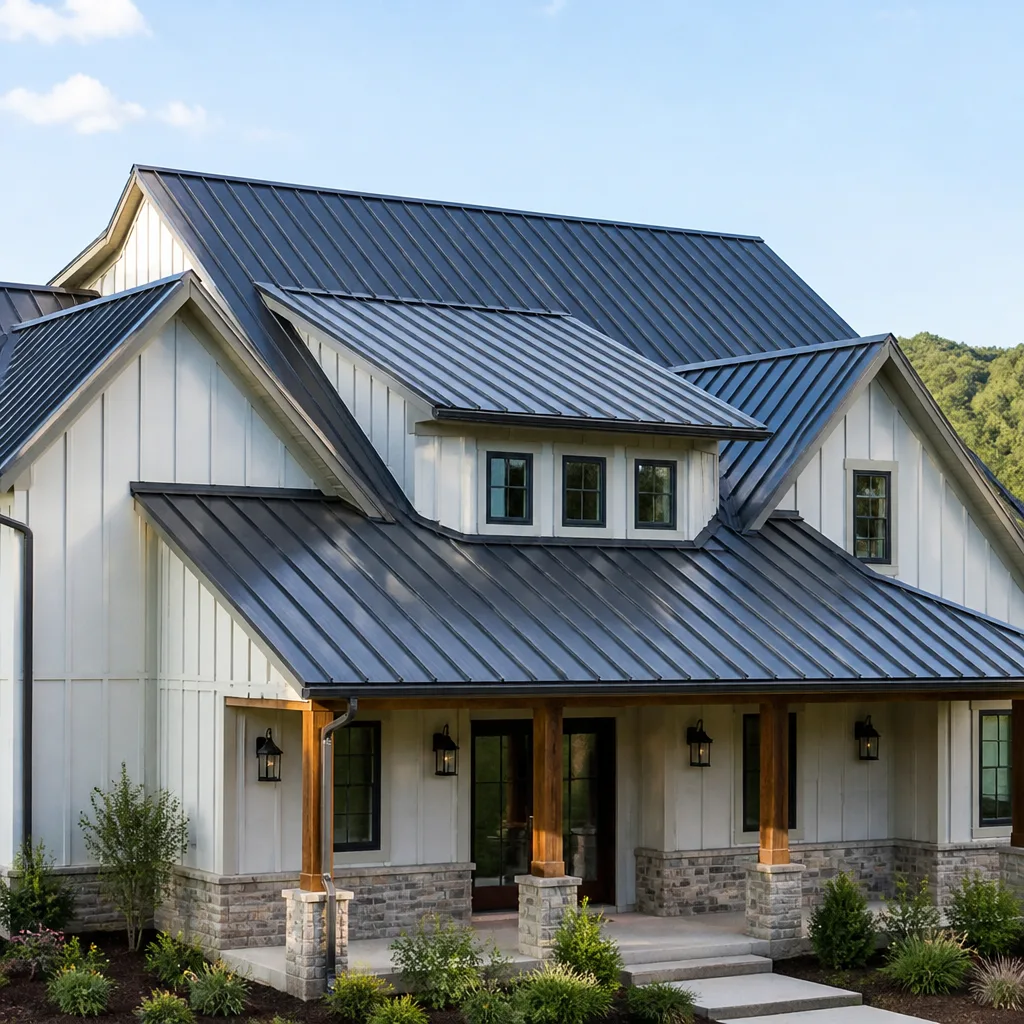
 Metal roofing
 Architectural shingles
 Tile roofing
 GAF
 Owens Corning
 Flat & low-slope
Free roof inspection with deck photos before we talk money - GAF and Owens Corning certified installation
Styles & brands we work with
- Architectural shingles
- Metal roofing
- Tile roofing
- GAF
- Owens Corning
- Flat & low-slope
See the difference
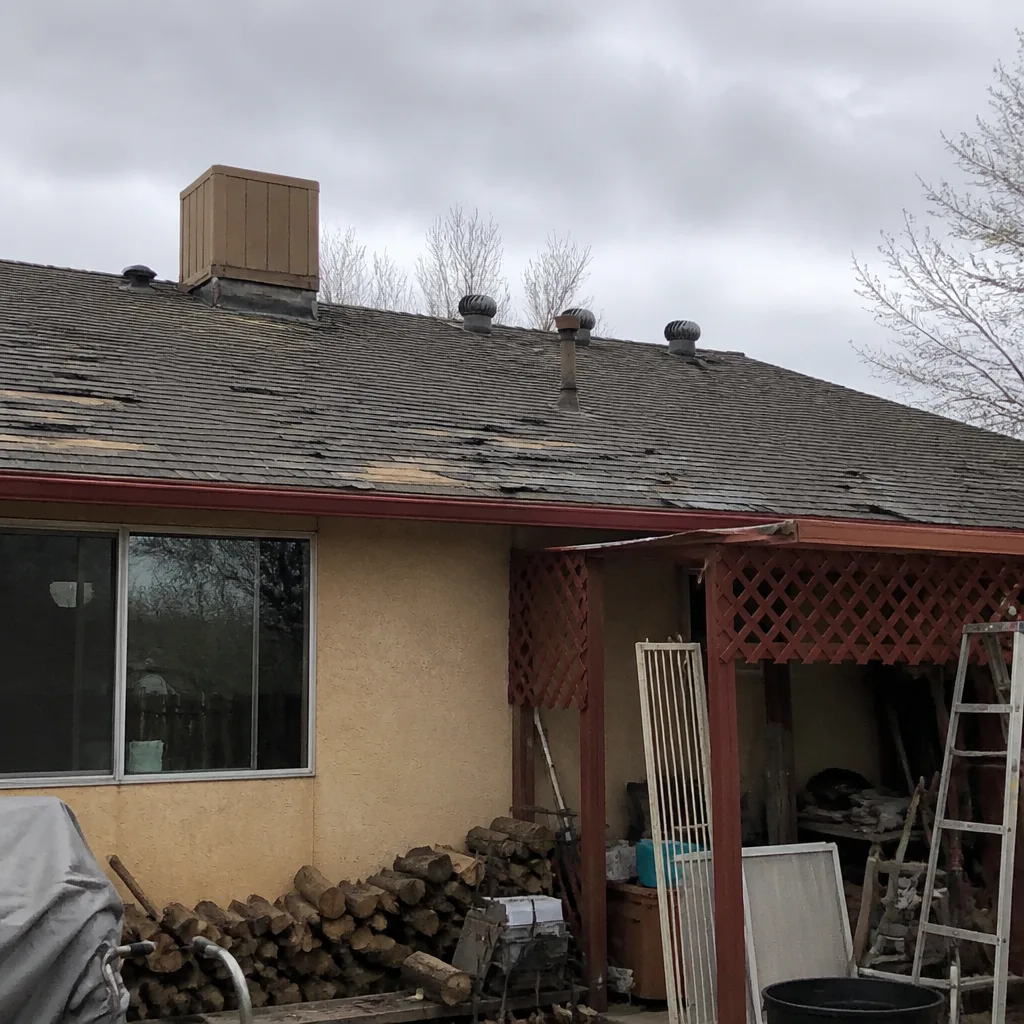 Before
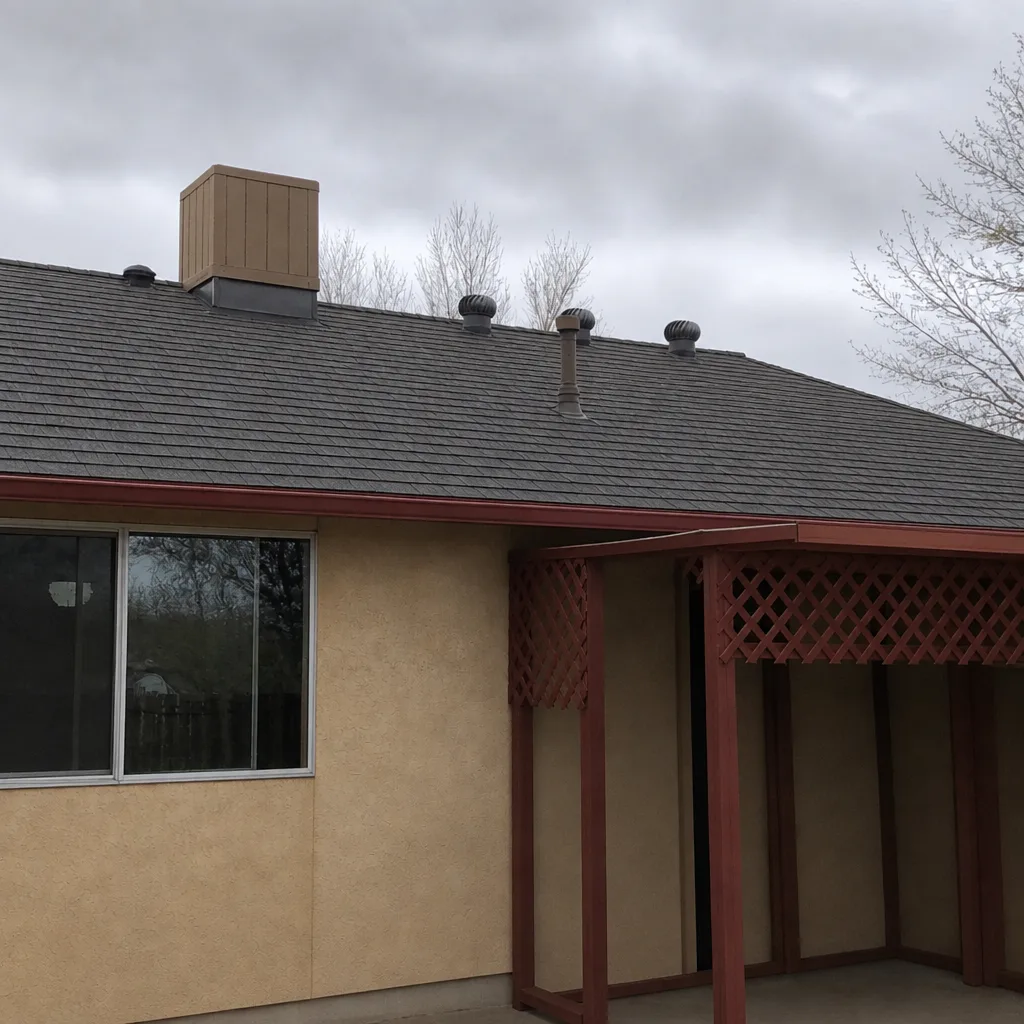 After
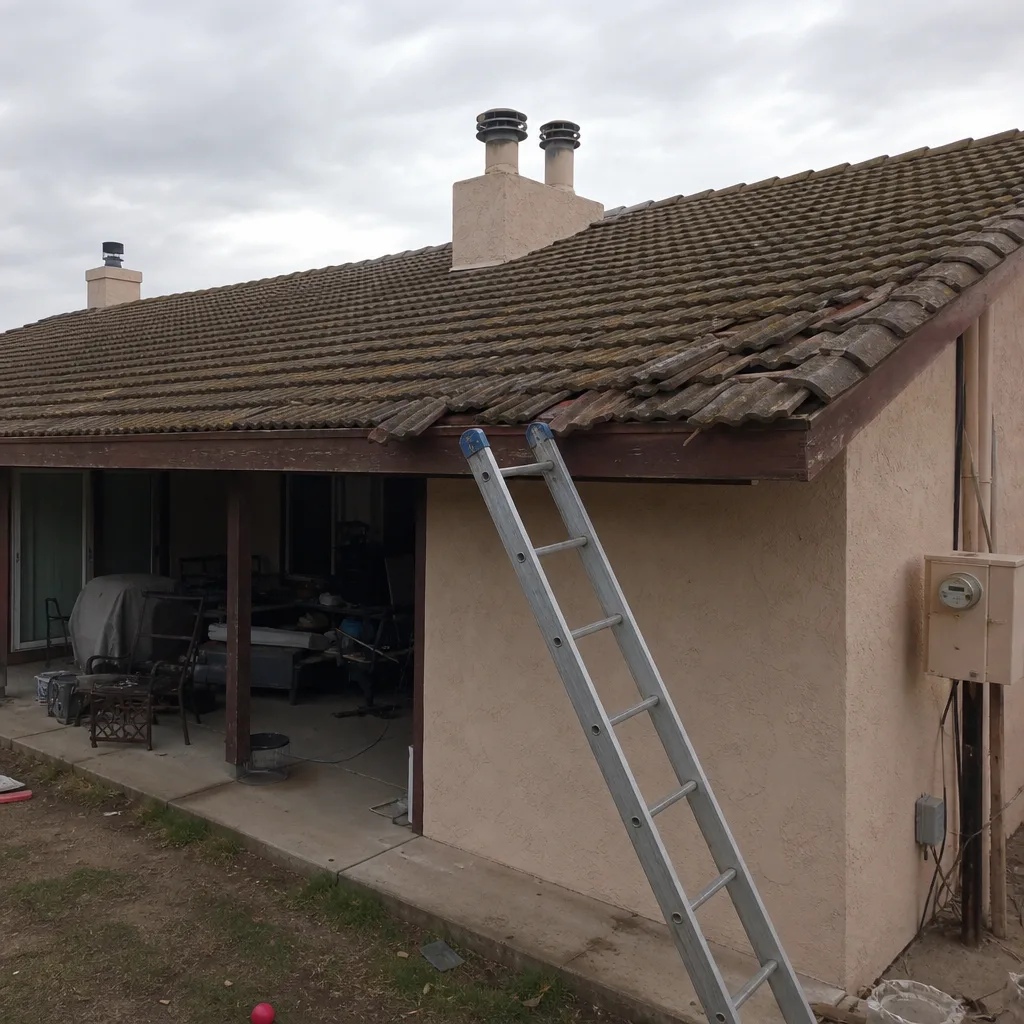 Before
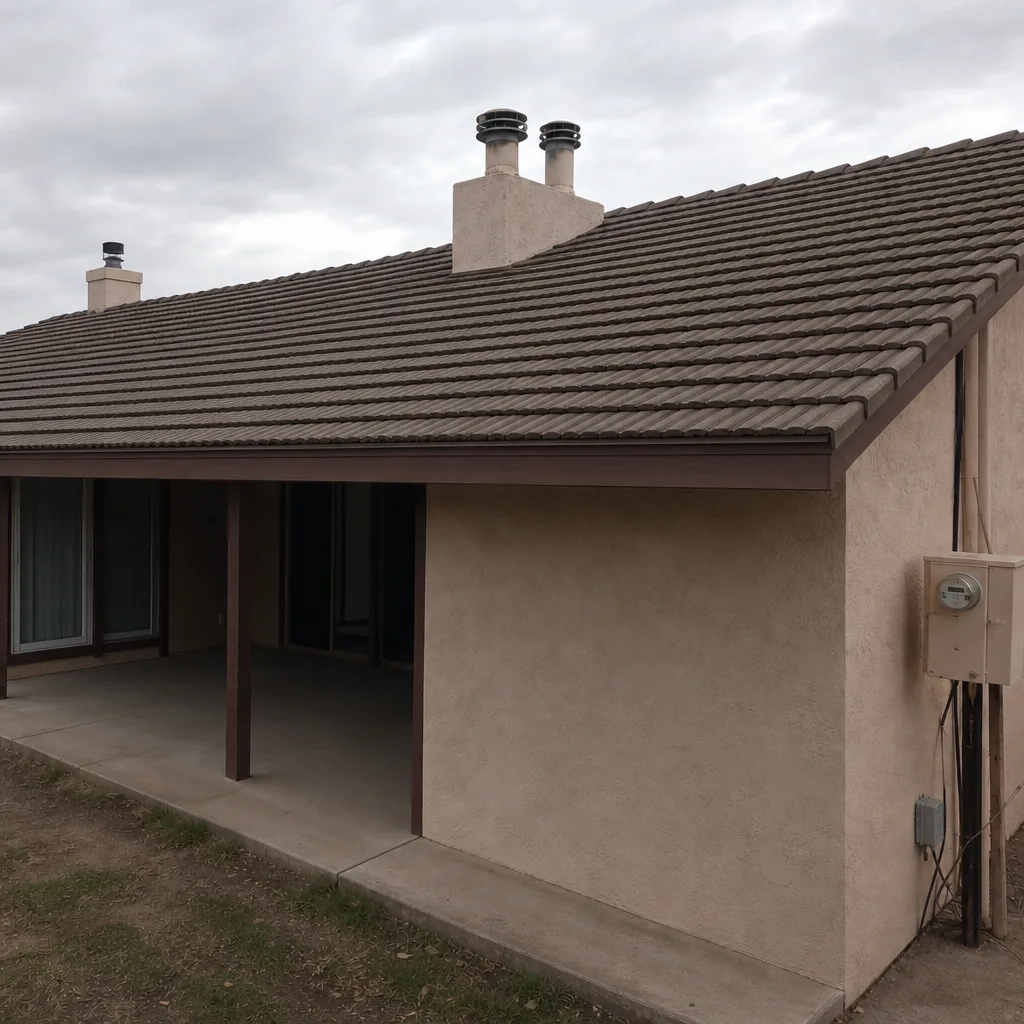 After
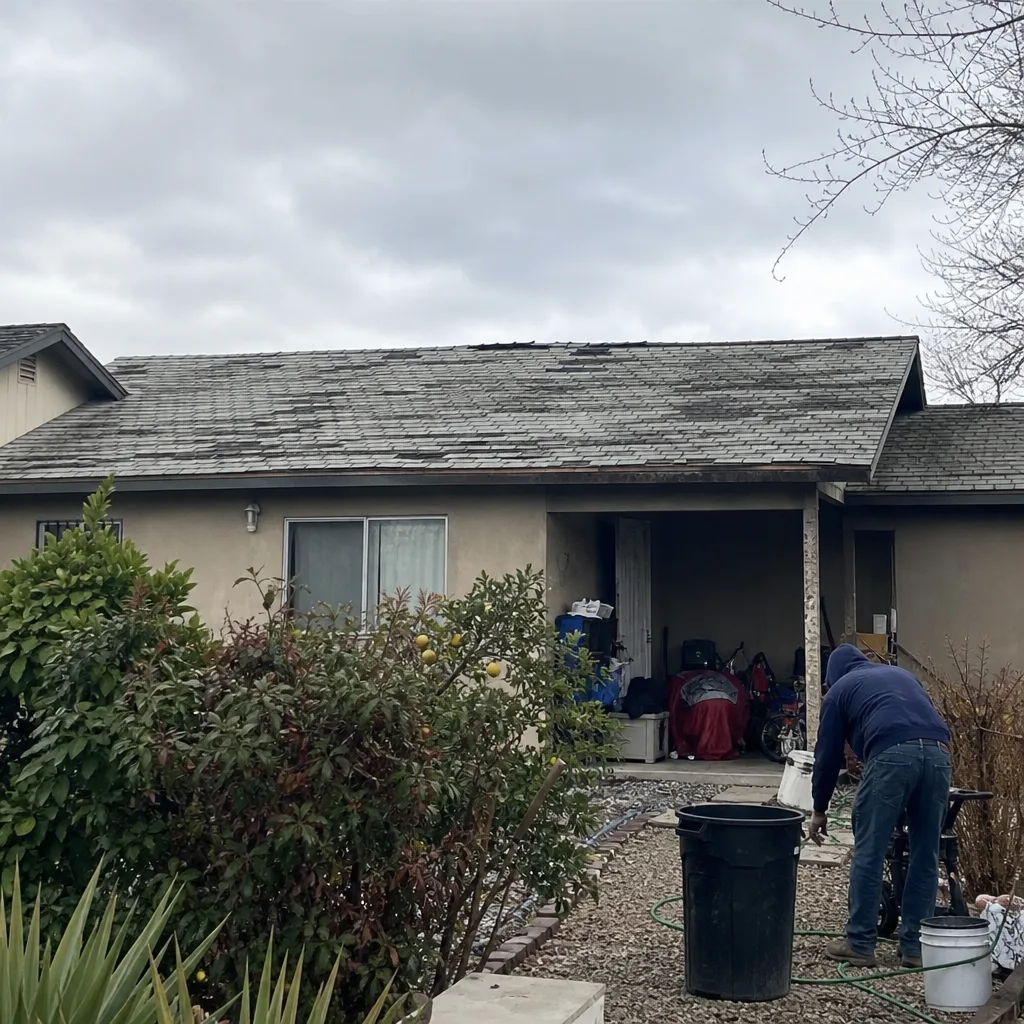 Before
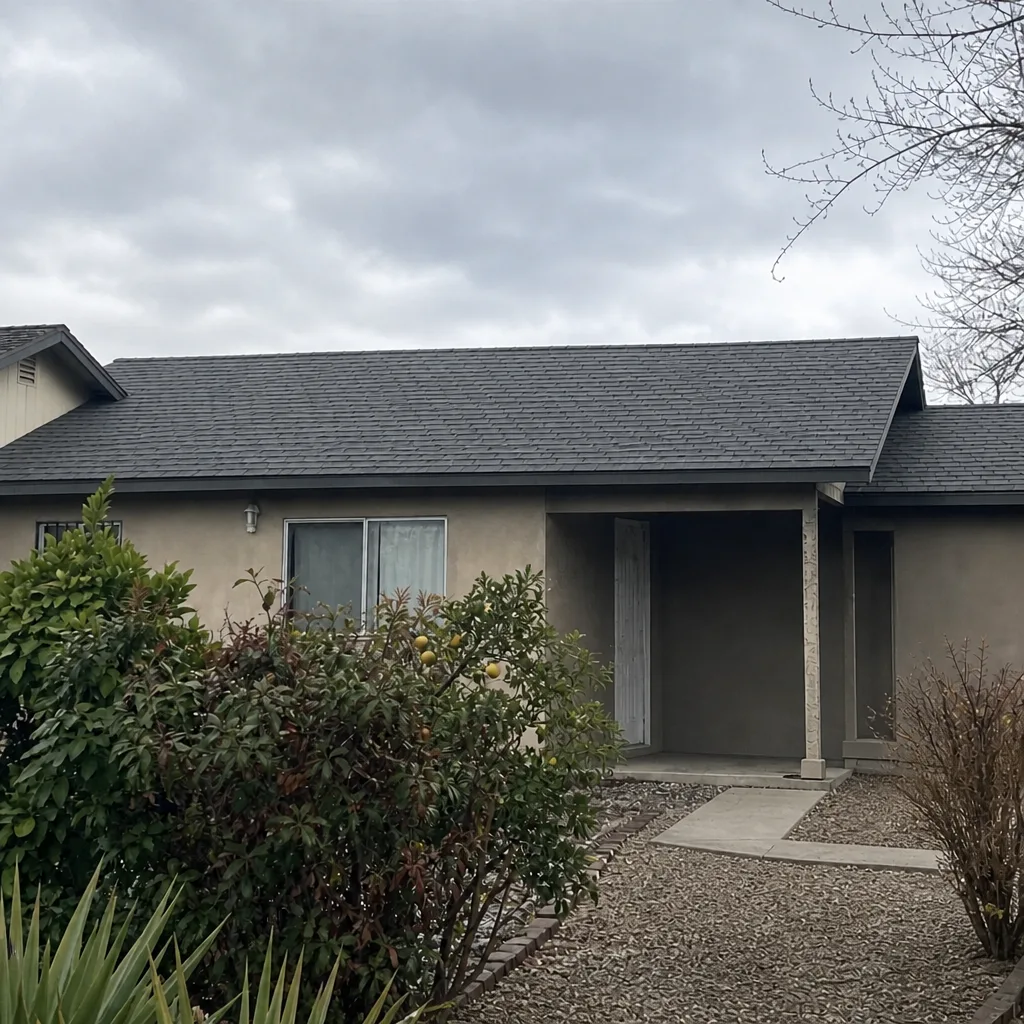 After
Roof Hail Damage Signs in Spring Valley, NV: What You’ll See on Concrete Tile (and What You Won’t)
On a concrete S-tile roof in Spring Valley, the most telling sign of hail damage is usually not a broken tile you can see from the driveway. It’s a hairline crack along the tile crown, or a shock-fractured sheet of felt underlayment underneath an intact tile, that stays hidden until the next monsoon pushes water through it. New hairline fractures, fresh shingle bruises, dented soft metals, and hail-splashed granules around downspouts all count as signs. If you’ve got a 20- to 35-year-old roof and any of those, call Ridgeline Roofing Co. Spring Valley at (855) 908-1590 for a photo-documented inspection from the roof surface itself.
Here’s the short answer for most homes in Spring Valley: if you can see a fresh dent, a bruise, or a cracked tile, the hail already did the important damage. The reason we lead with the hidden damage is that this is where most homeowner assumptions fall apart.
Why a Spring Valley Tile Roof Hides Hail Damage Better Than Any Other Kind
Concrete S-tile takes a hail strike differently than asphalt shingles do. Stand across the street and the tile face often looks untouched – the color is intact, the profile is straight. But up close on the roof surface, the impact shows up along the crown as a thin fracture line that didn’t exist before. You can’t spot that from a walk-around in the driveway, and you can’t spot it from a ladder at the eaves.
One of our technicians, working a Rhodes Ranch roof in late summer, found nine separate crown fractures on tiles that looked fine from the ground. Spring Valley surface temps pushing past 150°F in July and August mean a micro-crack doesn’t stay stable. The tile goes through expansion and contraction every single day, and a fracture that starts as a hairline widens within weeks instead of years. When the monsoon microbursts arrive in the afternoon and drive water sideways into the roof, it finds those cracks.
Which brings us to the part most people miss entirely:
- Shingle roofs show hail damage directly – bruises, granule loss, soft spots in the mat.
- Concrete S-tile roofs show hail damage indirectly – the tile face survives, but the impact transmits a shock wave into the felt underlayment beneath it.
- Underlayment 20-35 years old is already dry, brittle, and baked out by UV. A shock that would be a nuisance on new felt can crack the old sheet clean through.
That’s the actual damage indicator on a Spring Valley home. It isn’t the tile – it’s the felt underneath. We see it on west-side tile roofs across The Lakes and the Rhodes Ranch area all the time: original 1990s underlayment, cracks in the felt far from any damaged tile, and a ceiling stain in a bedroom that’s nowhere near where the water entered.
The Signs That Actually Tell the Story (Written for This Housing Stock, Not the Midwest)
The generic “look for dents” advice you’ll find online was written for asphalt shingles on flat lots in hail country back east. It’s not wrong, exactly. It just doesn’t apply cleanly here. Spring Valley was built almost entirely between the 1980s and 2000s, so the roof you’re looking at is a first-generation original, not a re-roof, and the housing stock is tile-dominant rather than shingle. That changes what to look for.
These are the signs worth your attention, roughly in order of how often they turn into a real leak:
- Hairline fractures on tile crowns – visible only from the roof surface, running along the top ridge of the tile. This is the number-one hidden sign on Spring Valley tile.
- Bruise marks on asphalt shingles – on the denser 1990s subdivisions and low-slope patio and garage sections, hail leaves dark, soft spots where the granules have been knocked loose.
- Dented soft metals – the top of a downspout, a gable vent, the metal frame around a skylight. If the metal dented, the roof took a hit.
- Granule splash around downspouts – a little pile of gray-black grit where the hail washed shingle granules off the roof and onto the ground.
- Ceiling stains that show up weeks later – brown rings or a soft ceiling spot, especially near a valley or a hip on a low-slope section. By the time you see it, the water has been running along a broken felt seam for a while.
- Cracked flashing and dried mastic – UV bakes the sealant at penetrations and wall junctions, and hail finishes the job.
What ties these together is the desert climate. Every sign above gets worse faster here than in a temperate climate. UV breaks down sealant and underlayment years before the tile gives out. Monsoon downpours deliver months of rain in an afternoon, so a hidden crack has a hard test almost every summer. Winter overnight cold snaps add freeze-thaw to the flashing. If you see any of these, it’s worth taking seriously rather than watching to see how it plays out. This is also why we treat storm response as its own line of work – you can read more about Emergency & Storm Damage if you’re already past the “is it damaged” question.
HOA Rules and the Inspection Record That Actually Gets a Claim Approved
Spring Valley isn’t inside Las Vegas city limits, and that matters more than most homeowners realize. The unincorporated Clark County master-planned communities, including The Lakes and the Rhodes Ranch area, answer to HOA architectural review committees that dictate tile color and profile. You can’t just swap a damaged tile for a mismatched one without submitting an ARC request. Roofing contractors who work mostly inside the city rarely deal with this, so it’s easy to get a bid that misses the HOA step entirely.
Here’s what a credible claim and a credible ARC request both need: a written record, tile by tile, of what’s damaged and where. Count and location. Insurance adjusters want to see it documented with photos from the actual roof surface, not a phone shot from the ground. The HOA architectural review committee wants to see exactly which tiles are being replaced and that the replacements match the approved color and profile.
That’s the reason our Emergency & Storm Damage in Spring Valley inspections are photo-documented from your roof, not the driveway. Background-checked technicians in uniform photograph the damage, tile by tile, so you have a record that adjusters and review committees can both use. A storm-chasing crew that came through after a June hailstorm and left a bid on the door didn’t climb your roof, doesn’t have that record, and won’t be here next spring. We will be. We’ve been standing behind local roofs since 1984, and we install seven manufacturer lines – GAF, CertainTeed, and Owens Corning among them – so replacement tiles can be matched properly to what’s on your roof instead of substituted with whatever’s on the truck.
What a proper hail inspection covers
Not a scary speech in the driveway. A few concrete things:
- Close inspection of tile crowns, ridgelines, and valley surfaces from the roof itself.
- Soft-metal check at vents, flashing, skylight frames, and downspout tops.
- Underlayment exposure where tile is already cracked or shifted, so the felt condition can be read.
- Photo documentation of every damaged tile, numbered and located, plus a written summary you can hand to an adjuster or your HOA.
- A clear read on whether it’s a repair or a re-roof – some of these 20- to 35-year-old roofs are past what a spot repair can honestly fix.
If it’s a repair, most jobs finish in a single visit with no-hassle upfront pricing – the number on the estimate is the number on the invoice. If it turns out to be a replacement, every job is backed by our written 90-Day Done Right Promise: no paperwork, no arguing, and if it’s not right, we come back and make it right.
Key Takeaways
- The most dangerous hail damage on Spring Valley concrete tile is invisible from the ground: crown fractures and felt-underlayment cracks, not missing tiles.
- The real indicator on a 20- to 35-year-old roof is the felt beneath the tile, not the tile itself.
- Spring Valley summer surface temps over 150°F widen a new micro-crack in weeks, not years.
- HOA architectural review committees in The Lakes and the Rhodes Ranch area require documented tile counts and approved color and profile – a photo-documented inspection gives you both.
- If you see dents, granule splash, or a ceiling stain weeks after a hail event, get it inspected rather than waiting for the next monsoon.
FAQs
The first signs are usually hairline fractures along the tile crowns and dented soft metals at vents and downspouts, not broken tiles. On a 20- to 35-year-old Spring Valley roof, the tile face often survives a hail hit while the felt underlayment below it cracks from the shock. That means the visible sign may not show up until a ceiling stain appears a few weeks after the next storm. If you’re not sure, a photo-documented inspection answers it – call (855) 908-1590 and we’ll be there when we say.
Most Spring Valley hail-related repairs fall in the $400 to $1,800 range, depending on how many tiles are involved and whether underlayment has to be exposed and patched. A spot tile replacement with proper color and profile matching for HOA approval runs at the lower end; a section re-felt under multiple damaged tiles runs higher. Full tile re-roofs on 20- to 35-year-old homes are a separate number and worth a written estimate. Call (855) 908-1590 for an exact quote – estimates are free, and we offer $50 off any repair over $250.
Hail damage to a tile roof is typically covered, but the claim depends on documentation – adjusters want photos of the actual damaged tiles, counted and located, plus the condition of the underlayment underneath. A record from the roof surface is what makes a claim credible. It also satisfies HOA architectural review when replacement tiles have to match approved color and profile. Call (855) 908-1590 if you’d like a free second opinion on any written estimate or on what your adjuster has proposed.
No, and anyone who says otherwise over the phone is guessing. Hail fractures on Spring Valley concrete tile only show under close inspection from the roof surface – a driveway walk-around misses most of them. Our technicians, who bring up to 10 years of experience, climb the roof, photograph what’s there, and give you a written read on repair versus replacement. Call (855) 908-1590 any hour, any day – a live person answers, including during a storm – and we’ll schedule the inspection. You can also start at our home page for the full picture of how we work.
If You’d Rather Have It Looked At
If you’d rather have it looked at, Ridgeline Roofing Co. Spring Valley offers a no-pressure assessment in Spring Valley. We’ll climb the roof, photograph the damage, and give you an honest read on repair or replacement – call (855) 908-1590 for a free estimate. The price we quote is the price you pay, and if it’s not right, we make it right.
Written by the team at Ridgeline Roofing Co. Spring Valley, serving Spring Valley, NV.