
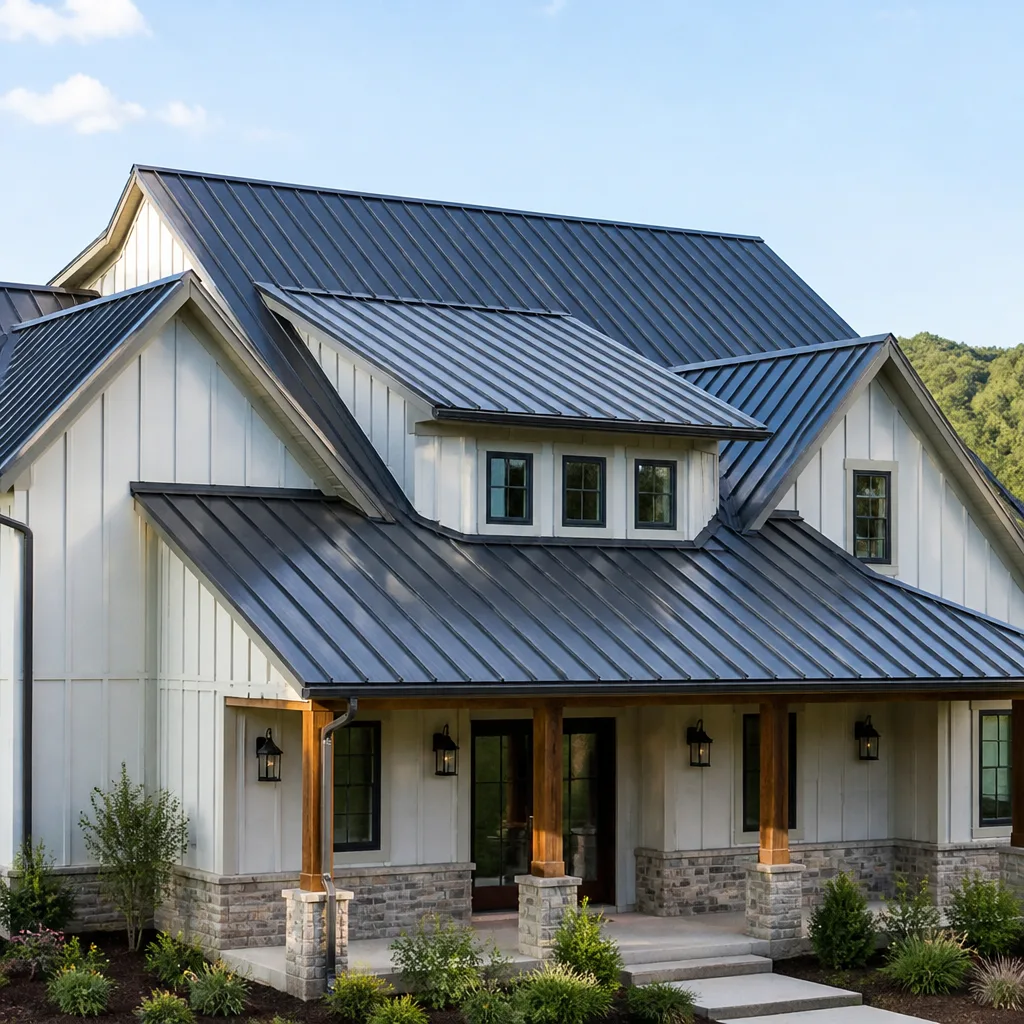
 Metal roofing
 Architectural shingles
 Tile roofing
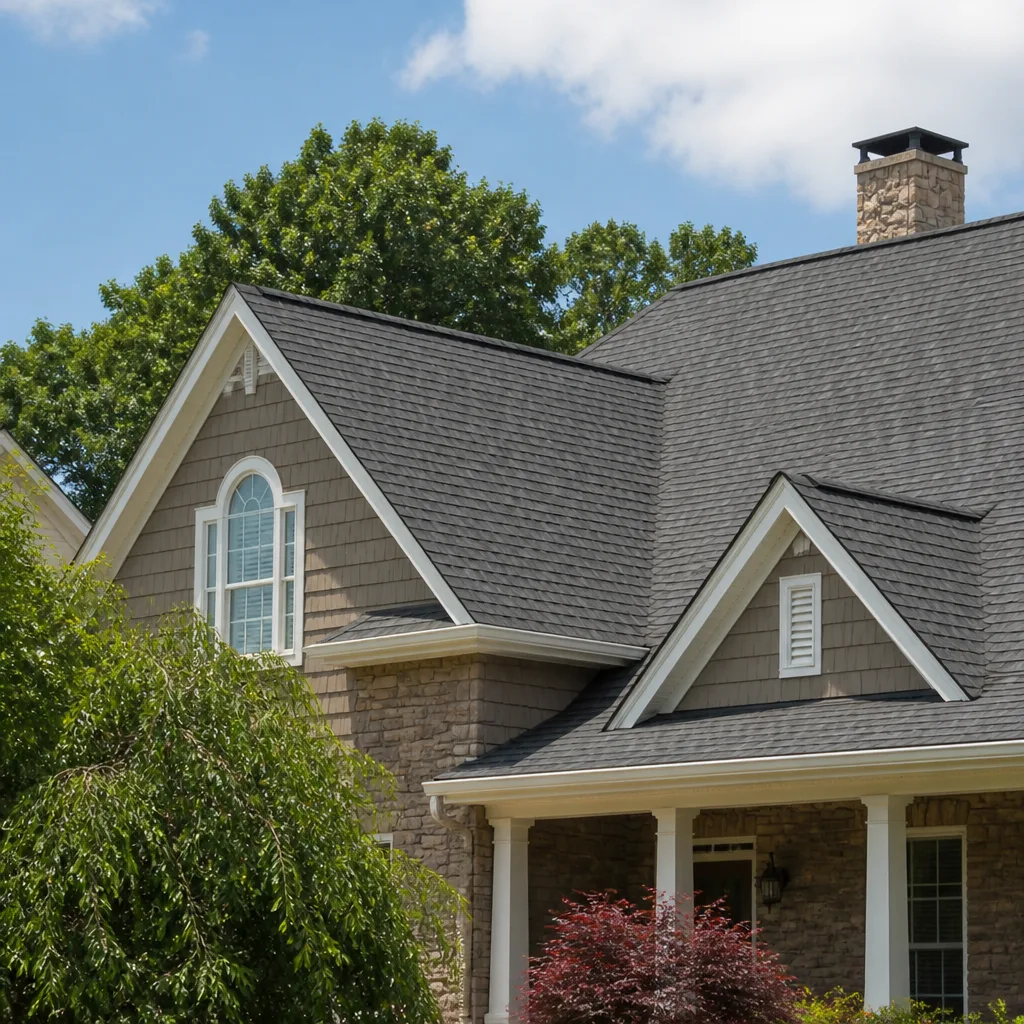 GAF
 Owens Corning
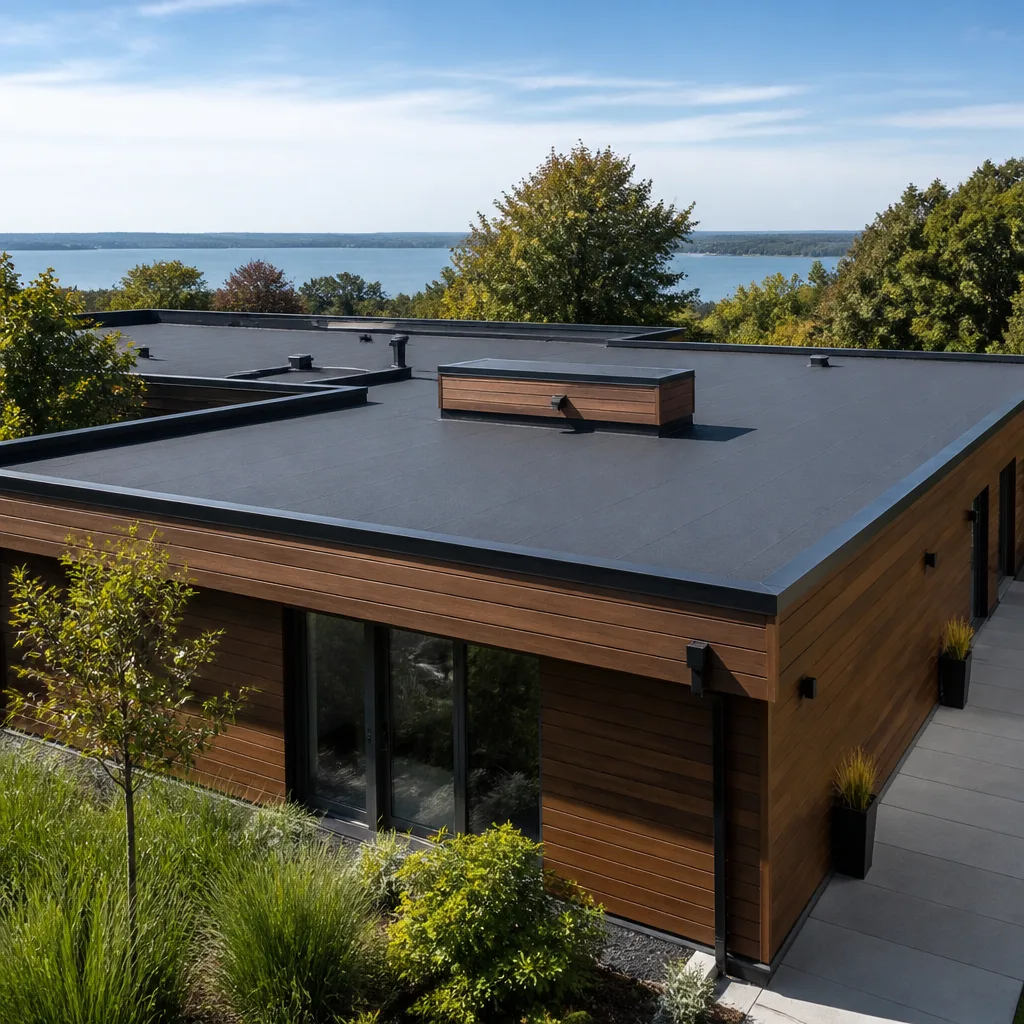 Flat & low-slope
Free roof inspection with deck photos before we talk money - GAF and Owens Corning certified installation
Styles & brands we work with
- Architectural shingles
- Metal roofing
- Tile roofing
- GAF
- Owens Corning
- Flat & low-slope
See the difference
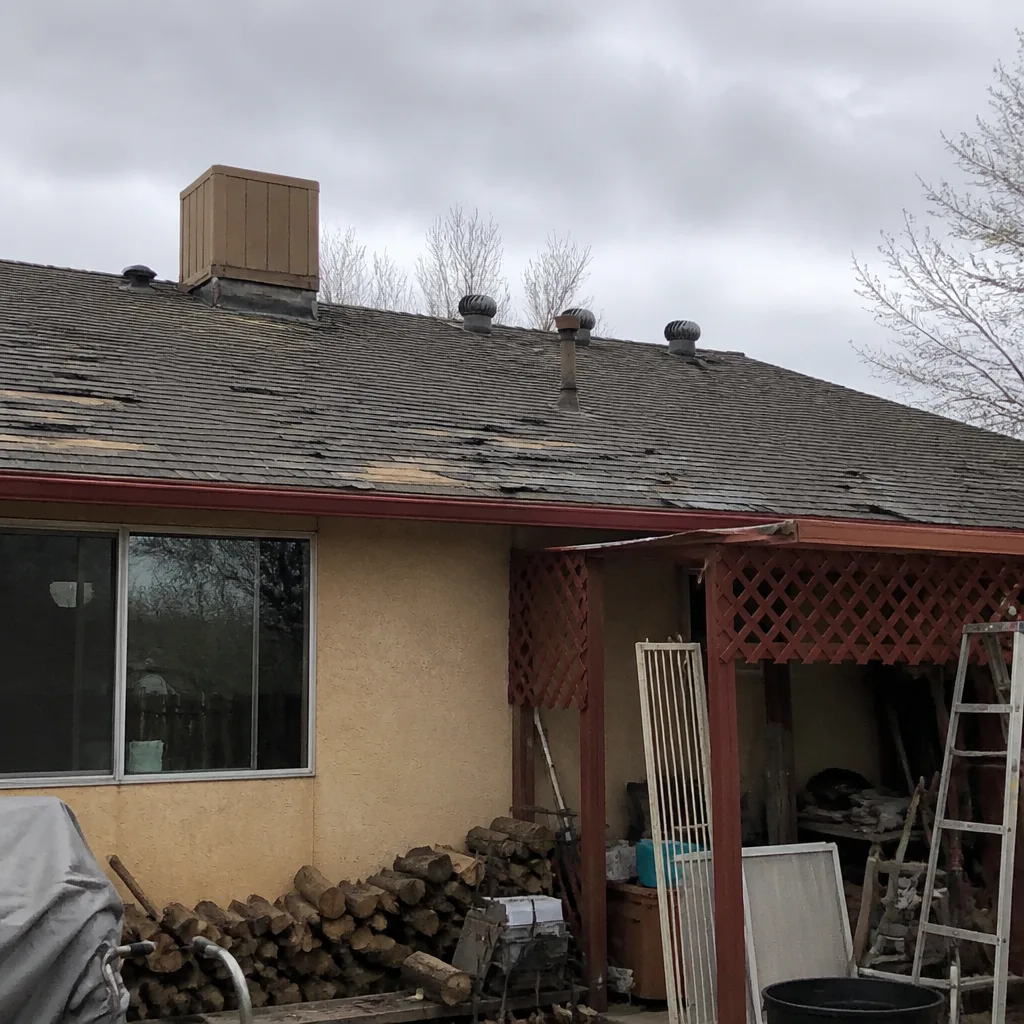 Before
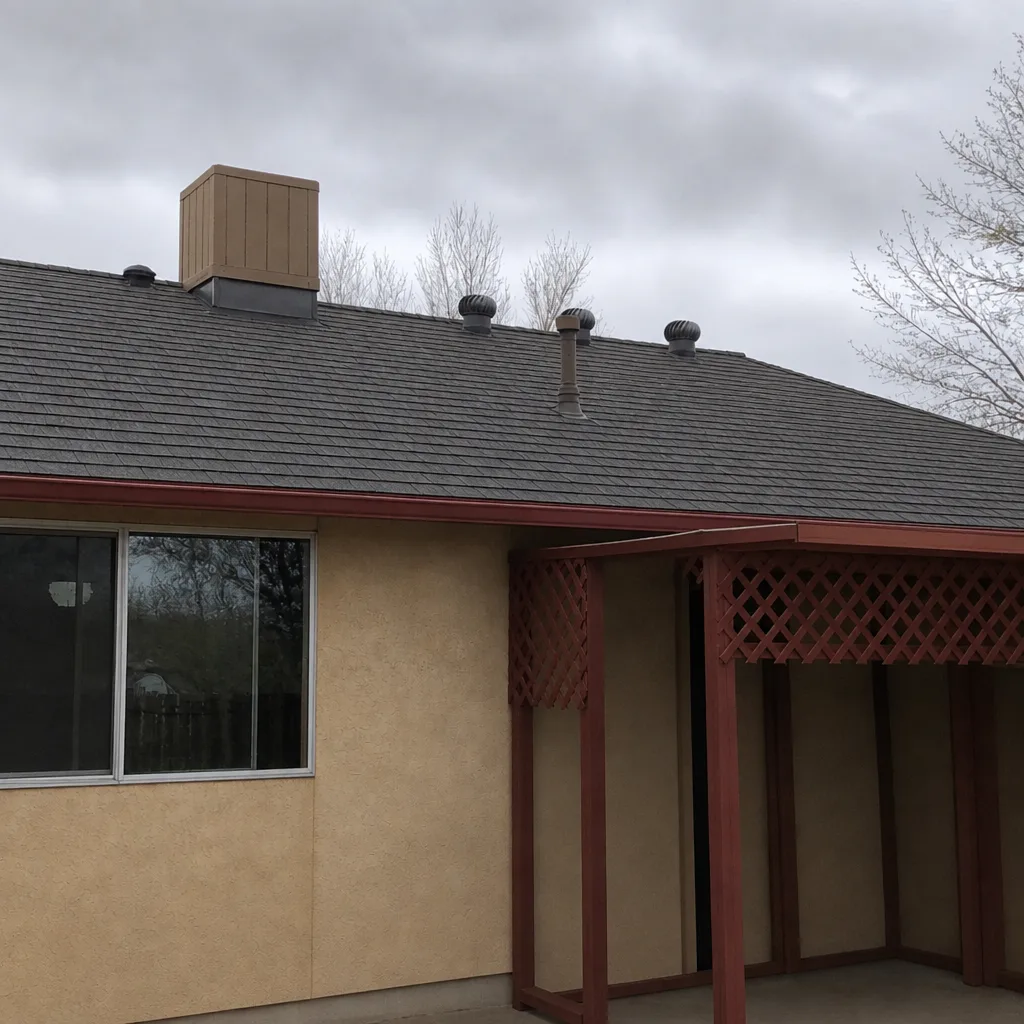 After
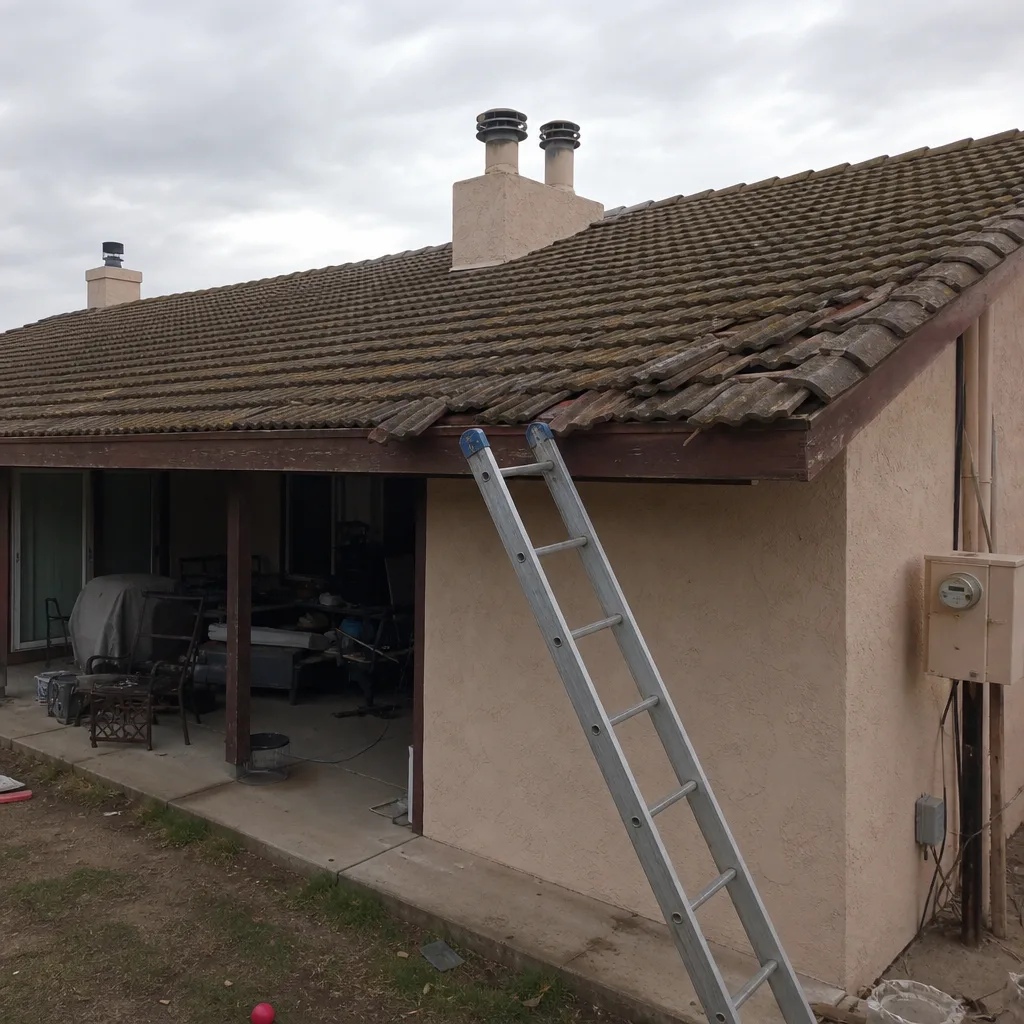 Before
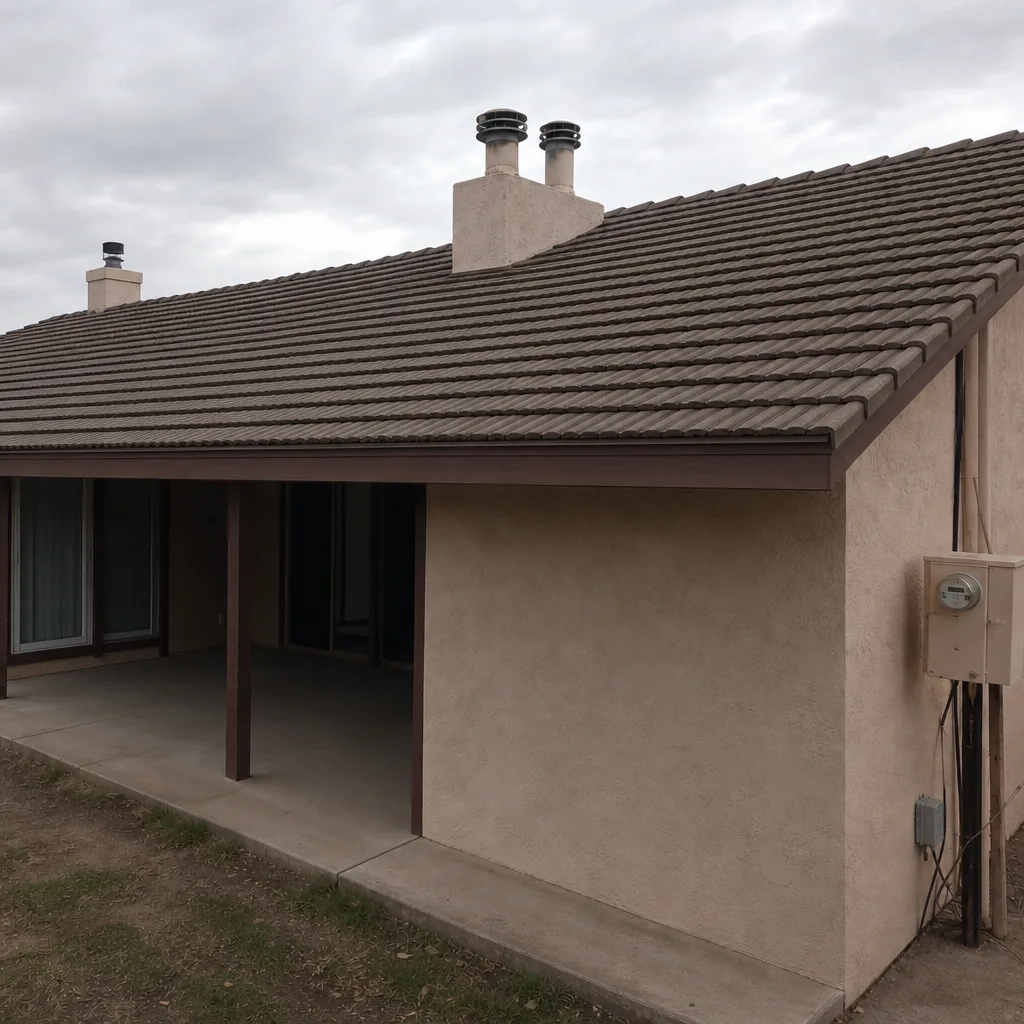 After
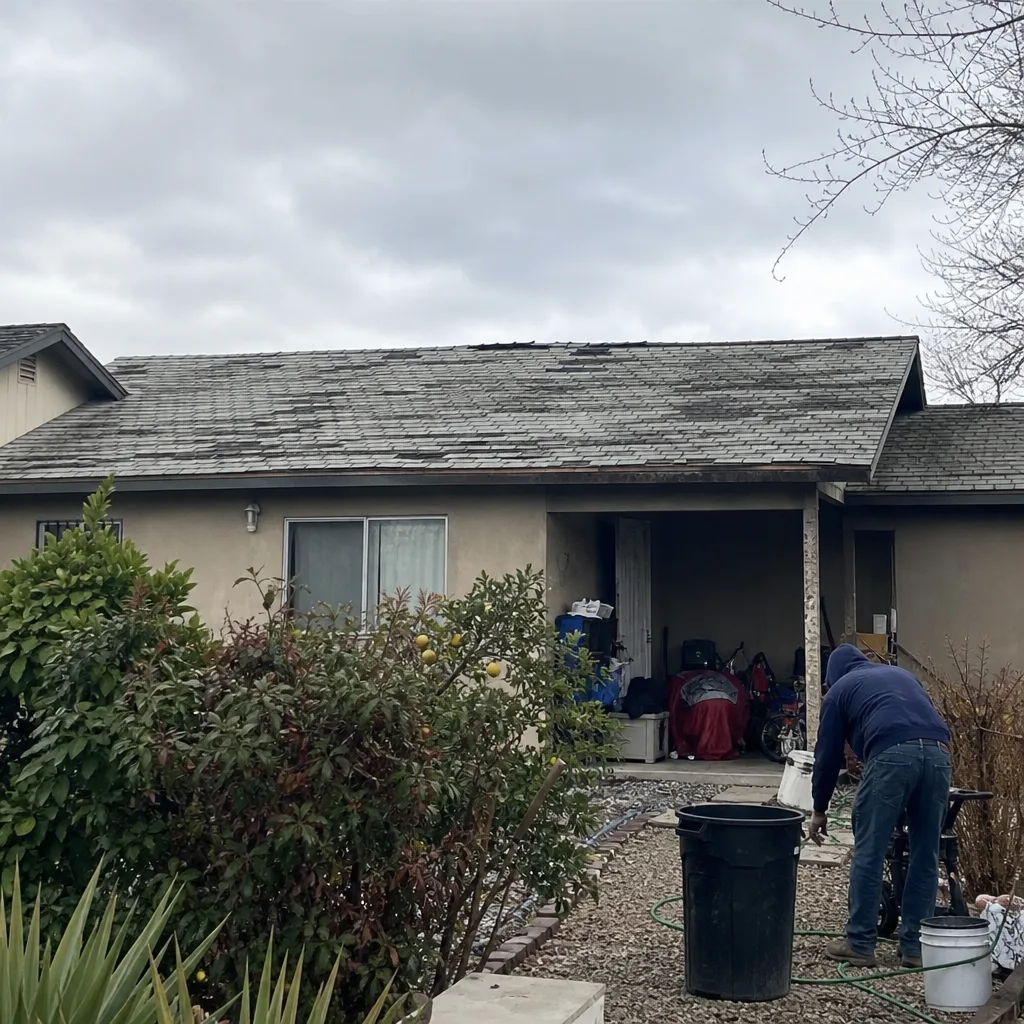 Before
 After
Signs You Need a New Roof in Spring Valley, NV: What a Ceiling Stain With No Broken Tile Is Telling You
The most reliable sign that a Spring Valley tile roof needs replacing is a ceiling stain in a room nowhere near any visibly damaged tile. If every tile looks intact from the ground but water is showing up inside, the 20-year felt underlayment beneath the tile has likely dried out, cracked in the field, and is now channeling water sideways along the roof deck until it exits through a nail hole. That is a replacement conversation, not a repair. If you’re seeing it right now, call (855) 908-1590 and we’ll take a look.
Why Spring Valley’s Housing Stock Breaks the National Checklist
Spring Valley is unincorporated Clark County sprawl built almost entirely between the 1980s and the 2000s. That means most of what we climb here is not historic re-roofing - it’s the first-generation replacement wave, roofs now sitting at 20 to 35 years old. The national home-advice checklist about curling shingles and missing tiles was written for asphalt in wet climates. It does not translate to concrete S-tile and flat-profile clay tile, which is what covers the upscale west-side communities like The Lakes and the Rhodes Ranch area.
Here’s the part most homeowners don’t know: tile doesn’t curl. It doesn’t visibly age the way shingles do. A clay or concrete tile can look perfectly sound from the curb while the underlayment beneath it is functionally gone. The tile is a rain-shedding surface, not the waterproofing - the felt underneath is. When that felt fails, the tile above gives you no warning. That’s why the inspection has to go below the tile surface, not just walk the perimeter.
Add the desert to the equation. Summer surface temps on Spring Valley tile routinely exceed 150°F, and the UV load bakes out sealant and underlayment year after year. Monsoon microbursts and hail, plus the overnight freeze-thaw of winter cold snaps, work the flashing and mastic loose well before the tile itself ever fails. The dry-climate killer is thermal cycling on that felt, and it shows up as a stain far from the actual failure point.
Five Spring Valley Warning Signs, In Plain Language
Forget the generic list. These are the five markers we actually find on Spring Valley roofs, in the order they tend to matter:
- Ceiling stains with no broken tile overhead. Water enters at a failed underlayment point and travels laterally along the deck before finding a nail hole to exit through. The stain is rarely where the breach is.
- Granule accumulation in gutters on shingle roofs, especially accelerating after year 15. Those granules are your shingle’s UV armor washing away. Heavy grit in the gutter means the mat is exposed and thinning.
- Crumbling or missing mastic and sealant around pipe boots and vents. This is where most mature Spring Valley leaks start. The sealant dries, cracks, and pulls away from the boot long before anyone notices from the ground.
- Daylight visible at ridge or hip caps when you look at the attic from inside. Light coming through the ridge means the cap seal has opened up and the structure may be letting in moisture at the highest point.
- Concrete tile that sounds hollow when tapped. That hollow sound means the mortar bond has broken and the tile is floating, no longer sealed to the one below it. Wind and monsoon rain get underneath it.
If two or more of those describe your roof, you’re past the point where a spot repair makes financial sense. This is the moment we’d typically steer a homeowner toward Roof Replacement & Installation rather than another season of patches.
The Age Threshold, Stated Honestly
A roof at 20 years old is not automatically due for replacement. A roof at 30 to 35 years old in Spring Valley almost certainly is, regardless of how the tile looks from the curb. That’s not a sales line - it’s the lifespan math of felt underlayment in a climate that cooks it at 150°F every summer. Once the felt is past life, the roof’s waterproofing layer is gone even though the tile above it still looks fine.
| Roof age | What we usually find | Typical action |
|---|---|---|
| Under 15 years | Underlayment still viable; sealant wear at boots and vents | Targeted repair and re-seal |
| 15-20 years | Granule loss on shingle, cracked sealant, early felt brittleness | Inspection and monitoring; repair as needed |
| 20-30 years | Felt cracking in the field, lateral water travel, pipe boot failure | Plan replacement; address active leaks first |
| 30-35+ years | Underlayment functionally gone, valley metal oxidation, floating tile | Replacement recommended |
Most Spring Valley jobs run from an entry-level tile repair up into full replacement territory, and the price tracks the roof’s pitch, complexity, and how deep the damage already goes. We give you the number upfront, and the number on the estimate is the number on the invoice.
What a Photo-Documented Inspection Catches That a Driveway Walk Misses
A driveway walkthrough tells you almost nothing about a tile roof. We climb it and photograph what we find from up there, and those photos are yours to keep. Here’s the difference in practice:
- Pipe boot condition. From the ground a boot looks fine. Up close you can see the sealant has dried and pulled away, which is the setup for the next leak.
- Valley metal oxidation. In a Spring Valley valley where two roof planes meet, moisture concentrates. Rusted metal is a leak waiting for the next monsoon.
- Exposed nail heads on ridge caps. Once the cap seal fails, nail heads back out and give water a direct path in.
- The visible cracking pattern of dried-out felt at the eave edge. This is the closest thing we have to a direct look at the underlayment. Cracking felt at the eave tells you the field felt behind it looks the same.
Every technician who climbs for us is background-checked, in uniform, and arrives with the same standard we’d hold for work on our own mother’s house. We install products from seven manufacturer lines, including IKO, Atlas, and Tamko, so there are no substitutions between what you’re quoted and what goes on the roof. Our technicians bring up to 10 years of experience to the inspection, and they document what they see rather than giving you a scary speech in the driveway.
The HOA Trigger Most Homeowners Don’t See Coming
Spring Valley’s many HOA architectural review committees can issue a violation notice for a roof that fails a visual inspection from the street. That means a homeowner may not learn their underlayment is failing until the ARC tells them the roof looks off - and at that point the replacement timeline becomes non-negotiable. We’re named for the ridge, the line where a roof proves itself, and we’ve walked enough of these communities to know that the ARC has to approve tile color and profile before anything changes. Contractors working strictly inside Las Vegas city limits rarely have to navigate that. We do, routinely.
If you’ve had a violation notice, or you’re worried one is coming, the right move is a documented assessment now rather than after the deadline. The same reasoning applies whether you’re weighing repair versus replacement - a Roof Replacement & Installation in Spring Valley isn’t something you want to time to an HOA letter.
Repair or Replace? A Straight Answer
If a single flashing point or one broken pipe boot is the only problem, repair it. If the underlayment is the thing that’s failing - which the ceiling stain and the eave-edge felt cracking both point to - replacement is the only fix that solves it. You can’t re-waterproof under failing tile without pulling the tile. A repair when the felt is gone just moves the leak to the next nail hole. That’s why we lead with a documented inspection rather than a bid: the photos tell you which of those two situations you’re actually in.
FAQs
Full replacement in Spring Valley typically falls into a broad range driven by roof size, pitch, and tile versus shingle, with most jobs priced well above a repair, and the only honest way to quote it is after climbing the roof. We give you a no-hassle upfront number and the price on the estimate is the price on the invoice. Call (855) 908-1590 for a free second opinion on any written estimate.
Yes. A ceiling stain with every visible tile intact is the classic signature of failed underlayment channeling water laterally along the deck until it exits through a nail hole in a room away from the breach. The tile looks fine because the tile isn’t the waterproofing; the felt beneath it is. Call (855) 908-1590 and we’ll document what’s happening from the roof surface.
Yes, and that’s the exact window where Spring Valley’s 1980s-through-2000s rooftops reach the statistically likely point of underlayment failure regardless of how the tile looks. A 25-year-old tile roof in this climate is a roofing replacement candidate even when nothing appears wrong, because the felt is usually past its service life. An inspection is free to plan and cheaper than a water-damaged ceiling.
Very often yes. Spring Valley architectural review committees typically dictate tile color and profile, and can flag a failing roof from a street-level inspection, so replacement usually requires ARC approval on materials before work starts. We’re familiar with that process in the communities here. Call (855) 908-1590 and we’ll walk you through what your committee will want to see.
Have It Looked At
If you’d rather have it looked at than guess, Ridgeline Roofing Co. Spring Valley offers a no-pressure assessment in Spring Valley. We climb the roof, photograph what’s actually there, and tell you plainly whether you need a repair or a replacement. A live person answers every call, day or night. Call (855) 908-1590 for a free estimate. Backed by our written 90-Day Done Right Promise - if it isn’t right, we come back and make it right. Visit the homepage to learn more about how we work.
Written by the team at Ridgeline Roofing Co. Spring Valley, serving Spring Valley, NV.