
Last updated November 17, 2026
 Architectural shingles
 Metal roofing
 Tile roofing
 GAF
 Owens Corning
 Flat & low-slope
Free roof inspection with deck photos before we talk money - GAF and Owens Corning certified installation
Roof Repair Maintenance Checklist for Spring Valley Homeowners
The number-one maintenance failure we see in Spring Valley isn’t neglect. It’s homeowners faithfully doing the wrong things. We’ve watched people water the ficus against the fascia every morning while the dried-out pipe boots on top of the house baked to powder in the sun, quietly opening a path for heat and dust into the attic year-round. A checklist built for Houston will get you into real trouble here, because the desert doesn’t rot your roof, it bakes and cracks it. This guide gives you a task-by-task calendar tuned to roughly 300 days of sun, monsoon afternoons, and near-zero annual rainfall.
Quick Answer
A Spring Valley roof needs four maintenance passes a year: an annual inspection in spring focused on sun-brittled pipe boots and penetration seals, a July monsoon prep pass to secure flashing and clear drains before the storms, a September post-monsoon walk to catch impact and water damage, and a late-fall pass to check attic ventilation and go over the year’s photo record. The tasks that matter most here are the inverse of wet-climate advice: seal and shade the sun-baked details, not the gutters.
Styles & brands we work with
- Architectural shingles
- Metal roofing
- Tile roofing
- GAF
- Owens Corning
- Flat & low-slope
Table of Contents
- Why Desert Roof Maintenance Looks Different
- The Spring Valley Roof Maintenance Calendar
- The Pipe Boot and Penetration Seal Inspection
- Why Attic Ventilation Beats Gutter Cleaning Here
- Monsoon Prep: The July Checklist
- Post-Monsoon Assessment: The September Checklist
- Inspect Without Damaging Your Own Roof
- Build a Photo Record That Protects You
Why Desert Roof Maintenance Looks Different
Most of the roof maintenance advice homeowners read online was written somewhere with 40 inches of rain a year and a humidity problem. Spring Valley gets a fraction of that, concentrated into a few violent weeks. That changes what fails first.
In a wet climate, the enemies are rot, moss, and standing water. Here, the enemies are ultraviolet light, thermal cycling, and wind. UV light breaks down the elastomeric seals around every penetration on your roof. Thermal cycling – the roof surface hitting well over 150 degrees by mid-afternoon and dropping sharply after dark – works the fasteners and seams loose a few thousand times a year. Then monsoon wind arrives to test all of it at once.
What this means in practice:
- Detailed seals fail before the field of the roof does. Pipe boots, vent flanges, and flashing caulk give out years ahead of the shingles.
- Wood doesn’t rot the way it does in coastal climates, but it does check, crack, and dry-split – often invisibly from the ground.
- Gutters matter far less than they do in wet regions, but ventilation and shade matter far more, because they carry directly into your summer cooling bill.
- Dust and desert grit accumulate in valleys and behind flashing, and the first hard monsoon rain turns that grit into mud that blocks drainage paths.
Spring Valley sits at the edge of the valley floor, where afternoon winds pick up and summer heat settles in. That combination is why our inspection attention goes to the details, the attic, and the calendar – not a yearly scrub of the gutters.
The Spring Valley Roof Maintenance Calendar
Four passes a year keeps a roof ahead of the failure points that actually matter here. Each pass has one job, and you can do most of the checking from the ground.
- March or April – annual detail inspection. The dry season is the right time to find cracked seals before the heat peaks. This is your pipe boot pass, covered below.
- Late June or early July – monsoon prep. Secure anything loose, clear the drainage paths, and photograph the roof before the storms arrive so you have a baseline.
- September – post-monsoon assessment. Monsoon storms carry wind, blown debris, and occasional hail. This pass catches impact damage and water intrusion while it’s still fresh and documentable.
- October or November – ventilation and records. Check attic ventilation before the heater runs through winter, and file the year’s photos.
Why March matters more than people expect: the failures show up in July. A seal that dried out over winter will let go under the first heavy monsoon rain. Finding it in April means a small, ordinary repair, and finding it in August means interior damage. Our technicians have up to 10 years of experience, and their inspection photos show exactly which details have begun to weather, so a small fix doesn’t become a big one. When a repair is needed, our Roof Repair in Spring Valley service keeps most jobs to a single visit.
The Pipe Boot and Penetration Seal Inspection
Every roof penetration has a seal around it, and every seal on a Spring Valley roof is fighting the sun. The rubber collar on a standard pipe boot – the piece that wraps around the plumbing vent pipes – is the first component to fail on most homes here. UV exposure makes that collar brittle, and a few coastal-climate rain cycles aside, it rarely sees water until the day a monsoon storm finds the crack.
You can check the condition of most boots safely from the ground, and from a ladder set on level ground at the eave.
- Choose a clear morning, before the roof heats up, and stay on the ladder with your feet on the rung you’d want to be standing on if the ladder moved an inch.
- From the eave line, use binoculars to inspect every pipe boot, vent flange, and chimney or skylight flashing you can see at an angle.
- Look for color change and texture: a healthy collar is pliable and matte, and a failing one turns chalky, gray, and cracked at the top edge where it bends over the pipe.
- From inside the attic, look up at the underside of the sheathing around each penetration for daylight or water staining on the decking. Any daylight here is a call us today condition before the next rain.
- Check the caulk lines at flashing edges. Gaps, lifted edges, or caulk that peels like a dry sunburned lip are failures in progress.
What we do not recommend: climbing up to reseal boots yourself. The fix looks simple, but a roof that funnels monsoon rain needs the seal installed the way the manufacturer engineered it, and the boot has to be sized to the pipe. The real risk is the walk. This is what we check on our free Ridgeline Roofing Co. Spring Valley home inspection, and it’s why we photograph every seal from the actual roof.
Why Attic Ventilation Beats Gutter Cleaning Here
If you take away one line from this guide, take this one: before June, check your attic ventilation, not your gutters.
In Spring Valley, the attic is where summer heat goes to sit. A roof with blocked soffit vents, a failed ridge vent, or batt insulation shoved against the underside of the deck stays above outside air temperature well into the evening. That trapped heat radiates down into the living space, and it also cooks the shingles from below, shortening their life. A roof that runs hot in the desert fails from above and below at once.
A quick June ventilation check, all from the attic access and standing on the floor joists:
- With the lights on in the attic, look at the soffit vents along the eaves. If they are covered by insulation, baffles or insulation removal clears the path.
- Check that the ridge vent along the top of the roof isn’t blocked by debris or a nest – desert birds find ridge vents appealing.
- Feel for a temperature difference: on a hot afternoon, air at the soffit should feel cooler than air in the middle of the attic, and air at the ridge should be running out.
- Look for daylight at the ridge. A blocked or failed ridge vent that reads solid from below is a call-us condition.
Gutters do still matter, but mostly as a monsoon drainage path. Clear them once in early July along with the downspout outlets, and you’ve handled the whole job. Our roof repair work often starts in the attic, where the heat problem shows up plainly. If you’re weighing a bigger job, the Roof Replacement & Installation in Spring Valley page covers venting and material choices (we install CertainTeed, Owens Corning, IKO, and Atlas, among others) in more detail.
Monsoon Prep: The July Checklist
Monsoon season in the valley happens fast: weeks of dry baking, then afternoon storms with hard rain and high wind. The prep pass exists so the roof is secure before the first one.
The July checklist, in order:
- Clear the valleys. Desert dust, seed pods, and dried leaf litter collect in the roof valleys. Wet down and clear them before the first rain so water has a clear path.
- Clear gutter runs and downspout outlets. Confirm every downspout delivers water at least a couple of feet from the foundation, away from the slab.
- Check for lifted or missing shingle tabs on the windward side, especially on west and south slopes that face the afternoon storms.
- Look at attached structures: patio covers, awnings, and shade sails are common in Spring Valley and get loose at the ledger board where they attach to the house.
- Trim the trees nearest the roof so limbs don’t lever shingles loose or drop on the roof in a high-wind event.
- Photograph the whole roof from the ground, just before the season. That baseline is what makes a September comparison meaningful.
Two things to skip. Don’t water plants against the wall or fascia in July hoping to keep the soil cool; that moisture is exactly what starts wood damage at the fascia board. And don’t try to hand-check or reattach wind-lifted shingles yourself – tabs are brittle when hot, and lifting them wrong voids the adhesion you’re trying to preserve. If a storm does find a leak, we specialty roofing in Spring Valley and the phones answer 24 hours a day, including the middle of a storm. If something’s wrong, call (855) 908-1590.
Post-Monsoon Assessment: The September Checklist
Once the storms have passed, do a walkaround with eyes on the effects, not the forecast. Monsoon damage usually announces itself as water marks and blown-off material.
- Walk the interior perimeter of the house. Look at the ceiling at exterior wall lines and at floor level below each ceiling for new stains or bubbling paint. Staining often appears a few days after the rain.
- Look at the ground below the roof edges for granules, broken shingle tabs, or nails that washed down the downspouts.
- Check the soffit and fascia at floor level for new cracks, lifted pieces, or mud stains where wind-blown water ran back up under the eaves.
- Look at the yard for the stray piece of flashing or cap that came off a ridge. A missing ridge cap is a small fix that turns into attic rain if left.
- Compare photos to the July baseline and note anything new with the date.
September matters for your timeline, not just your roof. In this valley, roof repair gets done in fall and early winter, and waiting until October to call often means waiting weeks for a schedule. If the storms left you peeling flashing off a fascia and water in the living room, call us and our specialty roofing in Spring Valley service will look. Our work is covered by the written 90-Day Done Right Promise – if it isn’t right, we come back and make it right.
Inspect Without Damaging Your Own Roof
Tile, of course, is the special case. Spring Valley has plenty of tile roofs, and tile is fragile by nature. A homeowner walking across a tile field for an inspection breaks tiles, cracks the underlayment, and creates future leaks. Those broken tiles are also repair costs you weren’t going to have, and they can affect your warranty coverage.
The rules for a safe inspection:
- Stay off the roof surface. Stay on the ground and the ladder. If you can’t see something from there, leave it for a technician.
- Never walk a tile roof at all. Tiles crack under a footstep, and the underlayment beneath them compresses in ways you can’t see or undo. Repairing tile properly takes the right rigid set and the right grout or sealant.
- Check the ground first. Look at the yard for broken tile pieces or granules; they’re the signal that walking has already happened or wind damage has started.
- Use binoculars and a camera phone with a good zoom, and only from below.
- Skip after-storm roof inspections in the hours right after a storm when tiles may be wet and slippery. Check the inside and the yard first.
A roof inspection is not a free pass to walk it. If you’re unsure about a single tile edge, call (855) 908-1590 and we’ll look. Our technicians document every inspection from the roof surface with photos, and they’re the only ones who should be up there. That’s the difference between a five-minute glance and a real read on your roof.
Build a Photo Record That Protects You
Homeowners file a maintenance record in a drawer or a folder on a phone; insurers and buyers want the date-stamped version. Build the simple system.
- Create one digital folder named “Roof Year” and save a subfolder for each pass: Spring, Monsoon Prep, Post-Monsoon, Fall.
- Take wide shots from all four sides first for a baseline, then close-ups of the failure-prone details. Big enough where a close-up actually shows texture, not a blur.
- Note on the photo location, orientation, and what you were looking at. “West pipe boot, looks cracked” is worth more than three good photos.
- Keep repair receipts and any written estimate in the same folder. If a leak ever becomes a claim, a photo timeline shows the condition, the dates, and the repair history.
- Review the folder before any repair visit. It’s the first thing a technician and an insurer both want.
If you ever need a full roof replacement in Spring Valley or a warranty claim, that record makes the conversation short. No arguing, no paperwork runaround – it’s just there, dated and complete.
Common Mistakes to Avoid
- Watering plants against the fascia. The cooling is the ficus’s problem; the wood and paint need to stay dry. Keep the ground and the fascia line clear.
- Resealing pipe boots with whatever caulk is in the drawer. In a UV climate, the wrong sealant fails inside a season and can leave the boot harder to fix.
- Walking a tile roof to “just look.” The tile you break is a repair you didn’t have, and the underlayment underneath is being compressed.
- Skipping the pre-monsoon drain clear because the forecast is dry. The storms arrive on afternoon-note; by the time you think about it, the grid has already seen water back against the fascia.
- Ignoring attic ventilation because the roof “looks fine.” A roof that runs hot in June fails faster and wastes cooling money all summer.
- Waiting until after the first storm leak to call. The best day to book a repair in Spring Valley is the dry day before the monsoon, not the wet week after.
- Trimming limbs while standing on the roof. Limb work from above brings weight and leverage to the roof. Cut from the ground or a ladder with the right line.
- No camera, no record. Without dated photos, a repair history lives only in your memory and is worth nothing at sale or claim time.
See the difference
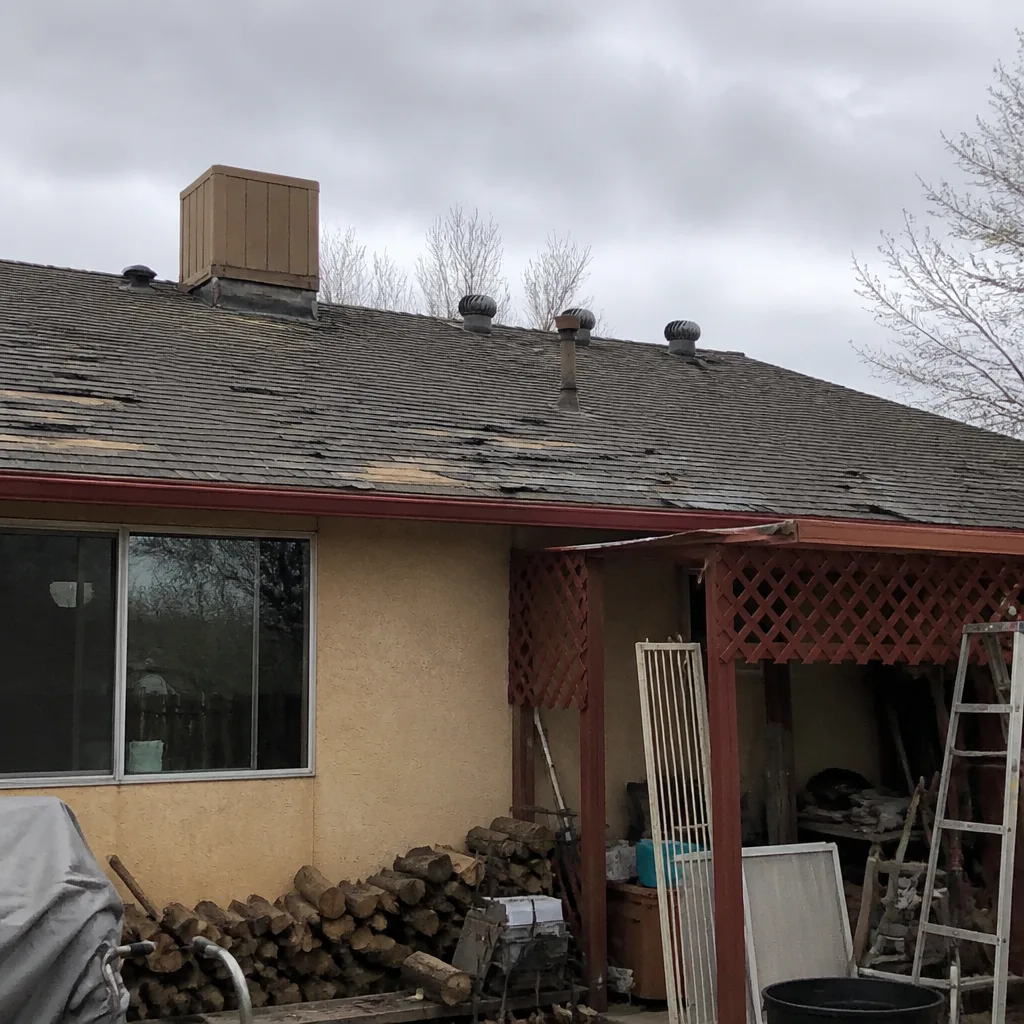 Before
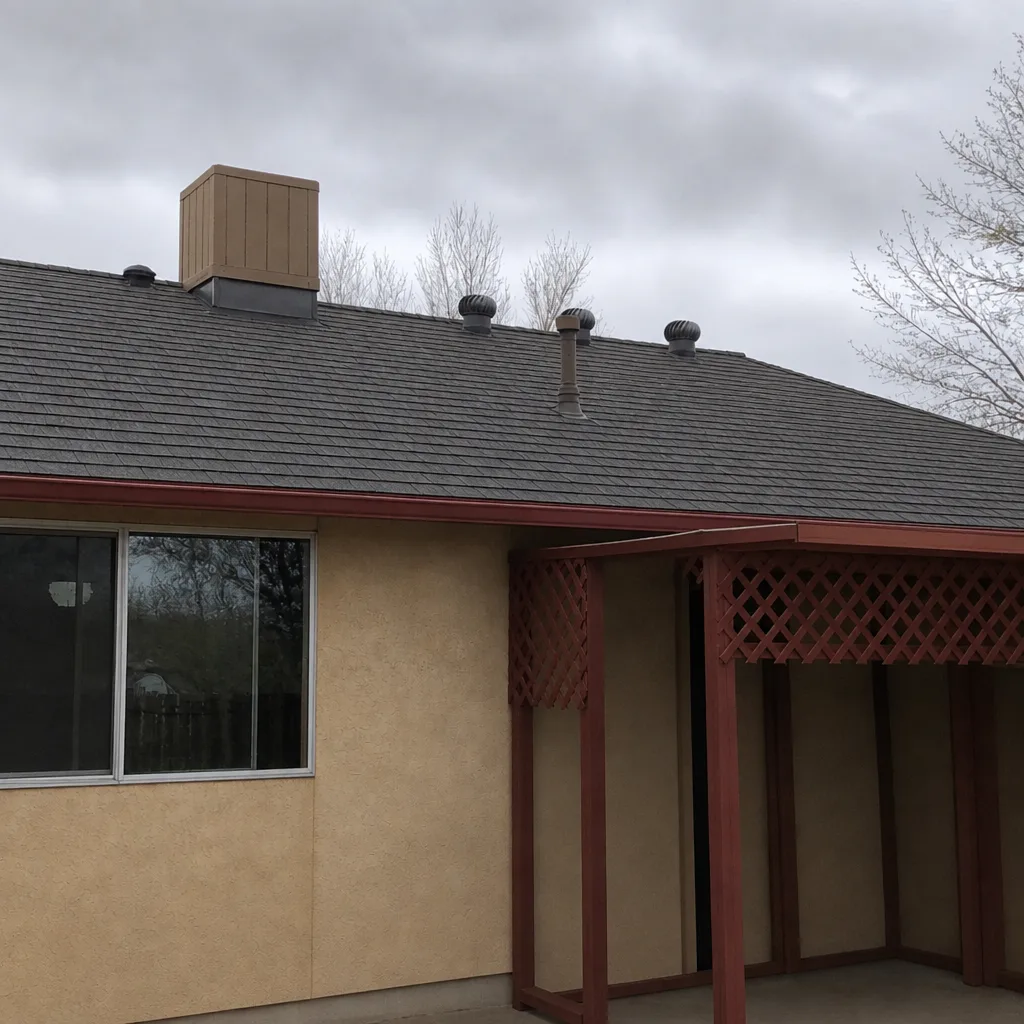 After
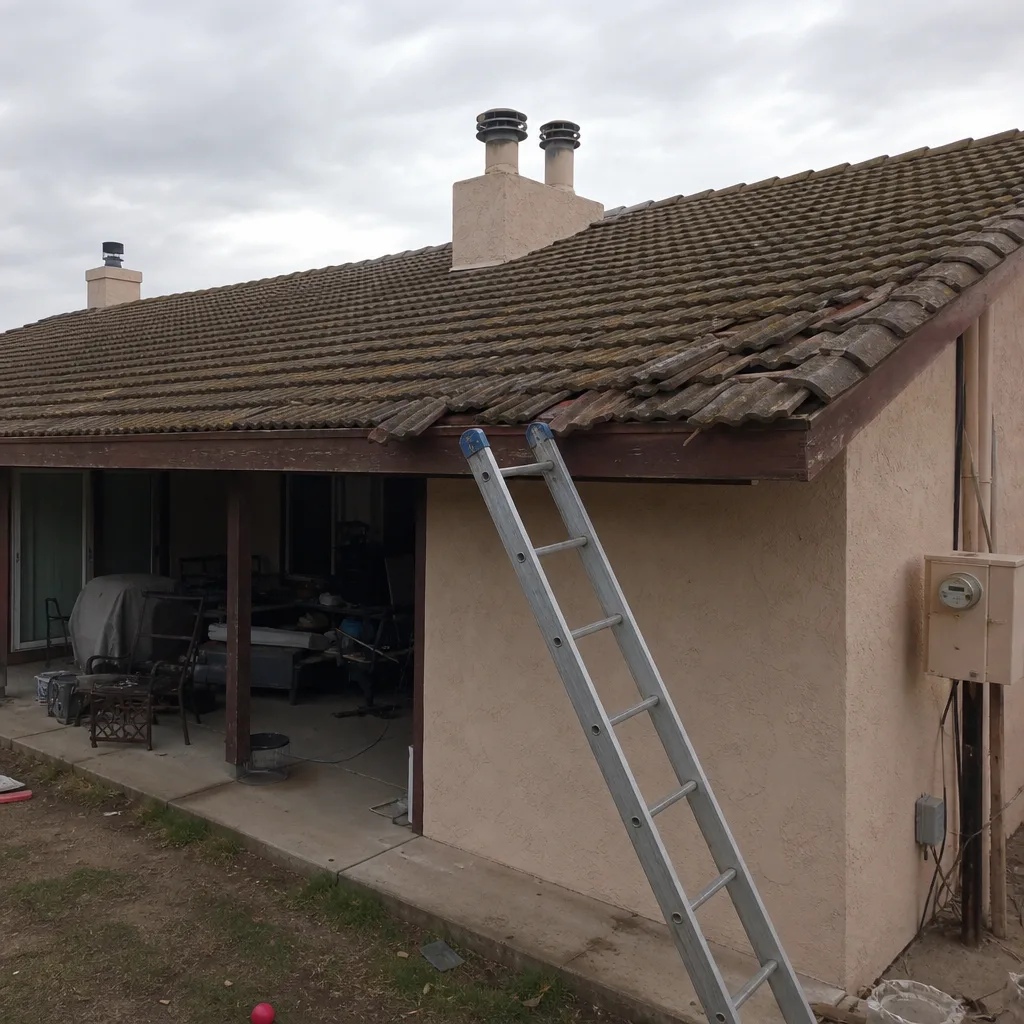 Before
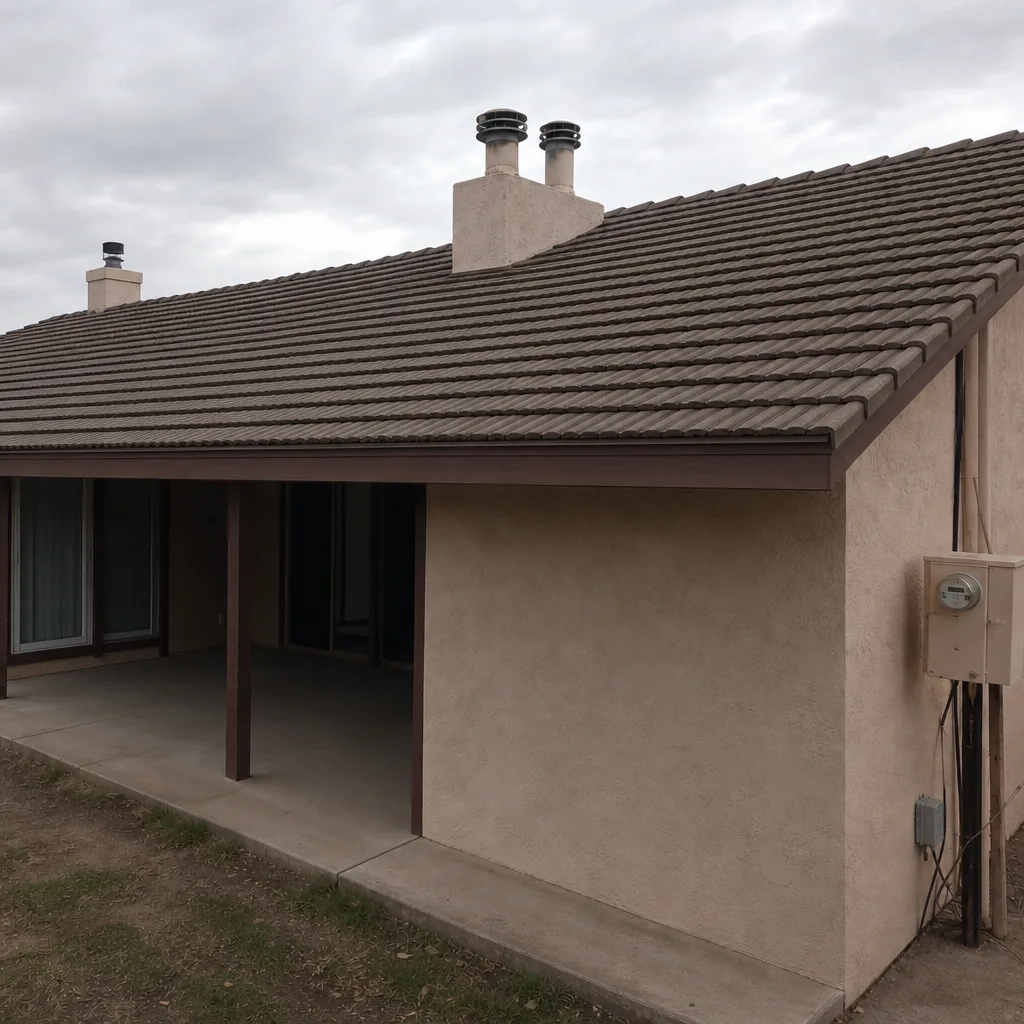 After
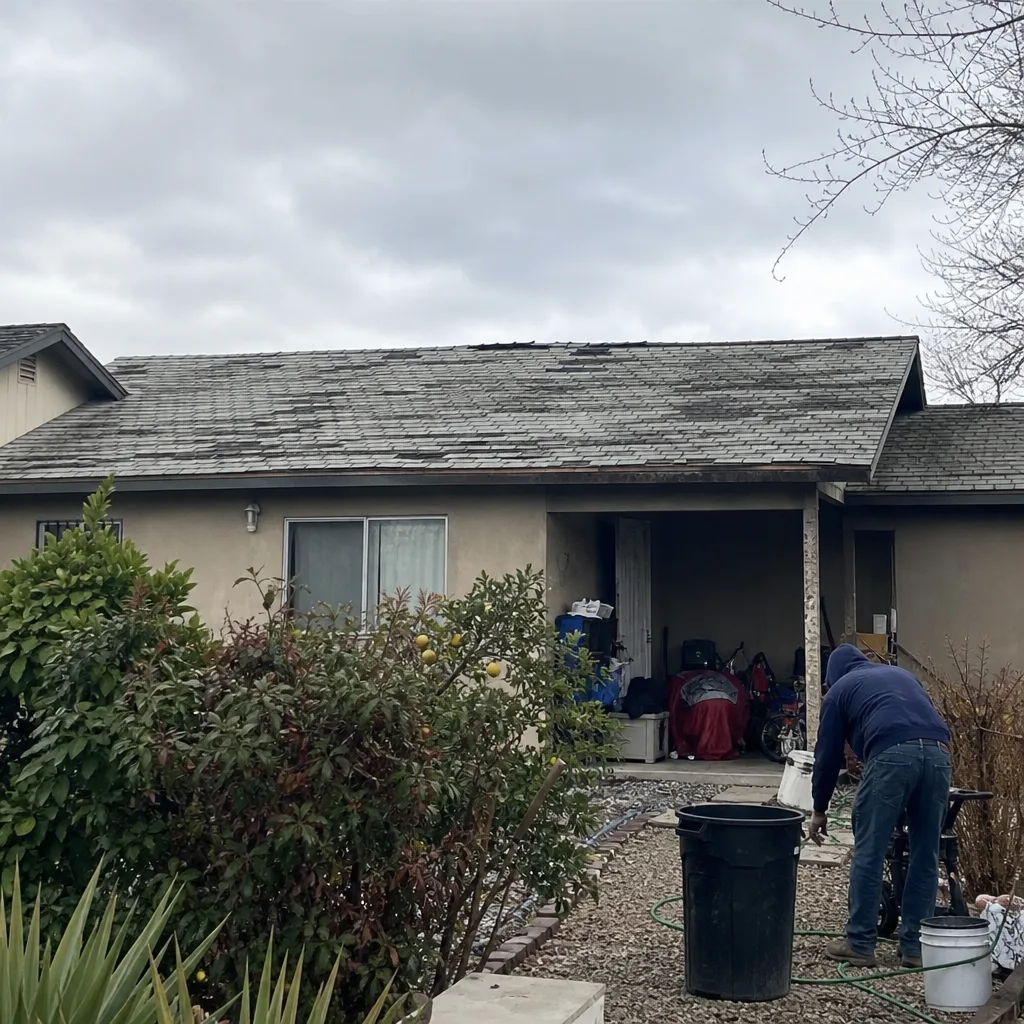 Before
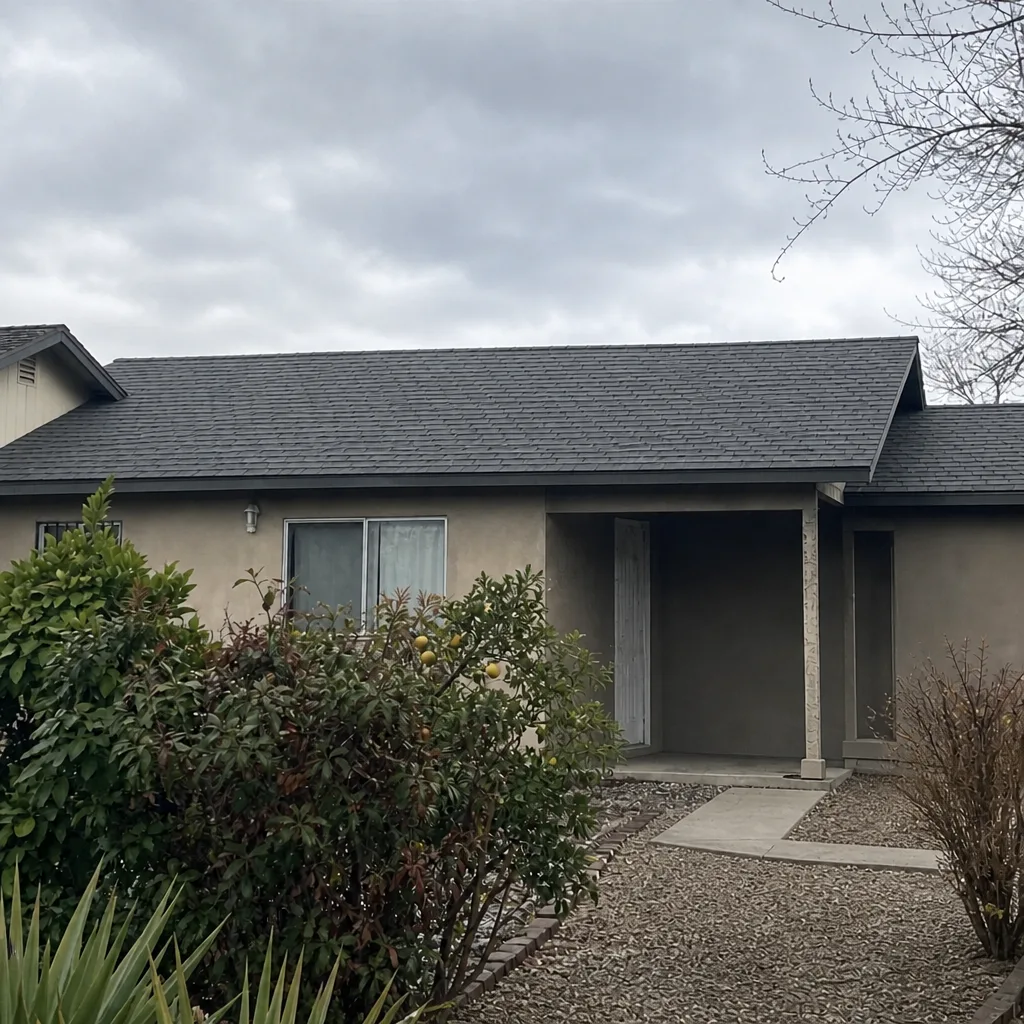 After
When to Call a Professional
Some items on this list are homeowner checks; others belong to a trained roofer. Call us when there’s daylight through the decking in the attic (before a storm, not after), when flashing or a pipe boot has cracked or lifted, when monsoon wind has lifted or torn shingles or a ridge cap, or when a leak has reached the ceiling. Call us before an insurance repair or resale inspection so your record holds up. And call us if the roof has had a past repair you didn’t document – we’ll photograph and evaluate it from the roof surface. Ridgeline Roofing Co. Spring Valley offers free estimates in Spring Valley – call (855) 908-1590 to schedule yours. Estimates are free, the quote is the written line-item estimate, and pricing is upfront – the number on the estimate is the number on the invoice, not a surprise. If anything we do isn’t right, the 90-Day Done Right Promise has you covered.
Frequently Asked Questions
Twice a year for a full inspection – once in spring (March or April) before the heat peaks, and once in fall after monsoon season – plus a quick ground-level look after any significant storm. The spring pass catches sun-baked pipe boots and caulk cracks while they’re still small, and the fall pass catches impact and water damage while it’s still documentable. Call (855) 908-1590 for a free estimate and we’ll photograph every inspection from the actual roof so you have a dated record.
Once a year is usually enough, timed for early July just before monsoon season, and mostly to make sure the downspouts deliver water away from the foundation. Desert fall litter is small and the dry season doesn’t put the load on gutters that wet climates do. If you’re not sure what’s blocked, call (855) 908-1590 and we’ll check it on a free roof estimate – the estimate is free and the work is backed by our written 90-Day Done Right Promise.
Because ultraviolet light breaks down the rubber collars ahead of anything else on the roof. We see collars chalky and cracked within a handful of summers while the surrounding shingle still has plenty of life. A cracked boot is a small repair now and a big one after a monsoon rain finds it. Call (855) 908-1590 for a free look and a written line-item quote.
We don’t recommend it, and most tile damage ends up being exactly where a footstep happened. Tile cracks, the underlayment compresses, and the repair is out of your control. Inspect from the ground with binoculars and let a technician get on the roof. If you’ve already found broken tiles, call (855) 908-1590 for a free estimate and a photo record of the repair.
Clear roof valleys and drainage paths, secure the windward-side shingles, check attached patio covers, trim nearby limbs, and photograph the whole roof as a baseline before the storms. Do it in late June or early July so the roof is ready for the first afternoon storm. If anything is loose, call (855) 908-1590 to schedule a free estimate.
Keep dated photos in labeled folders from every seasonal pass plus every repair receipt – the date stamp plus a close-up of the detail is what makes a record useful. Our technicians take photos from the roof surface on every inspection, so the file is complete. If you’re selling or filing a claim, call (855) 908-1590 for a free written estimate you can hand to the adjuster or buyer.
The Bottom Line
Desert roof maintenance is the opposite of wet-climate maintenance. Keep your attention on the sun-baked details – pipe boots and penetration seals – and your calendar tuned to two seasons: the dry spring pass and the monsoon sequence. Attic ventilation matters more here than gutter cleaning, and a two-minute ladder check beats a five-minute roof walk every time. Document each pass with dated photos and you’ll have a file that makes insurance, resale, and future repairs simple. Done right – and if it isn’t, we make it right. Call (855) 908-1590 for a free estimate in Spring Valley.
Written by the team at Ridgeline Roofing Co. Spring Valley.