
Last updated November 17, 2026
 Metal roofing
 Architectural shingles
 Tile roofing
 GAF
 Owens Corning
 Flat & low-slope
Free roof inspection with deck photos before we talk money - GAF and Owens Corning certified installation
DIY vs Professional Roofing: The Spring Valley Homeowner’s Decision Guide
Nevada law lets you roof your own primary residence. Clark County, however, still requires permits for most roofing scopes, and that single fact changes everything. A do-it-yourself re-roof done without an inspection checkpoint leaves you with the same title and insurance exposure as hiring a contractor who never pulled a permit. The work looks finished from the street, the records say otherwise, and the gap surfaces years later when you sell or file a claim. This guide maps the honest decision for Spring Valley homeowners: which jobs are within reach, which ones cost more to fix than to hire, what the county actually asks of an owner-builder, and how to weigh the real costs after you count your own hours and the risk of a second repair.
Quick Answer
In Spring Valley, most roof work beyond minor flashing repairs and single-section patching is better handled by a licensed, insured professional. The reason is rarely skill alone. It’s the combination of Clark County permit and inspection requirements, roof surface temperatures that make summer work genuinely dangerous, and manufacturer warranty language that can be voided by an unpermitted repair. DIY makes sense for small, low-risk fixes on a roof you can safely reach. Anything involving full replacement, structural decking, valleys, or the main field of the roof is where professionals usually pay for themselves.
Styles & brands we work with
- Architectural shingles
- Metal roofing
- Tile roofing
- GAF
- Owens Corning
- Flat & low-slope
Table of Contents
- The Clark County owner-builder permit: what it requires
- What DIYers can genuinely handle in Spring Valley
- Where amateur work creates more damage than it fixes
- Heat safety: why May through September changes the math
- Warranty and insurance consequences of a DIY repair
- The honest cost comparison
- Common mistakes to avoid
- When to call a professional
The Clark County Owner-Builder Permit: What It Requires
Clark County allows a homeowner to act as an owner-builder on their own primary residence, but the process is more involved than most people expect. You file for the permit yourself, you carry the legal responsibility for code compliance, and you agree to inspection checkpoints along the way. The county’s stated purpose is consumer protection: it wants to make sure work is done to code and that the person doing it understands what the code requires. For a Spring Valley homeowner planning a full re-roof, that means reading and satisfying the same standards a licensed contractor works to every day.
A typical owner-builder roofing permit involves several checkpoints:
- Application and disclosure. You submit the permit application as the owner-builder and confirm the property is your primary residence. The county limits how often and how many properties an owner-builder can use this route for.
- Scope and materials. The permit describes what’s being torn off, what’s being installed, and the underlayment and flashing details. Materials need to meet code and match the approved product.
- Pre-cover inspection. Before new material goes on, an inspector verifies the decking, underlayment, and flashing. You have to be ready on the county’s schedule, not yours.
- Final inspection. The finished roof is inspected for code compliance. This is the checkpoint that protects you at sale and at claim time.
Permit fees vary by scope and valuation, but the meaningful cost isn’t the fee itself. It’s the time, the scheduling, and the fact that you own the outcome. A missed inspection or a failed checkpoint means the work doesn’t close out, and an unclosed permit becomes a title problem when you sell. Ridgeline Roofing Co. has pulled and closed permits for Spring Valley roofs for over 42 years, and we’ve seen how often an unpermitted DIY job resurfaces at the worst possible moment.
What DIYers Can Genuinely Handle in Spring Valley
We’re not going to tell you every roof task requires a professional. Some genuinely don’t. The dividing line is reach, scale, and what’s underneath. If the work is a small patch on a single-slope section you can get to safely with a ladder and a harness anchor, and the fix doesn’t touch the main waterproofing field, a careful homeowner can do it. If the task involves the field of the roof, a valley, or anything you can’t inspect from the top, the math usually flips.
Tasks a careful DIYer can often handle safely in Spring Valley:
- Minor flashing repairs around a single vent pipe or a small chimney, where the leak is isolated and the surrounding shingles are sound.
- Single-section patching after a localized wind event, where a handful of shingles need replacement and the decking is confirmed intact.
- Clearing debris from valleys and gutters, which is a maintenance task rather than a repair.
- Sealing a small, well-defined gap in flashing with the correct sealant, after a professional inspection has confirmed there’s no hidden water intrusion.
Tasks that belong with a professional:
- Full re-roofs, tear-offs, and anything touching the majority of the roof field.
- Anything involving decking replacement, valleys, or the main ridge.
- Repairs where the leak source is unclear. Finding the source is often harder than the fix, and a wrong diagnosis wastes the repair.
- Any work that requires a permit for code compliance.
In our experience across Spring Valley, the honest DIY jobs are usually the ones an inspector wouldn’t have flagged anyway. When you’re not sure which side of that line a task is on, a free second opinion on a written estimate will tell you more than a weekend of guessing. You can read more about Roof Repair in Spring Valley to see how the smaller jobs are typically scoped.
Where Amateur Work Creates More Damage Than It Fixes
The most expensive roofs we’ve been called to in Spring Valley aren’t the ones that were neglected. They’re the ones where a homeowner started the work, got partway, and stopped. A torn-off section that sits open for a week during a monsoon-season push exposes the decking to moisture. A patched valley done with the wrong underlayment traps water rather than shedding it, and the damage moves sideways under the adjacent, still-intact field before anyone notices. That’s the trap: the repair looks complete and isn’t, and the failure shows up months later somewhere else.
The higher-risk work that amateurs most often misjudge:
- Valleys and penetrations. Water concentrates here, and a small error spreads damage under the surrounding roof.
- Flashing at wall-to-roof junctions. Get the step flashing wrong and you’ve created a slow leak that runs into the wall cavity.
- Decking. Soft spots and rot are invisible from above until the old material is off, and the fix has to be structural, not cosmetic.
- Ridge and hip caps. Improperly fastened caps lift in desert wind, and the failure is fast.
Heat is a reason in its own right, and we cover it next. The combination of working on a hot, steep surface with a time pressure to “just get it done before it rains” is where more damage happens than in any other scenario. When you’re weighing the fix, a professional inspection documents what’s actually wrong with photos taken from the roof itself, which is a far better starting point than a guess from the driveway.
Heat Safety: Why May Through September Changes the Math
Working on a Spring Valley roof between May and September is a different physical task than working on it in February. By late morning the surface can be hot enough to make kneeling and hand-contact uncomfortable and, with sun exposure, genuinely dangerous. The narrow, reasonable working window in midsummer starts before 7 a.m. and closes fast. Professional crews plan around that window, rotate labor, hydrate on a schedule, and treat heat as a hazard to manage rather than a discomfort to push through. A homeowner working alone has none of those advantages and often no one on the ground watching for signs of heat illness.
What the trained approach actually looks like:
- Work is scheduled early. Crews are on the roof at first light and off before the surface temperature peaks.
- Hydration and rest are planned, not improvised. Heat illness is a real hazard, and it comes on faster than most people expect.
- Work is paced across more than one day if needed. A professional crew isn’t racing a single Saturday to beat the weather.
- Fall protection is standard. Ladders, harnesses, and edge awareness are routine rather than afterthoughts.
If you’re going to be on your own roof in Spring Valley at any point between May and September, work before 7 a.m., have another adult on the ground, and stop when you feel off. For anything that requires more than one early-morning session, call us. A roofer who knows when to bring the work to a licensed crew is doing that crew a favor as much as anyone else.
Warranty and Insurance Consequences of a DIY Repair
Manufacturer warranties are written to protect the manufacturer, and the language is specific. Most full-system warranties from brands like GAF, Owens Corning, and CertainTeed require that the roof be installed by a properly licensed, qualified installer with the manufacturer’s approved materials. A single repair done by a homeowner, or by an unlicensed helper, can void the remaining warranty on adjacent material. That’s the part most homeowners don’t learn until they need the warranty and are told it doesn’t cover them. In our experience, that’s one of the more common reasons a Spring Valley homeowner ends up replacing a roof that had years of coverage left on paper.
Insurance is the second half of the problem. Most homeowner policies expect roofs to be maintained and, on a claim, expect documented work. That means a permit trail, an inspection record, and receipts. If a leak is traced to an unpermitted DIY repair, the insurer may deny the claim or cover only the pre-existing damage, depending on how the policy reads. The county’s inspection checkpoints exist partly to protect exactly this record. In a market where roofs face monsoon-season rain and summer heat, that record is what stands between you and a repair bill you didn’t budget for.
If you have any unpermitted work on your roof, or a repair you aren’t sure was documented, the safest step is to have it looked at and photographed. Roof Replacement & Installation in Spring Valley covers what a documented install looks like end to end, and our team can tell you whether the coverage on your current roof is still intact.
The Honest Cost Comparison
The DIY-versus-pro comparison that most people run misses half the line items. The homeowner sees material cost versus a contractor’s bid and stops there. The honest number includes tool rental, permit fees, disposal, the value of your time, and the probability-weighted cost of a professional repair if the DIY work fails. In Spring Valley, where June heat shortens the working window and monsoon-season rain can arrive mid-project, the probability of a second repair is not small. Here’s how the honest math usually lands:
- Materials on a single-section patch: typically $60 to $200 depending on the product and how much surrounding material you match.
- Tool rental for a patch or small flashing repair: often $50 to $150 if you don’t already own a ladder, harness, roofing bar, and correct fasteners.
- Clark County owner-builder permit fees: variable by scope, and well outside the range most homeowners expect.
- Disposal: old material has to be hauled, and the dump fee is real.
- Your time: a Sunday afternoon for a patch. A series of early mornings for anything bigger.
- Probability-weighted repair cost: a failed DIY fix on the field of the roof often costs more to correct than the professional job would have cost in the first place, because the second repair has to undo the wrong one.
On the professional side, the number on the estimate is the number on the invoice. No change orders, no surprise line items, and a written 90-Day Done Right Promise that means if the work isn’t right, we come back and make it right. For a smaller repair, that’s often the difference between doing the job once and doing it twice. For a full job, it’s a different order of decision, and the Ridgeline Roofing Co. Spring Valley home page walks through how we scope full-system work.
Common Mistakes to Avoid
- Skipping the permit because the job “feels small.” In Clark County, unpermitted work that later needs inspecting, closing, or disclosing at sale becomes a much bigger problem than the permit would have been. Pull it or hire someone who will.
- Starting an open tear-off before monsoon season. A section of roof torn off and left exposed through a summer storm in Spring Valley can turn a repair into a decking replacement. Plan the weather window before you touch anything.
- Working the roof surface after mid-morning in summer. It’s not about toughness. Roof surface temperatures and sun exposure combine fast, and a lone homeowner has no one watching for heat illness.
- Mismatching materials on a warranty-critical roof. Using a different shingle or underlayment than the rest of the field can void remaining manufacturer coverage on adjacent material.
- Patching a leak without finding the actual source. Water often travels under the field before it shows up, and patching the visible wet spot leaves the real entry point open.
- Trusting a bid from a truck that isn’t from around here. A storm-chasing outfit can quote low, do the work, and be gone before the first callback. Ask who’s answering the phone in a year.
- Relying on a driveway speech instead of a documented inspection. Photos taken from the actual roof tell you what’s wrong. A pitch delivered in your driveway doesn’t.
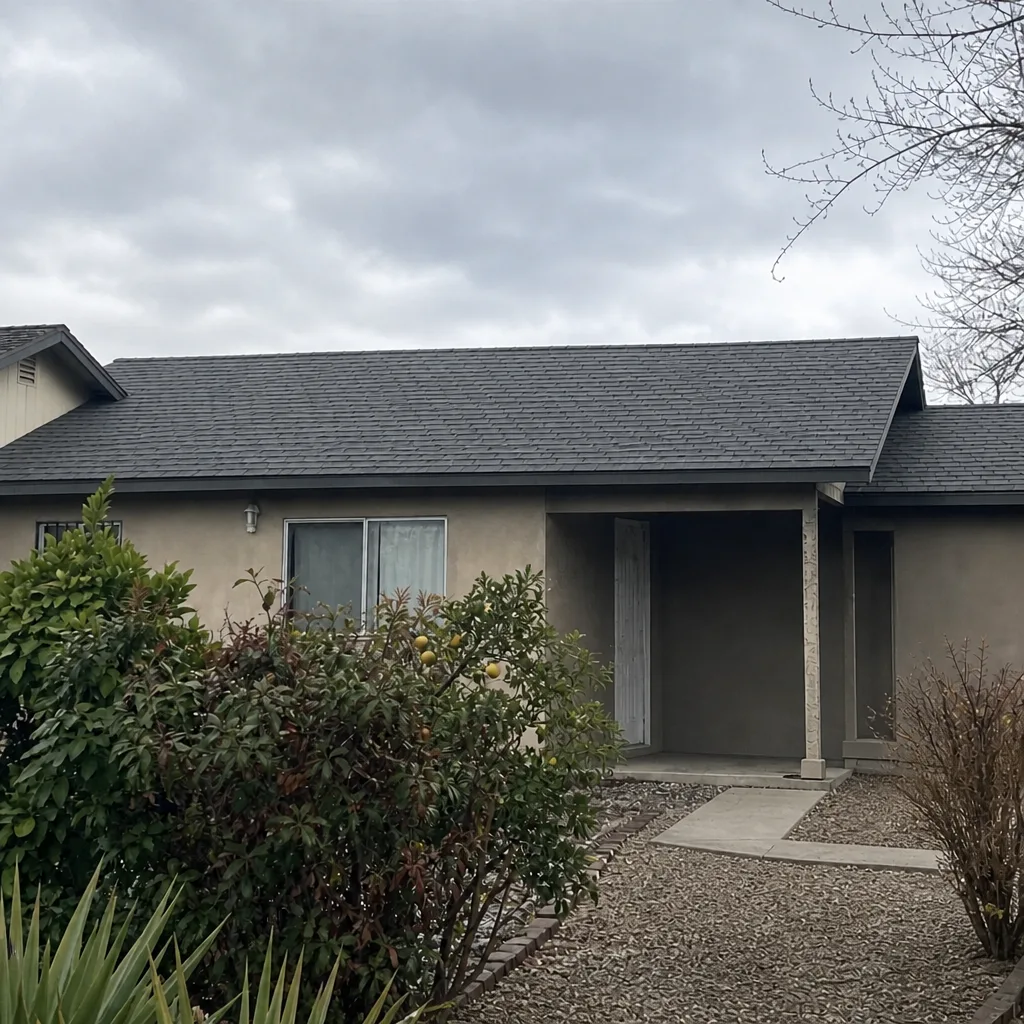
See the difference
 Before
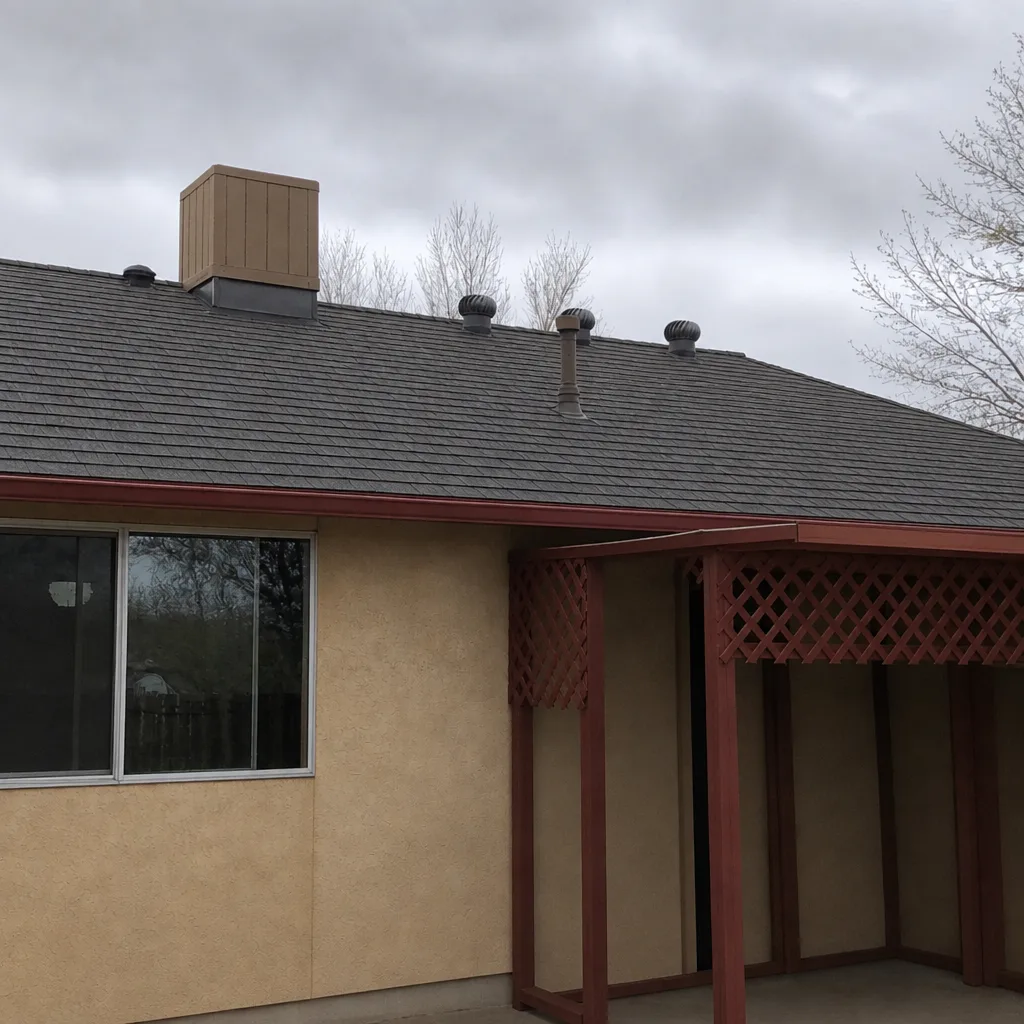 After
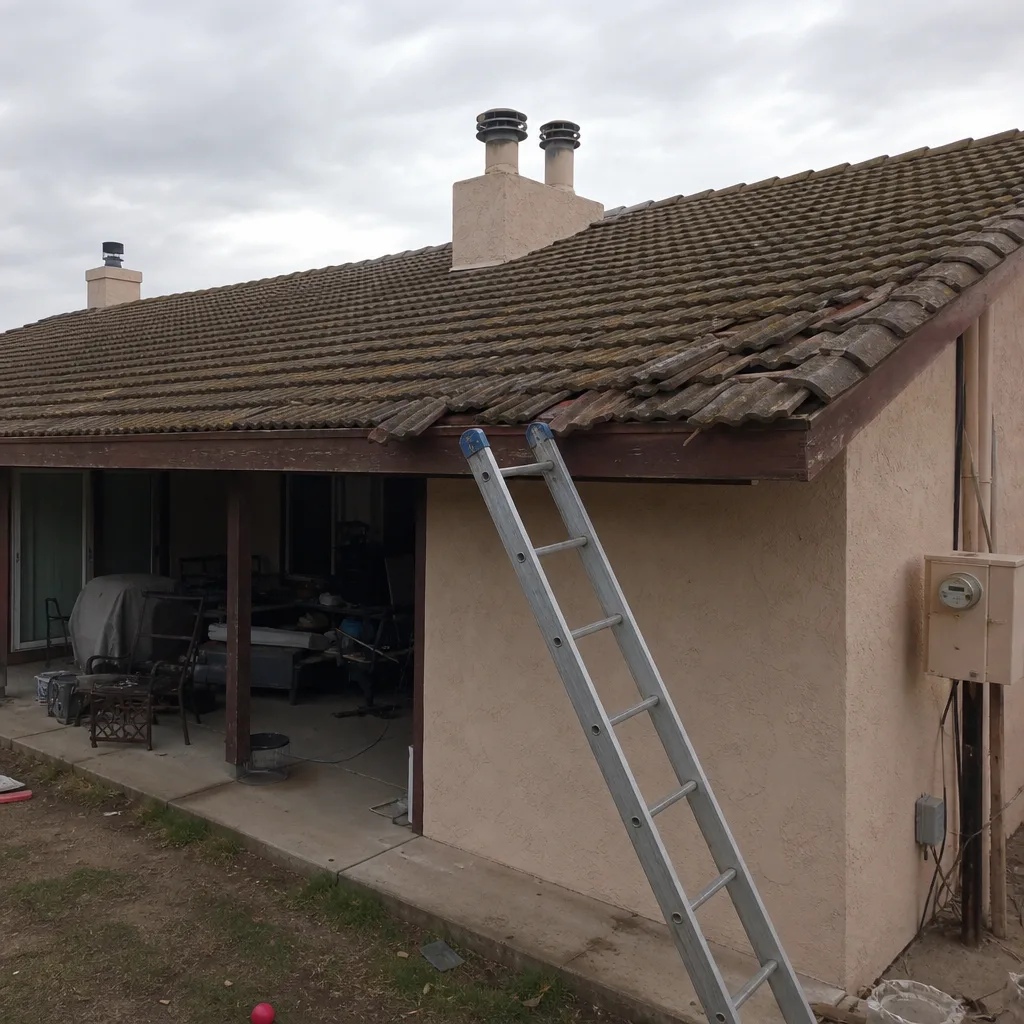 Before
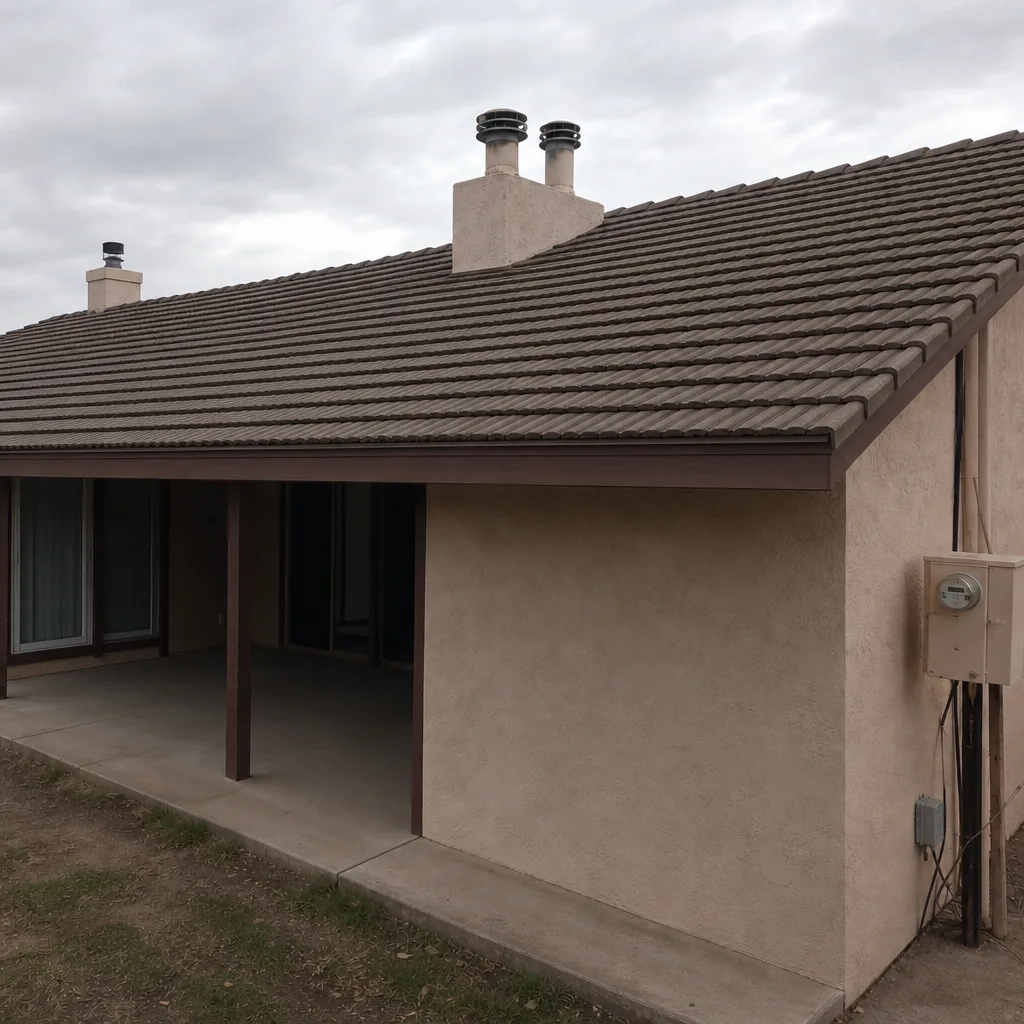 After
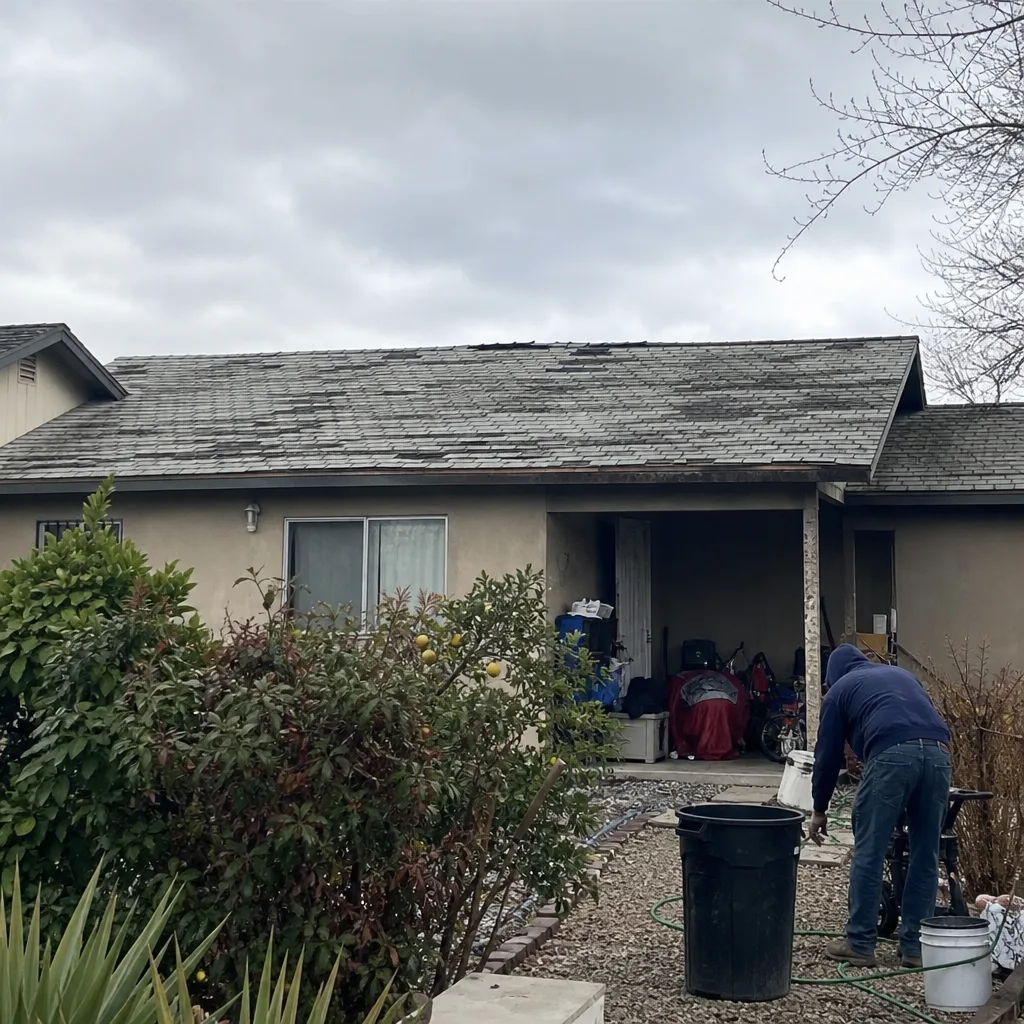 Before
 After
When to Call a Professional
Call a professional when the work touches the field of the roof, a valley, decking, or the main ridge. Call when the leak source isn’t clear. Call before a full re-roof, before anything that needs a permit, and before any repair that requires more than one early-morning session in summer. Call if there’s unpermitted work on the roof, if manufacturer warranty coverage matters to you, or if you simply want a documented inspection before you decide. This is true in every neighborhood in Spring Valley, from the tracts near Rhodes Ranch to the older homes off Flamingo and Rainbow.
Ridgeline Roofing Co. Spring Valley offers free estimates in Spring Valley. Call (855) 908-1590 and a live person will answer, day or night. Our technicians are background-checked and arrive in uniform, we’re authorized installers for GAF, CertainTeed, and Owens Corning among other manufacturer lines, and every job is documented with photos taken from your actual roof. If your roof has specialty materials, the Specialty Roofing in Spring Valley page covers those scopes too.
Frequently Asked Questions
Yes. Nevada law allows a homeowner to act as an owner-builder on their primary residence, but Clark County still requires permits for most roofing scopes and inspection checkpoints along the way. The permit and inspection records are what matter at sale and at claim time, and skipping them creates the same problems as hiring an unlicensed contractor. If you want the permit pulled and closed correctly without owning the process, call (855) 908-1590 for a free estimate.
A typical repair in Spring Valley runs a few hundred dollars for a localized fix and scales with scope: a small flashing repair costs less than a valley repair or a section replacement, and a full re-roof is a separate conversation entirely. The only way to get an exact number is a documented inspection, and ours are free. Call (855) 908-1590 and we’ll come out with photos and a written quote.
It can. Most full-system manufacturer warranties from GAF, CertainTeed, and Owens Corning require installation by a licensed, qualified installer using approved materials. A homeowner repair, or work by an unlicensed helper, can void the remaining warranty on adjacent material even when the rest of the roof is still covered. If you have a warranty you care about, call (855) 908-1590 before the work starts, not after.
Often yes, as long as the work is a small, isolated patch on a section you can safely reach and get off before the roof surface heats up, ideally before 7 a.m. Anything that involves the field of the roof, a valley, decking, or more than one session is where the heat risk and the water risk both go up. Call (855) 908-1590 for a free estimate if you’re not sure which side of that line you’re on.
Yes. We pull permits and see the work through its inspection checkpoints so your roof closes out with a clean record for sale and insurance purposes. We’ve done this for Spring Valley roofs for over 42 years, and it matters more than people realize when a claim or a sale arrives. Call (855) 908-1590 to schedule your free estimate.
Ask three things: where they’re going to be next spring, whether they’ll put the price in writing with no change orders, and who answers their phone in February. A community-rooted company hires local crews, trains apprentices, and plans to be here in thirty years. We stand behind every job with our written 90-Day Done Right Promise and a live person answers our phone around the clock. Call (855) 908-1590 for a free estimate.
The Bottom Line
DIY roofing in Spring Valley isn’t a yes-or-no question. It’s a line. On one side are the small, low-risk fixes a careful homeowner can do safely: a flashing repair, a single-section patch, maintenance. On the other side are full re-roofs, field repairs, valleys, decking, and anything needing a permit, and that’s where the cost of a mistake outruns the savings. Factor in Clark County’s owner-builder requirements, summer roof temperatures that cut the working window to a few early-morning hours, and manufacturer warranties that a single unpermitted repair can void, and the math usually favors a professional for anything beyond the small stuff. The goal isn’t the cheapest path. It’s the roof you never have to think about again.
If you’d like a documented inspection before you decide, or a free second opinion on a written estimate you already have, call (855) 908-1590 at Ridgeline Roofing Co. Spring Valley. A live person answers every call, day or night, and estimates are free.
Written by the team at Ridgeline Roofing Co. Spring Valley.