
Last updated November 17, 2026
 Architectural shingles
 Metal roofing
 Tile roofing
 GAF
 Owens Corning
 Flat & low-slope
Free roof inspection with deck photos before we talk money - GAF and Owens Corning certified installation
Roof Repair Maintenance Schedule: What to Do and When
Here’s the task that saves more Spring Valley roofs than any other, and almost nobody does it: twenty minutes in late May, walking the roof line with a tube of roof-grade sealant, checking every pipe boot and flashing collar before the monsoon arrives. It costs nothing but an afternoon. It prevents the majority of the storm-related repair calls we get in July and August, when a half-inch of rain finds the one cracked collar you skipped. This guide gives you a maintenance schedule built for Spring Valley’s calendar – two stress seasons, not four gentle ones – and it tells you which tasks genuinely extend a roof’s life and which ones are contractor upsells you can ignore.
Quick Answer
A roof maintenance schedule in Spring Valley should run on two anchor points, not four seasons: a pre-monsoon inspection and sealant pass in late May to early June, and a post-monsoon debris and drainage check in September to October after the summer storms settle. Add a quick visual check after any wind event, and a full professional inspection every two to three years. Roofs here age mainly through heat cycling and monsoon-driven water intrusion, so timing your work around those two forces matters more than the calendar month on a generic checklist.
Styles & brands we work with
- Architectural shingles
- Metal roofing
- Tile roofing
- GAF
- Owens Corning
- Flat & low-slope
Table of Contents
- Why a National Maintenance Calendar Fails in Spring Valley
- The Pre-Monsoon Pass: Late May to Early June
- The Post-Monsoon Pass: September to October
- Pipe Boots and Flashing: The DIY Job That’s Actually Safe
- Gutters and Fascia in a Desert Climate
- What’s Worth Doing and What’s an Upsell
- Building a Photo Log That Protects You at Claim and Resale Time
- Common Mistakes to Avoid
Why a National Maintenance Calendar Fails in Spring Valley
Most roof maintenance advice is written for a place with four mild seasons and steady rain spread across the year. Spring Valley isn’t that place. Here, the roof takes its punishment in two concentrated windows. From May into June, daytime temperatures climb well past 100 degrees and the roof deck bakes for hours, expanding and contracting through the day and stressing every seam, fastener, and sealant bead. Then the monsoon arrives, and suddenly the roof that cooked all summer is getting hit with fast, hard rain. That one-two punch – heat loading followed by sudden water – is what actually drives most of the roof failures we see in Spring Valley.
The practical takeaway is that your maintenance effort should be front-loaded before the rain, not spread evenly across the year. A homeowner who does a real check in late May prevents damage. A homeowner who follows a “check the roof every spring” template in March, then forgets it, walks into monsoon season with the same cracked sealant he had last year. We’ve watched this play out for years across Spring Valley, and it’s why we schedule our own inspection reminders around the two stress seasons rather than the equinox.
Understanding your roof’s material matters here too. Asphalt shingles from a quality line like GAF or CertainTeed handle desert heat cycling better than older organic-mat shingles, but no shingle is immune to fifteen or twenty summers of it. If you’re unsure what you have, a documented inspection is the place to start – and our roof repair in Spring Valley page walks through what we look for on a typical valley roof.
The Pre-Monsoon Pass: Late May to Early June
This is the important one. The pre-monsoon pass is about finding and sealing the small openings before the first real rain of the season turns them into leaks. Do this in late May, before the monsoon pattern sets up, and you’ll head off most of the July and August repair calls that flood every roofer in town once the storms hit.
Work from the ground up before you ever get on the roof. From a ladder at the eaves, scan for lifted or missing shingles, sagging spots, and any granule accumulation in the gutters (a sign of shingle wear). Then, if it’s safe and your roof pitch allows it, do a close pass on the vulnerable spots:
- Inspect every pipe boot and flashing collar for cracked or dried-out rubber and lifted sealant. This is the number-one leak source in Spring Valley.
- Check the sealant along the roof-to-wall juncture and around any skylight or vent.
- Look at the flashing around the chimney, looking for gaps or rusted metal.
- Confirm no shingles are curling, cracking, or missing tabs, especially on the sun-facing slope.
- Note everything you find with a photo, even the small stuff, so you have a record.
Do this pass in the cool of early morning. Roofing surfaces in late-May Spring Valley get hot enough to be genuinely unsafe by mid-morning, and heat also makes sealant harder to work. Our technicians are trained and background-checked for this work, and if the pitch or condition is beyond a safe walk, that’s exactly when to leave it to a pro rather than test your balance on a hot desert roof.
The Post-Monsoon Pass: September to October
Once the summer storms taper off, usually by mid-September, the roof is carrying debris – leaves, grit, granule shed, and whatever the wind blew up there – and that material does quiet damage. It holds moisture against the surface, clogs the drainage, and hides developing problems under a layer of grit. The post-monsoon pass is about clearing the roof and confirming nothing got through during the rainy season.
This is a ground-level and gutters-first job for most homeowners. Clear the gutters and downspouts completely – we’ll explain why below. Sweep debris off low-slope sections and valleys where it collects. Then look for the tell-tale signs of monsoon intrusion from inside the attic:
- Fresh water stains or dark rings on the roof deck or rafters
- Damp or compressed insulation in one spot
- Daylight showing through the roof boards
- Musty smell, which in a desert climate usually means trapped moisture
If the attic looks dry and the gutters run clear, you’re in good shape. If you find staining, that’s a strong signal to get eyes on the roof before the next season. A documented inspection at that point tells you whether it’s a small repair or something bigger, and it gives you the photos you’ll want later. For anything beyond a small patch, our roof replacement and installation in Spring Valley page covers what a full assessment looks like when repair no longer makes sense.
Pipe Boots and Flashing: The DIY Job That’s Actually Safe
Here’s the good news: the single most valuable maintenance task in Spring Valley – resealing pipe boots and flashing collars – is one a careful homeowner can do safely, provided you stay off steep slopes and never get on a hot roof. The pipe boot is the rubber or neoprene collar that seals where a plumbing vent pipe comes through the roof. Desert sun dries that rubber out, it cracks, and monsoon rain finds the gap. When this job is done right, before the season, it prevents more leaks than any other single task.
The safe version, done from a stable ladder at the roof edge or on a low-slope section:
- Inspect the collar for cracks, brittleness, or a lifted edge.
- Clean the surface around the boot with a dry cloth so sealant will bond.
- Apply a bead of roof-grade sealant (not silicone caulk from the hardware store) around the base of the boot and any lifted edge.
- Press it smooth and let it cure fully before the next rain.
- Take a dated photo of the finished seal for your log.
One rule matters more than any other: know your warranty before you touch anything. If you’ve had work done by a contractor with a written workmanship guarantee, call them first. Most guarantees – including our own 90-Day Done Right Promise – expect to be the ones who make repairs during the covered period. DIY sealant work in those spots can complicate a claim, so confirm before you reach for the tube. If you’re not sure whether your roof is still under a guarantee, a quick call sorts that out fast.
Gutters and Fascia in a Desert Climate
The most common misconception we hear in Spring Valley is that gutters don’t matter because it barely rains. The truth is the opposite in a specific way. Because rain arrives in intense bursts rather than gentle drizzles, the water that does come lands all at once, and a clogged gutter can’t handle the sudden volume. It backs up, sits against the fascia board and the roof edge, and over a few seasons that trapped moisture rots fascia and works its way toward the roof deck.
That’s the gutter-to-fascia relationship, and it’s why clean gutters matter especially in a desert. Debris that blows in during the dry months – dust, grit, seed pods, and leaves – collects in the channel. The first monsoon rain can’t move it, so the water has nowhere to go but back onto the house.
So add gutter clearing to both passes of your schedule. Late May clears the spring accumulation before the rain. September to October clears the summer debris before the dormant months, when any trapped moisture has weeks to work on the fascia unnoticed. While you’re at it, check that downspouts pour water away from the foundation, and look for any sagging or pulling away from the fascia. Gutter work is also where we see cheap upsells get pitched; honest advice is that a simple annual clearing prevents most gutter problems, and you don’t need a “gutter guard upgrade” every other year unless debris is genuinely overwhelming. Our gutter and accessories work is part of the broader service we cover from our Ridgeline Roofing Co. Spring Valley home.
What’s Worth Doing and What’s an Upsell
Not every maintenance task extends roof life by the same amount, and some of what gets sold in the driveway has marginal benefit. We’d rather you spend your money where it counts. Here’s our honest read, based on years of Spring Valley roofs.
- Worth doing: Pre-monsoon sealant check on boots and flashing. This is the highest return of anything on the list, and it’s basically free.
- Worth doing: Gutter clearing twice a year, for the fascia protection described above.
- Worth doing: A documented professional inspection every two to three years, so small problems get caught before they compound.
- Worth doing: Fixing a small leak promptly. A $200 repair deferred becomes a deck repair later.
- Often an upsell: Repeated “rejuvenating” treatments or coatings sold on a schedule. Some help, some are sold far too often. Ask what specific problem it solves.
- Often an upsell: Pushing a full replacement when a targeted repair is still the right call. Ask any roofer to show you the actual photos and explain the specific failure.
The test is simple: a real maintenance task addresses a specific, photographable problem you can see on your own roof. If a contractor can’t show you the problem in a photo taken from your roof, be skeptical. We document every inspection that way, and it’s how we keep our advice honest rather than a scary speech in the driveway.
Building a Photo Log That Protects You at Claim and Resale Time
A simple dated photo log is one of the most useful things you can build, and it takes five minutes a year. Insurance companies and buyers both respond to evidence. When a monsoon storm damages your roof and you file a claim, a log showing the roof was well maintained and recently inspected tells the adjuster you’re not claiming a problem you created. When you sell, a buyer relaxes when he sees a record of steady care rather than a spotless story.
Build it like this:
- Create one folder on your phone and name it with the year.
- Photograph the roof from a few consistent angles after each maintenance pass (early morning light is best).
- Photograph anything you sealed or repaired, close up and dated.
- Keep a simple written note of what you did and when, one line per task.
- Save any professional inspection reports and photos in the same folder.
Keep the log even after a repair or replacement. If you had a roof replaced, the photos of the finished job and the manufacturer’s line – say, an Owens Corning or Tamko system – belong in the file too. That’s the record a buyer wants to see. For specialty systems, such as tile or metal that need their own care routine, our specialty roofing in Spring Valley page explains how the maintenance schedule shifts for those materials.
Common Mistakes to Avoid
- Following a spring/fall calendar instead of a monsoon calendar. If you inspect in March and then forget it, you walk into July with the same cracked sealant. Time your work to late May and September to October in Spring Valley.
- Skipping the pipe boots because they look fine. Dried rubber often looks intact until you press it. Check every collar by touch, not just by glance.
- Getting on a hot roof in the afternoon. Desert roof surfaces in late-May Spring Valley get dangerously hot by midday. Do the work early, and stay off steep slopes entirely.
- Sealing over a workmanship warranty. If a contractor with a written guarantee repaired that spot, call them before you add sealant of your own, or you may complicate the claim.
- Ignoring gutters because “it barely rains.” The intense bursts of monsoon rain overwhelm a clogged gutter and back up against the fascia. Clean them twice a year.
- Trusting a scary driveway speech over a photo. Ask any roofer to show you the actual problem on your actual roof. If there’s no photo, be wary of the upsell.
- Letting a small leak wait until “after the season.” In Spring Valley, a half-inch gap becomes deck damage fast. Small repairs done early are far cheaper.
See the difference
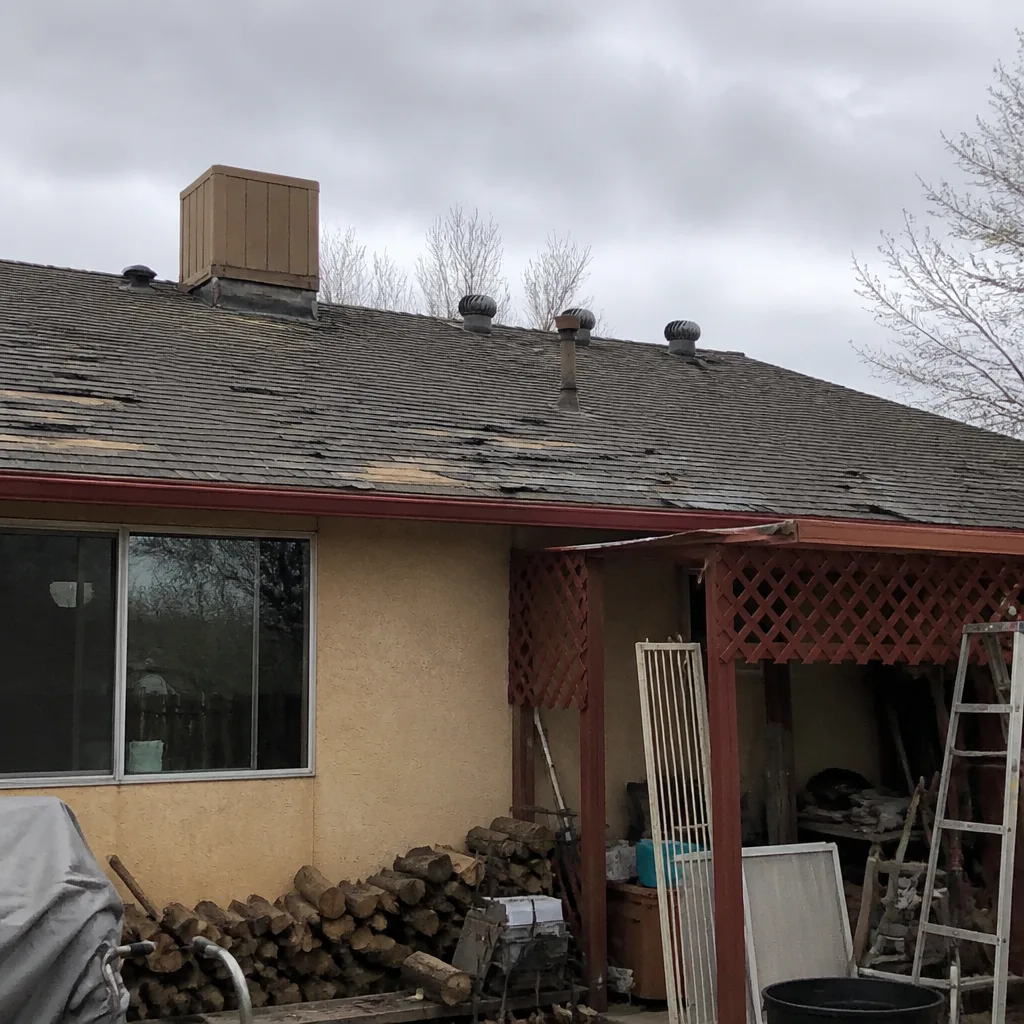 Before
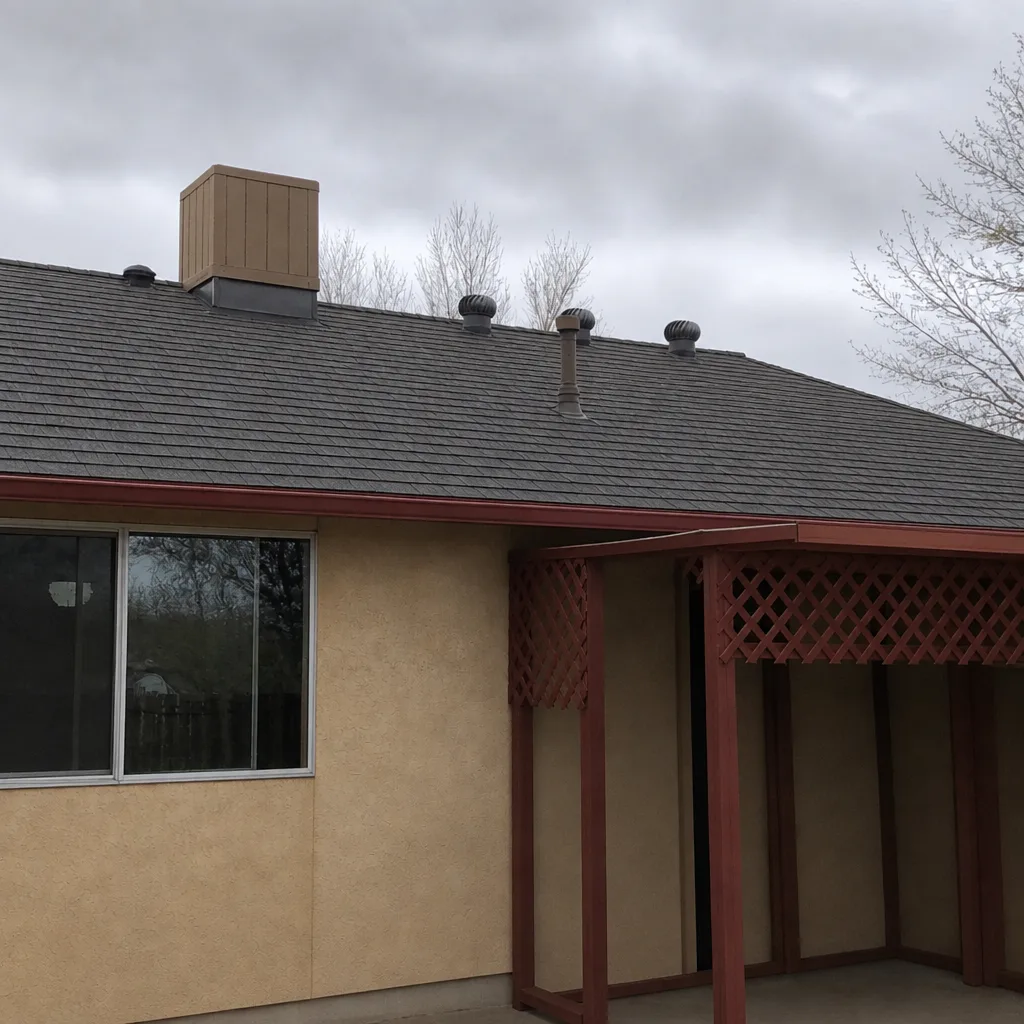 After
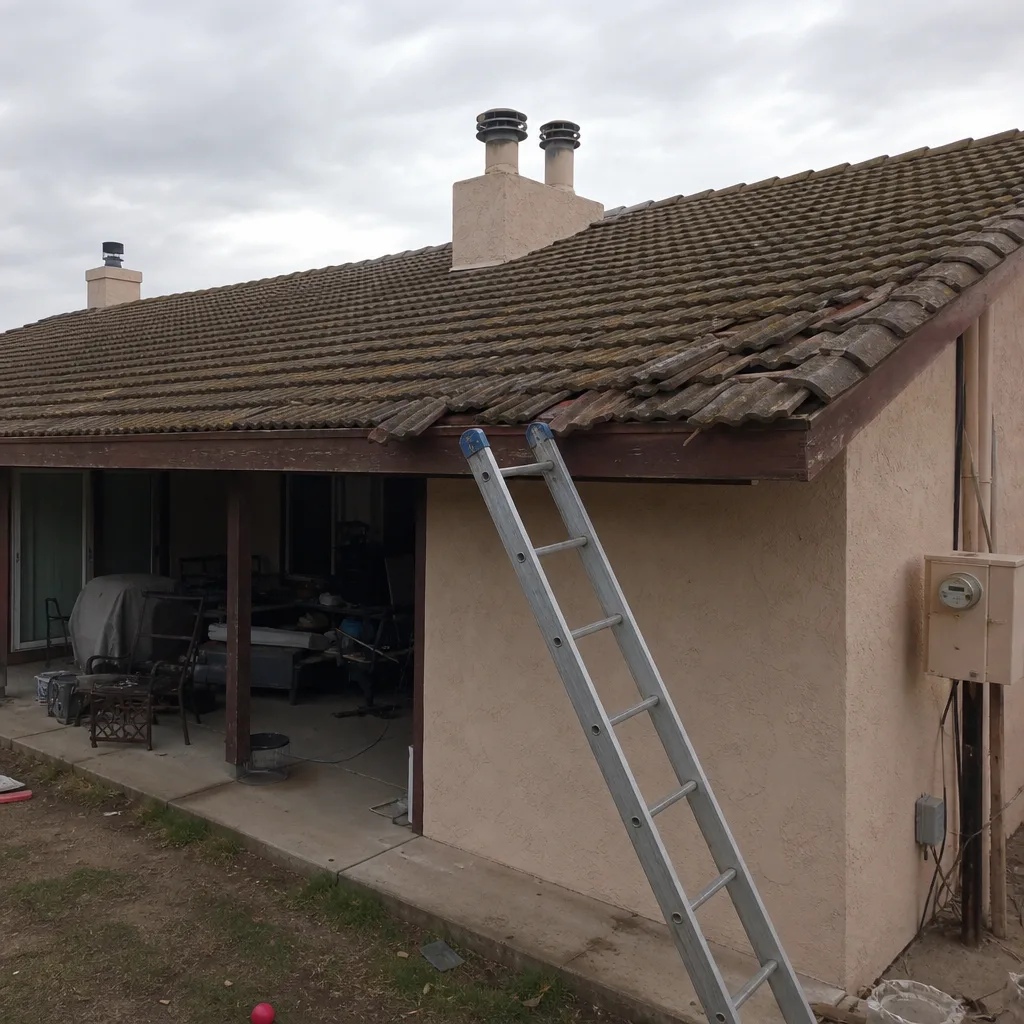 Before
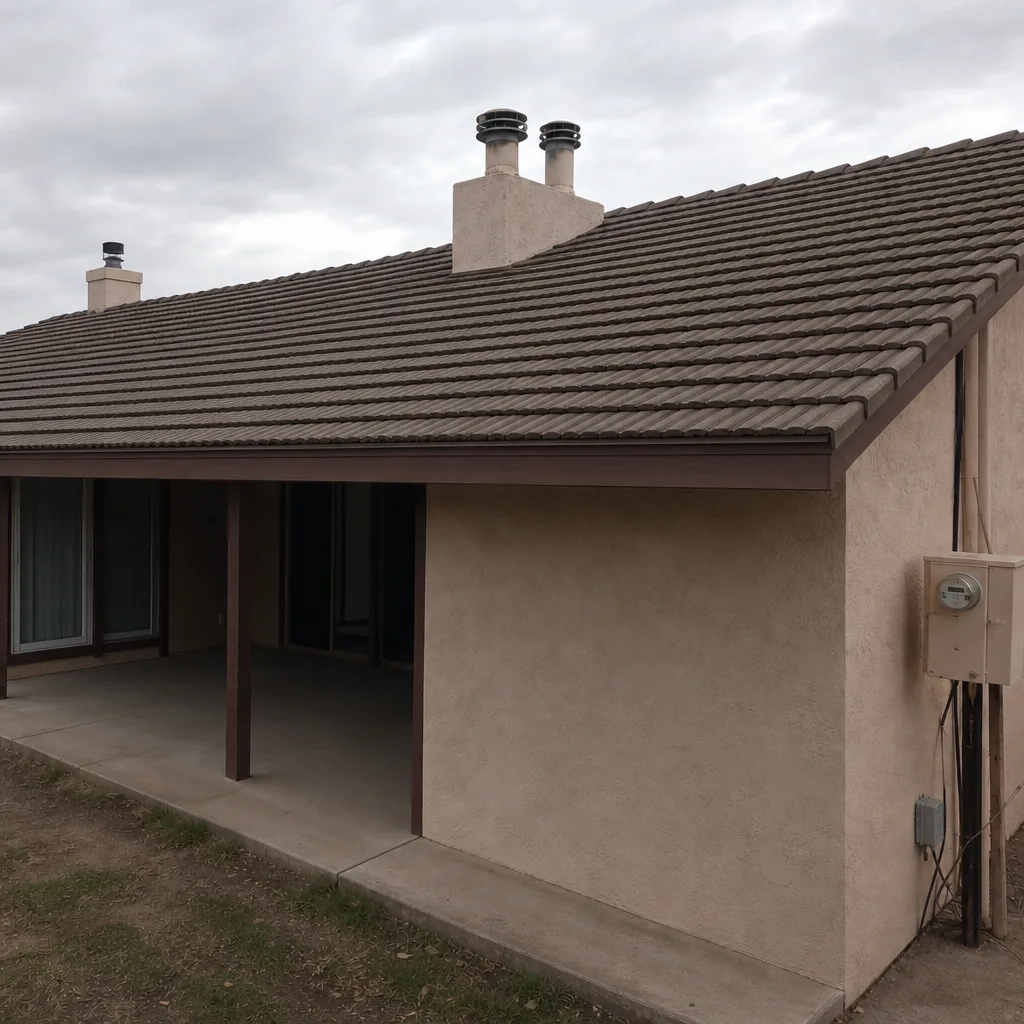 After
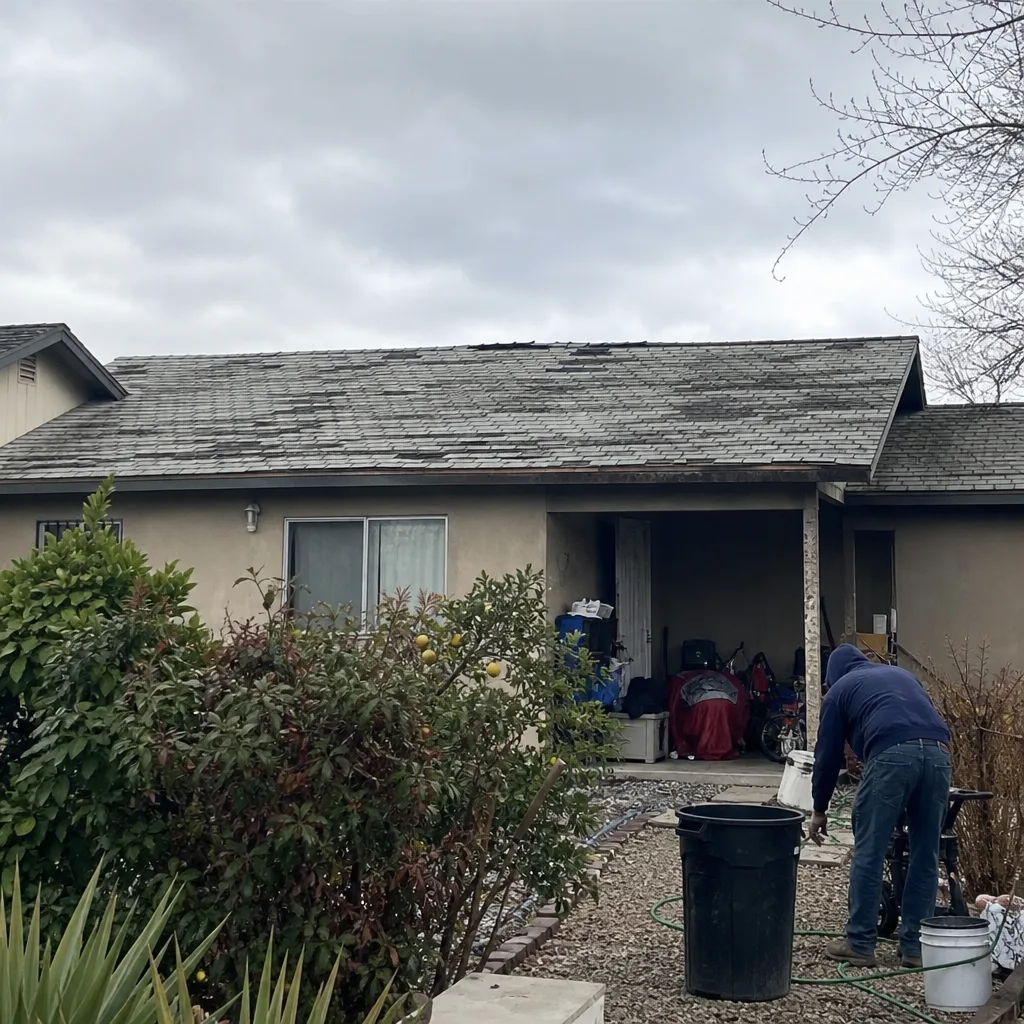 Before
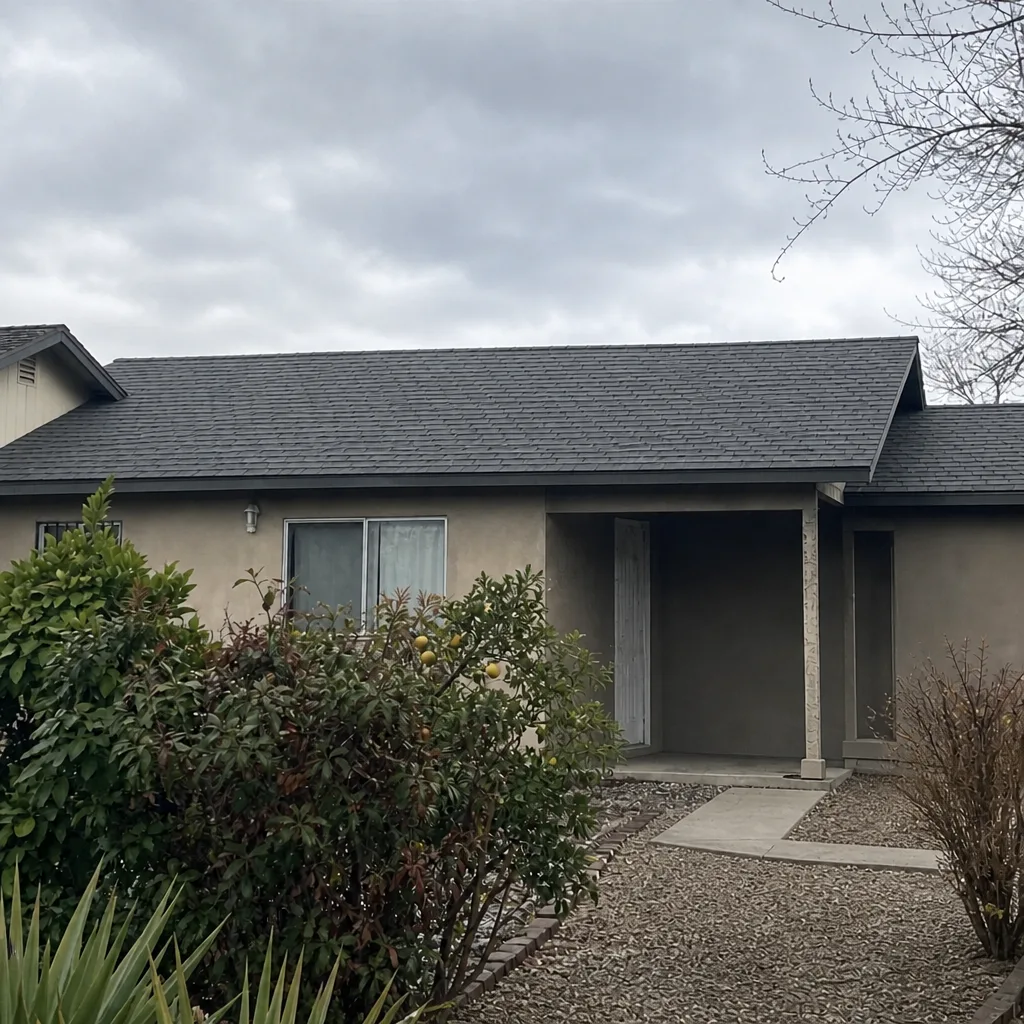 After
When to Call a Professional
Most of this schedule is safe for a careful homeowner to handle from the ground and a stable ladder. But some situations call for a trained pro every time: any steep roof pitch, signs of structural sagging, active water intrusion during a storm, damage after high wind, or any work on a roof under a workmanship guarantee. We also get called when homeowners simply don’t trust the previous roofer’s work and want an honest second set of eyes. In those cases, don’t climb up on a suspect roof yourself. Ridgeline Roofing Co. Spring Valley offers free estimates in Spring Valley – call (855) 908-1590, and a live person answers every call, day or night. Our technicians are background-checked, arrive in uniform, and document every inspection with photos taken from your actual roof.
Frequently Asked Questions
Have a professional inspection every two to three years, plus after any major wind or hail event. Between those, do your own visual checks in late May and September to October. Spring Valley’s heat cycling and concentrated monsoon rain age a roof faster than a mild climate would, so regular eyes on the surface and seams matter.
Late May to early June, before the monsoon sets up. That’s when you want every collar and seam sealed, so the first hard rain of the season finds a sound roof. Doing it in late May in Spring Valley gives the sealant time to cure before the storms arrive.
Yes, and specifically because the rain comes in intense bursts. A clogged gutter can’t handle that sudden volume, so water backs up against the fascia and rots it. Clean gutters twice a year – late May and again in September to October – protect the wood that holds your roof edge together.
It can complicate a workmanship guarantee, so check before you seal. If a contractor repaired that spot under a written guarantee, call them first. Manufacturer material warranties and workmanship guarantees work differently, and a quick call to confirm saves trouble. When in doubt, let the pro handle it.
You can safely do ground-level checks, gutter clearing, and light sealant work from a stable ladder on a low-slope roof, in the cool of the morning. Steep pitches, sagging, active leaks, and storm damage are for a trained pro. Don’t get on a hot desert roof or a steep slope.
A seasonal tune-up and inspection typically runs around a small flat fee, and small sealant and boot repairs are modest one-time costs. We offer an $89 seasonal tune-up and $50 off any repair over $250, with a free second opinion on any written estimate. Call (855) 908-1590 for exact pricing – estimates are free.
The Bottom Line
A roof maintenance schedule that works in Spring Valley isn’t a national template. It’s two calendar-anchored passes – late May before the monsoon, September to October after it – plus a quick look after any wind event and a professional inspection every few years. The highest-return tasks are the boring ones: sealing the pipe boots and flashing before the rain, clearing the gutters twice a year, and keeping a dated photo log. Skip the recurring upsells that don’t solve a visible problem. Handle the safe work yourself in the cool of the morning, and call a pro for steep pitches, active leaks, and anything under a guarantee. If you’ve had roof work done, the roof repair in Spring Valley page explains how we diagnose what a maintenance check turns up.
Ridgeline Roofing Co. Spring Valley has stood behind local roofs since 1984, and every job carries our 90-Day Done Right Promise: if it isn’t right, we make it right – no paperwork, no arguing. Our technicians have up to 10 years of experience, arrive background-checked and in uniform, and we’re an authorized installer of GAF, CertainTeed, Owens Corning, Tamko, Boral, IKO, and Atlas products. Call (855) 908-1590 for a free estimate; a live person answers every call, 24 hours a day, seven days a week.
Written by the team at Ridgeline Roofing Co. Spring Valley.