
Last updated November 17, 2026
 Metal roofing
 Architectural shingles
 Tile roofing
 GAF
 Owens Corning
 Flat & low-slope
Free roof inspection with deck photos before we talk money - GAF and Owens Corning certified installation
Specialty Roofing Maintenance Schedule: What to Do and When
Most specialty roofing maintenance checklists were written for climates with four seasons. Spring Valley has two that matter for your roof: relentless heat and the monsoon window. The national template that says “clean the gutters in spring, inspect in fall” was written in Ohio, and it doesn’t line up with what actually tears a tile roof apart in the Las Vegas Valley. Here, the damage happens in two concentrated bursts, and the calendar that protects your roof has to follow them. In this guide, we’ll walk through the two checkpoints that count, what you can safely do at ground level, what needs a trained roofer on the roof, and how to build a photo log that tells new damage from old wear.
Quick Answer
Your specialty roof needs two real maintenance checkpoints per year in Spring Valley: one in early July, before monsoon moisture and high wind arrive, and one in October, after a full summer of heat stress has worked on mortar, TPO seams, and metal panel expansion. The July visit focuses on clearing tile valleys and flat roof drains and checking metal fasteners. The October visit focuses on tile mortar, UV-driven seam separation, and panel expansion gaps. Everything else is a quick ground-level look after any big storm.
Styles & brands we work with
- Architectural shingles
- Metal roofing
- Tile roofing
- GAF
- Owens Corning
- Flat & low-slope
Table of Contents
- Why Spring Valley’s Climate Needs a Two-Checkpoint Schedule
- The July Pre-Monsoon Checklist
- The October Post-Heat-Season Checklist
- What You Can Safely Do at Ground Level
- What Requires a Credentialed Contractor and Fall Protection
- How to Document Roof Condition Year Over Year
- Maintenance That Keeps Manufacturer Warranties Valid
- Common Mistakes to Avoid
Quick Answer: In Spring Valley, roof maintenance should be scheduled around two dates, not the four-season template: early July (before monsoon wind and rain) and October (after summer heat stress). These two checkpoints catch the damage that actually happens in the Las Vegas Valley. Call (855) 908-1590 to schedule a free roof inspection and start a photo log.
Why Spring Valley’s Climate Needs a Two-Checkpoint Schedule
Here’s the counterintuitive part: a Las Vegas Valley roof doesn’t age steadily through the year. It takes almost all of its punishment in two short windows. Summer surface temperatures on a tile or metal roof routinely climb well past the ambient air reading, and the daily heat-cool cycle pulls and pushes every fastener and every mortar joint on the roof. Then July arrives, and the monsoon brings wind gusts and sudden rain onto a roof that’s been baking for two months. Those two events, back to back, do more to determine a roof’s lifespan than the other ten months combined.
A spring-and-fall schedule borrowed from a national template misses both. A “spring” visit in March lands in the quiet season when nothing is moving. The October visit that follows the heat, and the July visit that precedes the rain, land on the actual stress points. That’s why the schedule below is built around those two checkpoints, and why we build every Spring Valley maintenance plan the same way.
- What causes most tile damage here: thermal cycling, not freeze-thaw. The daily expansion and contraction of summer loosens mortar and bedding over months, then a monsoon wind gust finishes the job.
- What causes most flat roof damage here: UV and heat, not standing water. TPO and modified bitumen scan a summer of sun, then the October check catches the seam that’s starting to open before the next monsoon.
- What causes most metal roof damage here: fastener movement and expansion gaps, made worse by wind events that arrive on short notice.
If your home has a specialty roof system, the schedule is part of owning it. For an overview of the systems we work with, see our page on Specialty Roofing in Spring Valley.
The July Pre-Monsoon Checklist
July is the critical prep month. The goal is to make sure nothing loose, clogged, or unsupported is waiting for the first big wind and rain. A monsoon can drop a month’s worth of rain in an hour, and the wind ahead of it is what does the real damage. Here’s what a July inspection should cover, in order.
- Clear debris from tile valleys. Valley flashings collect palm fronds, seed pods, and windblown grit through the dry months. A clogged valley holds moisture against the flashing and lets water back up under the tile during a monsoon.
- Confirm flat roof drains and scuppers are unobstructed. On a low-slope TPO or modified bitumen section, a roof drain clogged with desert dust and debris is the difference between a roof that sheds water and one that ponds it over the sealer.
- Check metal panel fastener torque before high-wind events. The screws are the only thing holding a metal panel down when a gust hits. A backed-out or over-driven fastener lets the panel lift, and once one panel lifts, the moisture reaches the deck.
- Clear gutters and downspouts. This is the one item on the list a homeowner can usually handle, and it matters most before the first rain.
- Look at the flashing points. Skylights, chimney edges, and vent boots are where the monsoon finds the weak spot first.
These are inspection and condition items. Reading a fastener or a valley from a ladder is one thing; getting on the roof to torque, reset, or seal is another. Our technicians have up to 10 years of experience and document every inspection with photos taken from your actual roof, which is also why a July visit gives you a baseline to compare against October.
The October Post-Heat-Season Checklist
October is the assessment month. By the time it arrives, the roof has been through a full summer of daily heat cycles and one or more monsoon events. October’s job is to catch what the summer loosened before winter sets in and before small problems become big ones.
- Inspect tile mortar and bedding for summer thermal cycling damage. Mortar that held in June can crack by September. Loose ridge caps and lifted mortar joints are the most common October finding on tile roofs here.
- Check TPO seams for UV-driven separation. A hot-sealed TPO seam can start a slow separation over one summer of direct sun. Catching it in October means a small seam repair instead of a water intrusion.
- Examine metal panel expansion gaps. Metal panels expand and contract with the daily heat cycle. If panels are beginning to butt tight against each other or against a flashing, the next summer’s movement pushes the stress into the fasteners and the panel’s edge.
- Review the July photos against October conditions. If you keep a photo log, and you should, October is when it earns its keep.
- Look at the attic and the interior. A water stain on the ceiling or daylight at an attic corner tells you the roof was compromised somewhere, even if you can’t see where from the ground.
In Spring Valley, we regularly see the same pattern each October: a tile roof that looked fine all summer has two or three loosened ridge caps after the thermal cycle, and a flat section that shed every monsoon storm has a seam starting to open at a corner. Neither is a crisis if you catch it in October. Both become one by the next July.
What You Can Safely Do at Ground Level
The two-checkpoint schedule only works if you know which jobs belong to you and which belong to a professional. Getting on a roof is not a routine chore, and it becomes less of one as the years add up. A ground-level walk-around, done safely, catches a lot.
- Binoculars from the driveway. Scan the roofline for lifted ridge caps, missing tiles, dented panels, and sagging areas. You can see more from a careful angle than you might expect.
- Walk the perimeter. Look at the base of the downspouts for granules, broken tile, or debris that tell you something moved on the roof.
- Clear the gutters you can reach safely. A step ladder on level ground, one short reach, no climbing onto the roof. If it needs a taller ladder or a roof walk, that’s a professional call.
- Check the attic from inside. A flashlight at the ceiling joists will show you a water stain, sag, or daylight at the eaves.
- Look at the ceilings on the top floor. Discoloration and peeling paint are the roof telling you something, sometimes months after it happened.
What you don’t want to do is walk a pitched tile or metal roof, get on a steep slope, or lean out over an edge to reach a valley. We have seen too many homeowners hurt doing exactly that. If the item needs the roof surface, treat it as a professional job.
What Requires a Credentialed Contractor and Fall Protection
A specialty roof is a system, and most of what keeps it working lives where you can’t see it from the ground. The line is clear: if it involves the roof surface, fall-protection equipment, or the components underneath the finish, it belongs to a trained roofer.
- Any roof-surface work. Torquing fasteners, resetting ridge caps, checking a valley flashing, or examining a TPO seam all require being on the roof with proper fall protection.
- Anything at a height over a story or above grade. The one- and two-story rooflines common in Spring Valley look more forgiving than they are, especially with a tile roof that doesn’t grip like shingle.
- Tile mortar and bedding repair. Repointing mortar means reading the underlying condition, not just the surface crack. Done wrong, it fails again in a year.
- Seam and flashing work on flat and metal systems. These are warrantable conditions, and the wrong sealant or the wrong fastener can void the warranty.
- Anything where a manufacturer warranty is in play. A certified installer should do the work so the repair doesn’t put your warranty at risk.
Our technicians are background-checked and arrive in uniform, and every inspection is documented in photos taken from the actual roof rather than described from the ground. That’s the same standard we’d want for work on our own mother’s roof. For repairs that come out of an inspection, see Roof Repair in Spring Valley.
How to Document Roof Condition Year Over Year
A photo log is the single most useful maintenance habit you can build, and almost nobody does it. The point is simple: without a dated record, you can’t tell new damage from wear that’s been sitting on the roof for years. With one, you can show a roofer exactly what changed, and you can show a manufacturer exactly how the roof has been maintained.
- Set two fixed dates. July and October. Same week each year, if you can.
- Photograph the same four areas every time. The front roof plane, the worst flat section, the ridge line, and any existing repair. Same angles, same framing.
- Label the files with the month and year. A simple “07-2026-ridge.jpg” naming convention is enough.
- Note what you see in a plain sentence. “Ridge caps look tight” or “Seam at corner starting to lift.” Two lines each check, no more.
- Keep the log with the home’s records. If you ever sell the house or need warranty service, a dated log is worth more than any description.
In Spring Valley, an honest photo log is how a homeowner can hand a roofer a fair picture. It’s also how we prefer to start a conversation: not with a scary speech in the driveway, but with a set of dated photos on the table and a written estimate for what needs doing.
Maintenance That Keeps Manufacturer Warranties Valid
Most homeowners don’t read the fine print on the manufacturer warranty until they need it. The fine print is where the maintenance obligations live. Skip them, and the warranty can be reduced or voided, often on a technicality you never noticed.
- Keep the maintenance record. Many manufacturer warranties require documented annual maintenance. The photo log from the last section becomes the record.
- Don’t let anyone else perform repairs with the wrong materials. A mismatched repair or a substitute product is a common reason a claim gets denied. We install products from seven manufacturer lines, including GAF, CertainTeed, and Owens Corning, so the repair matches the roof.
- Don’t patch over a seam or fastener with the wrong sealant. A sealant not specified for the system can be enough for the manufacturer to consider the repair non-conforming.
- Don’t ignore the drain and flashing work. Several warrantable systems require that drains be kept clear and flashings inspected. Ponding water from a clogged drain is a frequent cause of denied flat-roof claims.
- Don’t let storm chasers “inspect” without documentation. A company that disappears after a storm can leave you with a repair the manufacturer won’t recognize.
When a repair is needed, the right call is a company that installs from the authorized lines and backs the work in writing, which is what our 90-Day Done Right Promise is: a written guarantee that if it’s not right, we come back and make it right, with no paperwork runaround. For a full replacement, see Roof Replacement & Installation in Spring Valley.
Common Mistakes to Avoid
- Using a spring-and-fall schedule. A national template written for four seasons puts the visits where nothing is happening in Spring Valley. The stress is in the summer and the monsoon.
- Skipping the October visit because the roof looked fine in July. Summer is what changes the roof. October is when the summer’s damage shows up.
- Clearing the valley and the drains “when it looks like rain.” By then the wind is already on the roof. Clear them in early July.
- Getting on the roof for a quick inspection. A tile or metal roof is not a forgiving walking surface, and the fall risk far outweighs a look with binoculars.
- Letting a storm chaser do the repair without documentation. A repair that isn’t photographed and written up can void the warranty it was supposed to protect.
- Not keeping a photo log. Without dated photos, neither you nor a roofer can tell new damage from wear that was there last year.
- Ignoring the maintenance the warranty actually requires. It’s easy to skip and expensive to discover at claim time.
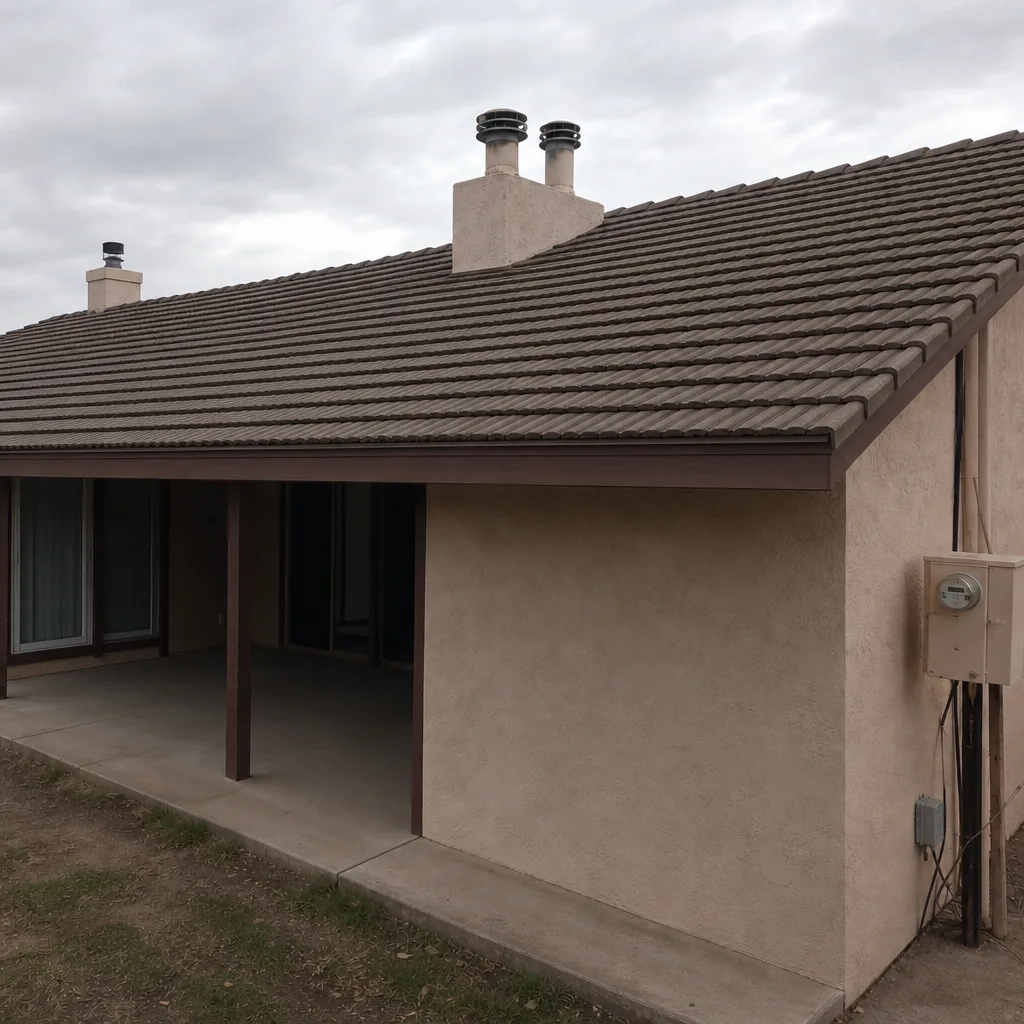
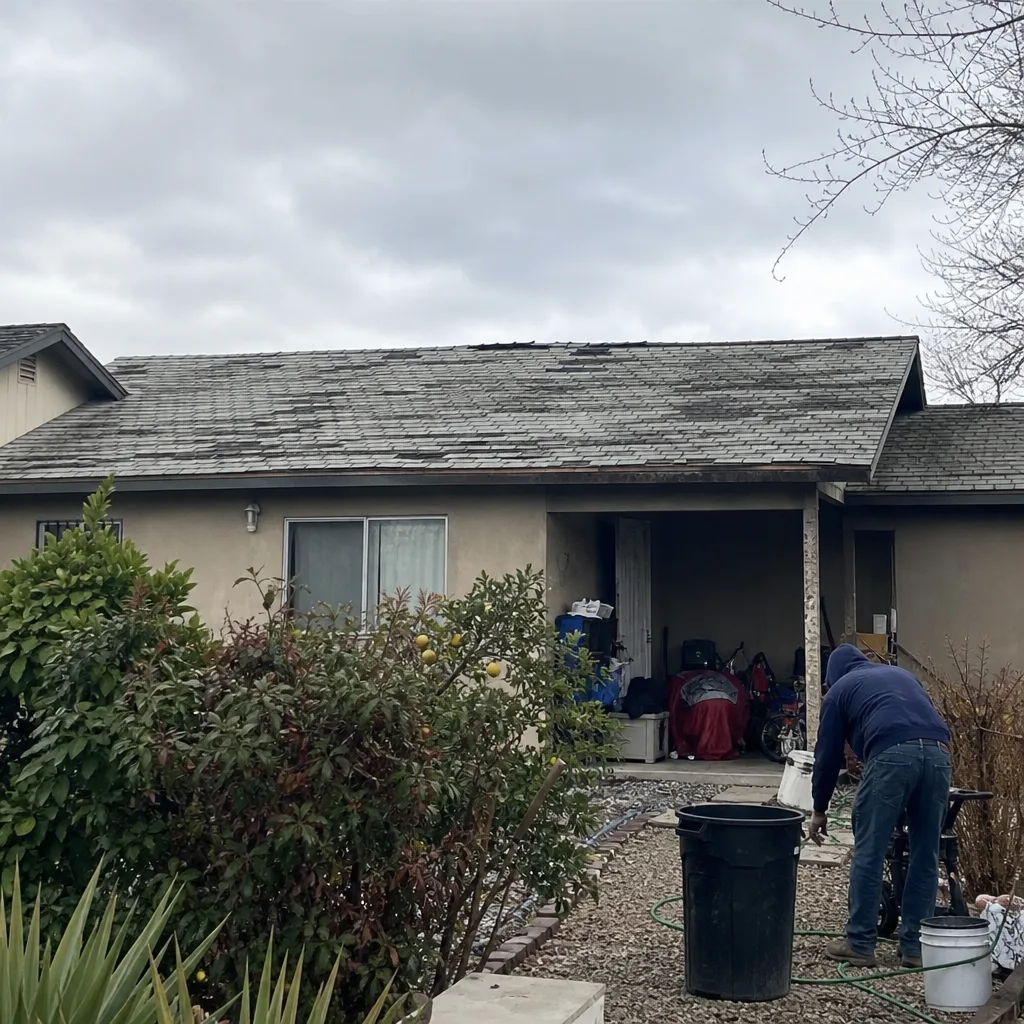
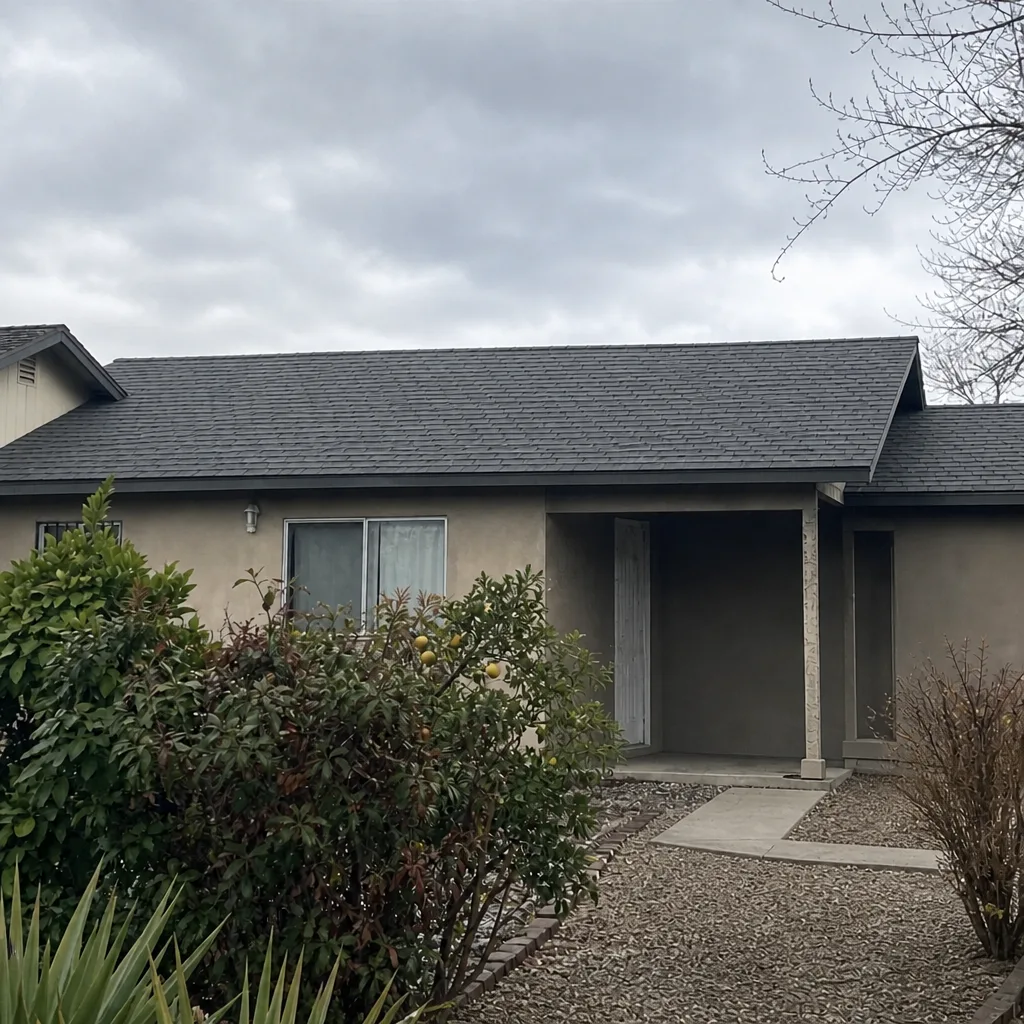
See the difference
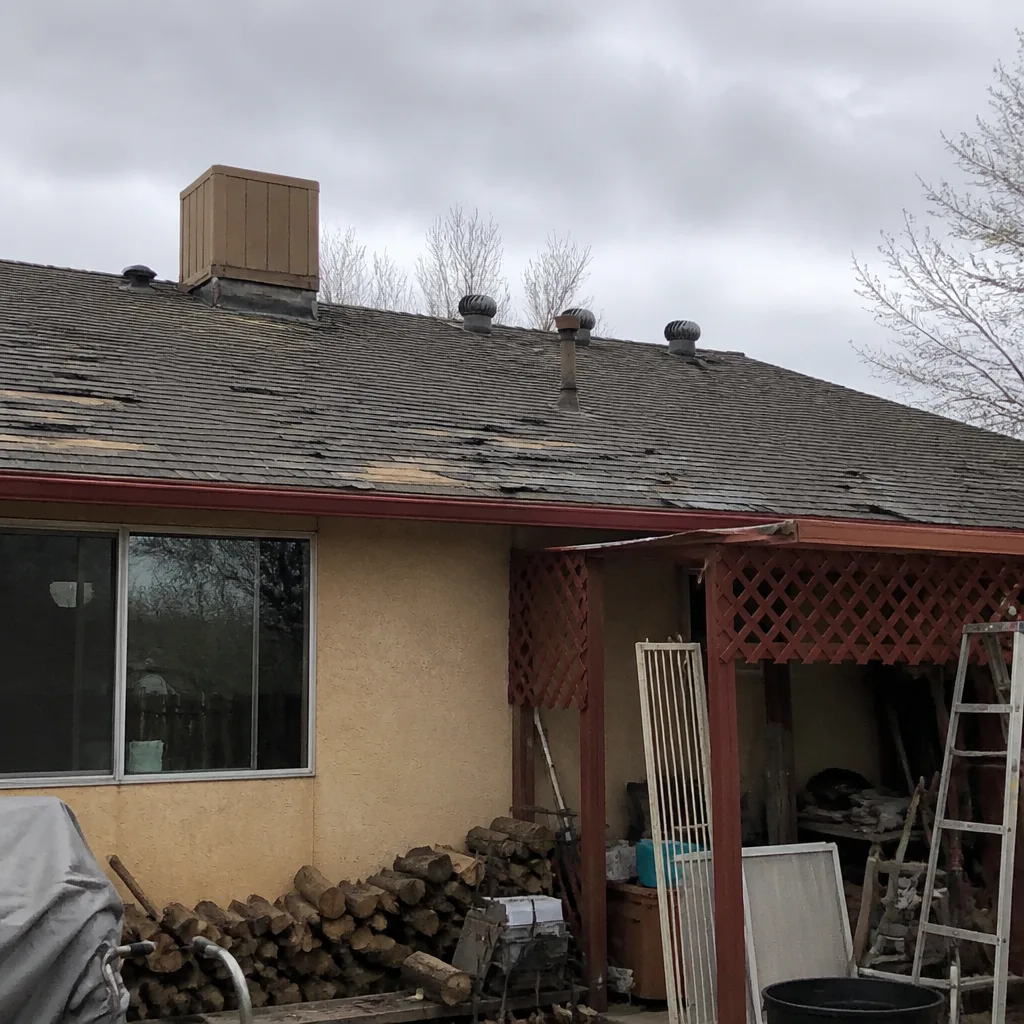 Before
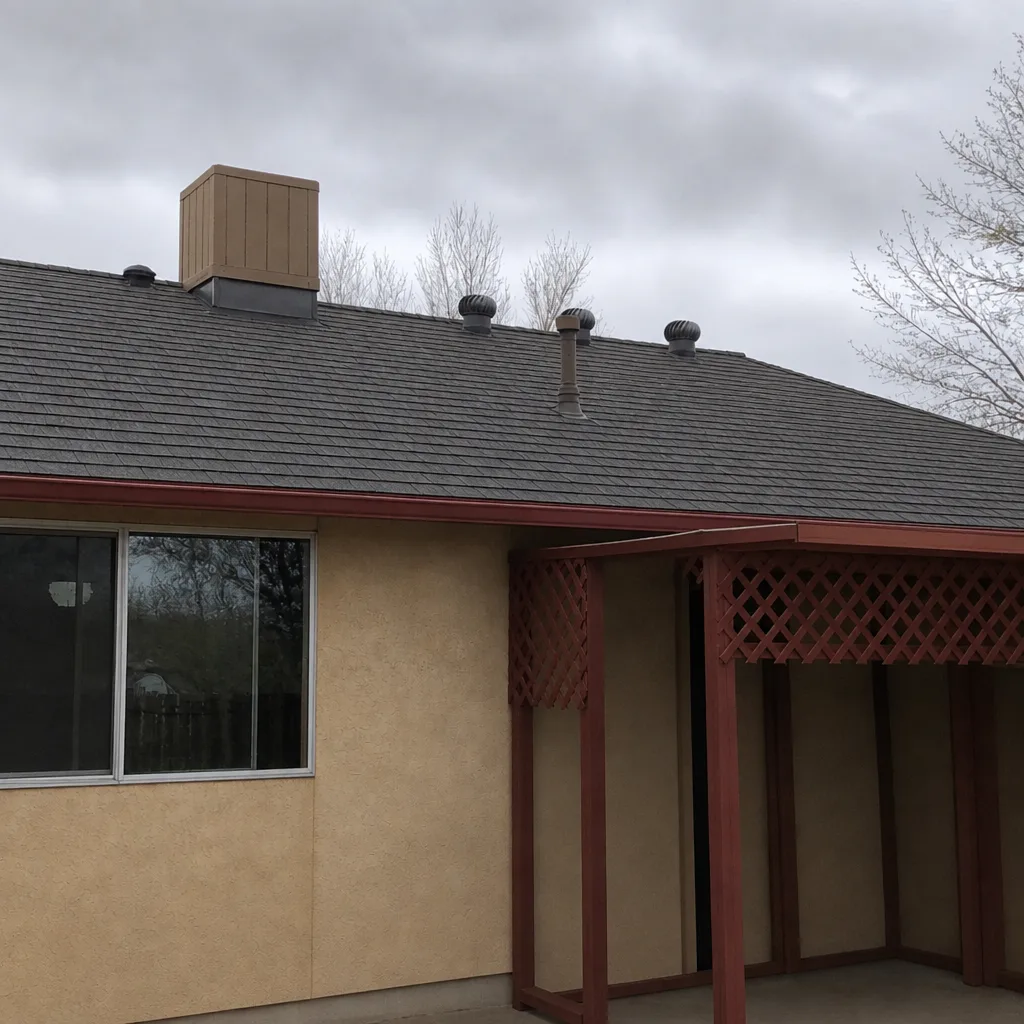 After
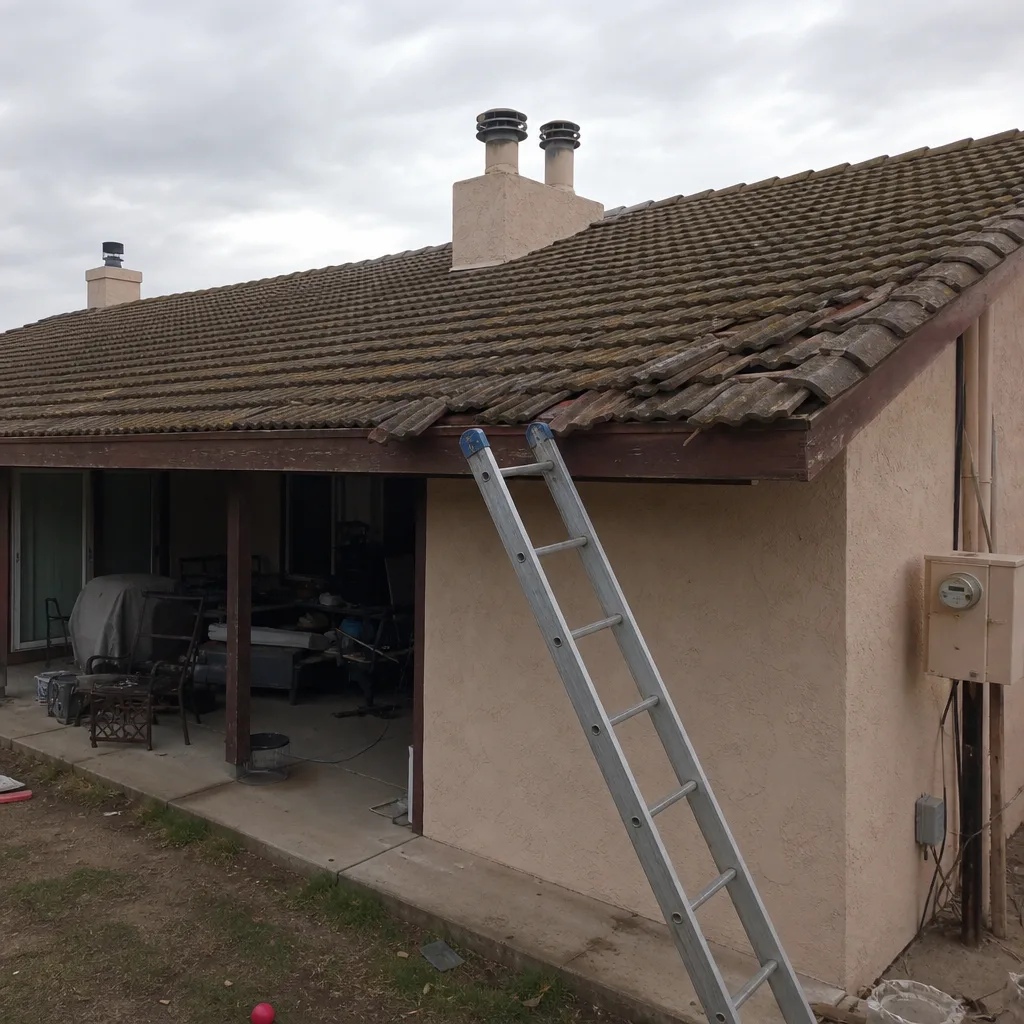 Before
 After
 Before
 After
When to Call a Professional
Call a roofer at any of these points in Spring Valley: a visible crack, lifted, or missing tile; a loose ridge cap; a flat section that holds water after a storm; a metal panel that’s lifted or has a backed-out fastener; a ceiling stain or daylight in the attic; or any damage from a monsoon event. If the work involves the roof surface or fall protection, it’s a professional call, not a weekend project. We offer free estimates in Spring Valley and a free second opinion on any written estimate, and a live person answers the phone every time. Call (855) 908-1590. For the full picture on our service, start with Ridgeline Roofing Co. Spring Valley home.
Frequently Asked Questions
Twice a year, in early July and in October. July covers pre-monsoon debris, drains, and fasteners; October covers summer heat-stress damage to mortar, TPO seams, and metal expansion gaps. A visual ground walk after any big storm in between is worth doing too. Call (855) 908-1590 to schedule a visit.
Only the ground-level parts. Clearing the gutters you can reach, a binocular walk-around, an attic check, and a ceiling inspection are within a homeowner’s range. Torquing fasteners, repointing tile mortar, and inspecting TPO or metal seams require being on the roof with fall protection, and that belongs to a professional. Our technicians have up to 10 years of experience and document every visit with photos from the actual roof. Call (855) 908-1590 for a free estimate.
An $89 seasonal tune-up covers the checkpoint inspection. A standard inspection with photo documentation is free with an estimate, and repair costs depend on what the inspection finds. We give a written, upfront price so the number on the estimate is the number on the invoice. Call (855) 908-1590 for your free estimate.
No. We quote upfront and in writing, and the number on the estimate is the number on the invoice. If an inspection finds more, you get a written line-item quote before we touch the roof, so nothing is done without your approval. Call (855) 908-1590 for a written estimate.
It can. Most manufacturer warranties require documented maintenance and prompt repair of flashing and drain issues. A dated photo log, repairs done with matching manufacturer materials, and a written record of any work are what protect the claim. We’re an authorized installer for lines including GAF, Atlas, and Boral, so repairs match the system. Call (855) 908-1590 with any warranty question.
Yes. We cover Spring Valley and the surrounding Las Vegas Valley, and we’ve been serving local homeowners since 1984. A live person answers the phone 24/7, so a monsoon problem at night gets a real answer, not voicemail. Call (855) 908-1590.
The Bottom Line
Build your specialty roof’s calendar around the two events that actually damage it: the July monsoon window and the October end of summer heat stress. Clear the tile valleys and drains in July, check the fastener torque before the wind. In October, look at the tile mortar, the TPO seams, and the metal expansion gaps the summer worked on. Keep a dated photo log so you can tell new from old. Stay off the roof surface yourself and let a professional handle the rest. Done right, and if it isn’t, we make it right. Call (855) 908-1590 for a free estimate in Spring Valley.
Written by the team at Ridgeline Roofing Co. Spring Valley.