
Last updated November 17, 2026
 Metal roofing
 Architectural shingles
 Tile roofing
 GAF
 Owens Corning
 Flat & low-slope
Free roof inspection with deck photos before we talk money - GAF and Owens Corning certified installation
Specialty Roofing Warning Signs Every Homeowner Should Know
A tile roof can be leaking for two years before the first ceiling stain appears. That surprises people. Water doesn’t drop straight down through a specialty system; it rides along battens, underlayment, and structural members, sometimes traveling twenty feet sideways before it finds a place to show itself. By the time you’re looking at a brown ring on the drywall, the damage behind it has been compounding through two winters. In our experience across Spring Valley, the homeowners who catch problems early aren’t the ones staring at their ceilings – they’re the ones who know what a failing specialty roof looks like from the driveway.
Quick Answer
Specialty roofing systems fail in ways that don’t match the asphalt-shingle warning signs most homeowners know. Tile roofs show failing hip-and-ridge mortar, efflorescence streaking, and sagging tile lines; flat roofs show ponding water that lingers past 48 hours, blistering, and interior staining near the parapet; metal roofs show rust streaking at fasteners, new oil-canning, and separating flashing. In Spring Valley’s high-desert climate, accelerated UV degradation and monsoon-driven moisture make these signs appear faster than they do in milder regions.
Styles & brands we work with
- Architectural shingles
- Metal roofing
- Tile roofing
- GAF
- Owens Corning
- Flat & low-slope
Table of Contents
- Why Specialty Roofs Fail Differently
- Tile Roof Warning Signs You Can See From the Ground
- Flat Roof Warning Signs
- Metal Roof Warning Signs
- The Spring Valley-Specific Sign Most Homeowners Miss
- Flawed Installation versus Normal End-of-Life Wear
- How to Document What You See: A Step-by-Step Approach
- Repair or Replace? What the Signs Tell You
Why Specialty Roofs Fail Differently
An asphalt shingle roof is designed to fail visibly. Granules shed, tabs lift, and by the time a shingle blows off you’ve had months of warning at eye level. Specialty systems don’t work that way. Tile, flat membrane, and standing-seam metal roofs are built to last decades, and their failure modes are slower and quieter. The tile itself may stay perfectly intact while the underlayment beneath it – the actual waterproofing layer – has aged past its service life. The metal panel may still be sound while the fasteners have backed out a quarter inch. The flat membrane may look flat and clean on top while water has been seeping under it for three summers.
That’s the trap. Homeowners in Spring Valley who’ve lived in their houses for twenty or thirty years learned to read asphalt. They know the look of a bad shingle. They don’t have that same vocabulary for a concrete tile roof or a modified bitumen flat roof, so they spot nothing, and the problem runs two or three seasons longer than it should.
What we do on every inspection is climb the actual roof and photograph it. Not a scary speech in the driveway – a documented set of images we walk through with you. If you’re not sure what you’re looking at from the ground, that’s what we’re for. More on that in the Specialty Roofing in Spring Valley overview.
Tile Roof Warning Signs You Can See From the Ground
Tile is the most common specialty system in Spring Valley, and the good news is that most of its failures announce themselves at ground level if you know where to look. Stand back across the street and work your way across the ridge line, hips, and valleys.
Broken or Displaced Hip-and-Ridge Caps
Hip-and-ridge caps sit at the highest, most wind-exposed parts of the roof, set in mortar. In Spring Valley’s sun, that mortar dries, cracks, and lets go long before the field tile does. Look for caps that have shifted out of alignment, gaps at the mortar joint, or pieces sitting askew. If you can see daylight between a cap and the tile beneath it, water is going in there every time it rains.
Efflorescence Streaking on Tile Faces
Efflorescence is the chalky white mineral deposit that appears when water moves through masonry and evaporates at the surface. On a tile roof, white streaking running down the face of tiles is a moisture signal – water is getting behind the tile and traveling. Some mild efflorescence is cosmetic. Persistent or growing streaks, especially concentrated along one plane, point to a failed underlayment or flashing detail above.
Sagging Mortar Lines
Run your eye along the horizontal mortar lines that hold the tile courses. They should be straight and consistent. Where the line dips or sags – usually near a valley or a roof penetration – the underlying structure or the mortar bed has moved. That’s a structural question as much as a roofing one, and it needs eyes on it.
Loose or Sliding Tiles
A single cracked tile after a hailstorm is normal. Courses of tiles sliding downward, or tiles that have shifted out of plane so the row no longer runs true, means the fastening or the batten system has failed. That’s not a repair you put off.
Tile work is heavy, breakable material installed at height, and walking on a tile roof without the right technique cracks tiles and can put a person through the deck. We don’t recommend homeowners get up there to investigate. Ground-level observation plus a professional inspection is the right combination.
Flat Roof Warning Signs
Flat and low-slope roofs on Spring Valley homes – typically over additions, patios, and garages – fail in a completely different pattern. The membrane is the waterproofing, and there’s no secondary layer underneath to forgive a lapse. Here’s what to watch.
- Ponding water that remains more than 48 hours after rain. Some standing water for a few hours is normal on a low-slope roof. Water still sitting two full days after the storm has stopped is a drainage or slope problem, and it’s actively degrading the membrane from the top down.
- Blistering or bubbling you can see from an adjacent elevation. If you can see the surface of the flat roof from a second-story window or a neighboring roofline, look for raised blisters or bubbles. Those are pockets of trapped moisture or escaping gas between membrane layers. They rupture eventually.
- Interior wall staining near the parapet. Water that enters at the parapet – the low wall around the roof edge – often runs down inside the wall cavity and shows as staining or bubbling paint on the interior wall just below the roofline. That’s a flashing failure, not a wall problem.
- Seam separation and alligatoring. On modified bitumen and built-up roofs, look for cracks that resemble alligator skin and lifted seams. Both mean the surface has aged out.
- Soft spots underfoot. Never something a homeowner should test alone on a roof – but soft or spongy decking under a flat membrane means the substrate has taken on water.
Flat roof leaks are notoriously hard to trace from inside. Water enters at one point and shows up ten feet away. That’s why photo documentation from the roof surface matters more on a flat system than almost anywhere else.
Metal Roof Warning Signs
Standing-seam and exposed-fastener metal roofs are common on Spring Valley outbuildings, porches, and some full homes. Metal is durable but not maintenance-free, and its failures have a signature.
Rust Streaking From Fastener Locations
On an exposed-fastener metal roof, each screw or nail is a small penetration through the panel. When the neoprene washer under the fastener dries out in the sun and shrinks, water gets in and rust begins. Look for vertical rust trails running down from fastener lines. Rust concentrated at fasteners is a maintenance item caught early; rust across panel faces is a finish failure.
Visible Panel Oil-Canning That Has Changed
Oil-canning is the wavy, dimpled look that flat metal panels get from thermal movement. A little is normal on many panels. What matters is change. If the waviness on your metal roof is noticeably worse than it was three or four years ago, or it’s new since you last looked, the panels are moving more than they should – often a sign of fastener back-out or substrate movement. Take a photo every spring and compare.
Flashing Separation at Wall Transitions
Where the metal roof meets a wall, a chimney, or a skylight, flashing does the sealing. Look for gaps, lifted edges, or sealant that has cracked and pulled away. Metal expands and contracts more than any other roofing material, and rigid flashing details that were tight five years ago may have opened up since. Spring Valley’s big day-to-night temperature swings work those joints hard.
Never walk a metal roof in the heat of the day – the panels get hot enough to burn and slick enough to slide on – and never try to reseal flashing from a ladder. This is trained-professional territory.
The Spring Valley-Specific Sign Most Homeowners Miss
Here’s the one that’s easy to overlook because it doesn’t happen on the roof at all. Check the ground at the base of your downspouts, especially after a windy stretch or the first big rain of the monsoon season. On a tile roof in Spring Valley, granule accumulation at the downspouts is a real signal – and not the harmless kind.
Wait, granules on a tile roof? The tile isn’t shedding granules. What’s washing down is the material beneath it: the granular surface of an aging underlayment, or the degraded mortar and surface coating of a tile system that has been blasted by Spring Valley’s UV load for decades. That high-desert sun is unforgiving. Tiles that face south or west take the brunt, and the material under and around them breaks down years sooner than it would in a milder climate. When you find a fan of grit and fine debris at the bottom of a downspout that wasn’t there last year, something on the roof is giving up material – and it’s worth a look before a ceiling tells you the rest.
Spring Valley sits at elevation with intense sun, dry air most of the year, and a monsoon season that delivers concentrated rain in short windows. That combination stresses tile systems in a particular way: months of baking, then sudden water loading. The two seasons accelerate each other.
Flawed Installation versus Normal End-of-Life Wear
Not every warning sign means the roof is old. Some mean it was installed wrong from day one – and that changes the conversation entirely. Here’s the distinction we draw, because it determines whether a repair actually solves the problem or just buys a year.
- Pattern of failure, not a single failure. Normal wear shows scattered, random failures. A flawed installation shows a pattern – the same flashing detail failing at every penetration, tiles lifting along one plane, ponding in the same low spot after every storm.
- Failures that show up early. A specialty system that leaks in its first five years is almost never worn out. Either the flashing detail was wrong, the underlayment was underspec’d, or a transition was skipped.
- Rust or failure at every fastener line. On metal, wear shows at the oldest, most sun-exposed fasteners first. If every fastener is rusting at once, the wrong fastener or the wrong installation method was used.
- Efflorescence that started the first season. Some moisture movement at fresh tile is normal. Streaking that appeared the first wet season and never stopped points at a drainage or flashing detail that was wrongly built.
- Recurring leaks in the same location after repair. If a roofer has “fixed” the same spot three times, the underlying detail is wrong. It needs to be rebuilt, not patched again.
When we install on a Spring Valley home, we’re an authorized installer of GAF, CertainTeed, Owens Corning, IKO, Atlas, Tamko, and Boral – proper materials with no substitutions. A correct installation is the difference between a roof that wears out on schedule and one that never worked right. That’s the reason the Roof Replacement & Installation in Spring Valley conversation starts with the flashing details, not the product name.
How to Document What You See: A Step-by-Step Approach
You don’t need to get on the roof to build a useful record. You do need to look with intention, once a season and after any big storm. Here’s the process we recommend for Spring Valley homeowners.
- Walk the perimeter at ground level. Start at one corner and work around the house. Look up at the ridge, hips, valleys, and penetrations. Note anything lifted, broken, discolored, or out of line.
- Photograph each concern from the same spot every time. Same angle, same distance, same time of year. Comparison over seasons is where the real information lives. A wavy metal panel is fine until you see it’s twice as wavy as it was two years ago.
- Check the ground at downspouts after rain. Look for grit, granules, and fine debris. Photograph the pile. Note if it’s new or growing.
- Walk the interior ceiling perimeter after a heavy rain. Check the walls just below the roofline, especially near parapets and chimneys. Look for staining, bubbling paint, or dampness.
- Write down the dates. When a sign appeared, when you last saw the roof clean, when the last repair happened. Dates turn a vague worry into something a professional can actually work with.
- Call a professional to climb and document. Ground observation tells you something is wrong. Only an on-roof inspection tells you what and how bad.
Get the free second-opinion offer on any written estimate if a contractor has already quoted you – no pressure, no obligation. The Roof Repair in Spring Valley process starts with a documented inspection, so you know exactly what the roof needs before any number gets attached to it.
Repair or Replace? What the Signs Tell You
The single most expensive mistake with a specialty roof is replacing one that only needed a repair – and the second most expensive is repairing one that needed replacing three years ago. The warning signs above are the diagnostic.
Signs that point to repair: a single flashing detail that has failed, one course of lifted tiles after a wind event, fastener rust confined to one section, a single ponding low spot. These are correctable without touching the rest of the system.
Signs that point to replacement: underlayment that has aged out under otherwise-sound tile, efflorescence across multiple planes, ponding in multiple locations on a flat roof, oil-canning that’s worsening across the whole field of a metal roof, or failures that show a pattern of flawed installation. When the underlayment or the substrate beneath a specialty system has failed, you can’t fix it from the top – the tile or panel has to come off.
That’s why the distinction between installation flaw and normal wear matters so much. A well-installed tile roof in Spring Valley should give decades before the underlayment needs attention. A badly installed one can fail in seven. Get the diagnosis right before you spend a dollar. Start with the Ridgeline Roofing Co. Spring Valley home page if you want to understand how we work.
Common Mistakes to Avoid
- Waiting for a ceiling stain to confirm a leak. By the time water shows inside, the damage is already two seasons old on a tile system, because water travels along structural members before it finds a way out. The roof shows its failure first.
- Judging a tile roof by asphalt standards. No missing shingles, no tabs – so the homeowner assumes the roof is fine. Tile fails at the underlayment and the mortar, not the tile face.
- Letting ponding water sit through monsoon season. In Spring Valley, one summer of standing water on a flat roof can take years off the membrane. Address drainage before the first rain, not after.
- Treating every fastener rust spot on a metal roof as “normal.” Some is normal. Rust at every fastener line means the installation itself is failing. Know the difference before you replace screws that will rust again.
- Patching the same leak repeatedly instead of fixing the detail. Three repairs at one location means the flashing detail is wrong. A fourth patch is a waste of money.
- Skipping the annual look. A once-a-season walk of the perimeter with a camera is the cheapest insurance on a specialty roof. Most Spring Valley failures we see were visible from the ground a full season before anyone called.
- Hiring a roofer who doesn’t know specialty systems. Tile, flat, and metal each need different techniques. A contractor who only works in asphalt won’t read the signs correctly.
See the difference
 Before
 After
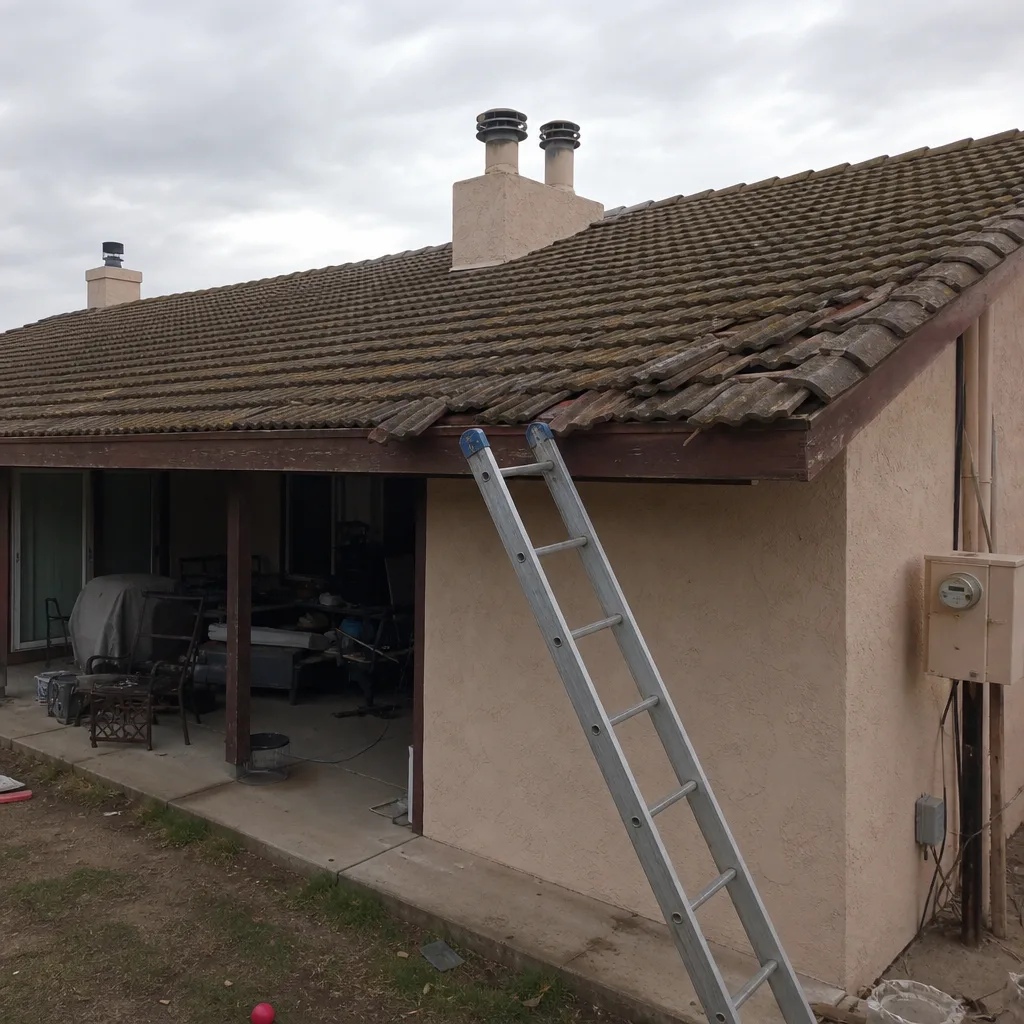 Before
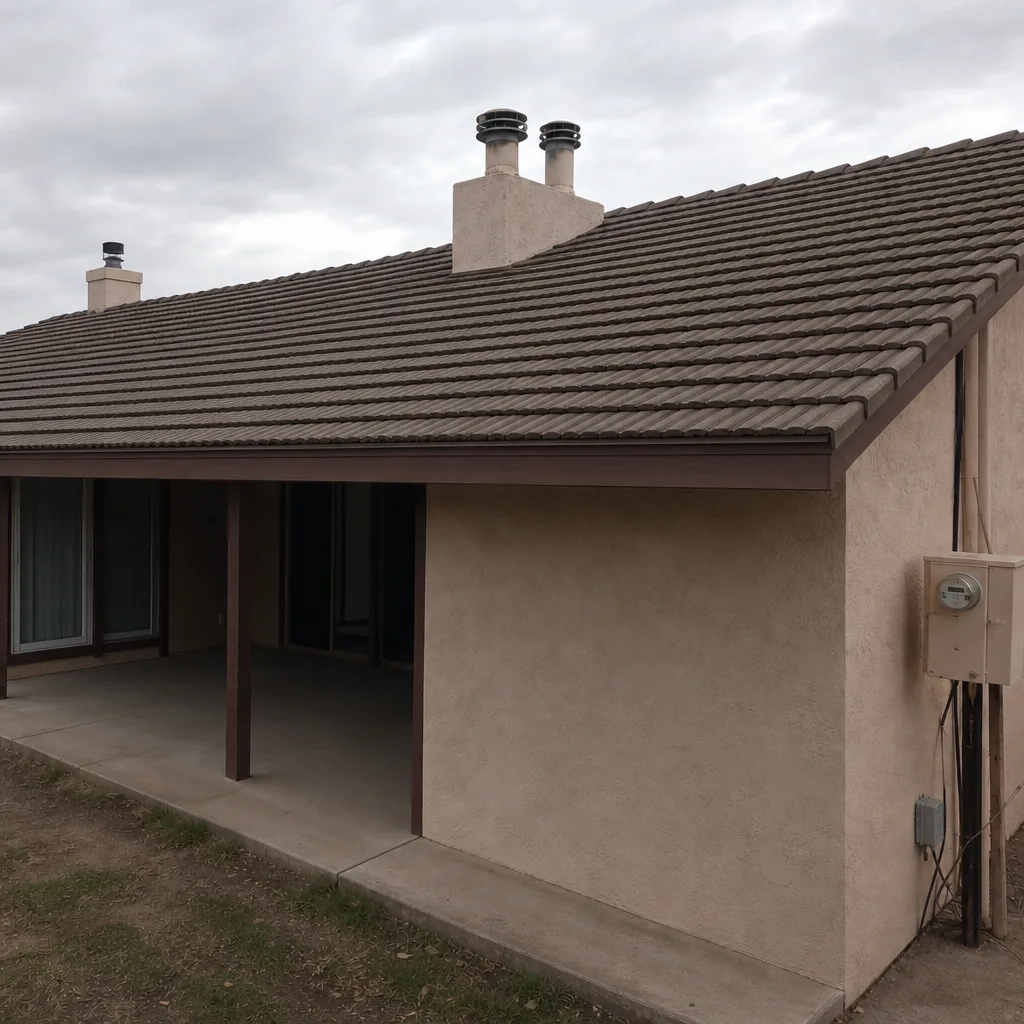 After
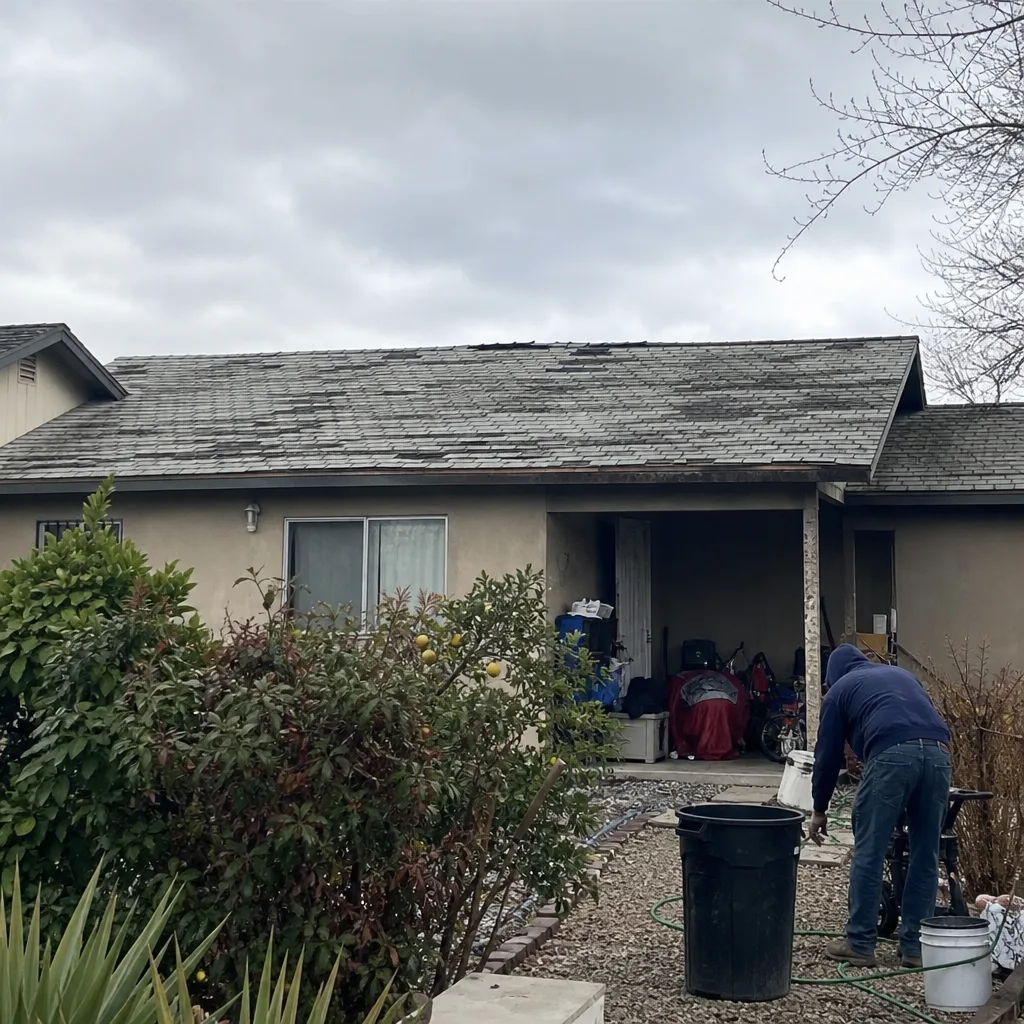 Before
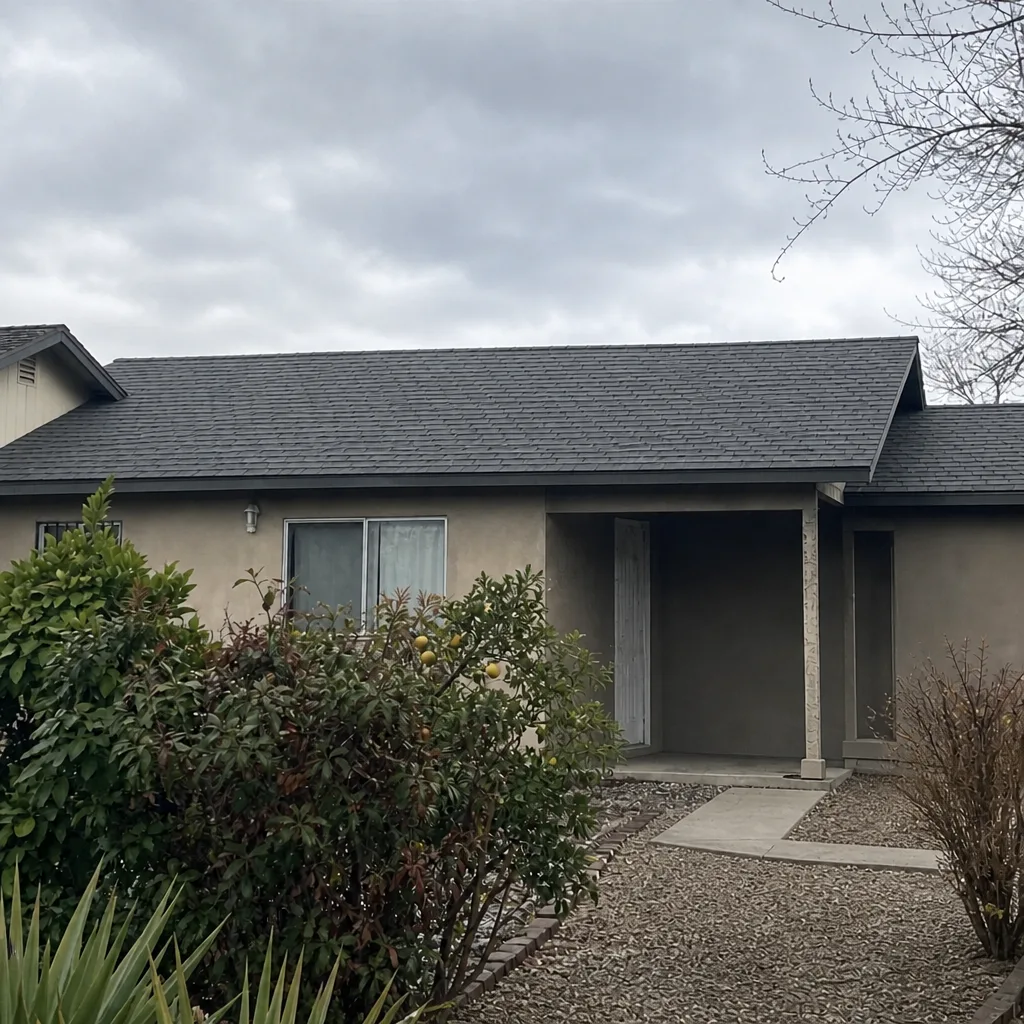 After
When to Call a Professional
Call us if you’ve spotted any sign on this list – broken cap tiles, efflorescence, ponding that lingers past 48 hours, rust streaks at metal fasteners, flashing separation, or grit at the downspouts that wasn’t there last year. Call us if you’ve had a repair in the same spot twice. Call us if it’s been more than a couple of years since anyone climbed the roof and looked. Call us if you’re approaching a decision between repair and replacement and want a documented second opinion on any written estimate you already have. Ridgeline Roofing Co. Spring Valley offers free estimates in Spring Valley – call (855) 908-1590. A live person answers every call, around the clock, and our technicians are background-checked, arrive in uniform, and document every inspection with photos taken from your actual roof. No scary speech in the driveway – just the pictures, and a straight answer.
Frequently Asked Questions
Look for the roof-level signs instead: efflorescence streaking down tile faces, cracked or displaced hip-and-ridge mortar caps, sagging mortar lines, and grit accumulating at your downspouts. Water travels along battens and structural members before it reaches drywall, so the roof shows its failure long before the ceiling does. A documented on-roof inspection finds it early.
Water still sitting 48 hours after rain has stopped means a slope or drainage problem, and in Spring Valley’s monsoon season that standing water shortens the membrane’s life fast. It can also indicate a low spot in the decking. Call (855) 908-1590 for a free estimate – estimates are free and the inspection includes photos.
A little surface rust at the oldest, most sun-exposed fasteners is normal. Rust at every fastener line, or rust streaking down full panel faces, points to a failed finish or a flawed installation. A trained eye has to sort the two apart, and honestly it takes being on the roof to know which one you’re looking at.
That depends on the material and, more importantly, on how it was installed. Tile systems commonly give decades before the underlayment needs attention, metal lasts decades, and flat membranes have shorter service lives than either. What we see in Spring Valley is that intense sun and monsoon-driven moisture compress the timeline – which is why catching the warning signs early matters more here than in a milder climate. We install GAF, CertainTeed, Owens Corning, IKO, Atlas, Tamko, and Boral products, properly specified for the job.
Tile, flat, and metal each demand their own tools, technique, and knowledge – a contractor who works mainly in asphalt won’t read those warning signs correctly. When you call (855) 908-1590, the technician who inspects your roof is experienced specifically in specialty systems. Our technicians have up to 10 years of experience.
No – the number on the estimate is the number on the invoice. That’s our upfront pricing policy, and it applies to repairs and replacements alike. Every job is also backed by the written 90-Day Done Right Promise: if it is not right, we make it right, no arguing, no paperwork runaround. Call (855) 908-1590 for a free estimate.
The Bottom Line
Specialty roofs fail in ways that don’t look like asphalt. Waiting for a ceiling stain means waiting two seasons too long on a tile system, where the underlayment gives out before the tile ever shows it. Learn the four signatures: failing hip-and-ridge mortar and efflorescence on tile, ponding past 48 hours on flat, rust at fasteners and shifting oil-canning on metal, and grit at the downspouts that wasn’t there last year. Walk the perimeter once a season with a camera. And know the difference between a flawed installation pattern and normal end-of-life wear – that distinction decides repair versus replace. We’ve been standing behind Spring Valley roofs since 1984, and the standard hasn’t changed: done right, or we come back and make it right. Call (855) 908-1590 for a free estimate.
Written by the team at Ridgeline Roofing Co. Spring Valley.