
Last updated November 17, 2026
 Architectural shingles
 Metal roofing
 Tile roofing
 GAF
 Owens Corning
 Flat & low-slope
Free roof inspection with deck photos before we talk money - GAF and Owens Corning certified installation
DIY vs Professional Gutters & Accessories: What’s Safe to Do Yourself
Emergency rooms treat roughly 164,000 ladder-related injuries each year, and most happen on jobs homeowners rated “quick and easy” before they started. That gap between how a gutter task looks from the driveway and what it demands once you’re up there is where the real decision lives. It isn’t whether you’re handy enough. It’s whether a specific job keeps the risk on the gutter and off your body and your home’s structure. This guide breaks gutter work into tasks that are genuinely safe to do yourself and tasks that quietly aren’t, with the line drawn more precisely than most advice you’ll find. We’ll also cover what a Spring Valley homeowner should weigh on the split-level and older homes common here.
Quick Answer
Flushing downspouts and clearing surface debris from a single-story gutter on a level lot is genuinely safe DIY work. Rehanging dropped sections, resealing end caps at roofline height, correcting slope, and replacing sections are professional territory – the fall risk, the hidden structural checks, and the warranty consequences make them a bad trade for the money saved.
Styles & brands we work with
- Architectural shingles
- Metal roofing
- Tile roofing
- GAF
- Owens Corning
- Flat & low-slope
Table of Contents
- Where the line between safe and unsafe actually falls
- Task-by-task: what to DIY and what to hand off
- Why your home’s shape and lot change the math
- The structural checks a pro does that a DIYer skips
- How DIY slope correction creates problems and voids warranties
- The honest cost comparison: a visit versus a mistake
- Common mistakes to avoid
- Frequently asked questions
Where the Line Between Safe and Unsafe Actually Falls
Most “should you DIY your gutters” articles sort tasks by difficulty. That’s the wrong axis. Difficulty tells you how hard a job is for a person standing on the ground. It says nothing about what happens when a task goes wrong at roofline height, or what a mistake does to the wood and foundation below. The right question is consequence: if this job fails, does it cost you a Saturday or does it cost you soffit, fascia, and a cracked foundation?
Sort gutter work that way and it splits cleanly into three groups.
- Ground-level and reachable work – clearing surface debris, flushing downspouts, checking that water exits where it should. Low consequence, low height. Safe DIY.
- Roofline work – rehanging a sagging section, resealing end caps and seams, replacing hangers, correcting slope. High height, high consequence if it fails. Professional work.
- System work – replacing full runs, adding gutter guards, integrating drainage with the roof edge, tying into a gutter system that has to hold against a real storm. Structural consequence. Professional work.
The group most homeowners underestimate is the middle one. Rehanging a dropped section sounds like a bracket and a screw. What it actually demands is a safe footing at the roof edge, a load rating on the hanger, and a slope set correctly enough that water keeps moving. Every one of those fails quietly. You don’t find out until the next hard rain, and by then the water has been running behind the fascia for a season. We’ll walk each task in the next section.
Task-by-Task: What to DIY and What to Hand Off
Here’s the working list we’d hand a Spring Valley homeowner who asked us over a fence. It isn’t about skill. It’s about keeping the risk on the gutter.
Safe to do yourself
- Clear surface debris. Gloves, a bucket, a garden trowel. Pull leaves, twigs, and grit from the gutter channel on a single-story run. Stay off the roof itself – work from a stable stepladder at the gutter, not from up on the shingles.
- Flush the downspouts. A garden hose run down the top of each downspout until water exits clear at the bottom. If it backs up, the clog is in the run, not the channel.
- Check the discharge point. Confirm each downspout sends water away from the foundation, not into a flower bed or against the slab. Reattaching a splash block is a ground-level fix.
- Look for the obvious. Walk the perimeter and note sagging runs, water staining on fascia, or gutters pulling away from the house. Note them – don’t fix them from a ladder.
Professional territory
- Rehanging a dropped section. Requires correct hanger spacing, the right fastener into sound wood, and a re-set of slope along the whole run – not just at the sag.
- Resealing end caps and seams. Done at roofline height, and a failed seam sends water straight down the fascia board behind it.
- Slope correction. The most botched DIY gutter job we see.
- Replacing a section or a full run. Includes structural checks the homeowner never sees, covered below.
- Gutter guards and accessories. Integration with the roof edge matters, and a poorly seated guard traps debris instead of shedding it.
Notice that nothing on the “professional” list is about being strong enough or having the tools. It’s about height, load, and the things you can’t see from the ground. If you’re weighing a full replacement rather than a repair, our guide to Roof Replacement & Installation in Spring Valley covers how gutters tie into that scope.
Why Your Home’s Shape and Lot Change the Math
Here’s where generic advice falls apart in Spring Valley. A single-story ranch on a level lot is a different risk calculation than a split-level home with a roofline that steps up in stages. Spring Valley’s older neighborhoods are full of split-levels, and that shape does two things: it puts some gutter runs at second-story height even on a “one-and-a-half story” house, and it lets you set a ladder on an upper level without realizing the ground below is graded away from the foundation. A ladder footed on a slope is a ladder that kicks out.
Climate adds a second variable. Spring Valley gets its weather in concentrated bursts rather than a steady drizzle, so when gutters fail they fail big – a single storm can dump enough water to overwhelm a run that held fine in light rain. That raises the consequence of a bad slope or a loose hanger. The gutter that looks fine in dry weather proves itself or fails in one afternoon.
So the height and grade math runs like this:
- Single story, level lot, gutter within easy ladder reach – cleaning and flushing are reasonable DIY.
- Split-level or stepped roofline, or any run above ladder height – treat rehanging and resealing as professional work, even if the job looks small.
- Landscaping, driveways, or grade changes under the ladder – add these to the risk column. A ladder needs four solid level points, every time.
If you’re not sure which category your home falls into, that uncertainty is itself an answer. When the job is genuinely safe, it’s obvious. When you’re talking yourself into it, it isn’t.
The Structural Checks a Pro Does That a DIYer Skips
When a homeowner replaces a gutter section, the work is visible: old section off, new section on, sealed and done. What’s invisible is everything a trained installer checks before and during that work – and those checks are the reason the new section holds. In our experience, these are the five that matter most.
- Fascia condition. A gutter attaches to the fascia board. If that board is soft from a long-running leak, a new hanger has nothing solid to bite into. A pro tests it; a DIYer sees a board and screws into it.
- Rafter tails. Behind the fascia are the rafter ends. Rot there means the whole attachment point is compromised, and the fix is structural, not a bracket.
- Soffit ventilation. Gutter and fascia work sits right at the soffit. A pro checks that ventilation hasn’t been blocked or crushed – a detail that affects attic moisture and, eventually, the roof deck.
- Hanger spacing and fastener type. Manufacturer specs call for specific spacing and fasteners. Get it wrong and the gutter sags again within a season, sometimes sooner.
- Drip edge alignment. Water has to leave the roof edge and enter the gutter cleanly. Miss this and the gutter simply concentrates water against the fascia instead of away from it.
None of these show up until they fail. That’s the point. A DIY section replacement that skips them looks correct from the ground and starts costing money from behind the board. A real roof-side inspection is the only way to know if you’re treating a symptom or a cause – and if the gutters are failing because the roof edge is, that’s a different conversation. Our Roof Repair in Spring Valley team handles the structural side when the gutter problem turns out to be a roof problem.
How DIY Slope Correction Creates Problems and Voids Warranties
Slope correction is the job most homeowners attempt and most get wrong. The premise seems simple: water should run toward the downspout, so tilt the gutter that way. The execution is where it goes sideways. A gutter needs a consistent fall across the whole run – roughly a quarter-inch per ten feet – and it needs that fall to hold under the weight of a full gutter. A homeowner correcting one sagging spot often creates a low point somewhere else, and that low point becomes a standing-water problem.
Standing water is the quiet kind of damage. It sits, it weighs, it works at the seams, and eventually it either overflows the front or finds its way behind the gutter. Once water is running behind, it’s on the fascia and into the soffit. That’s when a $150 gutter adjustment becomes a fascia replacement.
There’s a warranty consequence too, and it’s the part most people don’t hear about. Gutter systems and the accessories that go with them are warranted against defects – but not against improper installation. A slope corrected by hand, without the manufacturer’s specified hanger spacing and fasteners, can be read as an installation defect rather than a product defect. The gutter manufacturer isn’t obliged to honor a warranty on a run that wasn’t installed to spec. A professional installation holds that warranty intact because the work meets the spec that backs it. That’s part of what you’re paying for, and it’s the part you can’t see in the estimate.
When we install gutters and accessories, it’s as an authorized installer of GAF, CertainTeed, and Owens Corning products – proper materials, no substitutions, installed to the manufacturer’s spec. That’s how a warranty stays worth something.
The Honest Cost Comparison: A Visit Versus a Mistake
DIY looks cheaper until you price the failure. The fair way to compare is to put the professional visit next to the cumulative cost of a DIY mistake that reaches the soffit or the foundation – not next to the price of the work if everything goes right. Here’s the honest math, framed in ranges rather than a number that won’t hold.
- Professional cleaning and inspection – a modest single-visit cost, and it catches problems while they’re still small. This is the low-risk spend.
- Professional rehang, reseal, or slope correction – more than a cleaning visit, but the work is done to spec and the warranty stays intact.
- DIY mistake that damages soffit or fascia – a repair that runs into the hundreds to low thousands once you’re into structural wood, and you still pay for the gutter work afterward.
- DIY mistake that lets water reach the foundation – the largest line item by far. Foundation repair is a category of cost you never want to meet because a gutter was an inch off.
The point isn’t that cleaning always pays for itself against a mistake. It’s that the expensive mistakes cluster on the roofline jobs, not the ground-level ones. Hand off the roofline work and the math works in your favor every time. Since water that bypasses a gutter goes somewhere, our guide to Specialty Roofing in Spring Valley covers the drainage and edge details that keep it moving away from the house.
Common Mistakes to Avoid
- Working from the roof instead of a ladder. Walking a shingled roof to reach a gutter is the single most common way a “quick” gutter job turns into an injury. Work from a stable ladder at the gutter, or don’t work at that height at all.
- Ladder footed on graded ground. Common on Spring Valley’s split-levels where the ground under the ladder slopes away from the house. If all four feet aren’t level and solid, stop.
- Correcting one sag and creating another. Spot-fixing slope without checking the whole run leaves a low point that pools water. Slope has to be set across the full run, not just at the sag.
- Skipping the fascia check. Screwing a new hanger into soft or rotted fascia feels solid and holds nothing. Test the wood before trusting it.
- Sealing a seam from a ladder without checking what’s behind it. If water has already been running behind the gutter, the seam is the symptom, not the cause.
- Assuming new hangers fix a warranty issue. Improper installation – wrong spacing, wrong fasteners – can void the manufacturer warranty on the gutter regardless of how good the new part is.
- Letting the discharge point run against the foundation. A clear gutter that dumps water at the slab has moved the problem, not solved it. Check where each downspout actually sends water.
See the difference
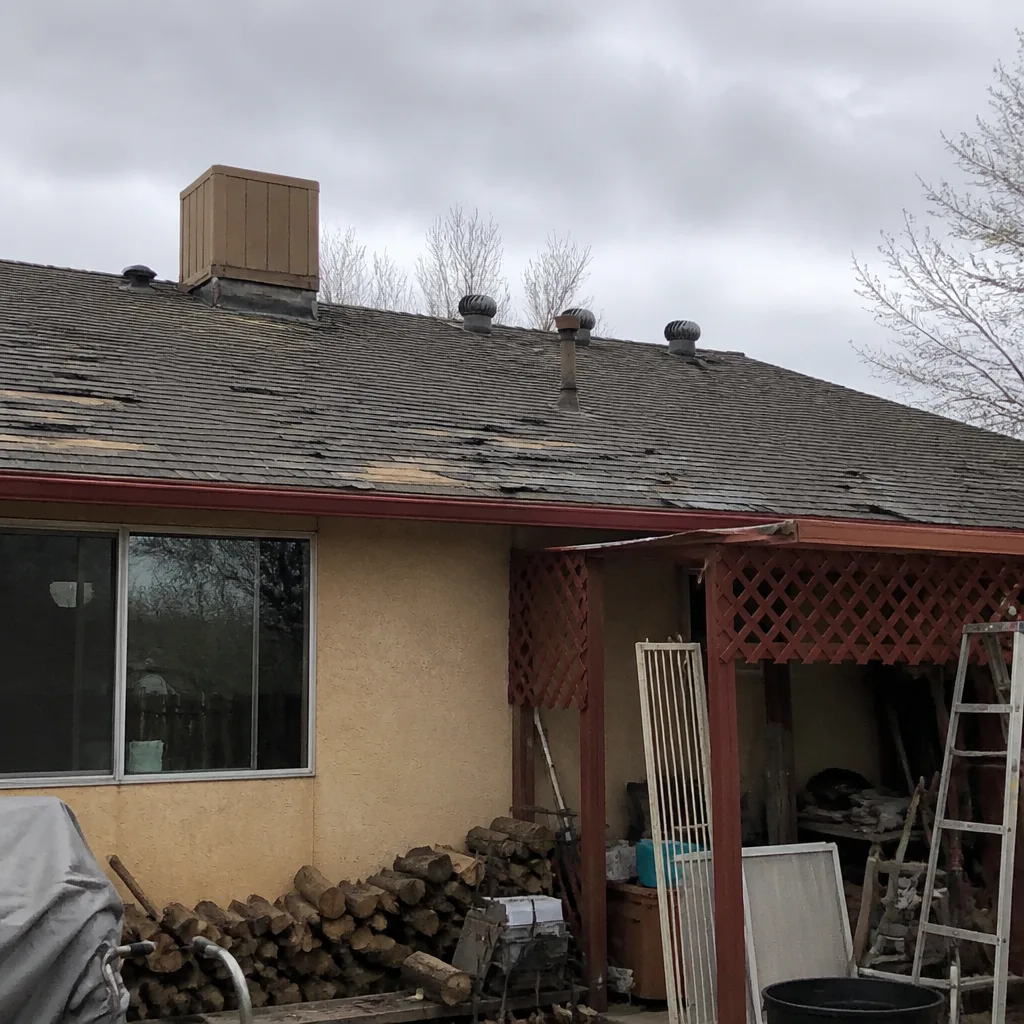 Before
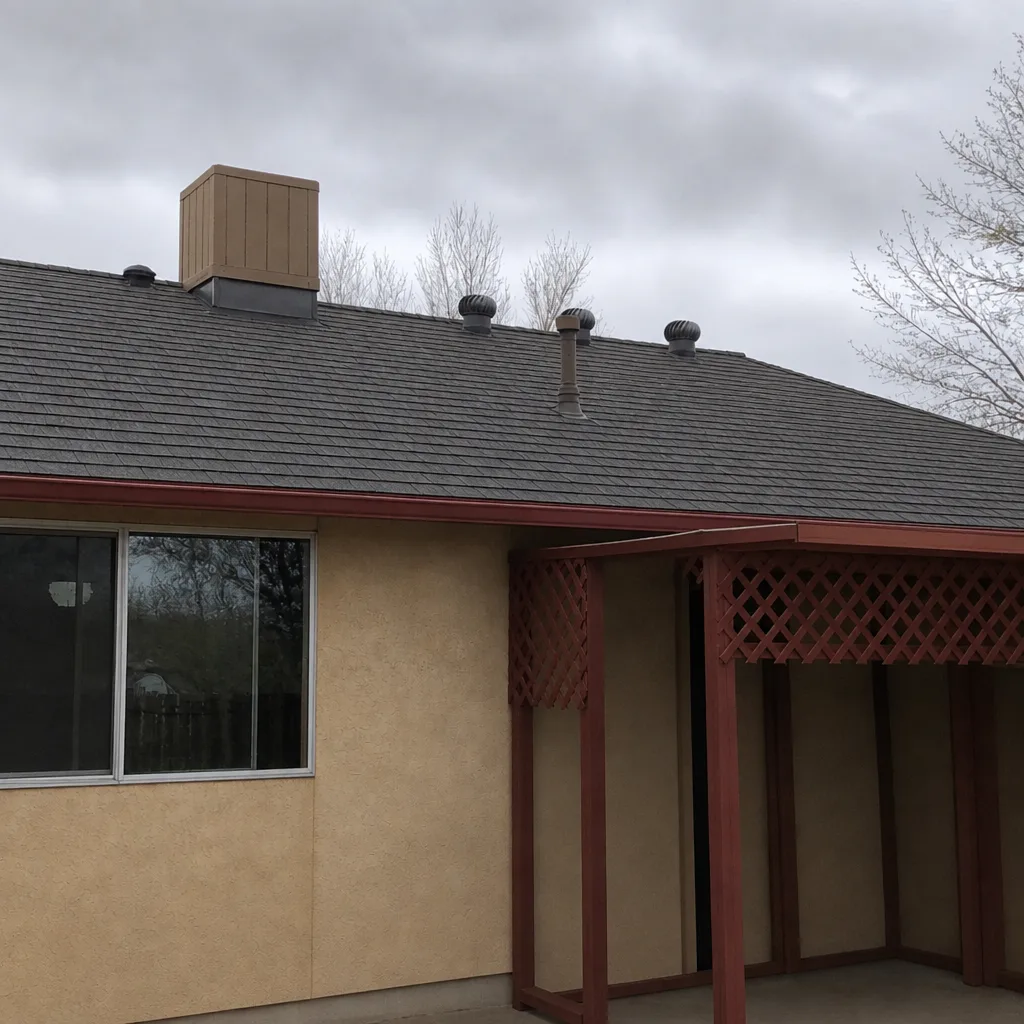 After
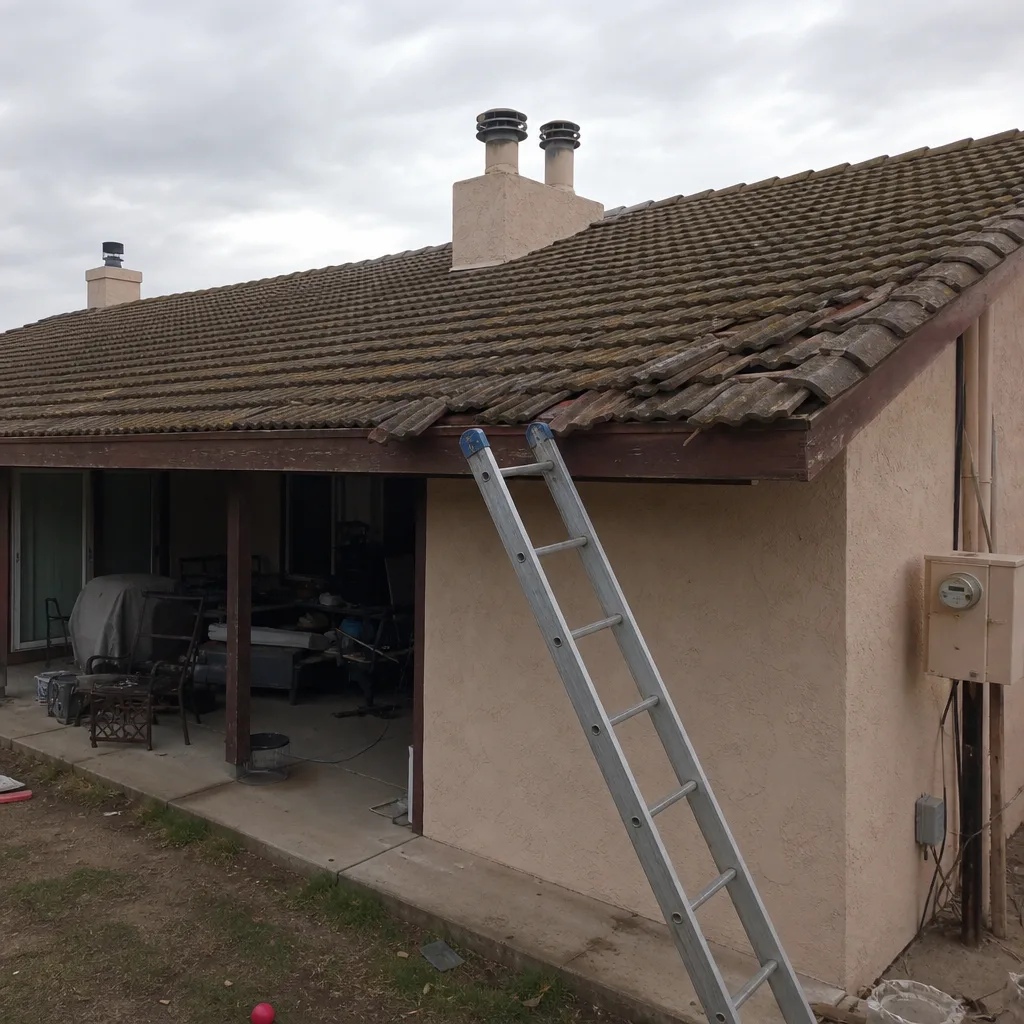 Before
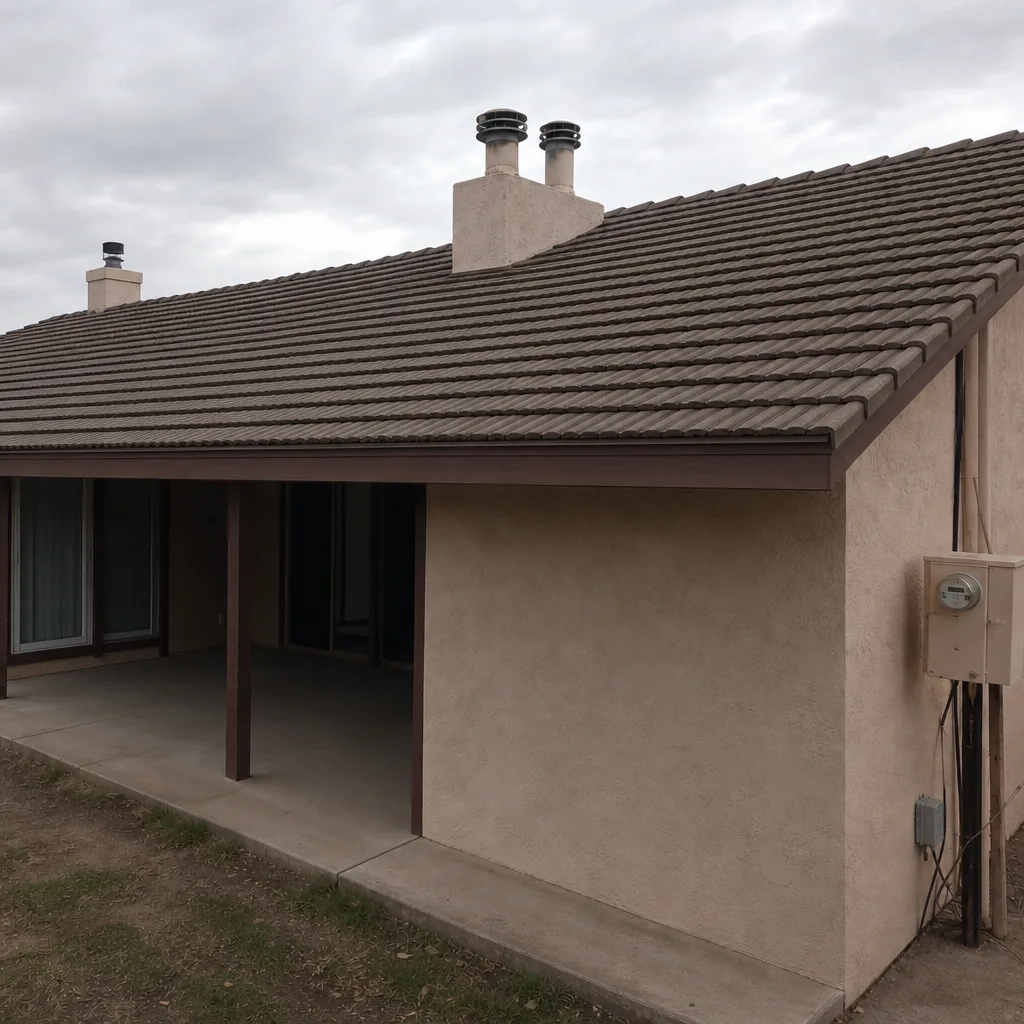 After
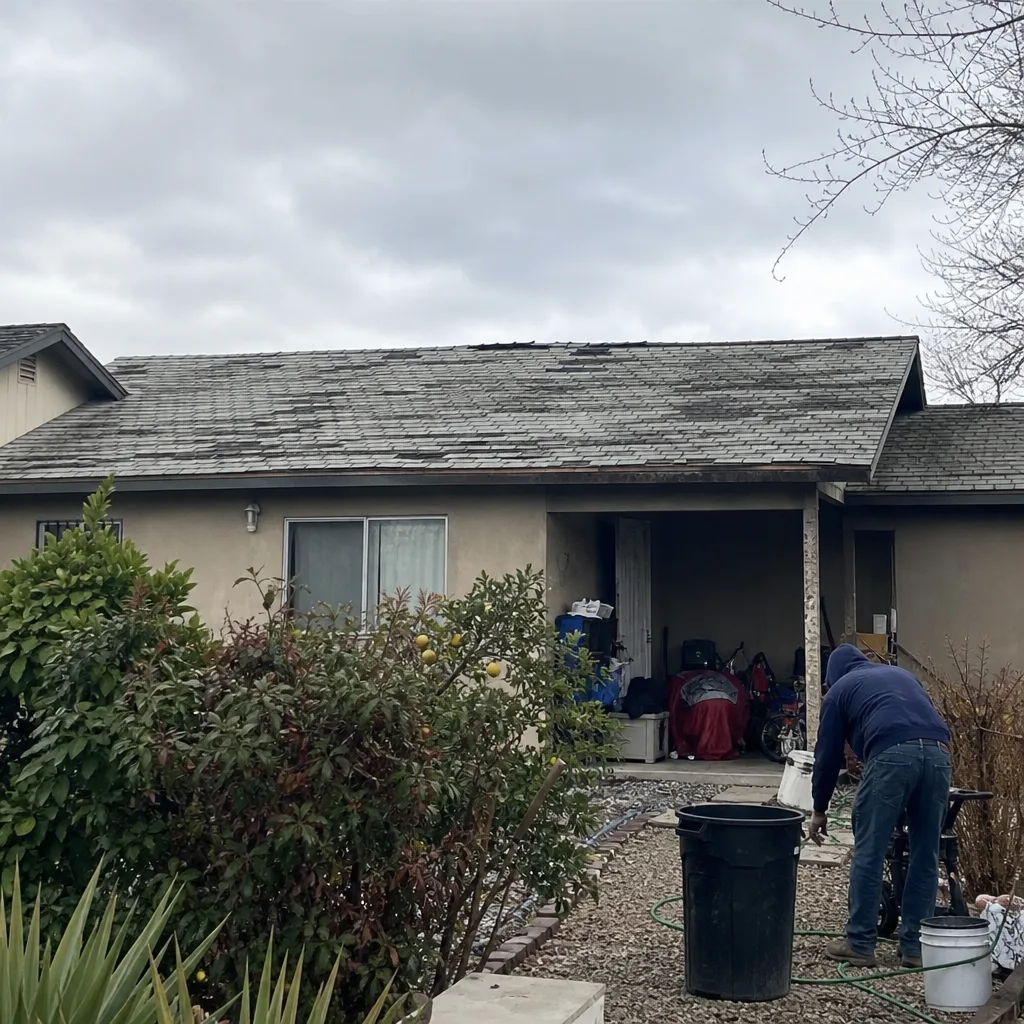 Before
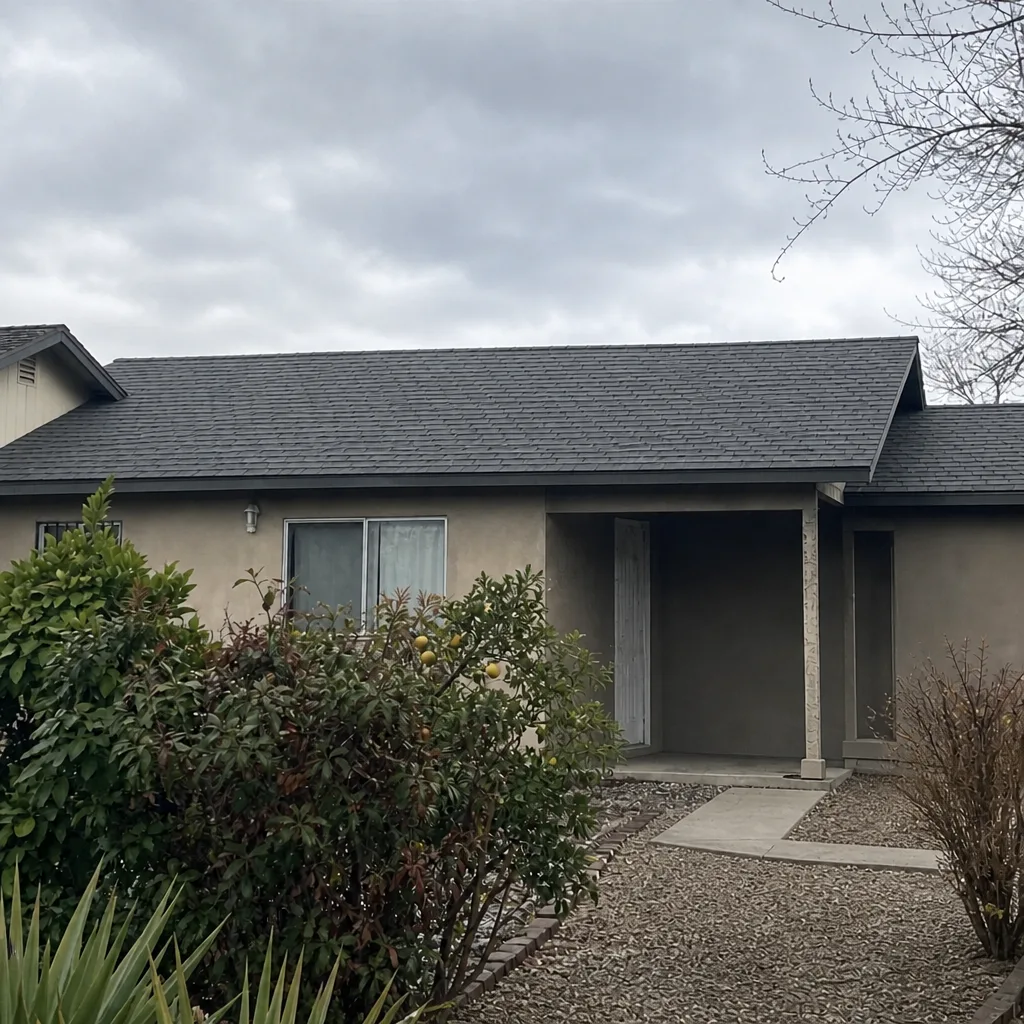 After
When to Call a Professional
Call a professional for anything at roofline height, anything involving a split-level or stepped roofline, any slope correction, any full-section replacement, and any job where you spotted staining on the fascia or water running behind the gutter. Call us too if a storm has left you unsure whether the problem is the gutter or the roof edge – that’s a distinction worth getting right the first time. A trained eye on your actual roof beats a guess from the driveway, and it catches the fascia and soffit problems a DIY repair would have left in place. Our Roof Repair in Spring Valley team can look at both together. Ridgeline Roofing Co. Spring Valley offers free estimates in Spring Valley – call (855) 908-1590.
Frequently Asked Questions
Yes, if it’s a single-story run on a level lot and you work from a stable ladder at the gutter, not from the roof. Clearing surface debris and flushing downspouts are the safest of all gutter tasks. Rehanging and resealing at roofline height are not.
It’s possible, but it’s professional territory because a rehang is really a slope job. Correct hanger spacing, the right fastener into sound wood, and a re-set of slope across the full run all have to line up. Get one wrong and the gutter sags again, often within a season.
Because slope has to be consistent across the whole run – about a quarter-inch per ten feet – and a spot fix leaves a low point somewhere else. Standing water then works at the seams and can find its way behind the fascia. A pro sets the fall across the entire run.
It can. Gutter and accessory warranties typically cover product defects, not improper installation. A run installed outside the manufacturer’s spec for hanger spacing and fasteners can be read as an installation defect, and the warranty may not apply. Professional installation keeps it intact.
Yes. Spring Valley’s older neighborhoods have many split-levels, and a stepped roofline puts some gutter runs at second-story height even on a house that looks one-and-a-half stories. That raises the fall risk and means the cleaning-only rule applies even when the job looks small.
Water reaching the foundation. A roofline mistake that damages soffit or fascia runs into the hundreds to low thousands. Water that bypasses the gutter and reaches the foundation is the largest cost of all, which is why the roofline jobs are the ones worth handing off.
Call (855) 908-1590 for an exact quote on any gutter or accessory work – estimates are free.
The Bottom Line
The safe DIY gutters job is cleaning and flushing from the ground or a stable ladder. The unsafe ones are rehanging, resealing, slope correction, and section replacement at roofline height – not because you can’t, but because the fall risk and the hidden fascia, soffit, and warranty consequences make the savings a bad bargain. On Spring Valley’s split-levels and older homes, treat the cleaning-only rule as firm. Hand off the roofline work to a crew that works to spec and stands behind it. Our technicians have up to 10 years of experience, are background-checked and arrive in uniform, and every job is covered by our written 90-Day Done Right Promise – if it isn’t right, we make it right. All work is done right, and priced upfront so the number on the estimate is the number on the invoice. For a free, no-hassle estimate in Spring Valley, call (855) 908-1590 – a live person answers any time. You can also start at our Ridgeline Roofing Co. Spring Valley home page to see what we cover.
Written by the team at Ridgeline Roofing Co. Spring Valley.