
Last updated November 17, 2026
 Architectural shingles
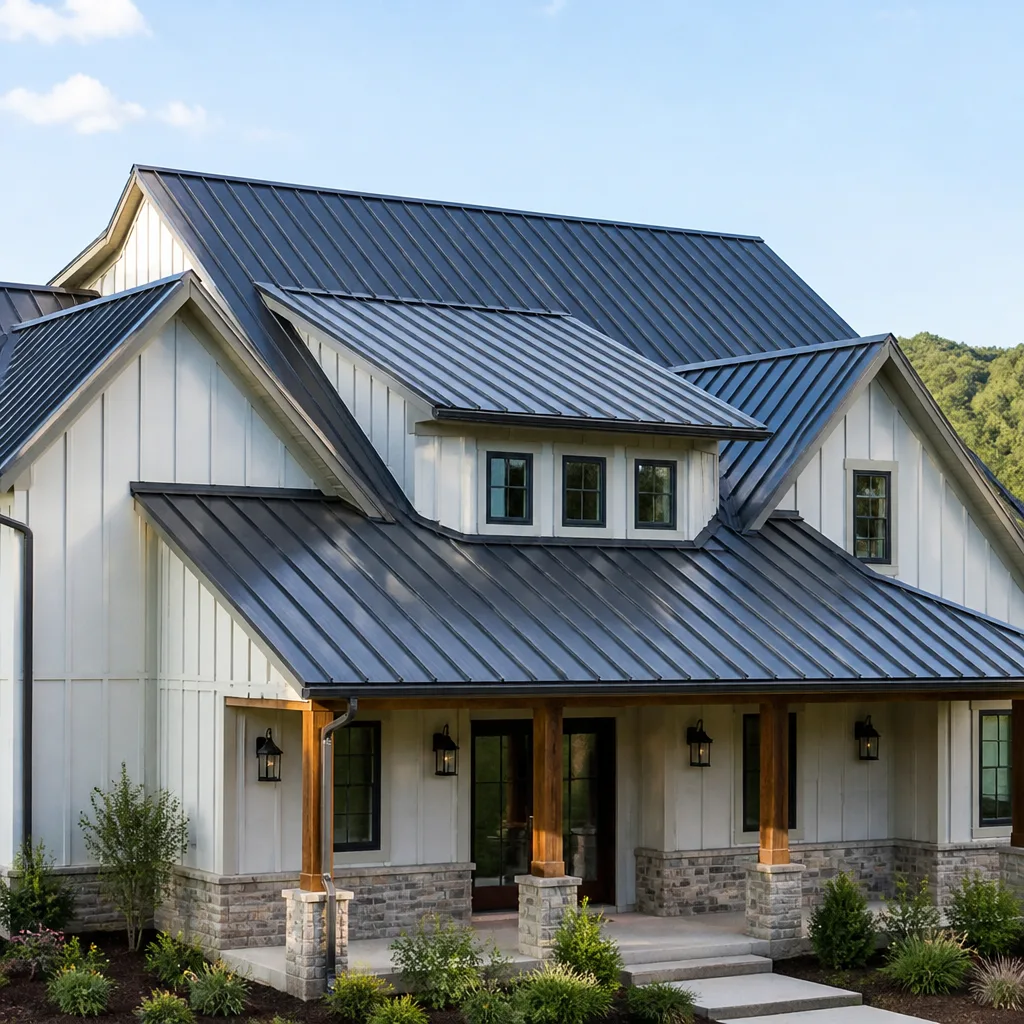 Metal roofing
 Tile roofing
 GAF
 Owens Corning
 Flat & low-slope
Free roof inspection with deck photos before we talk money - GAF and Owens Corning certified installation
DIY vs Professional Emergency & Storm Damage: What’s Safe to Do Yourself
Post-storm rooftop conditions cause more contractor injuries per hour worked than any other roofing task. That fact surprises homeowners, and it reframes the whole question of do-it-yourself repair. The instinct to climb up and patch things after a storm is understandable, especially for people who have maintained their own home for decades. But wet decking, shifted structural members, and debris-covered surfaces turn a familiar task into an unpredictable one. This guide separates the storm damage work that’s genuinely safe for a homeowner from the work that requires trained eyes and trained feet. We’ll cover the honest DIY ceiling, the specific danger of well-meant temporary repairs, and how to document damage before anyone touches it. If you live in Spring Valley and your roof just took a hit, this is the page to read before you reach for a ladder.
Quick Answer
Safe DIY storm damage tasks are limited to interior water mitigation, clearing gutters from the ground, and photographing the damage before anything is moved. Structural assessment, roof access, and emergency tarping are professional work, because a storm-damaged roof can fail under weight in ways a healthy roof won’t. When in doubt, get trained eyes on it before you touch anything structural.
Styles & brands we work with
- Architectural shingles
- Metal roofing
- Tile roofing
- GAF
- Owens Corning
- Flat & low-slope
Table of Contents
- The Honest DIY Ceiling: What You Can Safely Do
- Why Structural Assessment Isn’t a Visual Task
- The Hidden Danger of Temporary Repairs
- How Emergency Tarping Is Done Right (and How It Usually Isn’t)
- The Insurance Reason to Document Before You Touch
- Spring Valley Storm Conditions and What They Do to Roofs
- Common Mistakes to Avoid
- When to Call a Professional
The Honest DIY Ceiling: What You Can Safely Do
There’s a real list of storm damage tasks homeowners handle well, and it’s shorter than most people expect. Every item on it keeps your feet on the ground or your hands inside the house.
Interior water mitigation. When water is coming through a ceiling, you can place buckets, move furniture and electronics out of the path, and pull back wet rugs. You can also puncture a sagging ceiling bulge with a small nail hole to release trapped water before the drywall gives way on its own. Do this from below, carefully, and know that the water will come out fast.
Debris removal from gutters at ground level. If you have a gutter scoop on an extension pole, clearing leaf dams and shingle grit from the lower runs is safe. Every year in Spring Valley we see late-summer monsoon debris clog downspouts and back water under the fascia. Clearing what you can reach from a step stool is fine. Getting on the roof to do it is not.
Photographing everything. Before you move a fallen branch or discard a wet piece of drywall, take photos. Wide shots of the room, close shots of the water stain, a shot of the shingle damage if it’s visible from the ground. Timestamped phone photos are worth more than you’d think when the adjuster arrives.
Calling your insurer. Starting the claim is a homeowner task. So is asking them what documentation they need.
That’s the ceiling. Everything past it involves either a ladder, a roof surface, or a structural judgment call. Our technicians have up to 10 years of experience, and every one of them will tell you the same thing: the roof after a storm is not the roof you climbed last summer.
Why Structural Assessment Isn’t a Visual Task
A rafter under stress looks almost identical to a healthy rafter from six feet away. That’s the problem. The differences that matter are things you feel underfoot, or that you notice only when you’re looking at the right joint from the right angle with weight already on the deck. Even a visual assessment requires knowing what you’re seeing.
In our experience, here’s what a trained inspector is actually checking on a storm-damaged Spring Valley roof:
- Decking deflection. Walking a damaged roof, a seasoned technician feels soft spots through their boots before they see them. That feel comes from hundreds of roofs.
- Rafter separation at the ridge. A shifted rafter often shows as a hairline crack at the ridge board. From the ground, it’s invisible. From the wrong spot on the roof, it’s also invisible.
- Fastener pull-through. Storm-driven wind can back nails out of sheathing by a quarter inch. Without pulling a shingle tab, you can’t see it.
- Collar tie movement. When wind lifts a roof plane, collar ties can shift. That changes load paths through the whole assembly.
- Hidden moisture. A moisture meter reading under a suspicious shingle tells you what a visual check cannot.
None of that is a homeowner failure. It’s just the difference between familiarity with your house and familiarity with roofs. A person who’s lived in their home for thirty years knows that house intimately and still shouldn’t be the one deciding whether a rafter is safe to stand near. The risk isn’t the assessment. It’s the weight you put on the surface while you’re assessing.
For a closer look at what a professional assessment covers, see our Roof Repair in Spring Valley page.
The Hidden Danger of Temporary Repairs
Here’s the counterintuitive part: a temporary repair done wrong can cost more than no repair at all. We’ve seen it happen more than once in Spring Valley after a hard monsoon.
Trapping moisture. A tarp or plastic sheet taped tight over a wet breach seals water vapor inside the assembly. The shingles and decking underneath can’t dry. In our dry climate, most wet sheathing dries out fast if it can breathe. Seal it and you can turn a small wet spot into rot over the course of a season.
Compressing damaged decking. A tarp held down with cinder blocks or bungees pulls downward on the deck. If the deck has already been compromised by water or impact, that weight is exactly the wrong direction. We’ve pulled sheathing that cracked under a “temporary” repair someone installed for two weeks.
Missing secondary breach points. The spot the water is coming through is rarely the only breach. Wind-driven rain finds pathways a foot or two away. Sealing the visible hole and calling it done leaves the others wide open through the next storm.
Obscuring the damage. A poorly placed tarp covers evidence the adjuster needs to see. We’ll come back to this one because it matters for your claim.
Temporary repairs have a place. They just need to be done by someone who understands what they’re doing to the assembly underneath.
How Emergency Tarping Is Done Right (and How It Usually Isn’t)
Emergency tarping is the task homeowners most often attempt and most often get wrong. The principle is simple: shed water, don’t trap it. The execution takes a few things most driveways don’t have.
Done right, a tarp job works like this:
- The tarp runs up and over the ridge, not just over the damaged slope, so water sheds past the breach instead of pooling at its edge.
- It’s secured with weighted batten boards along the edges, not nails or screws driven through the shingles. Nailing a tarp down creates new holes to repair later.
- It’s loose enough to breathe at the low edge, so moisture can escape.
- It overlaps any other temp protection by at least a foot, with the upper layer on top.
- It gets photographed and dated before and after, for the insurance file.
Done wrong, which is what we usually find:
- A tarp laid flat over the breach with no ridge overlap, which pools water at the low edge and pushes it laterally into the assembly.
- A tarp stapled or nailed through the shingles, which creates a new cluster of holes that will leak the moment the tarp comes off.
- A tarp pulled tight and sealed against the deck, which traps moisture and grows mold in the sheathing.
- A tarp held down with blocks or bricks, which can slide off in the next wind gust and take shingles with them.
The reason tarping gets done wrong is not laziness. It’s that a windy, rainy evening on a ladder with a tarp is a hard place to think clearly. That’s one of the reasons our phones are answered by a live person around the clock. If you’re staring at a hole in your roof at 10 p.m., call Ridgeline Roofing Co. Spring Valley home. We’d rather talk you through whether to wait until morning than have you on a wet ladder.
The Insurance Reason to Document Before You Touch
Every adjuster will tell you the same thing: they need to see the damage as the storm left it. Once you move a branch, patch a hole, or sweep up the fallen shingles, that evidence is gone. Claims get denied or reduced for that reason more often than people realize.
Before you touch anything structural, do this:
- Photograph every water stain, inside and out, from multiple angles.
- Photograph fallen shingles or granules on the ground where they landed.
- Photograph any visible damage from the ground, using a zoom lens if you have one.
- Note the date and time of the storm and the damage discovery.
- Save any receipts for emergency items like tarps or fans.
Then call us for an inspection. A photo-documented inspection from your actual roof is exactly what your adjuster wants to see. It shows the damage in place, measured, and identified by someone who knows what they’re looking at. We install products from GAF, CertainTeed, Owens Corning, Tamko, and other leading lines, so when the repair scope gets written, the materials in it will be the materials we stand behind. If you’re considering a full replacement after a major loss, the Roof Replacement & Installation in Spring Valley page walks through what that process looks like.
Spring Valley Storm Conditions and What They Do to Roofs
Spring Valley storms are not the same as storms a few hundred miles away, and the damage pattern reflects it. Our summer monsoon cells drop a lot of water in a short window, and they often arrive with wind that lifts shingle tabs before the rain even starts. The wind opens the door, then the rain finds it.
That combination produces two things we see on Spring Valley roofs more than most homeowners expect:
- Water intrusion at penetrations. Vent boots, skylight seals, and valley flashing take a beating from wind-driven rain. The leak shows up inside as a ceiling stain but the breach is usually at one of those details, not at the shingle field.
- Granule loss and tab lifting. Hail and wind strip granules off the southern and western slopes first. That aging accelerates fast, and by the next storm the shingles are more vulnerable than the rest of the roof. If your Spring Valley roof is past 15 years old, that’s worth knowing before the next storm season.
Our crews train apprentices into journeymen and we’ve been standing behind local roofs since 1984. That’s not a sales line: it’s the reason we can tell you, looking at your roof, which storms a Spring Valley home usually shrugs off and which ones leave a lasting mark. For specialty details like tile, slate, or metal systems, our Specialty Roofing in Spring Valley page covers what holds up in our climate.
Common Mistakes to Avoid
- Climbing a wet roof before you know it holds weight. Once decking has soaked through, a surface that felt solid last month may give under a boot. If you’re not sure, stay off it – there’s nothing on that roof worth a fall.
- Fixing the visible leak and stopping. Wind-driven rain finds multiple entry points. Sealing the obvious one and calling it done leaves the secondary breach wide open through the next storm.
- Tarping tighter than the assembly can breathe. A tarp sealed against the deck traps moisture and encourages rot. It needs to shed water and let vapor escape.
- Nailing or screwing through shingles to hold a tarp. Each fastener is a new hole. Weighted batten boards along the edges work and leave the shingles intact.
- Cleaning up before you document. Once the fallen branch is gone, the adjuster can’t see where it was. Take photos first, then clean up.
- Trusting a storm-chasing truck with out-of-state plates. In our experience, the crews that knock on the door after a hail event are usually gone by spring. A written workmanship guarantee from a company that will still be here in thirty years is worth far more than a low bid from a truck that won’t.
- Assuming a small stain on the ceiling means small damage. By the time a stain shows inside, water has usually traveled a fair distance through the assembly. The visible damage is often the smallest part of the problem.
When to Call a Professional
Call us when any of these is true:
- You can hear water running inside a wall cavity.
- A ceiling is sagging or bulging.
- You see visible deflection in the ceiling or roof line.
- There’s a shingle loss you can see from the ground that’s bigger than a single tab.
- Any part of the structure is exposed to weather.
- Your insurer has asked for a professional assessment.
- You feel unsure – that feeling is usually the right answer.
Ridgeline Roofing Co. Spring Valley offers free estimates in Spring Valley, photo-documented inspections, and no-hassle upfront pricing. Every job is backed by our 90-Day Done Right Promise: no arguing, no paperwork runaround, if it’s not right we make it right. Call (855) 908-1590 – a live person answers, day or night, including the middle of the storm.
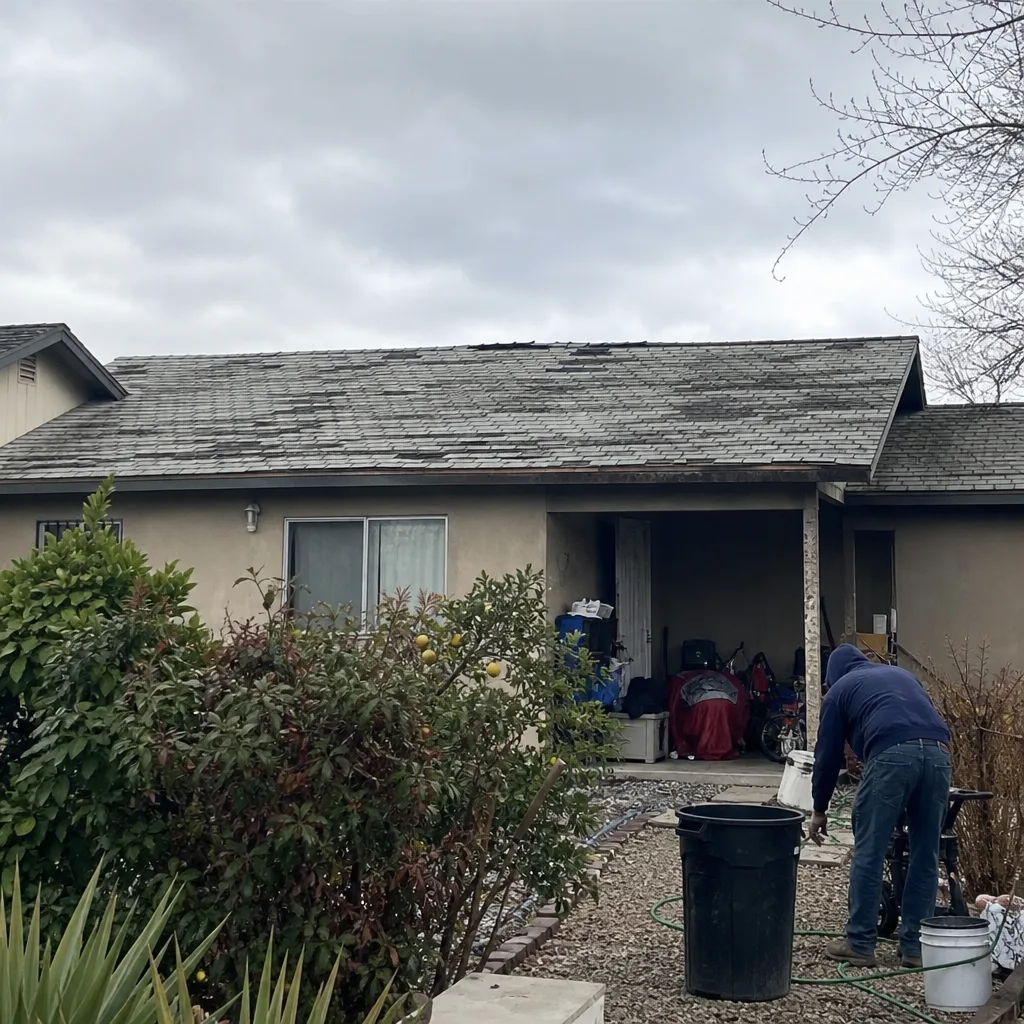
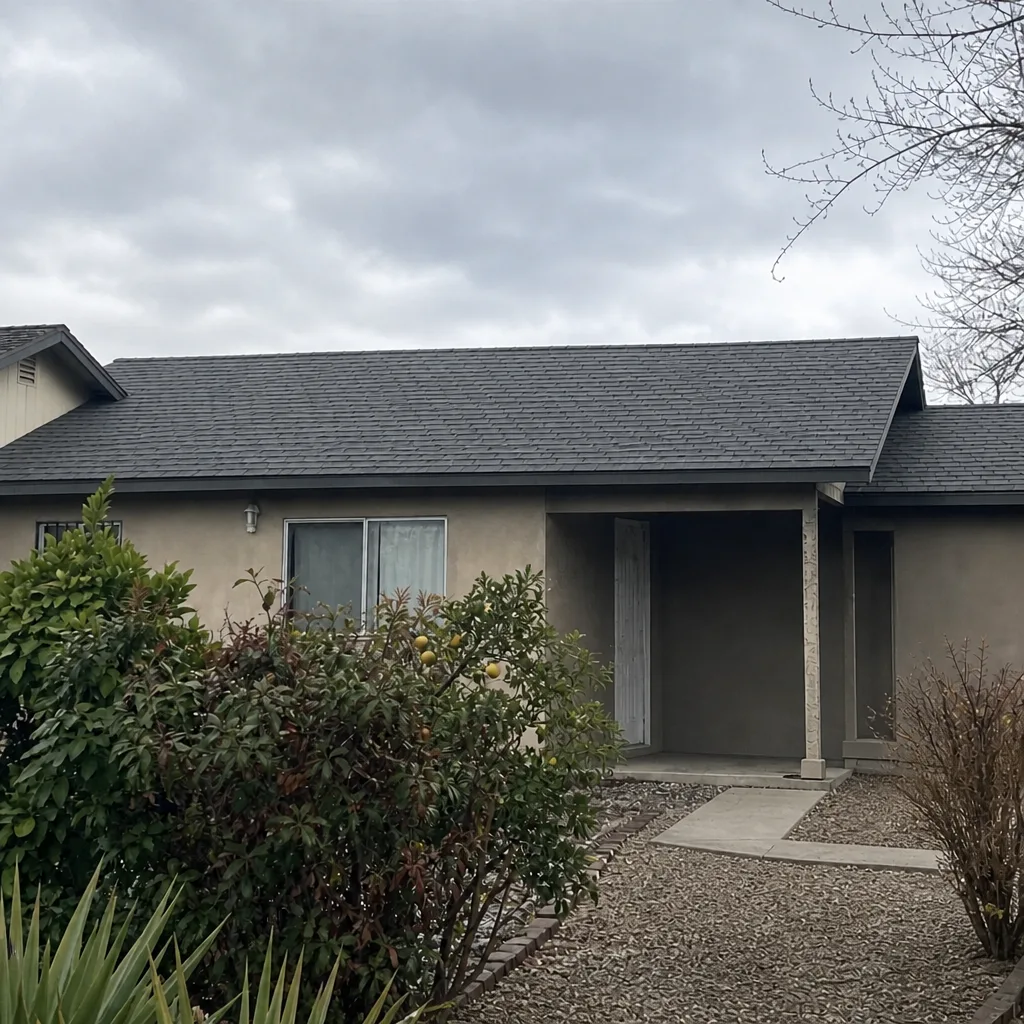
See the difference
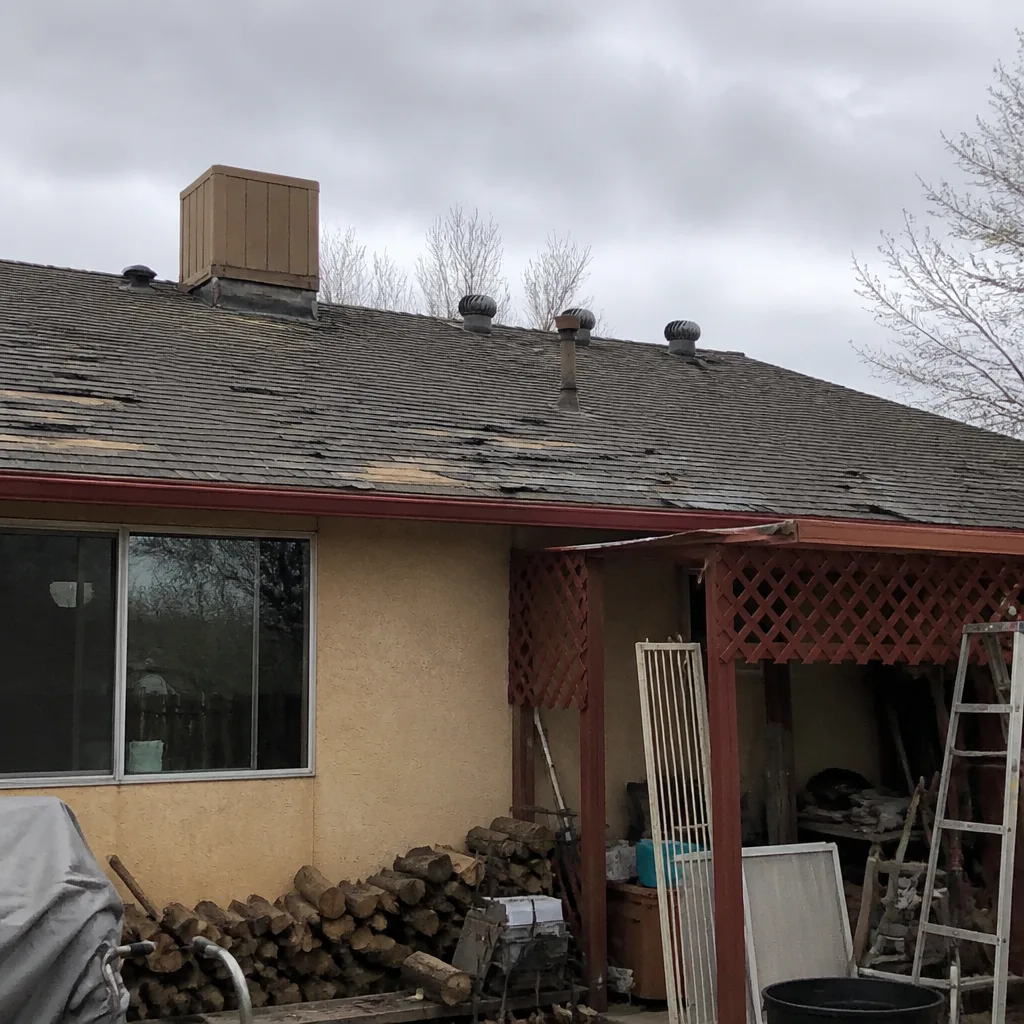 Before
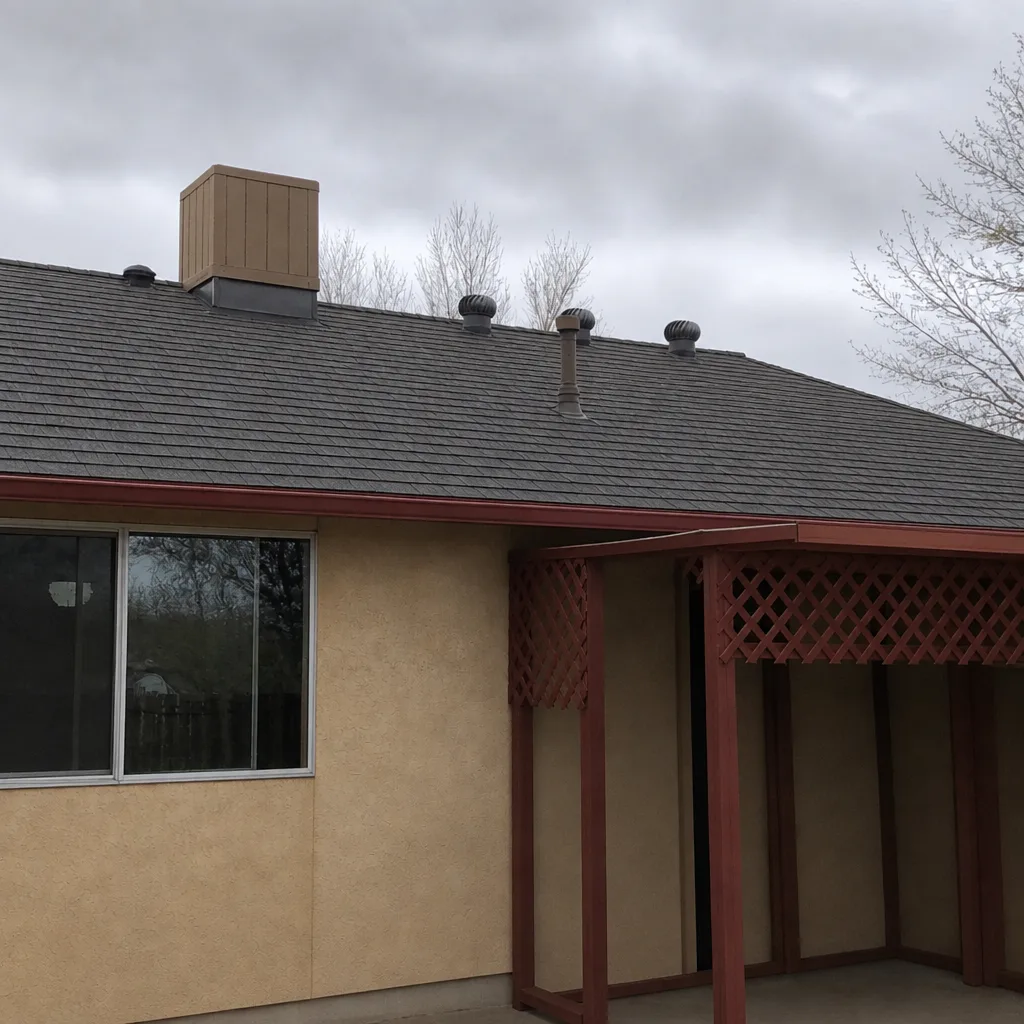 After
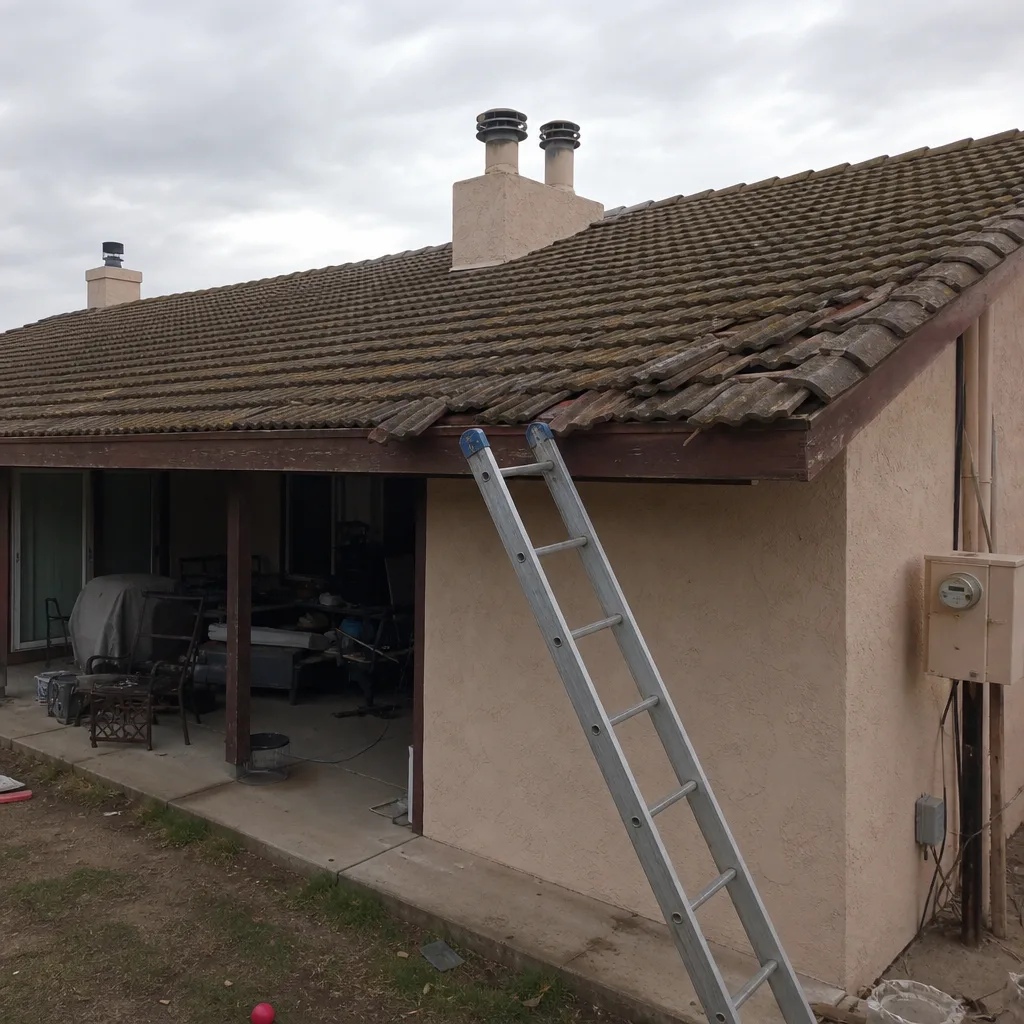 Before
 After
 Before
 After
Frequently Asked Questions
Hire a contractor for anything structural or anything that requires getting on the roof. The safe DIY list is limited to interior water mitigation, ground-level gutter clearing, and photo documentation. A storm-damaged roof can fail under weight, and a temporary fix done wrong can cost more than the original damage. Call (855) 908-1590 for a free estimate – we’ll tell you honestly whether you have a problem worth our time.
No, not unless you’re confident the roof surface will hold your weight and you can do the job safely on a wet, windy day. Tarping looks simple and mostly isn’t. A wrong tarp can direct more water into the structure than no tarp at all. Our phone line is live around the clock – call (855) 908-1590 if you’re dealing with an active leak tonight.
Usually yes, but the settlement can be reduced if the adjuster can’t see the original damage. Photos taken before you touch anything make the claim much stronger. Do the documentation first, then call us and your insurer.
You usually can’t tell from inside the house or from the ground. Structural signs include sagging ceilings, deflection along the roofline, water running inside walls, and separation at the ridge. Any of those means professional eyes. Call (855) 908-1590 for a free photo-documented inspection – you’ll get a clear answer, not a sales pitch.
Most small storm repairs are a single-visit job once materials are on hand and the scope is clear. Larger repairs, especially when insurance is involved, depend on the adjuster’s timeline. The number on the estimate is the number on the invoice, and most jobs are finished in a single visit. Call (855) 908-1590 for a timeline specific to your roof.
Photograph everything, then call your insurer and a roofing contractor, in that order. If water is actively coming in, place buckets and move valuables out of the way. Do not climb on the roof. Our technicians are background-checked and arrive in uniform, and every inspection is documented with photos from your actual roof. Call (855) 908-1590 to schedule your free inspection.
The Bottom Line
After a storm the honest DIY list is short: interior water mitigation, ground-level gutter clearing, and thorough photo documentation before you touch anything structural. Everything past that – assessing a rafter under stress, tarping a damaged roof, judging whether a wet deck can hold weight – belongs to someone who’s trained for it and knows what failure looks like before it happens. That’s not a knock on homeowners. It’s the difference between familiarity and a specific skill. Ridgeline Roofing Co. Spring Valley has been standing behind local roofs since 1984, with no-hassle upfront pricing and a written 90-Day Done Right Promise on every job. Call (855) 908-1590 for a free estimate – we’ll give you a straight answer about what your roof needs and what it doesn’t.
Written by the team at Ridgeline Roofing Co. Spring Valley.