
Last updated November 17, 2026
 Metal roofing
 Architectural shingles
 Tile roofing
 GAF
 Owens Corning
 Flat & low-slope
Free roof inspection with deck photos before we talk money - GAF and Owens Corning certified installation
Roofing Permits, Codes & Inspections in NV: What You Need to Know
A Spring Valley homeowner finished a full re-roof, wrote the final check, and thought the job was closed. Months later, at closing on a refinance, the title company flagged an open permit on the property. The contractor had pulled the permit but never scheduled the final inspection, so the county record showed work started and never verified. That single missing inspection stalled the loan and cost the homeowner weeks of calls to straighten out. This guide explains how permitting actually works for roofs in unincorporated Clark County, which jobs need a permit and which don’t, how to check a permit’s status yourself, and how to fix a roof that was built without one. It’s written for Spring Valley homeowners who plan to stay in their houses, not flip them.
Quick Answer
In unincorporated Clark County, which includes Spring Valley, roofing permits are issued by Clark County Building & Fire Prevention, not the city of Las Vegas or Henderson, and inspections follow that office’s schedule and the code edition Nevada has adopted. Structural or material-substitution work like a full re-roof, new sheathing, or a change in roofing type generally requires a permit and inspection. Minor like-for-like repairs on a small section usually don’t. The permit record matters at resale, so verifying the final inspection is signed off is part of doing the job right.
Styles & brands we work with
- Architectural shingles
- Metal roofing
- Tile roofing
- GAF
- Owens Corning
- Flat & low-slope
Table of Contents
- Why Spring Valley’s Jurisdiction Surprises People
- Which Roofing Work Requires a Permit in Clark County
- Nevada’s Adopted Code and Fire Ratings for Spring Valley Roofs
- How to Check a Permit and Inspection History Yourself
- What a Roof Inspection Actually Looks At
- What Happens When Roofing Work Was Done Without Permits
- How to Remedy an Unpermitted or Un-Inspected Roof
Why Spring Valley’s Jurisdiction Surprises People
The most common misunderstanding we run into starts with an address. Spring Valley is not a city. It’s a large unincorporated community in Clark County, wedged between the Las Vegas Strip corridor and the Spring Mountains. That means the building authority covering a Spring Valley address is Clark County Building & Fire Prevention, not the city of Las Vegas, and not Henderson. A neighbor across a boundary line may deal with a different office, a different permit portal, and a different inspection queue for what looks like the same job.
This trips up homeowners and, in our experience, more than a few contractors who work mostly inside city limits. Someone who routinely pulls permits with the city of Las Vegas may assume the same process carries over to Spring Valley. It doesn’t. The application, the review timeline, and the field inspection get routed through the county, and the person who answers a status question is a county staff member, not a city one.
Why it matters beyond paperwork: an open or improper permit follows the property, not the contractor. When a Spring Valley home changes hands, a lender or title company can see the county record. An unclosed permit, or work that never went through the county at all, becomes a question at closing. Getting the jurisdiction right at the start is cheaper than explaining it later. If you want the work handled correctly from the first shingle, that’s the kind of job we do at Ridgeline Roofing Co. Spring Valley.
Which Roofing Work Requires a Permit in Clark County
Not every trip onto a roof needs a county permit. The distinction comes down to whether the work is a like-for-like repair or a change to the roof system. Here’s how the split usually falls for Spring Valley homes, though the county makes the final call on any specific job.
Work that generally requires a permit and inspection:
- A full re-roof or tear-off, even when the new covering is the same material as the old.
- A change in roofing material type, such as moving from asphalt shingle to tile or from flat membrane to shingle.
- Replacing or adding roof sheathing or decking over a substantial area.
- Structural changes to rafters, trusses, or the roof framing.
- Adding a roof over a new addition, patio cover, or covered structure.
- Installing or substantially altering roof-mounted equipment, skylights, or vents tied to the deck.
Work often treated as like-for-like repair that doesn’t require a permit:
- Replacing a handful of damaged or missing shingles after wind.
- Patching a small leak or sealing a flashing point.
- Re-caulking or re-sealing a vent boot or pipe collar.
- Clearing debris or making minor drainage corrections.
The square-footage line is where people get confused. There’s no single number printed on a poster that applies to every roof. In practice, a small repair on a limited section tends to be treated as maintenance, while anything approaching a full slope or a large share of the roof crosses into permit territory. When a homeowner asks us whether a Spring Valley repair needs a permit, we don’t guess. We check with the county, because a wrong assumption here is what creates an open-permit problem at resale. For repair-specific questions, see our page on Roof Repair in Spring Valley.
Nevada’s Adopted Code and Fire Ratings for Spring Valley Roofs
Nevada adopts building codes at the state level and local jurisdictions enforce them, so the edition of the code in effect on a Spring Valley job is set through that state and county process, not left to whatever a contractor prefers. The key takeaway for a homeowner: roofing work has to meet the code edition adopted when the permit is issued, and that edition gets updated over time. Work permitted years ago was held to the standards of that year, which is one reason a fresh inspection may look at things an older roof never had to satisfy.
Fire rating is the piece most Spring Valley homeowners have never had explained. Roof coverings carry a class rating based on how they perform against an external fire, and Clark County’s dry, windy conditions make that rating something the county takes seriously. Asphalt shingles from established lines like GAF and CertainTeed carry ratings that satisfy typical residential requirements, and tile products such as Boral offer their own ratings. The detail that matters is that the rating has to match what the code calls for on your structure. A substitution during the job, even a well-intentioned one, can fail inspection if the rating doesn’t line up.
This is where material sourcing becomes a code issue. We’re an authorized installer of GAF, CertainTeed, Owens Corning, IKO, Atlas, Tamko, and Boral products, which means the covering going onto a Spring Valley roof matches what the permit describes. No substitutions, no rating surprises at the inspection. When the job is a full replacement rather than a repair, the code and rating questions deserve their own conversation; that’s covered in Roof Replacement & Installation in Spring Valley.
How to Check a Permit and Inspection History Yourself
You don’t need a contractor to look up a permit on a Spring Valley property. Clark County runs an online permit portal where a homeowner can search the record and see whether inspections have been signed off. Here’s the process, step by step. Portal layouts change from time to time, so treat the labels as a guide.
- Go to the Clark County Building & Fire Prevention permit search. Search by the county’s name plus “permit search” and you’ll land on the current portal.
- Enter the property address exactly as it appears on your county record. A typo or a missing directional will return nothing, so copy the address from your property tax statement if you have it.
- Alternatively, search by permit number if the contractor gave you one on the estimate or contract. Ask for it in writing if they haven’t.
- Open the permit record and look at the status. “Issued” or “open” means work was authorized but the file isn’t closed. “Finaled” or “closed” means the final inspection passed.
- Scroll to the inspection history. You want to see each required inspection listed with a result and a date. A passing final inspection is the line that matters most.
- If the record shows an inspection scheduled and never completed, or an inspection marked failed with no follow-up, call the county to confirm before you rely on it.
Do this before you close on a Spring Valley home, before you refinance, and before you pay the final invoice on a new roof. The record is public and it’s yours to check.
What a Roof Inspection Actually Looks At
A county roof inspection is not a full evaluation of whether your roof will last another twenty years. It’s a check that the work matches the permit and meets code. Knowing the difference helps a homeowner read the result correctly.
The county inspector is generally verifying:
- The covering installed matches the permit and its fire rating.
- Underlayment and flashing are in place where the code requires them.
- Decking attachment and any sheathing replacement meet the approved scope.
- Venting and penetrations are handled to code.
- The job as built matches what was approved on the application.
What it doesn’t tell you is whether the workmanship will hold through a Spring Valley summer or the monsoon gusts that roll off the mountains. That’s a craftsmanship question, and it’s why we document every roof with photos taken from the actual roof, not from the driveway. A photo record of what was there and what went on is the kind of proof that outlasts any single inspection. The 90-Day Done Right Promise backs the workmanship in writing for the period right after the job, so if something isn’t right, we come back and make it right. For specialty roofs, which often carry their own inspection considerations, see Specialty Roofing in Spring Valley.
What Happens When Roofing Work Was Done Without Permits
An unpermitted roof doesn’t announce itself. It sits there looking fine until a lender, an insurer, or a buyer’s inspector starts asking for the county record. Then the gap becomes visible, and it can touch the two things a homeowner cares about most: insurability and resale value.
On insurance: Carriers ask about the age and condition of a roof when they underwrite or renew a policy. An unpermitted roof raises a question about whether it meets current code, and that question can affect coverage decisions or premiums. It’s not a guaranteed denial, but it’s a risk a homeowner is better off removing.
On resale: A title company examining a Spring Valley property can surface an open permit or work done without one. A buyer’s lender may require it be corrected before the loan is approved. Even a buyer willing to look past it now has negotiating leverage and a reason to reduce the offer. The cost of a permit pulled properly at the start is a fraction of what a stalled closing costs in time and price.
There’s also the safety layer. Roofing involves high-tension components, ladder and height work, and a covering that has to be tied down against wind. When a job skips the permit and inspection, it also skips the check that the work was done to a standard, and the record shows nothing. The correction is possible, but doing it right the first time is always the cheaper path.
How to Remedy an Unpermitted or Un-Inspected Roof
If you’ve found an open permit or work that never went through the county, it’s fixable. The county has a process for it, and the earlier you start the better, especially if a closing or renewal is on the horizon. Here’s the general path.
- Confirm the record. Pull the permit status on the county portal, or call the county directly, and find out exactly what’s open and what inspections are missing.
- Understand what’s already done. Sometimes the permit was pulled and only the final inspection was never scheduled. That’s often a shorter path than a fully unpermitted job.
- Get the work verified. A licensed roofer who handles county permitting can document the current condition of the roof and tell you what the county will need to close the file.
- Apply for the correct permit or correction. Depending on the situation, the county may allow a permit to be issued retroactively with inspection of the existing work, or require corrections before sign-off.
- Complete the required inspections. Keep every inspection record and document it in writing, so you can hand a clean file to a lender, insurer, or buyer.
- Hold onto the paperwork. A finaled permit and inspection history are part of your home’s records now, and they’re worth keeping with the deed and any warranty documents.
We handle county permitting on Spring Valley jobs and know the county’s schedule and what inspectors expect to see, which saves homeowners the back-and-forth. Upfront pricing means the number on the estimate is the number on the invoice, including the permit work, so there are no surprises mid-project.
Common Mistakes to Avoid
- Assuming Spring Valley is inside Las Vegas city limits. It isn’t, and a permit filed with the wrong office doesn’t cover the job. Check the authority before anyone applies.
- Pulling the permit but skipping the final inspection. This is the exact trap that flagged the open permit at that homeowner’s closing. The final inspection is the line that closes the file.
- Trusting a verbal “we’ll handle the permit.” Ask for the permit number in writing and confirm it on the county portal yourself. A promise isn’t a record.
- Letting a contractor substitute materials mid-job. A swap can change the fire rating and fail inspection. The covering on the roof needs to match the permit.
- Treating a large repair as maintenance to skip the permit. A repair that crosses into a substantial re-roof needs the county process. Skipping it is what creates the resale problem later.
- Waiting until closing to check the record. Pull the permit history before you list, refinance, or buy. Fixing it under deadline pressure costs more.
- Hiring a storm-chasing crew that leaves town. They may pull a permit and vanish before the inspection. The property carries the open file, not them.
See the difference
 Before
 After
 Before
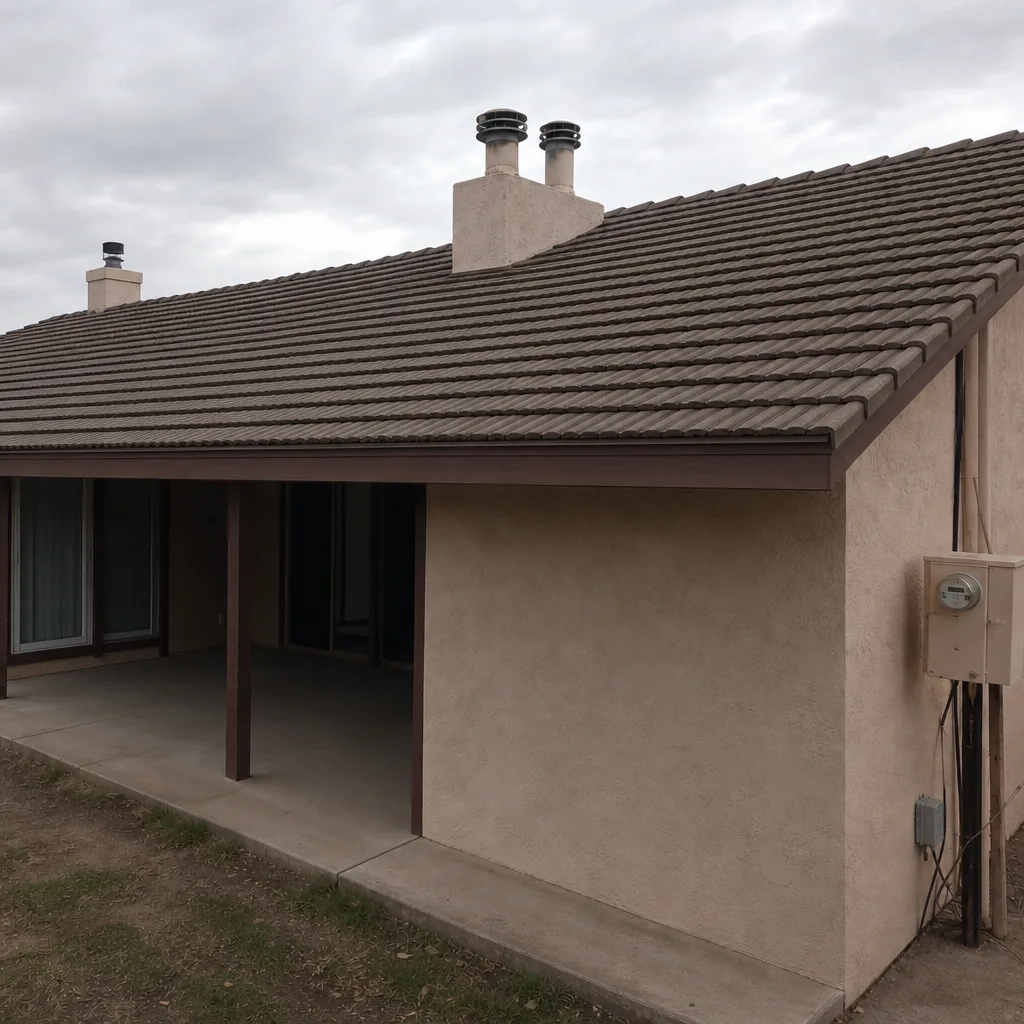 After
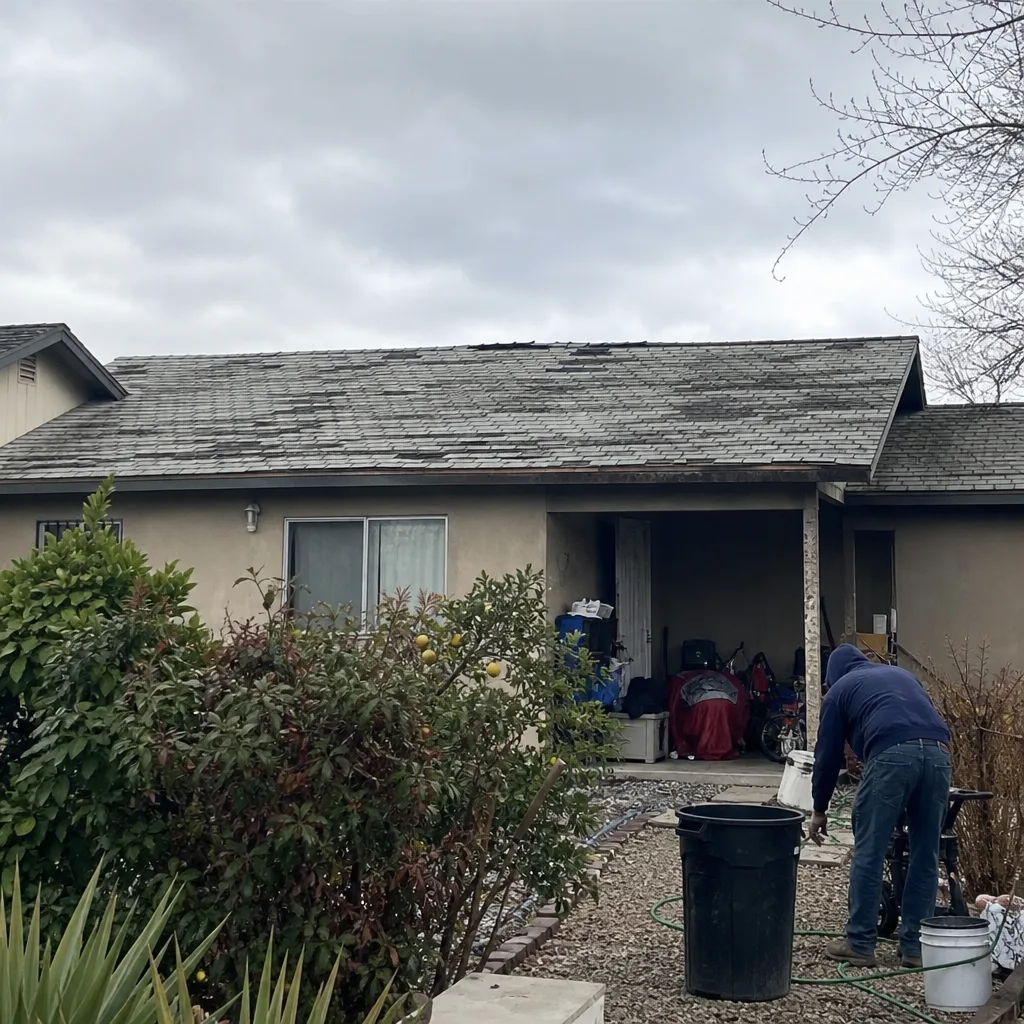 Before
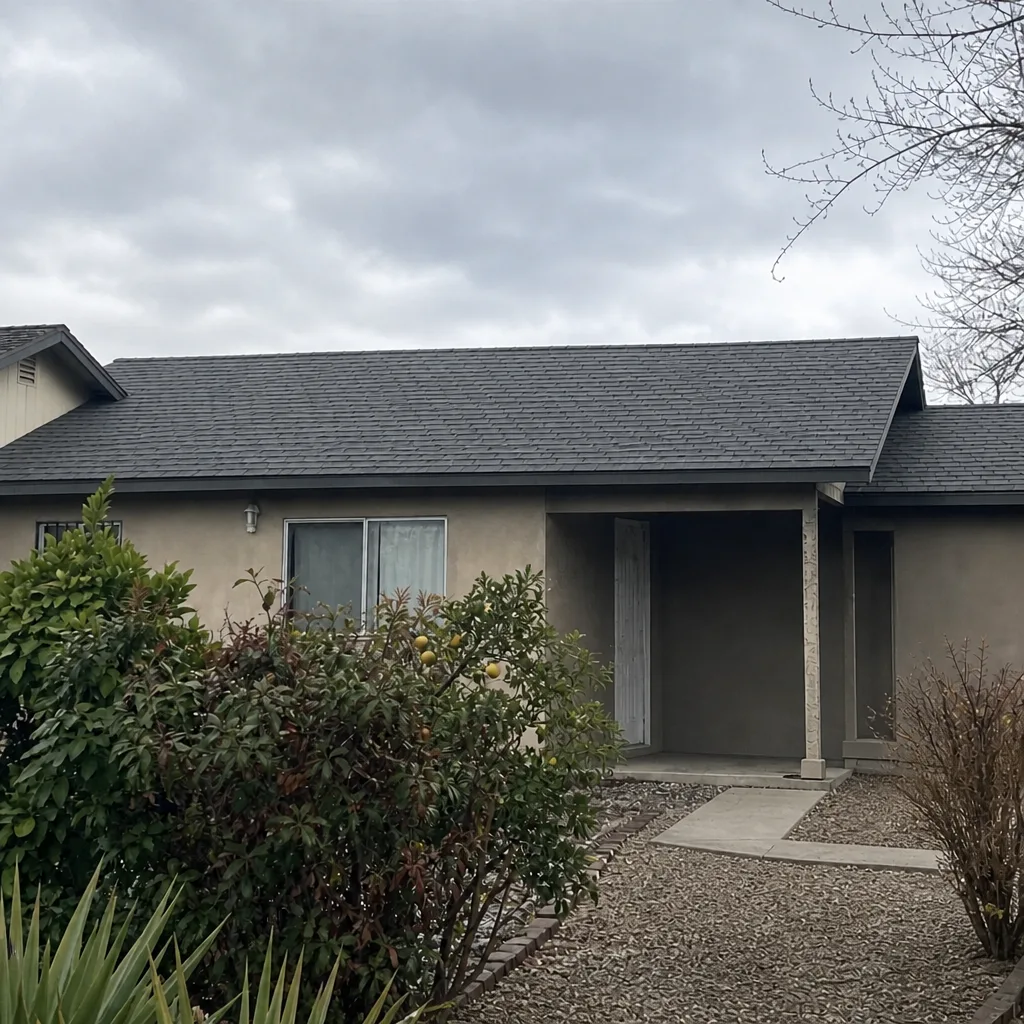 After
When to Call a Professional
Some questions about a Spring Valley roof are fine to answer yourself with a phone call to the county. Others involve ladders, height, and high-tension components, and those are jobs for a trained professional. Call a roofer when the work is above the first story, when the roof is steep, when the job involves a permit or a change in material, when you’ve found an open permit on the county record, or when storm damage has opened the roof to the weather. Those situations combine safety risk with code questions, and a back-and-forth with the county is not something to take on from the top of a ladder. Ridgeline Roofing Co. Spring Valley offers free estimates in Spring Valley. Call (855) 908-1590 to schedule yours. A live person answers, day or night.
Frequently Asked Questions
It depends on the scope. Small like-for-like repairs, such as replacing a few damaged shingles or sealing a flashing point, usually don’t need a permit. A full re-roof, a change in material type, sheathing replacement over a substantial area, or structural work generally does. Because Spring Valley is unincorporated Clark County, the permit comes from Clark County Building & Fire Prevention. Call (855) 908-1590 for a free estimate and we’ll tell you which side of that line your job falls on.
Clark County Building & Fire Prevention issues roofing permits in Spring Valley, because Spring Valley sits in unincorporated Clark County and is not inside the city of Las Vegas or Henderson. That means the county’s portal and inspection schedule apply, not a city’s. If you’re comparing estimates from contractors who mostly work in the cities, confirm they know which office to file with. Call (855) 908-1590 with questions about who handles what.
Search your property by address on the Clark County permit portal and open the permit record. A status of finaled or closed means the final inspection passed; issued or open means the file isn’t done. Then check the inspection history for a passing final with a date. If your listing or refinance depends on it and the record looks incomplete, call the county to confirm. Call (855) 908-1590 and we can walk you through what a clean file looks like.
Often yes, through the county’s correction process. If the roof is already on, the county can review the existing work and inspect it before sign-off, though the exact path depends on what was done. The sooner you start, the more options you have before a closing or policy renewal. Call (855) 908-1590 for a free second opinion on any written estimate and we’ll help you sort out what the county will need.
It can affect both. Carriers ask about roof age and condition at underwriting and renewal, and an unpermitted roof raises a code question that can influence coverage decisions or premiums. On resale, a title search can surface an open permit, and a buyer’s lender may require it be corrected before the loan goes through. Getting the permit pulled and finaled removes that risk. Call (855) 908-1590 to schedule a free estimate on permit-compliant work.
It varies with the scope of the job and the county’s current review and inspection schedule. A straightforward re-roof moves through review faster than a change in material or structural work, and scheduling an inspection depends on the field queue. The step homeowners forget is the final inspection after the work is done. Because we plan the county’s timeline into the job, we schedule the final inspection rather than leave the file open. Call (855) 908-1590 for a free estimate and a realistic schedule.
The Bottom Line
Spring Valley’s location in unincorporated Clark County is the fact that drives everything else in this guide. The county issues the permit, the county conducts the inspection, and the county’s adopted code edition and fire ratings govern what goes on the roof. Small repairs usually don’t need a permit; a full re-roof, a material change, and structural work generally do. Check the permit and inspection history yourself on the county portal, and make sure the final inspection is signed off, because an open file follows the property into insurance and resale. Done right, the record is a clean page a homeowner never has to revisit. Done wrong, it’s the detail that stalls a closing. If you’re facing a roof question in Spring Valley and want it handled by a company that will be here when you need it, we’re glad to help. Call (855) 908-1590 for a free estimate. A live person answers every call, day or night.
Written by the team at Ridgeline Roofing Co. Spring Valley.