
Last updated November 17, 2026
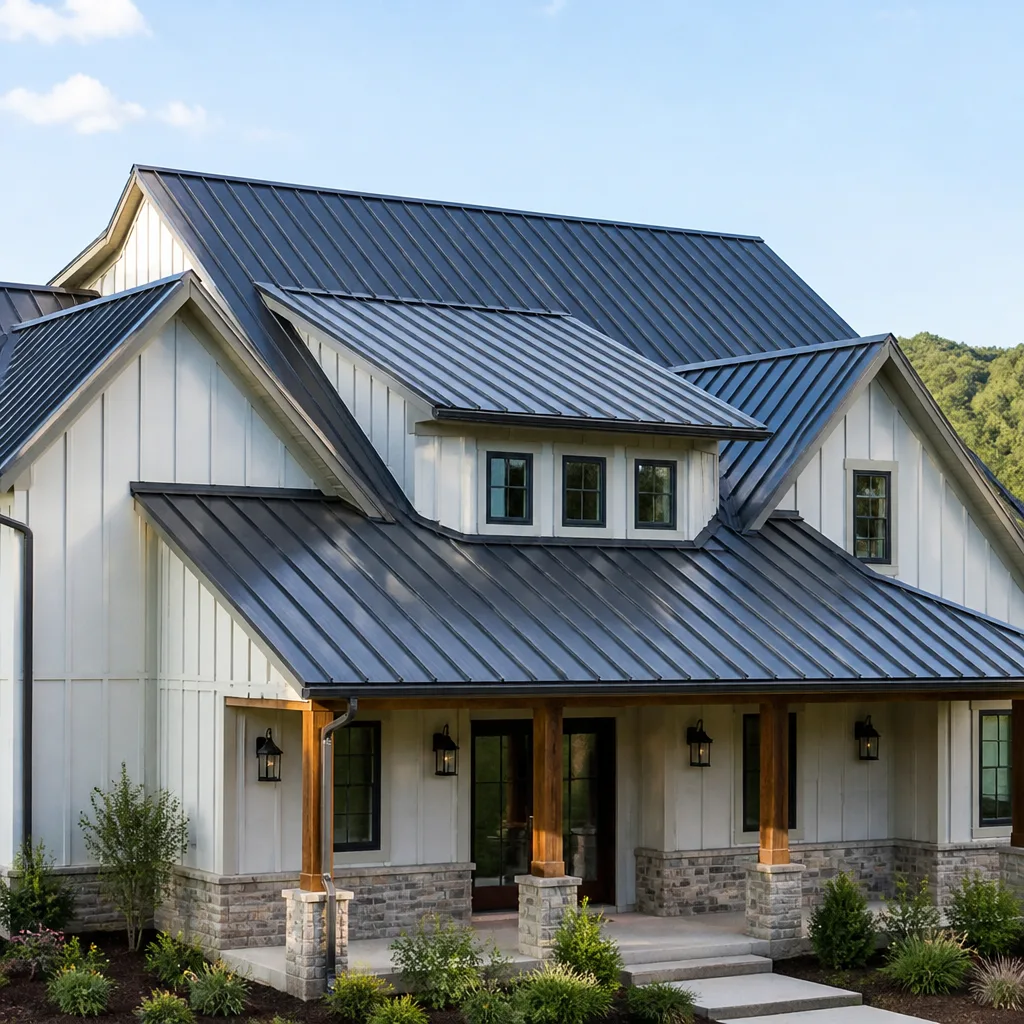 Metal roofing
 Architectural shingles
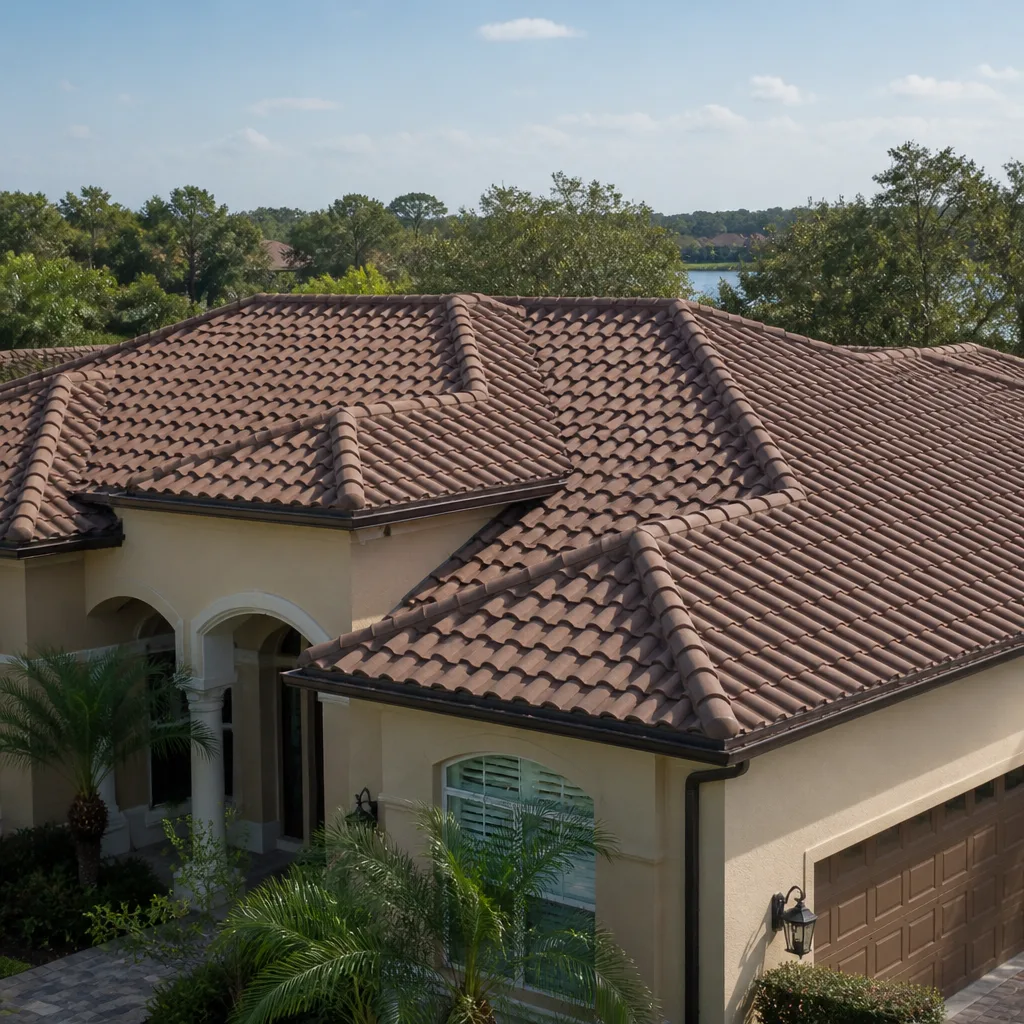 Tile roofing
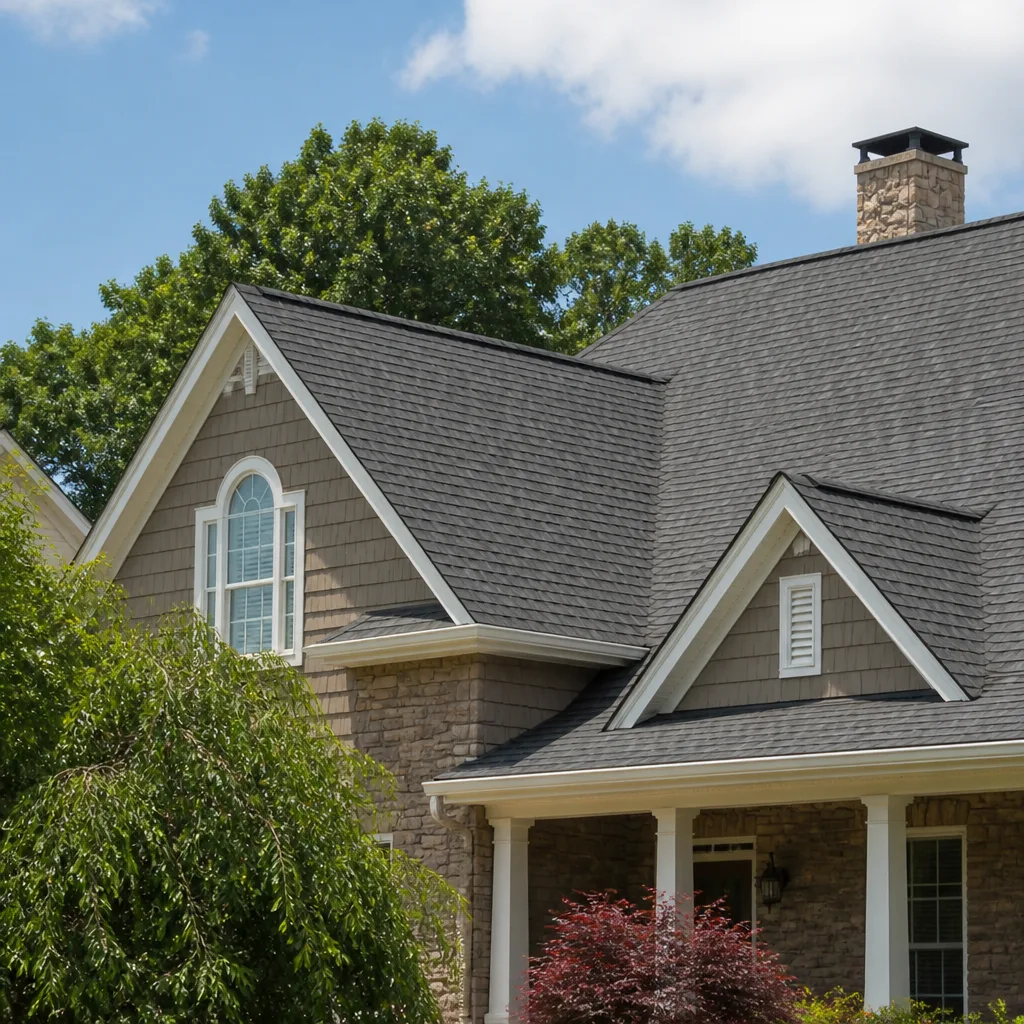 GAF
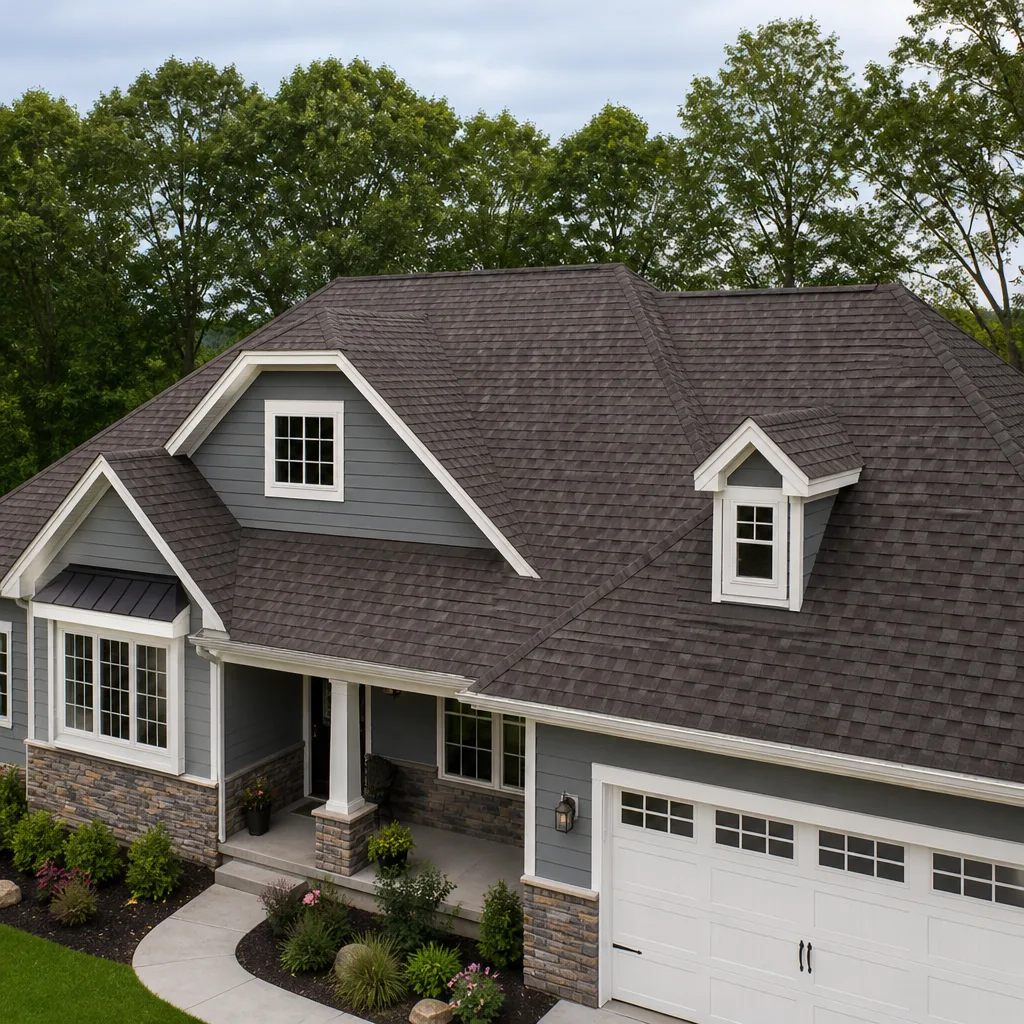 Owens Corning
 Flat & low-slope
Free roof inspection with deck photos before we talk money - GAF and Owens Corning certified installation
Roofing Cost Breakdown: The Spring Valley Homeowner’s Reference for 2026
The cheapest bid we’ve ever been asked to beat was cheap for a documented reason. It left out decking repair, spec’d a 15-pound felt instead of synthetic underlayment, and carried a workmanship warranty measured in months. None of that was visible on the one-page number the homeowner was comparing against. That is the whole story of roofing pricing in Spring Valley: the number on the page is not the number of the job. This reference walks through real 2026 price ranges, the line items every honest bid in Spring Valley should carry, how Clark County permits and insurance supplements actually work, and how to read two bids side by side without defaulting to the lowest figure.
Quick Answer
In Spring Valley, a full roof replacement in 2026 runs roughly $14,000 to $26,000 for concrete tile, $9,500 to $16,000 for composition shingle, and $11,000 to $19,000 for low-slope modified bitumen on a typical single-story home. Bids for identical scopes can vary by 40 percent, and the gap almost never comes from material brand. It comes from what each contractor left out of the written price: underlayment spec, decking allowance, haul-off, permit fees, and the workmanship warranty you only find out about when something fails.
Styles & brands we work with
- Architectural shingles
- Metal roofing
- Tile roofing
- GAF
- Owens Corning
- Flat & low-slope
Table of Contents
- What the three most common Spring Valley roof types cost in 2026
- The line items every legitimate Spring Valley bid should carry
- How Clark County permits and inspections factor into the total
- Reading an insurance supplement: is your contractor claim-literate?
- Why the 20-year to 30-year jump costs less than you think
- How to compare two bids honestly, line by line
- Common mistakes to avoid
- Frequently asked questions
What the three most common Spring Valley roof types cost in 2026
Spring Valley homes are dominated by three roof systems, and each has its own cost structure. Prices are quoted per “square” (100 square feet of roof surface), and a typical single-story home in the neighborhood runs about 22 to 30 squares once you account for hips, valleys, and the low-slope transitions many of these houses carry. Here is what the market looks like in 2026.
- Concrete tile: $600 to $850 per square installed, or $14,000 to $26,000 for a full replacement. Tile itself lasts 40-plus years, but the underlayment beneath it is what fails first in the desert sun, usually somewhere between year 15 and 22. A tile “re-roof” that replaces underlayment and reuses the tiles commonly lands at $9,000 to $15,000.
- Composition shingle (architectural): $425 to $575 per square, or $9,500 to $16,000 all-in. This is the most common replacement we’re asked to price in Spring Valley. The 110-degree summer afternoons age asphalt faster here than in milder climates, so a shingle roof that might last 25 years in the Midwest is realistically a 17- to 20-year roof on a west-facing slope.
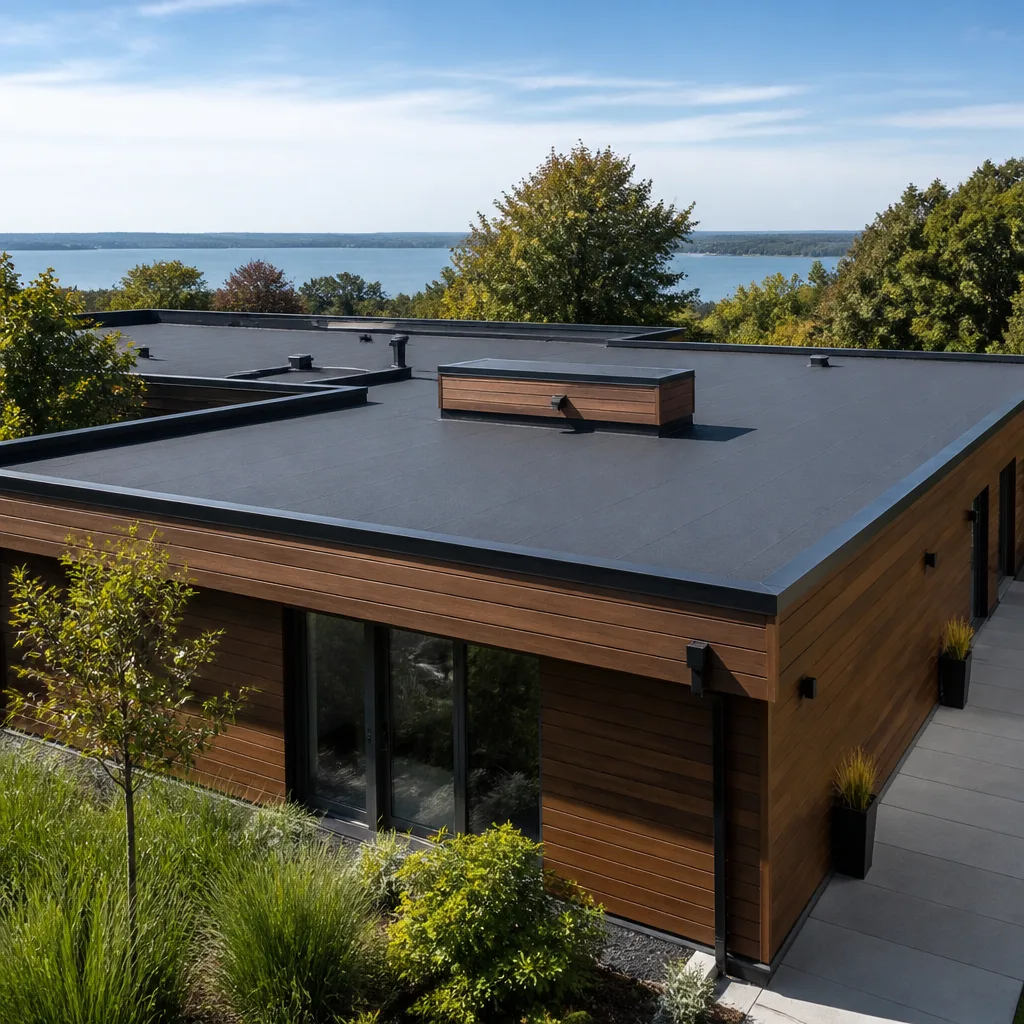
- Low-slope modified bitumen: $475 to $650 per square, or $11,000 to $19,000. Many Spring Valley homes have a flat or near-flat section over a patio, addition, or garage. These need a membrane system, not shingles, and mixing the two without proper transition flashing is one of the most common sources of leaks we see.
Each of those ranges assumes a straightforward tear-off with no hidden soft decking. The moment a bid derives a per-square price on a single line without breaking out underlayment, decking, and permit costs, you cannot meaningfully compare it to anything else. We’d rather show a Spring Valley homeowner the components than the total.
The line items every legitimate Spring Valley bid should carry
A bid is a document, not a handshake. If it doesn’t show you the parts, you can’t tell what’s in it. Here are the four line items we look for in every bid, whether we wrote it or not, and what it means when one is missing.
- Underlayment specification. The spec should name the product and type: synthetic underlayment, not “felt” or “paper.” Synthetic underlayment costs roughly $18 to $30 more per square than 15-pound felt, but it holds up to UV exposure during installation and performs better under tile for the two decades before the tile itself shows wear. A bid that just says “underlayment” is telling you it’s negotiable.
- Decking allowance. Repairs to rotted or delaminated roof sheathing are almost always an overage. An honest bid lists a per-sheet allowance (often $75 to $120 per sheet installed) so you know the rate before work begins and can see it on the final invoice. A bid with no decking allowance is either assuming perfect sheathing or planning to surprise you.
- Haul-off and dump fees. Tear-off material has to leave the property and be disposed of properly. In Spring Valley that typically runs $600 to $1,400 depending on roof size and material weight (tile weighs significantly more than shingles). A missing haul-off line means either it’s bundled into the per-square number (fine, if disclosed) or the contractor is planning to leave debris or charge it later.
- Permit fee and inspection. Covered in detail below, but the short version: a legitimate bid in Clark County carries a permit line, usually $150 to $400 depending on scope. No permit line, no permit.
When all four are present and itemized, you can put two bids side by side and actually read them. That is the difference between choosing a contractor and guessing at one.
How Clark County permits and inspections factor into the total
Clark County requires a permit for roof replacement, and that permit carries a fee, an inspection requirement, and a paper trail. The fee itself usually lands in the $150 to $400 range depending on the scope and valuation of the job. The inspection is where the real value sits: a county inspector verifies that the underlayment, nailing pattern, and flashing meet code before the final roof course goes on or the job is signed off.
Here is why this matters to your bottom line. A contractor who skips the permit in Spring Valley saves you a few hundred dollars up front, and takes on three risks on your behalf:
- If a future sale requires a permit record for the roof, you may be asked to pay for a retroactive permit or remediation.
- An unpermitted install has no third-party verification of the underlayment or nailing schedule, which many homeowner insurance policies scrutinize after a loss.
- Warranty coverage from the manufacturer can be voided if the installation isn’t documented as code-compliant.
We pull permits on every replacement we do in Spring Valley, and we list the fee as a line item. If a bid you’re holding doesn’t show one, ask the question directly: “Will you pull the permit, and can I see the fee?” The answer tells you a lot about how the rest of the job will be handled.
Reading an insurance supplement: is your contractor claim-literate?
If your roof damage came from a storm, wind event, or hail, insurance may cover most or all of the replacement. The catch is that insurance pays based on a scope, and the scope is what your contractor documents. A contractor who doesn’t know how a claim works will leave money on the table, and you’ll pay the difference out of pocket.
Here is the process in plain steps:
- Adjuster scope. Your insurer sends an adjuster to write a scope of damage and a payment estimate. That first number is almost never the full cost.
- Contractor documentation. Your contractor photographs and measures the actual damage, including what the adjuster missed (often decking, flashing, or code-required upgrades like ice-and-water or drip edge).
- Supplement request. The contractor submits a supplement to the insurer documenting the gap between scope and reality. This is a normal, expected part of the process.
- Final settle. The insurer approves the supplement, and the difference is paid under the claim, not out of your pocket.
A contractor who doesn’t mention the supplement process at the first inspection either doesn’t do claims work or expects you to absorb the difference. Ask directly: “Do you handle supplements, and can you show me an example of one you’ve submitted?” We do this work regularly in Spring Valley, and we’ll walk you through every line before anything is signed.
Why the 20-year to 30-year jump costs less than you think
Homeowners often assume the 30-year architectural shingle is dramatically more expensive than the 20-year three-tab, and skip the upgrade to save. In 2026 the gap is narrower than most expect: roughly $25 to $60 per square, or $600 to $1,600 across a full roof. That is a real number, but when it’s spread over the service life of the roof, the math changes.
A $1,200 upgrade on a roof that lasts ten extra years costs about $120 per added year of service. Set that against the cost of a second replacement ten years earlier, and the 30-year product is the cheaper decision every time. We recommend CertainTeed Landmark or Owens Corning Duration to most Spring Valley homeowners replacing a shingle roof, not because they’re the most expensive options, but because they sit right where the price-to-life curve is flattest. Ridgeline is an authorized installer for both, so the warranty holds without any substitution games at install.
On the tile side, the same logic runs in reverse: the tiles themselves will outlive all of us, but the underlayment beneath them won’t. When we do a tile re-roof in Spring Valley, we spec synthetic underlayment specifically so the second underlayment replacement is the one your grandkids deal with, not you.
How to compare two bids honestly, line by line
You have two bids in front of you. They look different. Here is how to find out if the cheaper one is actually cheaper.
- Check the scope paragraph against the line items. If the scope promises “complete tear-off and replacement” but the line items don’t show haul-off, either it’s bundled (ask) or it’s omitted (bid is low).
- Compare underlayment spec word for word. “Synthetic underlayment” vs. “30-pound felt” vs. nothing. Ask what product, and whether it’s a name brand.
- Look at the decking allowance. Both bids should show one. If one does and one doesn’t, the one without is hiding a variable.
- Check the permit line. Either it’s there, or the contractor isn’t pulling one.
- Compare the workmanship warranty, not just the manufacturer warranty. The manufacturer covers the materials; the workmanship warranty covers the installation. A 90-day workmanship guarantee is short by industry standards, and we chose that window deliberately: if our installation has a defect, you’ll see it in the first 90 days, and we’ll fix it without argument. If it doesn’t fail in that window, the work is sound and the manufacturer warranty carries the rest.
- Ask about supplement handling in writing. If insurance is involved, this single question separates the contractors who know claims from the ones who don’t.
- Confirm the numbers match. The estimate is the invoice. Any bid that includes an open-ended “and other necessary repairs” clause without a rate card is a bid with a hole in it.
Line-item literacy is the whole game. A homeowner who can read a bid in Spring Valley doesn’t need to trust the lowest price, because they can see exactly why the numbers differ.
Common Mistakes to Avoid
- Choosing the lowest bid without a line-item breakdown. A number without components is not a bid, it’s a guess. Insist on a written line-item estimate or move on to the next contractor.
- Skipping the permit question. In Spring Valley, an unpermitted roof is an unrecorded roof. Ask “will you pull one” before signing, not after.
- Treating the adjuster’s first number as final. Insurance scopes are almost always low. A contractor who knows the supplement process will find the gap; one who doesn’t will ask you to pay it.
- Assuming the 30-year material tier is out of reach. On a typical Spring Valley roof the upgrade is often under $1,500. The 10 extra years of service is usually worth that several times over.
- Hiring on verbal workmanship promises. If the warranty isn’t in writing, it isn’t a warranty. Ask to see it before the contract is signed.
- Ignoring what the desert climate does to underlayment. Spring Valley gets summer attic temperatures that push underlayment far harder than milder climates do. A cheaper felt saves money on day one and loses it in year twelve.
- Letting a single inspection trip turn into a sales pitch. A proper roof inspection in Spring Valley is a photo-documented walk of every plane, flashing point, and penetration, with images you keep. If you come away with photos and a written scope, you learned something. If you come away with a warning and a pressure to sign today, you didn’t get an inspection.
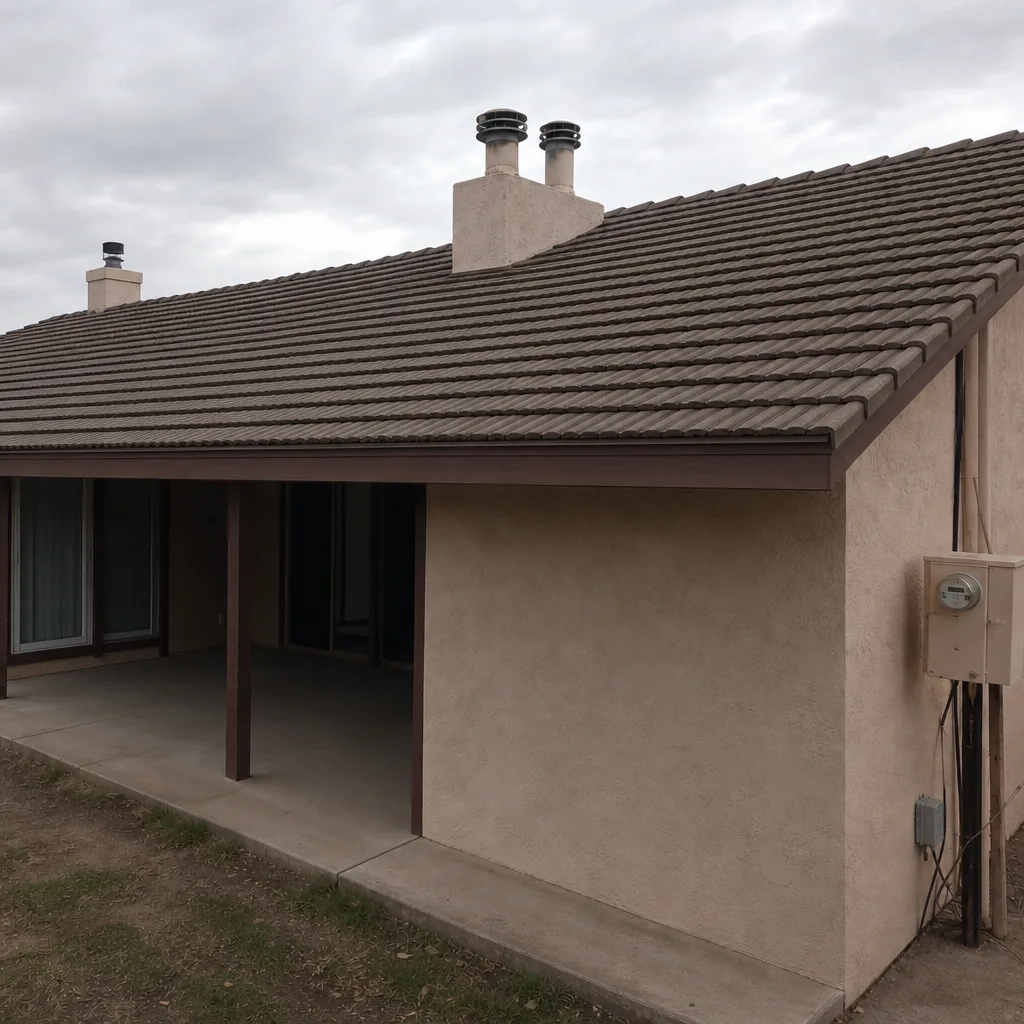
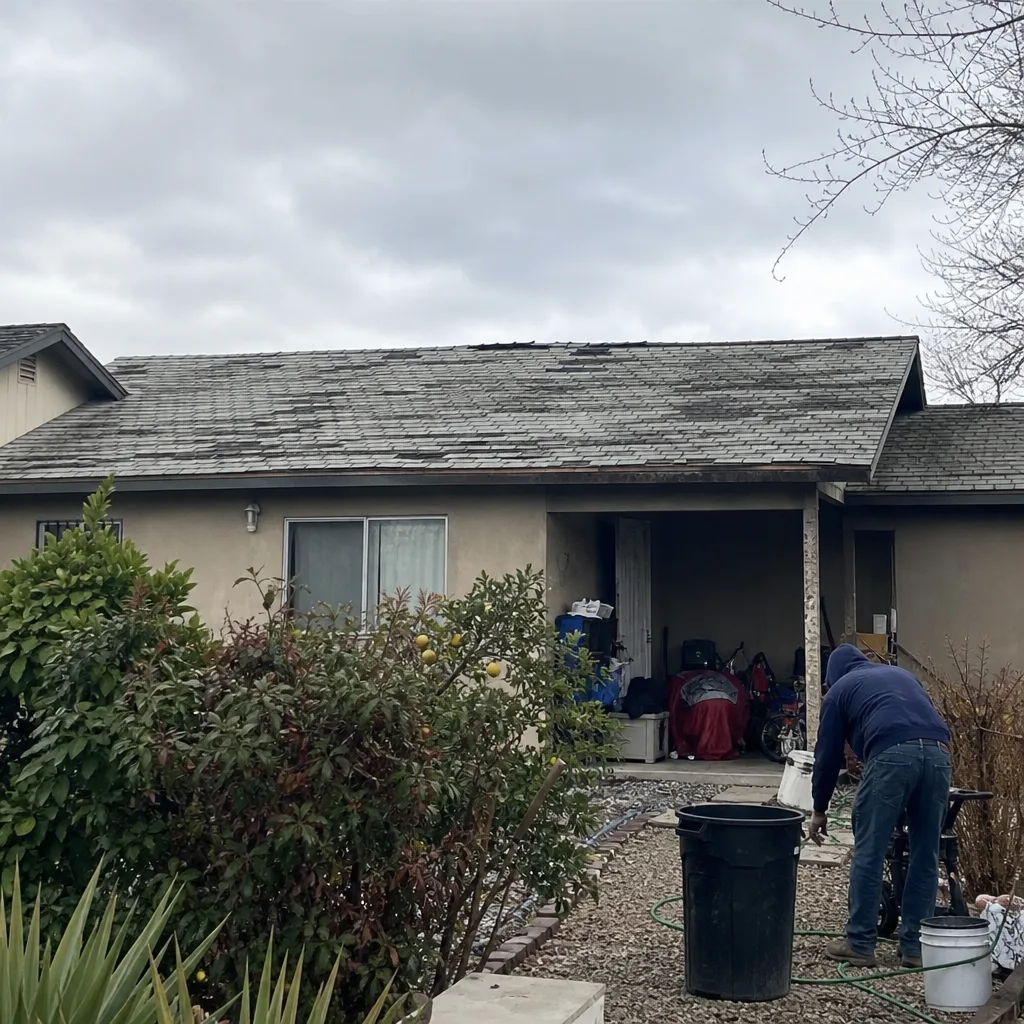
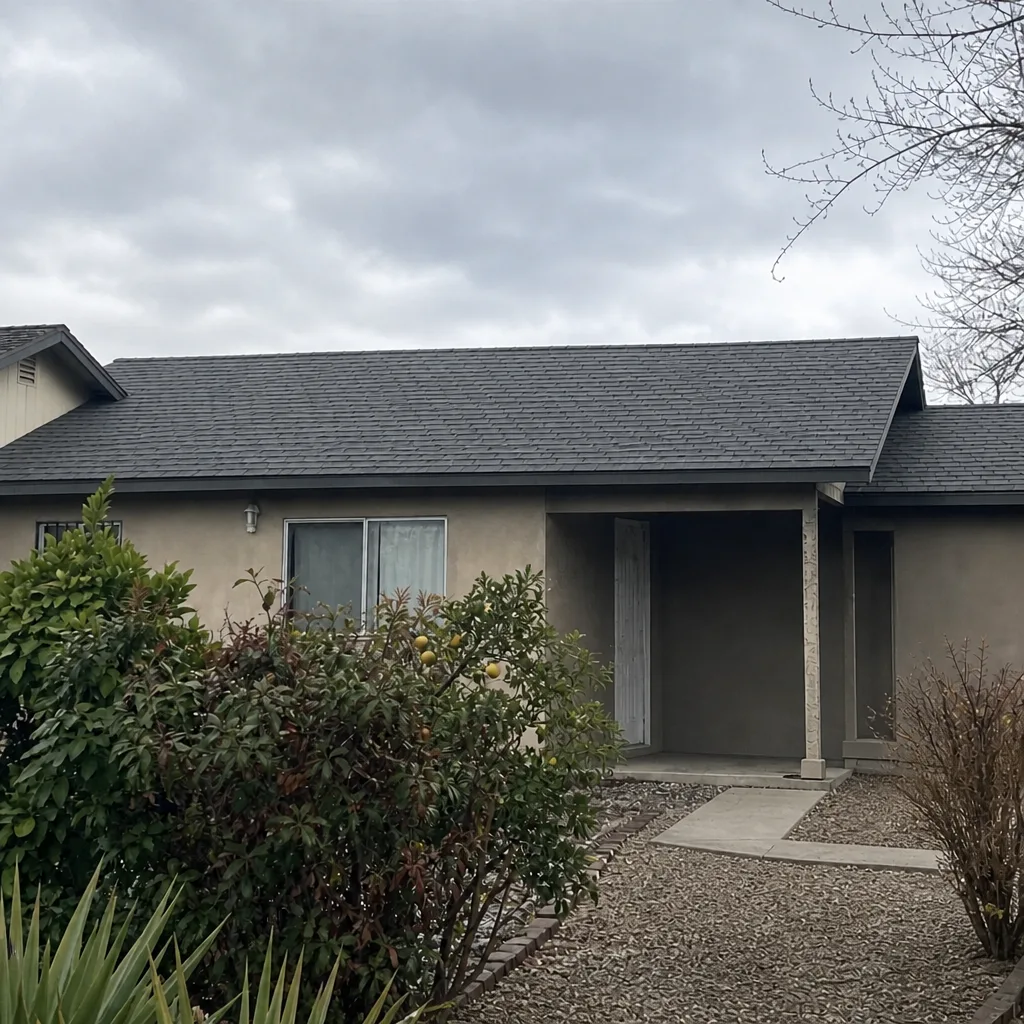
See the difference
 Before
 After
 Before
 After
 Before
 After
When to Call a Professional
Some roof conditions are cosmetic, and some aren’t. Call in a professional if you’re seeing granules in the gutters after rain, if a ceiling stain appears after a wind event, if tiles are cracked or lifting along the ridge, if any low-slope section has water pooling more than 24 hours after a storm, or if the roof is past year 20 and you’re planning to stay in the house. Spring Valley’s wind events and summer heat cycles both accelerate the small failures that turn into large ones, so a photo-documented inspection is the cheapest form of insurance. Ridgeline Roofing Co. Spring Valley offers free estimates – call (855) 908-1590 to schedule yours. Our technicians have up to 10 years of experience, and we answer the phone with a live person 24 hours a day.
Frequently Asked Questions
A full roof replacement in Spring Valley in 2026 typically runs $9,500 to $16,000 for composition shingle, $11,000 to $19,000 for low-slope modified bitumen, and $14,000 to $26,000 for concrete tile on a single-story home of about 22 to 30 squares. Those ranges assume a straightforward tear-off. Tile re-roofs that reuse the existing tiles and replace only the underlayment usually land between $9,000 and $15,000. Call (855) 908-1590 for a line-item estimate for your specific roof, at no charge.
Because the differences are in the omissions, not the materials. The 40 percent gap most Spring Valley homeowners see between bids is almost entirely explained by what each contractor didn’t include: decking allowance, synthetic underlayment spec, haul-off and disposal fees, permit costs, and whether a real workmanship warranty sits behind the install. Two contractors quoting the same roof can submit numbers 40 percent apart and still both be “correct” – but only one is a complete price.
Yes. Clark County requires a permit for roof replacement, and the permit fee typically runs $150 to $400 depending on scope. The permit also triggers a county inspection that verifies underlayment, nailing, and flashing meet code – verification you lose if a contractor skips it. Ask every bidder whether they’ll pull the permit and show the fee. Call (855) 908-1590 if you’d like a free second opinion on a bid you already have.
Ask one question: “Do you handle supplements?” A contractor who handles claims will explain the supplement process clearly, show you examples of supplements they’ve submitted, and offer to walk through the adjuster’s scope line by line. A contractor who doesn’t do claims work will say “the insurance company pays what they pay” and ask you to cover the gap. On a typical Spring Valley roof, that gap is often several thousand dollars. Call (855) 908-1590 for a free second opinion if you’re in the middle of a claim.
For most Spring Valley homeowners, yes. The upgrade typically costs $25 to $60 more per square, or $600 to $1,600 across a full roof, and roughly doubles the roof’s service life. Amortized across those added years it works out to about $120 per extra year of service, which is far less than the cost of a second replacement ten years sooner. We install CertainTeed and Owens Corning architectural shingles regularly and can show you both tiers side by side on a free estimate.
Most single-story composition shingle replacements in Spring Valley are completed in one to two days once the permit is issued. Concrete tile takes longer, typically three to five days, because of the weight, the underlayment schedule, and the dry-in requirements. Low-slope modified bitumen on a small section is often a single day. The permit timeline from Clark County adds a few business days before work can begin. Call (855) 908-1590 for a schedule based on your specific roof.
The Bottom Line
Roofing bids in Spring Valley vary by 40 percent because they contain different things. The number that matters is not the low one or the high one, it’s the complete one: underlayment spec’d by name, decking allowance disclosed, haul-off included, permit pulled, workmanship warranty in writing, insurance supplement understood if a claim is involved. That’s what line-item literacy buys you. It’s also what we quote on every estimate we write – the number on the estimate is the number on the invoice, and if it isn’t right, we make it right. Whether you’re looking at a repair, a full replacement, or a specialty roof, the goal is the same: a square deal you’ll never have to revisit. Read more about Ridgeline Roofing Co. Spring Valley, or explore Roof Repair in Spring Valley, Roof Replacement & Installation in Spring Valley, and Specialty Roofing in Spring Valley for service-specific detail.
Whenever you’re ready, call (855) 908-1590 for a free, line-item estimate. A live person answers every call, 24 hours a day, and we’ll come out, document the roof with photos, and give you a written price you can compare without a sales pitch. Ridgeline Roofing Co. has been doing this work since 1984, and we plan to be here when you need your next one done – done right.
Written by the team at Ridgeline Roofing Co. Spring Valley.