
Last updated November 17, 2026
 Metal roofing
 Architectural shingles
 Tile roofing
 GAF
 Owens Corning
 Flat & low-slope
Free roof inspection with deck photos before we talk money - GAF and Owens Corning certified installation
Roofing Emergency Preparedness Guide for Spring Valley Homes
Microburst storms in the Las Vegas Valley can drop two inches of rain in under an hour – more than Spring Valley averages in an entire year – and the flat or low-slope roofs on a significant share of local homes were not designed to drain that volume without help. Most Spring Valley homeowners have never thought about their roof until something goes wrong at 11 p.m. during a monsoon, and in that moment the decisions made in the first two hours determine whether the damage stays at a few hundred dollars or becomes a structural claim. This guide builds the before-it-happens plan so the emergency response is calm, documented, and effective. You’ll learn how to prep your roof for monsoon season, what to do in the first two hours of an active leak, how to file a Nevada claim that gets approved, and how to avoid signing a full contract under duress at 2 a.m.
Quick Answer
Roofing emergency preparedness in Spring Valley means three things: clearing drains, checking tile and vent screens before monsoon season starts in July, and keeping a documented contact sheet with your insurance policy number, adjuster line, and a roofer’s number on file. When a storm hits, your job in the first two hours is to stop water from spreading inside, photograph everything before you touch it, and tarp the roof only in a way that doesn’t void your claim. A trained roofer should handle the actual roof access.
Styles & brands we work with
- Architectural shingles
- Metal roofing
- Tile roofing
- GAF
- Owens Corning
- Flat & low-slope
Table of Contents
- Why Spring Valley Roofs Are Vulnerable to Monsoon Damage
- The Pre-Season Prep Checklist: What to Do Before July
- The First Two Hours of an Active Roof Emergency
- Emergency Tarping vs. Full Repair: Knowing the Difference
- How to File an Emergency Roof Claim in Nevada
- Your Homeowner Emergency Contact Sheet
- How to Avoid Signing Under Duress After a Storm
- Off-Season Roof Health for Spring Valley Homes
Why Spring Valley Roofs Are Vulnerable to Monsoon Damage
Spring Valley sits in a peculiar climate pocket. Annual rainfall averages under five inches, so most roofs here are built assuming water is a rare event. Then July and August arrive and a single microburst can dump two inches in forty minutes. Roofs that performed fine for eleven months suddenly have to move a full year of water in under an hour, and that’s where the failures happen.
The housing stock adds to the problem. A large share of Spring Valley homes built in the 1980s and 1990s use flat or very low-slope roof sections over garages, add-on rooms, and patio covers. These rely on scuppers, drains, and a modest pitch to move water. When a drain clogs with desert dust, palm fronds, or the granule runoff from an aging shingle roof, water backs up and finds the weakest seam. Tile roofs common in the older neighborhoods around Spring Valley face a related issue: cracked or slipped tiles let water underneath the underlayment, and after twenty summers of UV baking, that underlayment is often brittle.
We’ve seen the pattern repeat across Spring Valley: a homeowner calls in August after a ceiling stain appears, and the actual entry point turns out to be a hairline crack near a valley or a failed vent boot that’s been leaking quietly for two seasons. The storm didn’t create the problem. It exposed one that was already there.
The good news is that most of this is preventable with a few hours of prep each spring. If you suspect your roof is already past the point of easy fixes, our team at Ridgeline Roofing Co. Spring Valley home can walk you through a photo-documented inspection before the season starts.
- Rainfall mismatch: Spring Valley averages under 5 inches a year, but a single microburst can drop 2 inches in under an hour.
- Low-slope sections: Flat and low-pitch roof areas over garages and additions depend on functional drains to shed water.
- Aging underlayment: Tile roofs from the 1980s and 1990s often have UV-brittled felt underneath that no longer seals.
- Desert debris: Dust, palm fronds, and granule runoff clog scuppers fast, and nobody notices until it rains.
The Pre-Season Prep Checklist: What to Do Before July
The best roofing emergency is the one you never have. Spring Valley’s monsoon window runs roughly July through September, so the practical prep window is April through June. Here’s the checklist we recommend to every homeowner we work with in Spring Valley.
- Clear every drain, scupper, and downspout. On flat or low-slope sections, remove visible debris by hand from a ladder at the edge – not by walking the roof. If you can’t see the drain opening from the ladder, that’s a sign it needs professional clearing.
- Identify loose or slipped tiles. From the ground with binoculars, look for tiles that sit out of plane with their neighbors, especially near valleys and ridges. Mark the location on a sketch of your roof from the ground.
- Check attic vent screen integrity. Go into the attic on a dry day and look at the vents. Torn or missing screens let in wind-driven rain and insects. Replace screens that have pulled loose, and note any daylight showing through where it shouldn’t.
- Inspect the attic for existing stains. Any brown ring or water line on rafters or sheathing is a mark of a past leak. Photograph it now so you know it’s old if a new storm hits.
- Trim overhanging limbs. Palm fronds and tree limbs within six feet of the roof will end up on the roof during a microburst. Trim them back before the wind does it for you.
- Check gutter fasteners. Gutters that pull loose under the weight of standing water spill directly against the fascia and foundation. Tighten loose hangers and replace rusted spikes.
- Confirm your insurance policy and deductible. Know whether your policy covers “wind and hail” and what your deductible is before you need to file. Write the policy number on the contact sheet covered later in this guide.
If any of these steps reveal something you’re not comfortable diagnosing, that’s the moment to call in a professional. A pre-season inspection is far cheaper than an emergency call. Our Roof Repair in Spring Valley service covers exactly this kind of pre-season diagnosis and small-fix work.
The First Two Hours of an Active Roof Emergency
When water is coming through the ceiling at 11 p.m., the instinct is to panic and start moving things. Slow down. The first two hours are about containment and documentation, not repair. Here’s the sequence that keeps damage – and your insurance claim – intact.
- Get water away from valuables and electrical. Move electronics, furniture, and rugs out of the drip zone. Place buckets and towels under active drips. If water is anywhere near an outlet, light fixture, or the electrical panel, shut off that circuit from the breaker and do not touch the wet area. Water and electricity are a lethal combination, and this is a call-a-professional-now situation, not a DIY moment.
- Photograph everything before you move it. Wide shot of the room, close-up of the stain, close-up of the drip, close-up of any damaged belongings. Timestamp your photos. These images are what your adjuster will ask for first.
- Document the roof from the ground. Take photos of the roof’s edge from outside, but do not climb onto a wet roof. Wet tile and wet shingle are both slick enough that a fall is a real risk. Stay off the roof. If you can safely photograph from a second-story window, do that.
- Call your insurance company’s claims line. Most carriers have a 24-hour claims line. Open the claim now, not in the morning, because some policies have reporting-window language worth honoring. Write down the claim number and the adjuster’s name.
- Call a local roofer for emergency stabilization. This is the one call where you want a live person, not a voicemail tree. Our phones at Ridgeline are answered by a live person 24 hours a day, and the purpose of this call is to arrange emergency tarping and stabilization – not a full roof replacement decision.
- Save every receipt. Hotel, dehumidifier rental, plastic sheeting, whatever you spend to protect the house. Most policies reimburse reasonable emergency mitigation costs.
We’ve walked Spring Valley homeowners through this sequence many times, and the difference between a $500 claim and a $15,000 claim is almost always whether steps one through four got done in that first window.
Emergency Tarping vs. Full Repair: Knowing the Difference
Emergency tarping is a legitimate, specific service. It means covering the damaged section with a weighted, secured tarp to stop water entry until the roof can be properly assessed. It is not a repair, and it doesn’t fix anything. Its only job is to stabilize the situation so the real repair can be done calmly, in daylight, with a proper written estimate.
Full repair is a different transaction. It involves identifying the actual failure point, removing damaged material, replacing underlayment or flashing, and reinstalling roofing material. It should be quoted with a written, line-item estimate after a photo-documented inspection – never agreed to on a wet driveway at midnight.
One crucial detail: how the tarp is attached matters a lot for your insurance claim. Stapling through shingles, driving screws through a tile field, or nailing into the decking in a way that adds damage can give an adjuster grounds to reduce or deny the claim. A correctly installed emergency tarp uses weighted sandbags, tarp straps, or fasteners placed only in areas the roofer intends to replace anyway. This is why we recommend a trained roofer handle the tarp, not a neighbor’s ladder and a blue tarp from the hardware store.
For homes with tile roofing or specialty systems, tarping is even trickier. Our Specialty Roofing in Spring Valley team handles stabilizing tile and low-slope systems without voiding manufacturer warranties or causing secondary damage.
- Emergency tarping: Stabilizes, stops water entry, photographed for the claim, no permanent fix. Should be documented with before/after photos.
- Temporary repair: A specific patch or flashing fix done in daylight, sometimes same-week, with a written invoice.
- Full repair: Line-item written estimate after inspection, scheduled work, backed by a written workmanship promise.
- Full replacement: Only when the roof is at end of life or damage is widespread. Never a decision to make within hours of a storm.
How to File an Emergency Roof Claim in Nevada
Nevada homeowner’s insurance generally covers sudden, accidental damage from wind, hail, and falling objects. It does not cover damage from deferred maintenance – a leak that’s been happening for two years and just got noticed is typically not covered, which is one more reason documentation matters. Here’s what adjusters actually require and where claims tend to get denied that shouldn’t.
What adjusters require:
- Date and time of the event that caused the damage.
- Photographs of the damage from the ground and from inside the house, with timestamps.
- A written statement of what you did in response – the mitigation steps.
- Receipts for emergency mitigation costs (tarping, dehumidifier, hotel if the home was uninhabitable).
- A professional roof inspection report identifying the cause of damage.
- The name of the roofer who performed the stabilization, along with photos of the tarp installation.
What gets claims denied that shouldn’t:
- Missing “before” photos. If you only photograph the damage after cleanup, the adjuster has no baseline. Photograph first.
- Signs of pre-existing failure. Old staining, rust, or clearly deteriorated material in the photos can trigger a “wear and tear” exclusion. This is why our inspections are photo-documented from the actual roof – a written record makes causation much harder to dispute.
- A repair performed before the claim was opened. Some policies allow this for mitigation, but the claim number should exist before the permanent repair starts.
- Unpermitted work. Clark County requires permits for most roof replacements and structural repairs. A claim file with unpermitted work on file often gets flagged. Ask your roofer directly whether they pull permits.
- A storm-chaser’s invoice with no license or local address. Adjusters see this pattern every monsoon season and scrutinize it hard.
If you get a denial you believe is wrong, ask for the specific policy language and get a free second opinion on any written estimate before you accept a settlement number. Our phones at Ridgeline are answered by a live person 24 hours a day, and we offer a free second opinion on any written estimate as a standing service – not a sales tactic.
Your Homeowner Emergency Contact Sheet
Put this on the inside of a kitchen cabinet and a copy in your phone. Fill it in on a dry day, not on the night the ceiling is dripping.
- Insurance company name and policy number: ______________________
- 24-hour claims line: ______________________
- Assigned adjuster name and direct line (once assigned): ______________________
- Your roofer’s 24-hour line: (855) 908-1590 for Ridgeline Roofing Co. Spring Valley
- Clark County Building Department permit line: ______________________ (look this up and write it down)
- Your homeowner’s association contact (if applicable): ______________________
- Preferred emergency water mitigation company: ______________________
- Electrician’s 24-hour line: ______________________
- Roof material and year installed (from your original purchase contract or last replacement): ______________________
- Location of water shut-off and electrical panel: ______________________
Southern Nevada roof permits for tear-off and replacement are typically handled through Clark County, with inspections required at stages. A good roofer knows this process and pulls permits as standard practice. If a roofer tells you permits aren’t needed for your project, get a second quote.
You can also pre-sign up for a free written estimate on a roof replacement before you need it – so you know what a fair number looks like during an emergency when stress is high. Our team at Roof Replacement & Installation in Spring Valley provides written, line-item estimates with no surprises.
How to Avoid Signing Under Duress After a Storm
After a serious monsoon event, out-of-town roofing trucks roll into Spring Valley within twenty-four to forty-eight hours. Some do good work. Most don’t. The single most expensive mistake a homeowner makes after a storm is signing a full contract at 2 a.m. with a crew that’s going to be in the next state by September.
Signs you’re dealing with a storm-chaser:
- They knock on your door the day after the storm, uninvited.
- The contract has no local address and no local license information.
- They offer to “waive your deductible” – which is insurance fraud in Nevada.
- The estimate is verbal or handwritten on a generic form with no line items.
- They want the contract signed before you’ve had a second opinion.
- They pressure you with “we’re only in town through Friday.”
What legitimate emergency service looks like:
- Stabilization first – tarping, water mitigation, photo documentation.
- A written line-item estimate delivered after the inspection, not before.
- A name you can look up, a license number, and a written workmanship warranty.
- Time to think. A real company will not lose your business by letting you sleep on it.
At Ridgeline, the standard is simple: any written work is backed by our written 90-Day Done Right Promise, and the number on the estimate is the number on the invoice. If it’s not right, we come back and make it right – no paperwork, no arguing. That is not an emergency-time concession. It is the same standard we hold every job to.
Off-Season Roof Health for Spring Valley Homes
Spring Valley summers are brutal on roofs. UV exposure in the Las Vegas Valley is among the highest in the country, and shingles, tile underlayment, and flat-roof membranes age faster here than the manufacturer’s published lifespan would suggest. The off-season months (October through June) are when the real work gets done. Three habits matter most:
Check after any wind event over 30 mph. Microbursts aren’t only a monsoon phenomenon. Any strong wind event can lift a ridge cap or slip a tile. A quick walk-around from the ground with binoculars after a windstorm catches problems while they’re still $200 fixes.
Schedule an inspection every two to three years. Photo-documented inspections catch small failures before they become attic stains. Our technicians have up to 10 years of experience, and every inspection includes pictures from the actual roof – not a scary speech in the driveway. If your roof is more than twenty years old, annual inspections are worth the investment.
Budget for replacement before you need it. A roof replacement is a planned, rational decision – not an emergency one. When you know the number ahead of time, you don’t sign on the night your ceiling is dripping.
Ridgeline installs and services products from seven manufacturer lines, including GAF and CertainTeed on our shingle side and Boral for tile work. Authorized installation means proper materials and no substitutions – which is what you want when the roof has to hold through the next twenty monsoon seasons, not just this one.
Common Mistakes to Avoid
- Going onto the roof during a storm. Wet tile and wet shingle are slick enough that one step is all it takes. Two inches of rain in forty minutes and a homeowner on the roof is how a $500 repair turns into an emergency-room visit. Stay off the roof and let a trained professional handle access.
- Skipping the “before” photo of the interior leak. If you mop up first and photograph after, the adjuster has no baseline and the claim gets harder. Photograph the stain, the drip, and the damaged belongings before cleanup.
- Nailing a tarp through the shingle field. This is the single fastest way to give an adjuster grounds for a denial. Proper emergency tarping uses sandbags or fasteners in areas destined for replacement anyway – not random nails through good roofing.
- Signing a full replacement contract at 2 a.m. Emergency tarping, yes. A $25,000 replacement decision in the middle of a storm, no. Get a written line-item estimate after a proper daytime inspection.
- Believing a “we’ll waive your deductible” pitch. This is insurance fraud in Nevada, and it makes you a party to it. Any crew making that offer is telling you exactly what they are.
- Ignoring the flat section over the garage. Spring Valley homes with flat or low-slope sections fail here first. The main shingled roof can look fine while the garage roof drains slowly, backs up under a clogged scupper, and wicks water into the ceiling below.
- Not knowing your policy before the storm. Homeowners who find out their deductible is $5,000 during a claim tend to make rushed, expensive decisions. Look it up in May. Write it on your contact sheet.
See the difference
 Before
 After
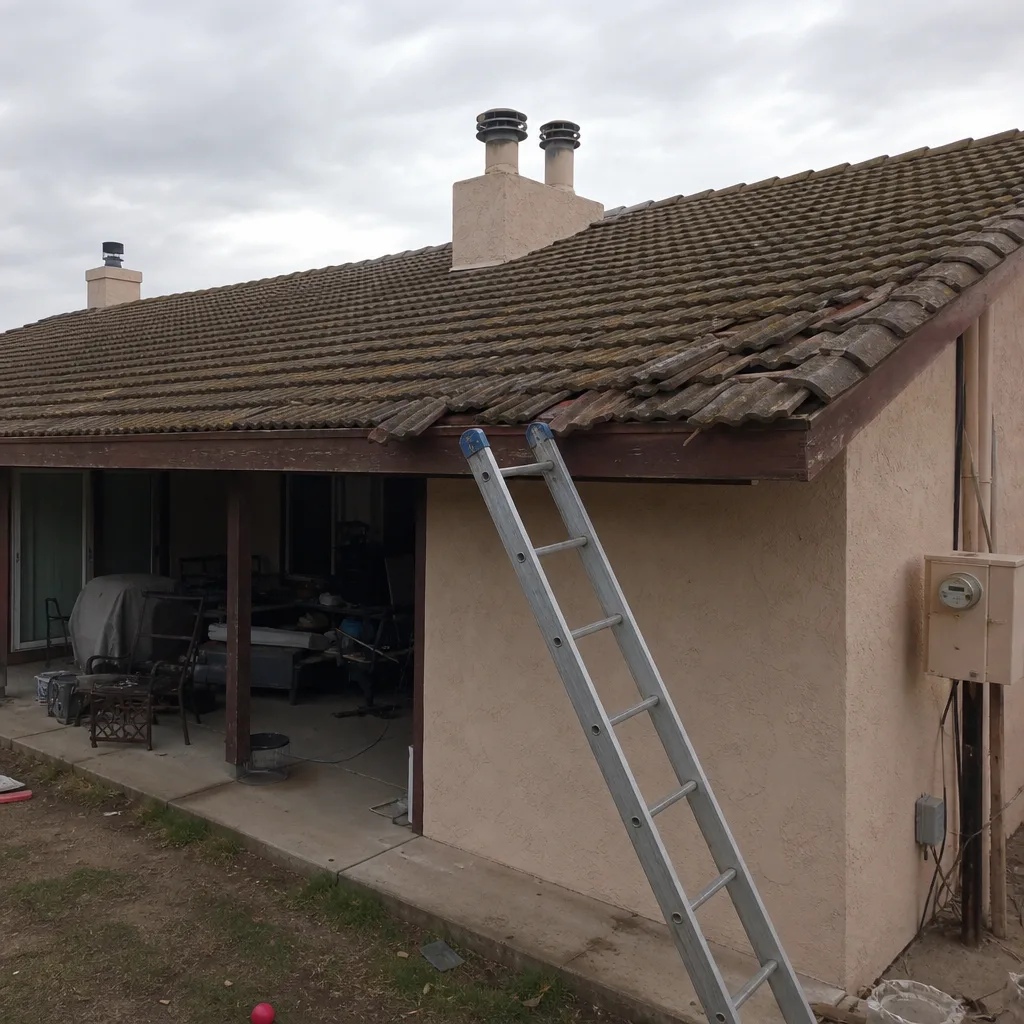 Before
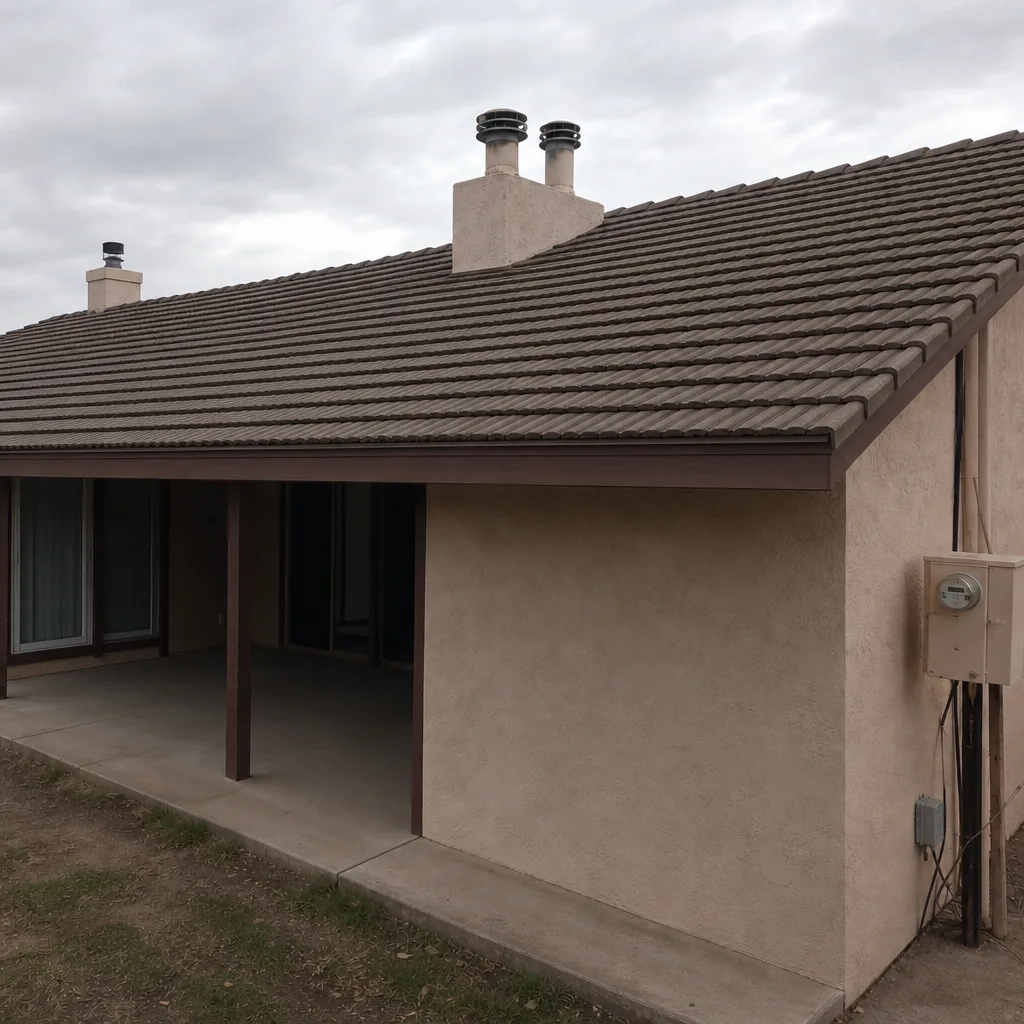 After
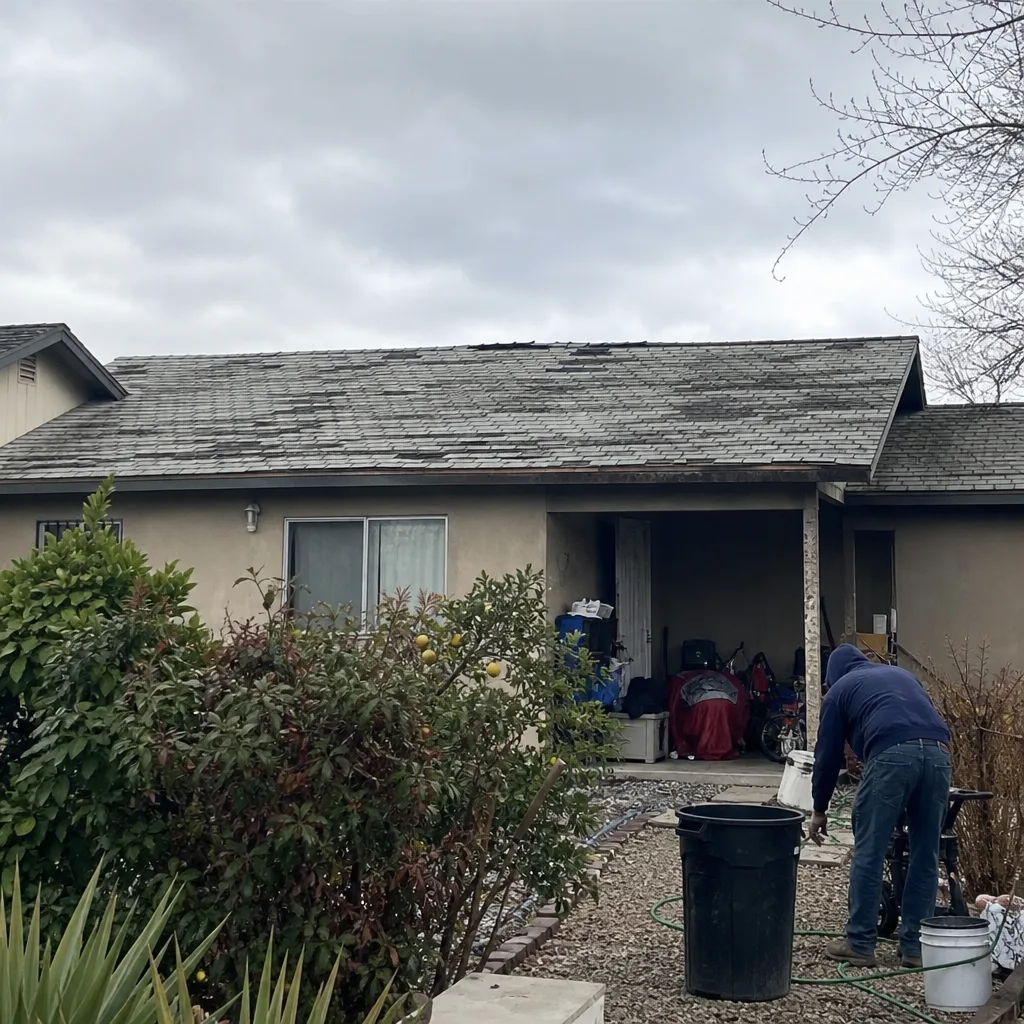 Before
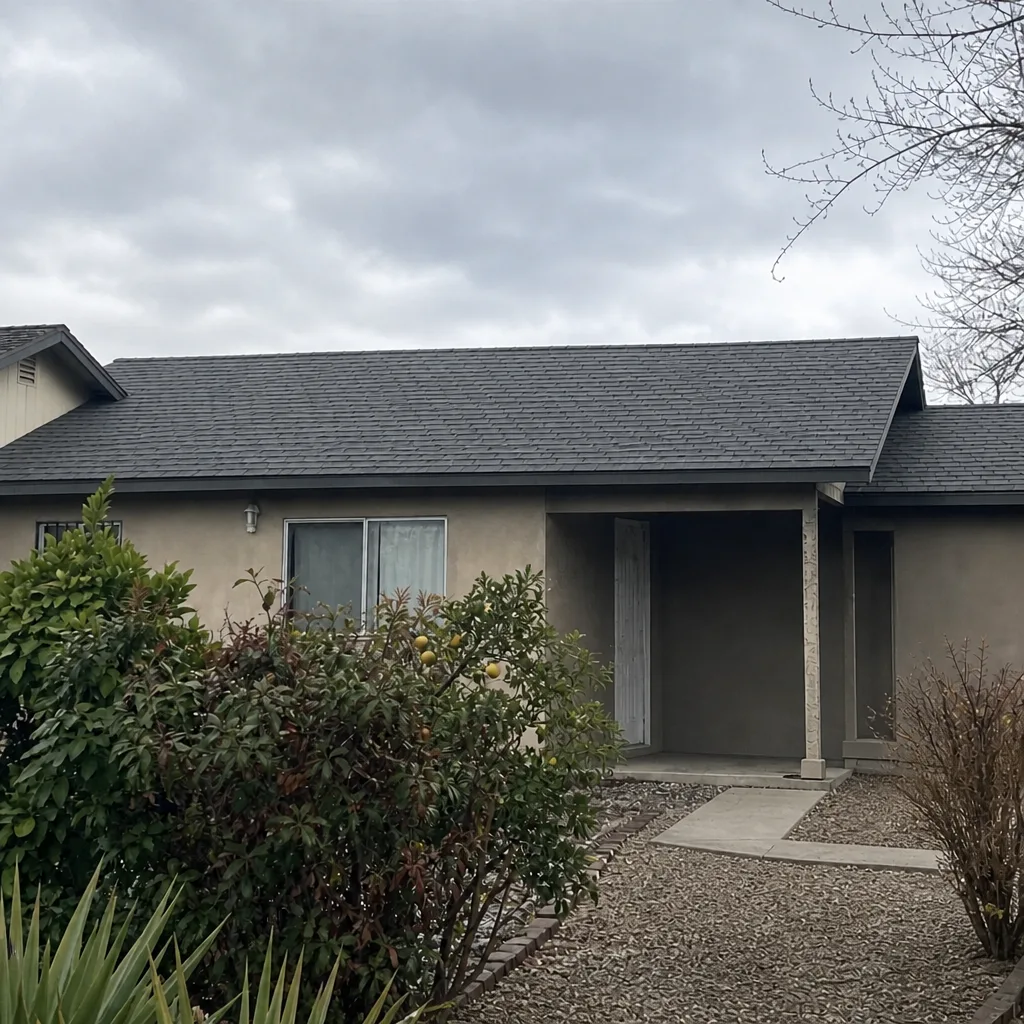 After
When to Call a Professional
Call a professional roofer in any of these situations: water is actively coming through your ceiling, you see daylight through the attic sheathing, you have loose or missing shingles or tiles after a wind event, your flat or low-slope section is ponding water, or your insurance company needs a written inspection report to process a claim. Also call if your roof is more than twenty years old and has never had a documented inspection – we find that age-plus-no-inspection usually pairs with an already-hidden leak. For anything involving roof access on wet materials, electrical contact water, or active structural concern, do not attempt a DIY response. Call a trained professional. Ridgeline Roofing Co. Spring Valley offers free estimates in Spring Valley – call (855) 908-1590 to schedule yours, and if it’s already a live emergency, our phones are answered by a live person 24 hours a day.
Frequently Asked Questions
Move valuables and electronics out of the drip zone, place buckets under active drips, and photograph everything before you touch it. If water is near any electrical fixture or outlet, shut off that circuit at the breaker. Then open your insurance claim and call a local roofer for emergency stabilization. Do not climb onto the roof during the storm – wet tile and shingle are dangerous, and the risk of a fall is not worth it. Call (855) 908-1590 if you need a live person tonight – our phones are answered 24 hours a day.
Most Nevada homeowner policies cover sudden damage from wind, hail, and falling debris, but not damage from deferred maintenance. A leak that’s been developing for two years and just became visible is usually not covered. The documentation that keeps a legitimate claim intact is timestamped photos of the interior damage, documented mitigation (tarping, dehumidifier), and a professional inspection report that identifies the cause. Call (855) 908-1590 for a free second opinion on any written estimate if you’re being pressured by an adjuster or a contractor.
Emergency tarping and stabilization typically runs in the range of a modest service call – far less than a repair – and in many cases the cost is reimbursable as part of your homeowner’s claim. The exact number depends on the size of the affected area and whether the roofer needs to access a delicate tile or low-slope system. Call (855) 908-1590 for an upfront number – the number on the estimate is the number on the invoice, and we offer a free second opinion on any written estimate.
Not with us. Ridgeline operates on upfront, no-hassle pricing – the number on the written line-item estimate is the number on the invoice, with no surprises. If we discover something unexpected during the repair, we stop and re-quote in writing before we proceed. Call (855) 908-1590 to schedule a free estimate and see the number in writing before any work begins.
Yes – we pull permits as standard practice for roof replacements and structural repairs, and work with Clark County on the required inspections. Any roofer who tells you permits aren’t needed for a substantial repair is telling you something about how they operate. Call (855) 908-1590 with questions about the permit path for your specific project.
Emergency stabilization (tarping, water mitigation) typically happens the same day the call comes in, weather permitting. The permanent repair is scheduled after the inspection and insurance approval, and most minor repairs are completed in a single visit. Larger repairs depend on the material – tile work and low-slope membrane work take longer than shingle patching. Call (855) 908-1590 and we’ll give you a realistic timeline in writing before you commit to anything.
Emergency tarping is stabilization only – it stops water entry and gives your insurance claim a documented starting point, but it doesn’t fix the underlying failure. A full replacement is a scheduled, planned project quoted with a written line-item estimate after a proper daytime inspection. Never sign a replacement contract during an active emergency. Tarp now, inspect in daylight, decide with the facts in hand.
Because they handle the entire year’s rainfall in one afternoon. A clogged scupper or slow drain on a garage or patio cover can back up two inches of standing water against a seam that has quietly aged for twenty years – and the water finds it. Clearing drains, scuppers, and downspouts every spring is the single highest-value prep step for a Spring Valley home with any flat or low-slope section.
Can I prepare my roof for monsoon season myself?
Yes, with limits. You can clear visible debris from drains from a ladder at the edge, trim overhanging limbs, check attic vent screens, tighten gutter fasteners, and photograph existing stains. You should not walk a wet or aging roof, clear a main scupper you can’t reach safely, or attempt any work involving roof access on tile. For anything beyond ground-level prep, call in a trained professional – our team at Ridgeline handles photo-documented pre-season inspections that catch what ground-level prep can’t. Call (855) 908-1590 for a free estimate on a pre-season inspection.
The Bottom Line
Spring Valley roofs are built for a dry climate that fails them once or twice a year. A monsoon microburst drops more rain in an hour than the rest of the year combined, and the difference between a nuisance leak and a structural claim is almost always preparation and calm documentation. Do three things this spring: clear every drain and scupper, fill out your emergency contact sheet, and get a photo-documented roof inspection before July. When the storm comes, tarp first, photograph everything, call your insurance company, and don’t sign a full contract in the middle of the night. A square deal is a daytime decision made with a written estimate in hand – and if the work isn’t right, it gets made right. That’s the standard.
Call Ridgeline Roofing Co. Spring Valley at (855) 908-1590 for a free estimate. Our phones are answered by a live person 24 hours a day, every day – including nights, weekends, and the middle of a storm. Whether it’s a pre-season inspection, emergency tarping tonight, or a planned replacement quoted in writing with no surprises, we’ll be there when we say.
Written by the team at Ridgeline Roofing Co. Spring Valley.