
Last updated November 17, 2026
 Architectural shingles
 Metal roofing
 Tile roofing
 GAF
 Owens Corning
 Flat & low-slope
Free roof inspection with deck photos before we talk money - GAF and Owens Corning certified installation
How Long Does Roof Repair Take? Timelines and What to Expect
A repair quoted as “a few hours” can stretch to two weeks if it uncovers deck rot. That is not a sign of a slow contractor. It is a sign the original scope was set before anyone pulled a shingle. In our experience across Spring Valley, the jobs that run long were almost never scheduled honestly to begin with. The crews were fine; the estimate was a guess dressed up as a promise. This guide explains what actually drives repair duration, so you can tell a real timeline from a hopeful one and hold any contractor to a scheduling plan that makes sense.
Quick Answer
Most roof repairs take between two hours and two days from start to finish, with the majority of straightforward fixes, like a small leak or a few damaged shingles, completed in a single visit. Anything that involves hidden damage, specialty materials, or a tight weather window can stretch to one or two weeks. The honest answer is that no one can give you a reliable timeline before an inspection is complete, and any contractor who does is guessing.
Styles & brands we work with
- Architectural shingles
- Metal roofing
- Tile roofing
- GAF
- Owens Corning
- Flat & low-slope
Table of Contents
- The Three Phases of Every Roof Repair
- Which Phase Gets Underestimated Most
- How Spring Valley Heat Restricts Safe Working Hours
- Material Lead Times That Affect Your Schedule
- What a Written Scope of Work Should Say About Timing
- The Hidden Damage Conversation
- Weather Windows and Why They Matter
- How to Hold a Contractor Accountable
The Three Phases of Every Roof Repair
Every repair, from a cracked flashing to a full valley rebuild, moves through three phases. They are not equal in length, and they are not equal in how much contractors talk about them.
- Diagnosis. This means getting on the roof, photographing the problem, checking the underside where you can reach it, and confirming what actually failed. A thorough inspection takes 30 to 90 minutes depending on roof pitch, access, and how far the water traveled. It also tells you whether the leak you see inside is even coming from where you think.
- Material sourcing. Once diagnosis confirms the repair, the right materials have to be on hand. Common asphalt shingles in a standard color? Often available the same week. A discontinued three-tab, a specific clay tile profile, or a custom flashing? That can add days or weeks.
- Installation. The actual work. For most standard repairs this is hours. For anything involving decking replacement, the clock depends on how much framing needs to come out and go back in.
The phase homeowners hear least about, and the one that most often moves the schedule, is material sourcing. A roofer who has to hunt down a matching shingle from an older GAF line can lose days that no one warned you about. That is why we ask about your roof’s age and material early, and why our crews are authorized installers of CertainTeed, Owens Corning, and other lines, so substitutions are less likely to become a problem mid-job.
Which Phase Gets Underestimated Most
Material sourcing is the quiet culprit. Here in Spring Valley, where a lot of homes were built in the 1990s and early 2000s, we routinely run into shingles that have been discontinued. The home looks like it has a normal asphalt roof. Then the crew gets up there and finds a color or profile that no longer rolls off the line. That is a real scheduling issue, not a contractor looking for an excuse.
Diagnosis runs a close second. A leak over the garage may trace back to a failed pipe boot thirty feet away. Finding that takes time on the roof, and skipping that step is how a “quick fix” turns into a callback. Whenever we inspect, our technicians document findings with photos taken from your actual roof, so you can see what we see. That record matters later, when a scope is written and a timeline is set.
Notice what is not on the list: crew size. More people does not make a repair faster if the diagnosis is wrong or the material has to be ordered. Speed comes from doing the front end right.
How Spring Valley Heat Restricts Safe Working Hours
Between June and September, roof surface temperatures in Spring Valley regularly climb well past what is safe for extended work. Shingles absorb sun and get hot enough to soften underfoot and burn through gloves. That changes how a realistic workday looks.
Crews that know what they are doing start early, often at first light, and wrap up before the worst of the afternoon heat. When you see a crew finishing at 11 a.m. or taking a long midday break, that is not laziness. It is a safety call, and it protects the quality of the work. Adhesives and sealants behave differently on a hot roof, and rushing those steps in the heat is how sealant strips fail early.
- Early-morning starts are a sign of a crew that has done this in the desert before.
- A crew that shows up at 2 p.m. on a July day in Spring Valley and promises to knock it out fast is a crew that may cut corners on sealing and cleanup.
- Any timeline that does not account for heat-limited working hours in summer is optimistic.
If your repair is scheduled for late summer, expect it to stretch slightly longer than the same job would in March. That is a scheduling reality, and a straight estimate will say so up front.
Material Lead Times That Affect Your Schedule
This is the part of the conversation that separates an honest timeline from a hopeful one. Here is what realistically affects lead time in the Spring Valley area:
- Discontinued shingle colors. If your roof was installed with a color that has been retired, a matching repair may not be possible with new stock. Options include a close-profile replacement or a slightly larger repair area so the mismatch is not visible from the street.
- Specific tile profiles. Concrete and clay tile repairs, especially on older homes, often require sourcing tile that matches the original profile. Boral tile lines are among what we install, but even authorized lines do not always stock a discontinued profile locally. That can add several days.
- Specialty flashings. Custom metal flashing for a chimney or a tricky valley is often fabricated, not pulled off a shelf. Turnaround is usually a few days, longer in peak season.
- Decking. If the job turns into a decking replacement, new sheathing and framing lumber are easy to source. The delay is in the diagnosis, not the supply.
A contractor who can tell you up front which of these risks apply to your roof, based on what they actually found up there, is giving you a real timeline. One who says “a few hours, no problem” before an inspection has not done the work yet.
What a Written Scope of Work Should Say About Timing
A written scope of work is how a timeline becomes something you can check against, rather than a sentence in a phone call that nobody remembers. Here is what a solid scope covers about timing:
- The diagnosis and its date. When the inspection was done, and what it found.
- Materials specified, with a lead-time note. Not just “shingles,” but the exact line and color, and whether it is on hand or being ordered.
- Milestones, not just an end date. Something like “materials delivered by [date], crew on site by [date], completion expected by [date].”
- A clear statement of what would change the timeline. Hidden damage is the most common. A scope that names it in advance is a scope written by someone who has seen it before.
- The warranty terms, in writing. Our 90-Day Done Right Promise is exactly this: a written commitment that if something is not right, we come back and fix it, no arguing. Timelines and warranties belong in the same document.
When timing is documented, delays become events you can ask about, not vague excuses. That is the whole point.
The Hidden Damage Conversation
This is where a lot of trust gets lost, and it does not have to. Midway through a repair, a crew pulls back shingles and finds deck rot, a cracked rafter, or water damage that has spread further than the initial inspection showed. The job just got bigger. What happens next tells you everything about the contractor.
Here is what a straight-shooting contractor does:
- Stops work and shows you what was found, with photos from your roof.
- Explains in plain terms what needs to happen and how long it adds.
- Puts the change in writing before a single extra board is installed.
- Gives you a revised estimate, and does not proceed until you have agreed to it.
What a bad contractor does is finish the job, mention it later, and hand you a bill that looks nothing like the estimate. When we find hidden damage in Spring Valley, we photograph it, walk you through it, and give you the revised scope before the crew moves on. The number on the estimate is the number on the invoice, which is easier to promise when you handle surprises up front instead of burying them in the bill. If your repair has become a bigger project than planned, our Roof Repair in Spring Valley page covers how we scope larger jobs.
Weather Windows and Why They Matter
Roofing is weather-dependent work. You cannot seal a roof in active rain, and you do not want to open a deck in high wind. That means a repair that would normally take a day can be pushed a few days if the window closes.
In Spring Valley, the concern is less about rain and more about wind and extreme heat. Wind advisories can shut down work on a pitched roof. Summer heat can shorten the safe working window, as we covered above. Any honest timeline is always weather-contingent, and the contractor should say so. When we give you a date, we plan around a realistic weather window, not an optimistic one. That is why our crews are backed by a live person answering the phones around the clock, so if a window closes and a date moves, you hear it from us, not a voicemail tree.
How to Hold a Contractor Accountable
You do not have to be a roofing expert to keep a project on track. You need a paper trail and a few simple checkpoints.
- Get the written scope before work starts, including material line items and milestone dates.
- Ask for the photo documentation from the inspection, so you know what the scope was based on.
- Confirm in writing that any hidden damage will be documented and approved before additional work begins.
- Check that the warranty is in writing, not just described on the phone.
- Keep a written estimate and a written final invoice, and compare them before you pay.
We keep all of that in the open because it is the only way to make a timeline mean something. Our Ridgeline Roofing Co. Spring Valley home page has more on how we approach every job in the area, from small repairs to full roof replacement and installation in Spring Valley.
Common Mistakes to Avoid
- Accepting a timeline before an inspection. No one can give you an honest number before getting on the roof. A realistic estimate follows a real inspection, not a walk-by.
- Assuming more crew means faster work. The bottleneck is usually diagnosis and materials, not hands on the roof.
- Not asking which shingle line or tile profile your repair uses. In Spring Valley, this is where schedules slip. Find out if the material is on hand or being ordered.
- Not asking about hidden damage up front. A scope should say in advance what happens if the deck or framing is worse than it looked. If it doesn’t, ask.
- Scheduling a summer repair without accounting for heat limits. A realistic plan for July looks different from one for October.
- Paying without comparing estimate and invoice. Compare both before you write the check. If they don’t match and there was no written change approval, that’s a red flag.
- Skipping a second opinion. A free second read on any written estimate is one of the simplest ways to check whether a scope and timeline are honest.
See the difference
 Before
 After
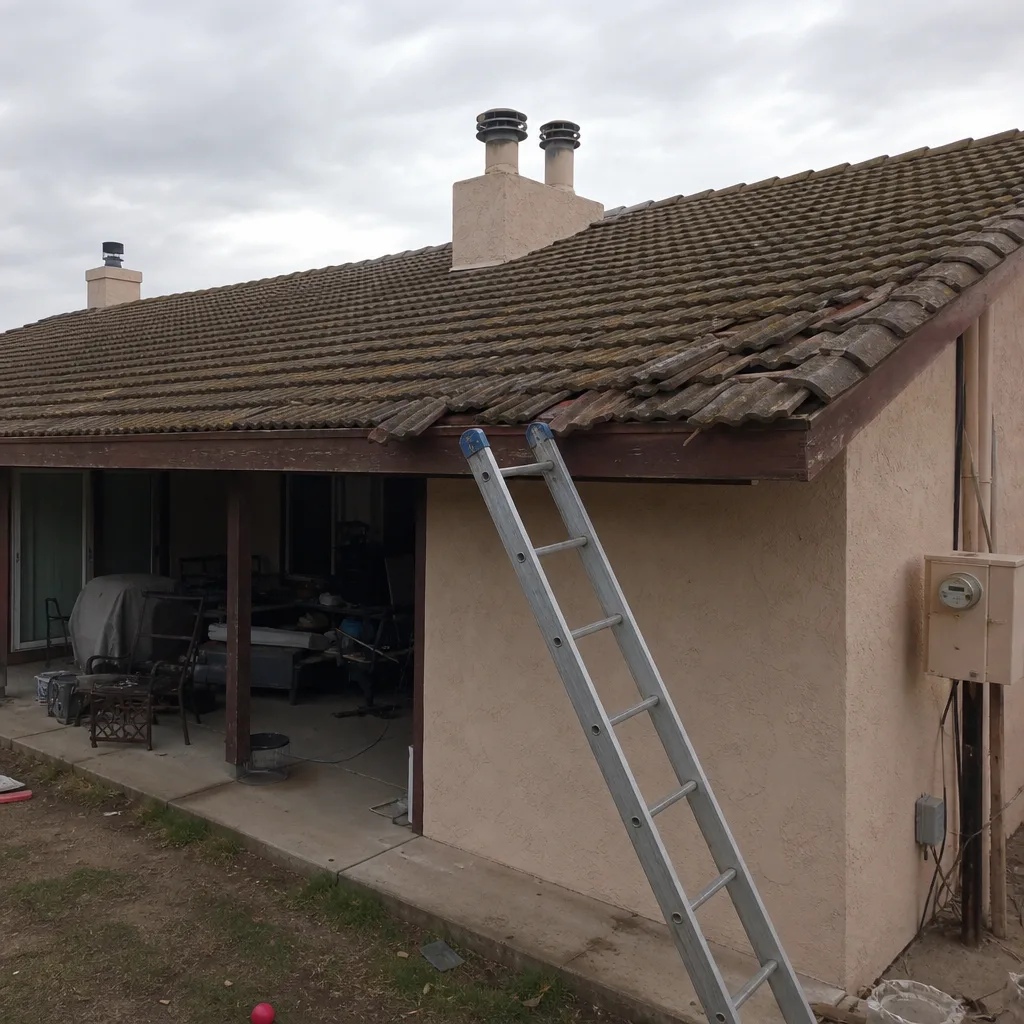 Before
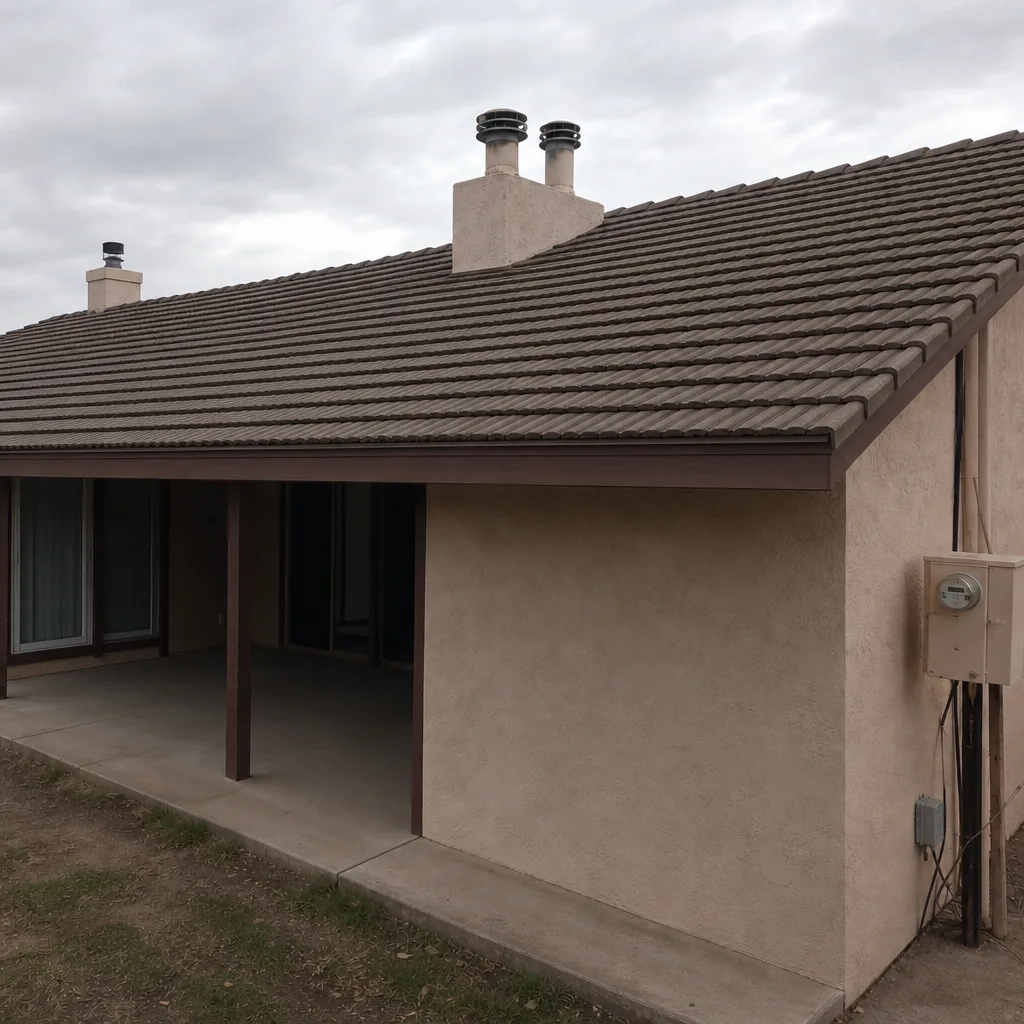 After
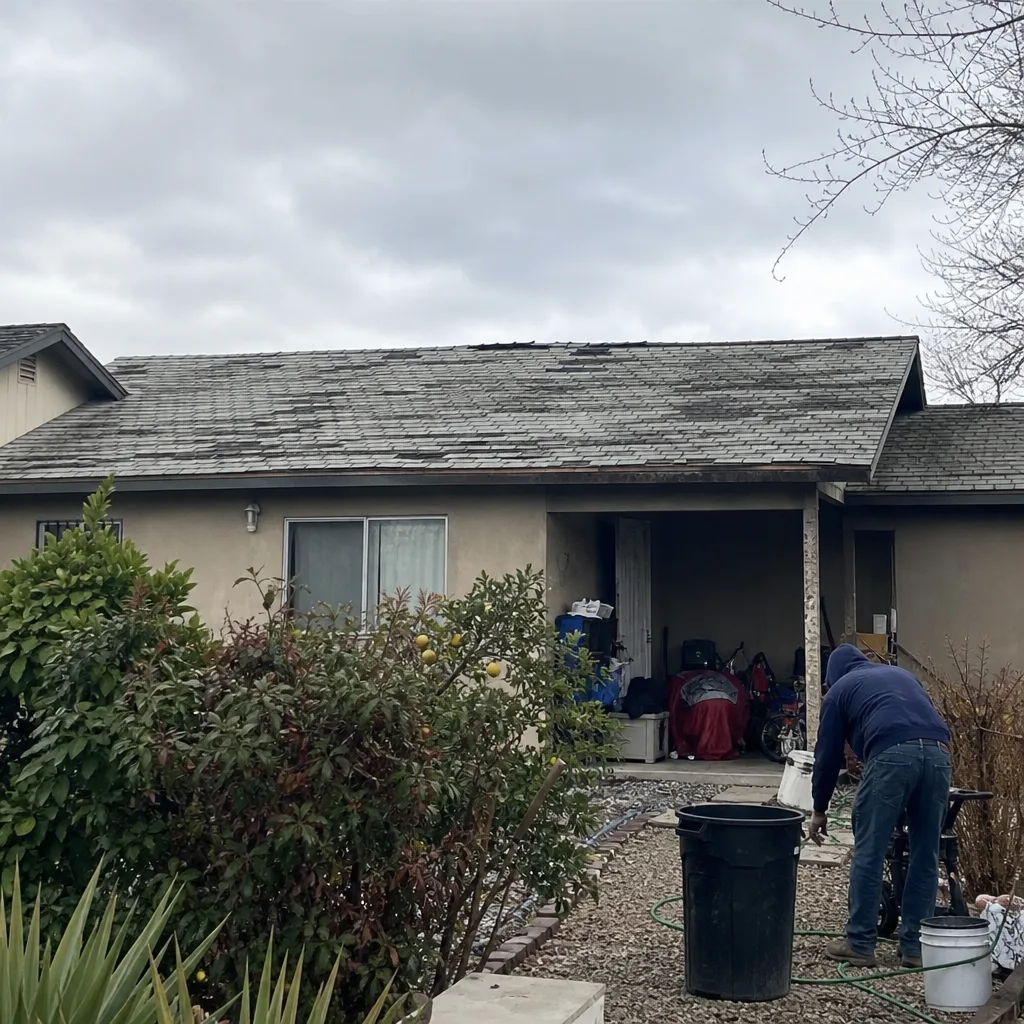 Before
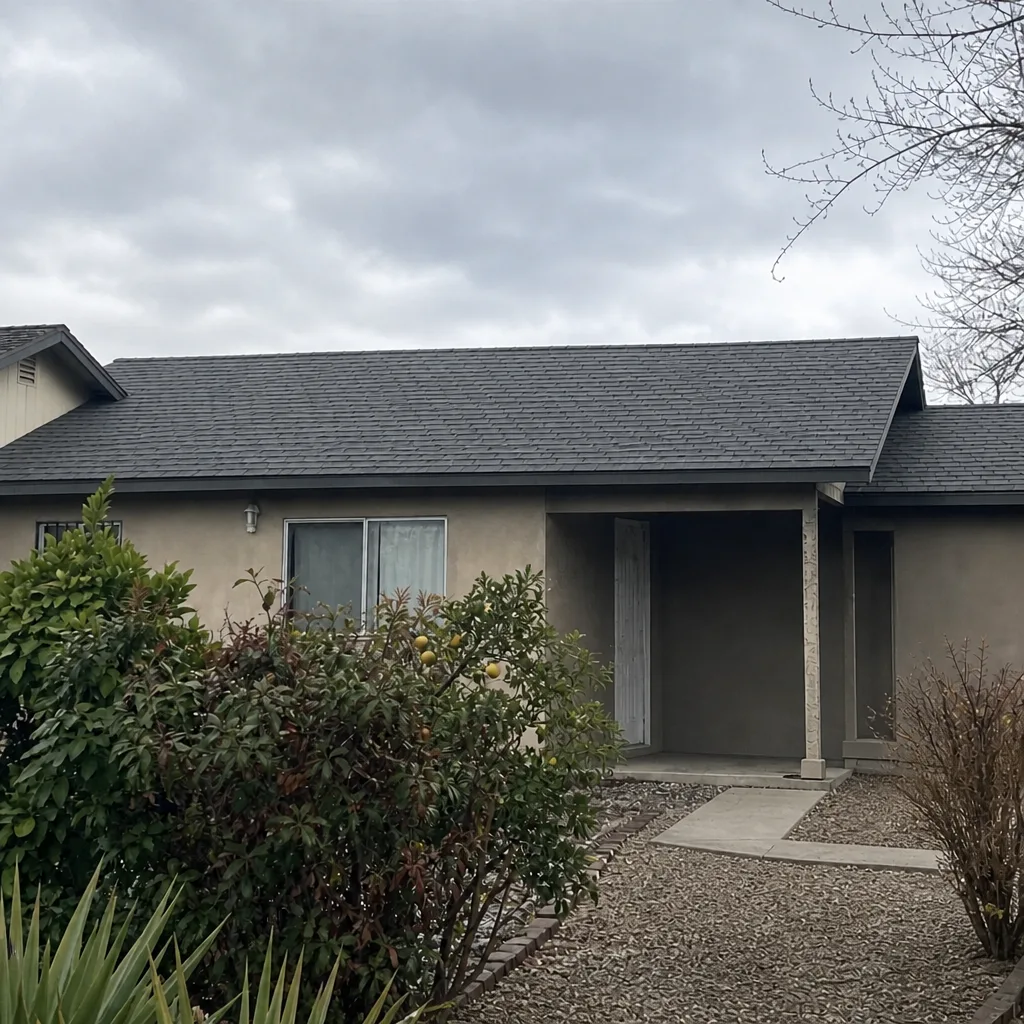 After
When to Call a Professional
Some roof problems announce themselves and some do not. Call a professional if you see water staining on a ceiling or wall after a storm, granules collecting in gutters and downspouts, or shingles that are curling, missing, or lifting at the edges. Those are the signs that diagnosis needs to happen before a small repair becomes a larger one. In Spring Valley, the same is true after any significant wind event, when flashing and ridge caps tend to fail. Never climb up on a pitched roof to check for yourself, especially in the heat. Ridgeline Roofing Co. Spring Valley offers free estimates in Spring Valley. Our technicians are background-checked and arrive in uniform, and we document every inspection with photos from your actual roof. Call (855) 908-1590 to schedule yours.
Frequently Asked Questions
Most standard repairs take two hours to one day, with the work completed in a single visit once materials are on hand. Jobs involving hidden decking damage or specialty materials can take one to two weeks. Call (855) 908-1590 for an exact quote based on an actual inspection, not a guess.
Three things stretch timelines here: summer heat that limits safe working hours to early morning and late afternoon, discontinued shingle colors that have to be sourced or closely matched, and hidden deck damage discovered once the shingles are off. All three are predictable if the contractor inspects and scopes the job properly before scheduling. Call (855) 908-1590 to talk through what your roof needs.
A straight contractor stops, shows you photos, explains what changed, and puts a revised scope in writing before doing the extra work. You should see the revised estimate and agree to it before the crew continues. If a contractor finishes first and bills you afterward for damage nobody discussed, that’s a problem worth pushing back on. Call (855) 908-1590 for a free second opinion on any written estimate.
Usually, yes. Spring Valley summer heat narrows the safe working window, so a job that takes one full day in spring may take the better part of two short morning sessions in July or August. A contractor who does not mention this is giving you an optimistic number. Call (855) 908-1590 to ask how scheduling looks for your specific repair.
Most repairs are completed in a single visit if the right materials are on hand after the inspection. Specialty tiles, discontinued shingles, and custom flashings often need to be ordered, which adds a return trip. A good estimate will tell you in advance which category your job falls into. Call (855) 908-1590 to schedule your inspection.
Structural repairs and full replacement typically require a permit, and a proper contractor handles that paperwork as part of the job. Minor repairs usually don’t. Ask this question up front, and get the answer in writing as part of the scope. For anything that might need a permit, our Specialty Roofing in Spring Valley page covers how we handle the paperwork and inspection side. Call (855) 908-1590 to ask about your specific repair.
The Bottom Line
Repair timelines are driven by diagnosis, material availability, and weather windows, not crew size. A repair that takes two hours on paper can take two weeks if the diagnosis was incomplete or the right material had to be ordered. The right way to protect yourself is to require a real inspection first, get a written scope with milestones and material details, and insist on a written change-order process for hidden damage. That is how a timeline becomes something real. At Ridgeline Roofing Co. Spring Valley, every job is backed by our written 90-Day Done Right Promise and no-hassle upfront pricing, and the number on the estimate is the number on the invoice. When you are ready to get a real answer on timing, call (855) 908-1590 to schedule your free estimate. We will be there when we say.
Written by the team at Ridgeline Roofing Co. Spring Valley.