
Last updated November 17, 2026
 Architectural shingles
 Metal roofing
 Tile roofing
 GAF
 Owens Corning
 Flat & low-slope
Free roof inspection with deck photos before we talk money - GAF and Owens Corning certified installation
Roof Replacement & Installation Maintenance Schedule: What to Do and When
Here is the part almost nobody tells you at the end of a roof job: a new roof doesn’t start its maintenance clock at year one. The first 90 days are the most critical inspection window of the entire roof’s life, and most homeowners spend them doing nothing at all. Manufacturer warranties get voided more often by missed maintenance documentation than by actual material failure – yet most homeowners walk away from a completed job with no written schedule and no record to defend a future claim. This guide lays out the full timeline, from the 90-day punch list through the long-term years, and we’re writing it from Spring Valley, where the desert climate writes its own rules. You’ll learn what to inspect, what to photograph, and when.
Quick Answer
Your new roof needs a documented inspection at day 30 and day 90, then twice a year after that, with the focus shifting from installation quality in years 1-5 to material aging in years 6-15. Photograph and file everything in a maintenance record that can defend a warranty claim later. In Spring Valley, add a pre-monsoon and post-monsoon check, since summer storm season does more roof damage here than winter does.
Styles & brands we work with
- Architectural shingles
- Metal roofing
- Tile roofing
- GAF
- Owens Corning
- Flat & low-slope
Table of Contents
- Why the First 90 Days Matter Most
- The 90-Day New-Roof Punch List
- Maintaining Manufacturer Warranty Validity in Nevada’s Climate
- Year 1-5 Maintenance Priorities
- Year 6-15: How the Focus Shifts
- Gutters, Fascia & Soffit as One System
- Building a Maintenance File That Pays You Back
- A Spring Valley Seasonal Calendar
Why the First 90 Days Matter Most
A newly installed roof is settling. Sealants are curing, fasteners are seating, and any installation error – a missed nail, a lifted shingle tab, a flashing that wasn’t tucked correctly – tends to reveal itself in the first warm weeks rather than years later. That’s why the 90-day window is the single highest-value inspection period of the roof’s life. Catch something now and it’s a warranty matter. Catch it in year six and it’s a repair bill.
In Spring Valley, the timing is sharper than in most places. Desert sun bakes new sealant fast, and the first monsoon that rolls through in July can find a weak spot before it’s fully cured. We’ve seen a single missed flashing detail in a Spring Valley neighborhood like Rhodes Ranch turn into a stained ceiling within one storm season. The homeowner had photos from day one and a written record, and the fix was covered without argument. A neighbor two streets over, without documentation, spent a year going back and forth.
Here’s the practical truth: if Roof Replacement & Installation in Spring Valley is done right, the roof should be sound for decades. But “done right” is verified, not assumed. The 90 days are when you verify.
The 90-Day New-Roof Punch List
Treat the first three months after installation as a checklist, not a waiting period. Here’s what to do, in order:
- Day 1 – collect and file the paperwork. Keep the manufacturer warranty card, the contractor’s written workmanship guarantee, and the material list (confirm which GAF, CertainTeed, or Owens Corning product line went up). Photograph the serial numbers or bundle stamps if they’re visible on your attic framing.
- Day 7 – walk the perimeter. From the ground, look for shingle granules in the gutter and downspout – a small amount is normal shedding, but granules filling a gutter run is not. Note any loose drip edge or lifted fascia trim.
- Day 30 – first documented inspection. Have the roof examined and photographed. Check ridge, valleys, all penetrations (vents, chimney, skylights), and the transition points at walls.
- Day 60 – attic check. Look for daylight coming through the deck, water stains on rafters, or damp insulation. This is where a slow leak shows up before it reaches the ceiling below.
- Day 90 – final warranty-window inspection. This is your last clear look before the installation warranty period closes on workmanship. Photograph everything and file it with the day-1 paperwork.
Each of those inspections should produce dated photos from the actual roof plane, not the ground. A ground-based glance can’t see a lifted tab or a poorly sealed vent boot, and those are exactly the things that fail first.
Maintaining Manufacturer Warranty Validity in Nevada’s Climate
Roof warranties are strict about a few things, and Nevada homeowners trip over them routinely. Most manufacturer coverage requires adequate attic ventilation, proper installation to spec, and no unapproved coatings or alterations. Void the terms and a 25-year material warranty can become worth nothing on the day you need it.
Ventilation is the big one here. In Spring Valley’s heat, an under-ventilated attic can push temperatures well past 150°F, cooking shingles from underneath and shortening their life. Manufacturers often require a balanced system – intake at the soffits, exhaust at the ridge or static vents – sized to square footage and roof pitch. If your attic ventilation isn’t balanced, you’re not just losing efficiency; you may be voiding coverage.
Prohibited coatings. Reflective or elastomeric coatings sprayed on asphalt shingles to beat the heat feel like a smart idea in the desert, and they regularly void the manufacturer’s warranty because the coating traps moisture and changes the shingle’s thermal behavior. Always check the warranty terms before applying any coating.
An authorized installer works with the exact product spec, which is why it matters which lines went on your roof. Being an authorized installer of GAF, CertainTeed, and Owens Corning means we install to each brand’s published requirements, and those requirements become your defense if a claim ever comes up. Keep the documentation that shows it.
Year 1-5 Maintenance Priorities
Once the 90-day window closes, the roof is past installation and into early service. In years one through five, your inspection focus should stay on the parts most likely to develop minor issues from settling and weather: sealant lines, penetrations, and flashing. These are still relatively cheap problems to catch.
- Twice-yearly inspections, matched to the seasons – a pre-monsoon check in late spring and a post-monsoon check in early fall.
- Penetration seals at vents and boots, which dry out and crack first in the desert sun.
- Valley and flashing integrity, where water concentrates during a storm.
- Attic checking after any heavy rain, for damp spots or daylight.
- Debris clearing behind chimneys and in valleys where windblown sand, leaves, and mesquite pods collect and hold moisture against the roof.
This is also when Roof Repair in Spring Valley work is most affordable if something turns up – a small fix now beats a deck replacement later.
Year 6-15: How the Focus Shifts
Past year five, the roof is out of the warranty-active installation period and into the aging phase. Your inspection attention shifts from “did the install hold” to “how is the material wearing.” This is when you start reading the roof’s condition rather than checking finished details.
What we watch for in Spring Valley roofs entering this phase:
- Granule loss – bare spots on shingles where the protective coating has worn, common on south- and west-facing slopes that take direct afternoon sun.
- Shingle curling or cracking – the material drying out as it ages, faster in unventilated attics.
- Flashing wear – metal that has loosened or corroded at the joints.
- Sealant striping – a maintenance task that keeps wind from lifting a tab during a monsoon gust.
In our experience, a well-ventilated Spring Valley roof will hold strong past year 15, while one with poor airflow can show early wear by year eight. That’s why the ventilation check in the warranty section above isn’t housekeeping – it directly sets the roof’s lifespan.
Gutters, Fascia & Soffit as One System
Here’s a mistake we see all the time: homeowners maintain the roof and ignore the gutters, or clean the gutters and never look at the soffit. They’re one connected system. The gutter carries water away, the fascia is the band it’s mounted to, and the soffit is the intake that feeds your attic ventilation. Damage to any one of the three affects the other two.
- Clogged gutters back water up under the bottom roof course, rotting the fascia and wicking into the deck.
- Failing fascia lets the gutter sag and pull away, creating a gap that channels water behind the trim.
- Blocked soffit vents starve the attic of intake air, and that undercuts the balanced ventilation the manufacturer warranty requires.
In Spring Valley, where the dry soil and sudden monsoon runoff put real stress on drainage, keeping the whole assembly clear and attached matters. Check gutters after every significant rain and inspect the fascia and soffit during your twice-yearly roof walk. Our Specialty Roofing in Spring Valley team handles gutter, fascia, and soffit work as part of a full roof system, not as an add-on.
Building a Maintenance File That Pays You Back
A maintenance file does two jobs at once: it defends warranty claims, and it raises your home’s resale value. Buyers pay for a documented roof, and appraisers and inspectors trust records. Here’s how to build one that holds up:
- Keep a single folder – paper or digital – for the warranty certificate, contractor workmanship guarantee, and material spec sheets.
- Date and label every inspection photo so the sequence is clear months or years later.
- Log every service: who did it, what was found, what was fixed, and the date.
- Store a copy off-site or in the cloud, so a storm that damages your home doesn’t also destroy your proof.
When a warranty claim comes up – or a buyer asks about the roof – a clean file answers every question at once. A documented maintenance history is one of the strongest signals a home inspector will note, and it’s evidence a homeowner took care of the biggest single investment on the exterior.
A Spring Valley Seasonal Calendar
Timing your checks around Spring Valley’s weather keeps the schedule practical. Here’s the pattern we recommend to homeowners in the valley:
- Spring (March-April): pre-monsoon inspection – check seals, valleys, and flashing before storm season, and clear gutters of winter debris.
- Early summer (June): attic ventilation check before the worst heat, and confirm soffit and ridge airflow.
- Monsoon (July-September): post-storm roof and gutter checks after any heavy rain, watching for lifted tabs and pooling.
- Fall (October-November): post-monsoon inspection, sealant touch-up, and file your photos for the year.
- Winter (December-February): a quieter period – a good time for a deeper inspection and any planned repair work.
Simple seasonal rhythm, matched to real weather, is the whole game. We plan our work around it because it’s what the roof actually responds to. Ridgeline Roofing Co. Spring Valley home has more on how we approach each season.
Common Mistakes to Avoid
- Skipping the 90-day inspection entirely. The installation warranty window is your one chance to catch workmanship issues before they become your problem.
- Never photographing the roof from the roof. Ground-level photos prove nothing when a warranty claim comes up months later.
- Applying reflective coatings to asphalt shingles. A tempting desert fix, and one that voids most manufacturer coverage.
- Ignoring attic ventilation. In Spring Valley heat, an under-ventilated attic accelerates shingle aging and can void the warranty.
- Cleaning gutters but never inspecting fascia and soffit. They’re one system; damage to one affects the others.
- Throwing out warranty paperwork after the job. The paperwork is the proof you need if a failure shows up in year ten.
- Pressure-washing a shingle roof. It strips granules and ages the roof prematurely, and it’s a common Spring Valley mistake during dry-season cleaning.
See the difference
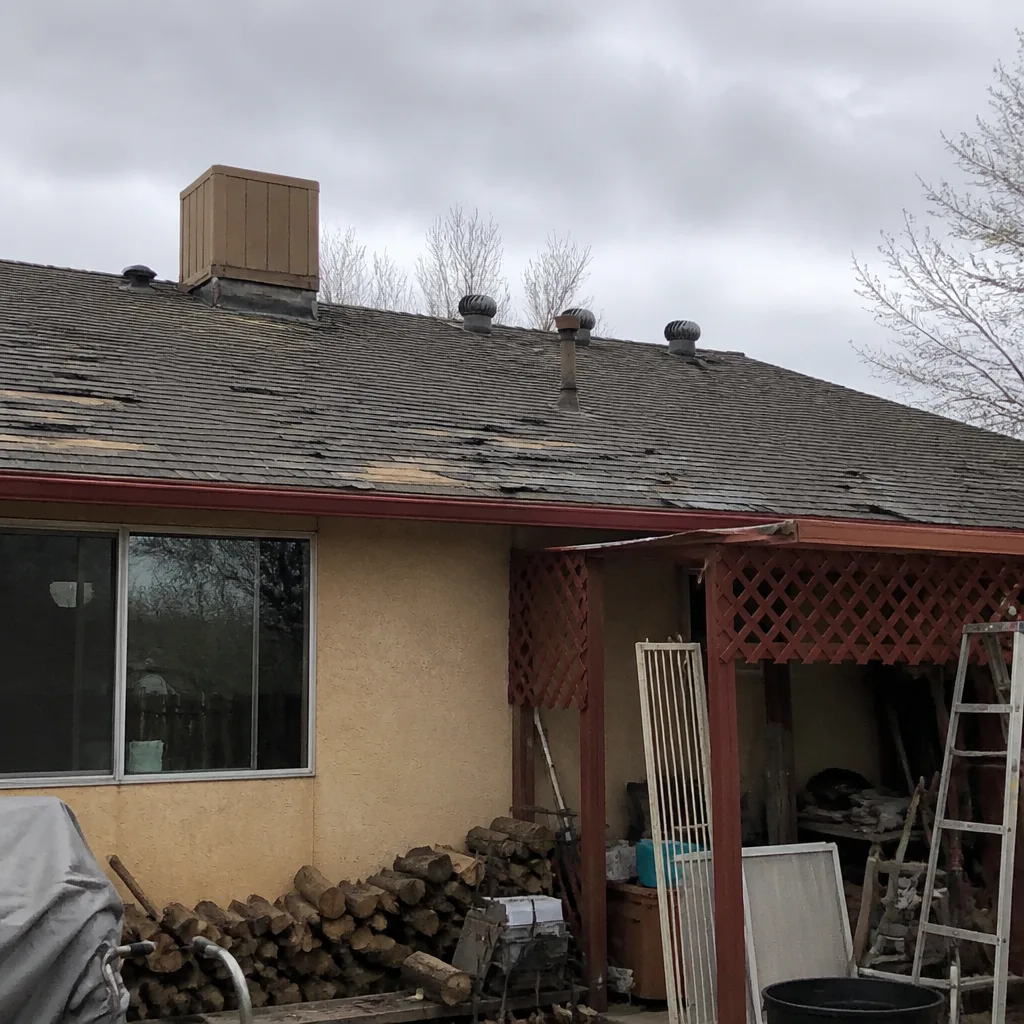 Before
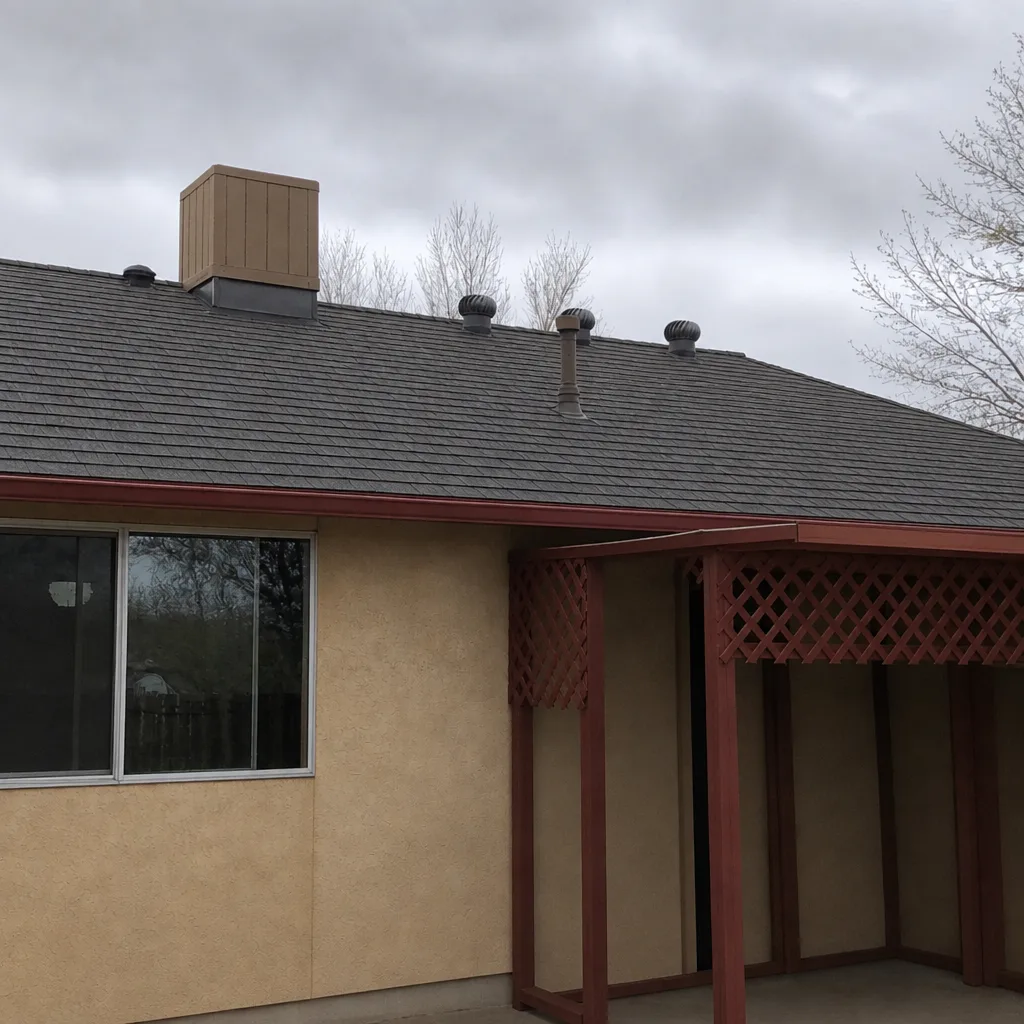 After
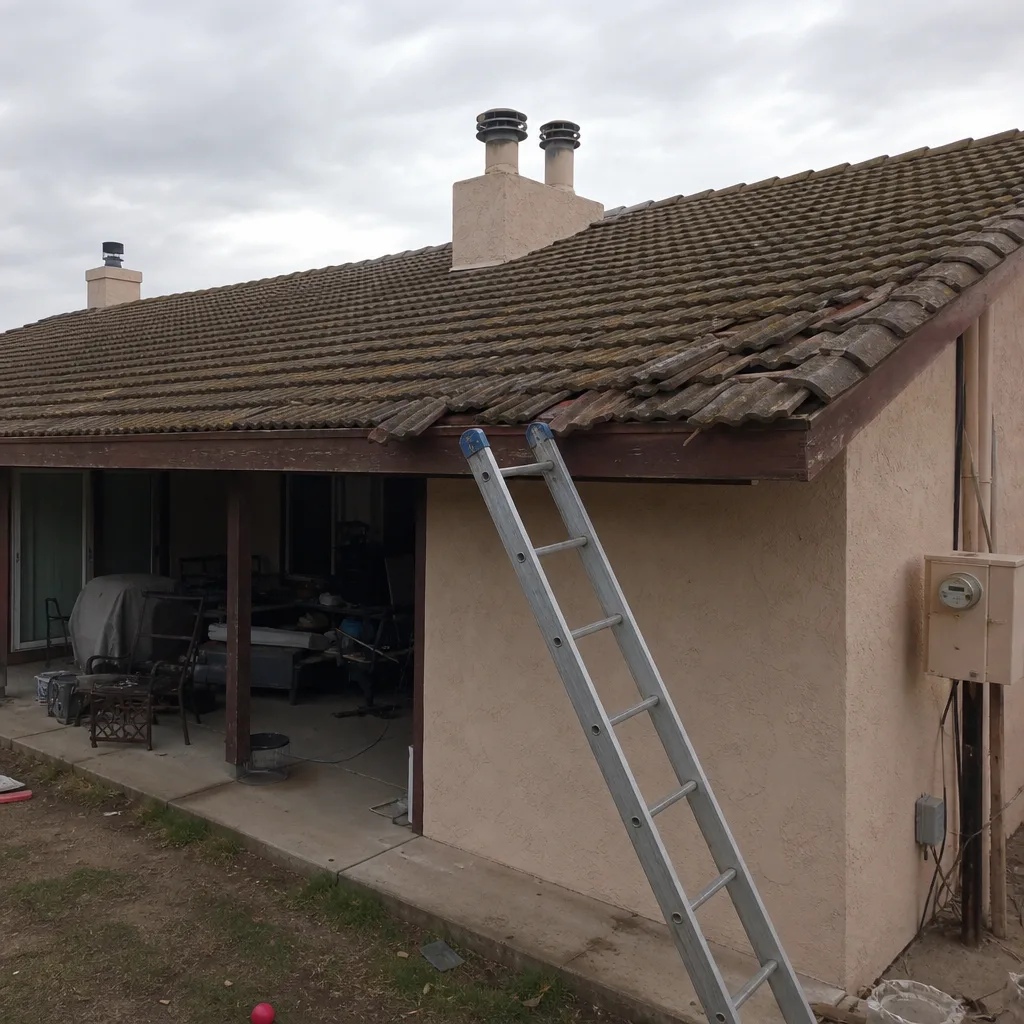 Before
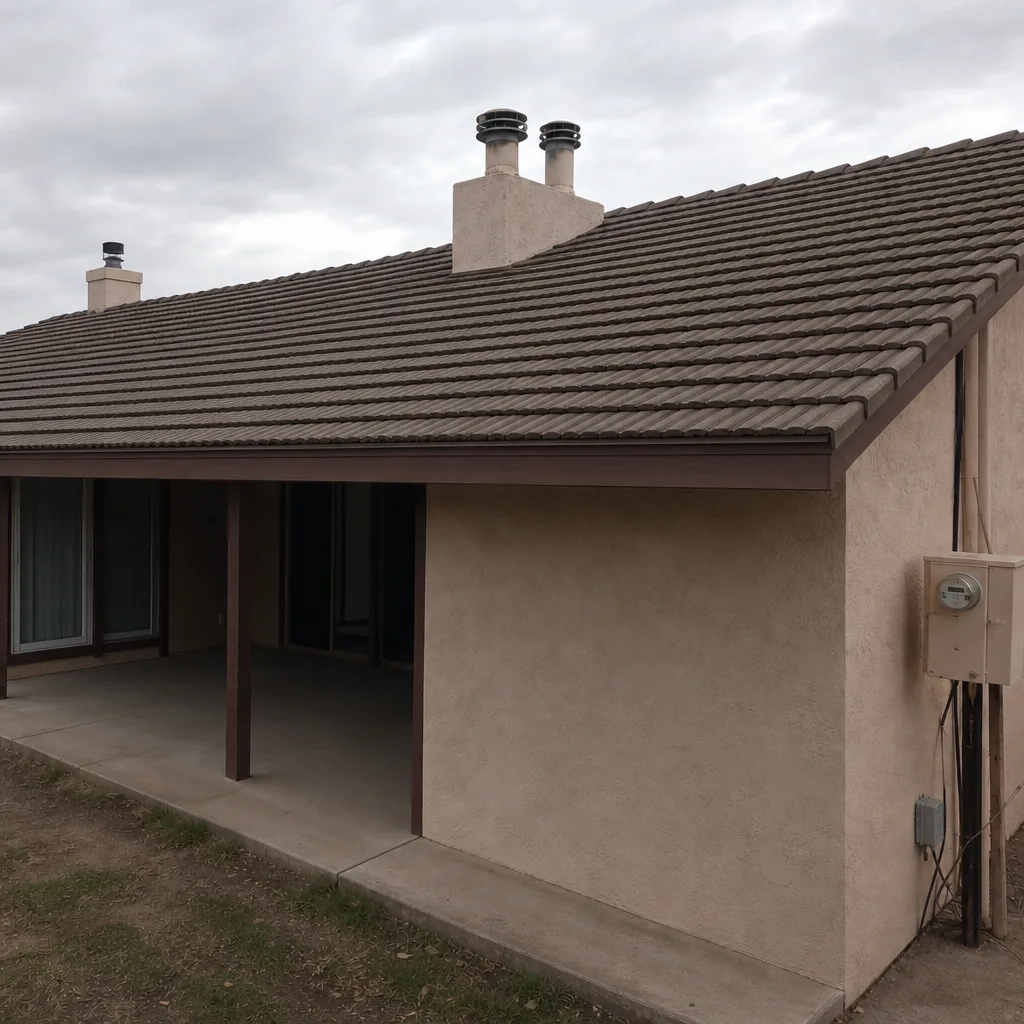 After
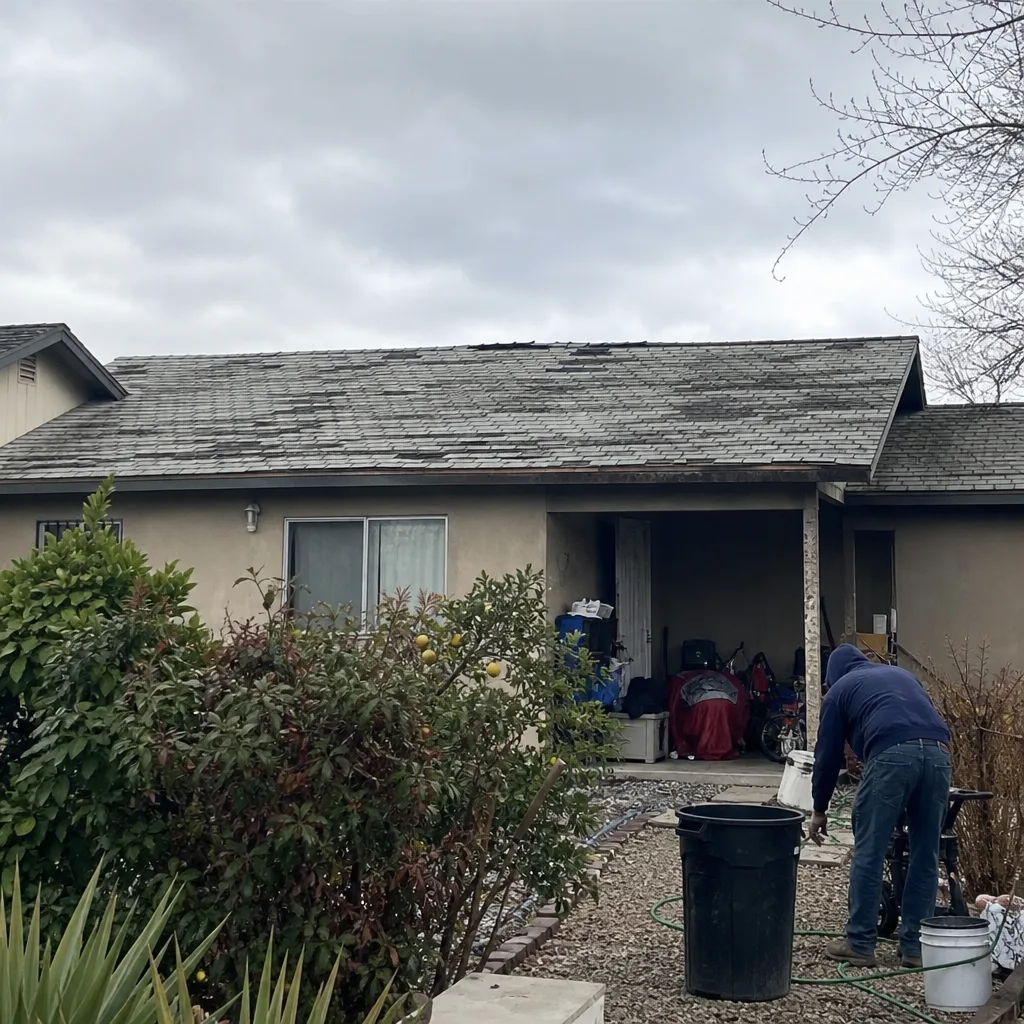 Before
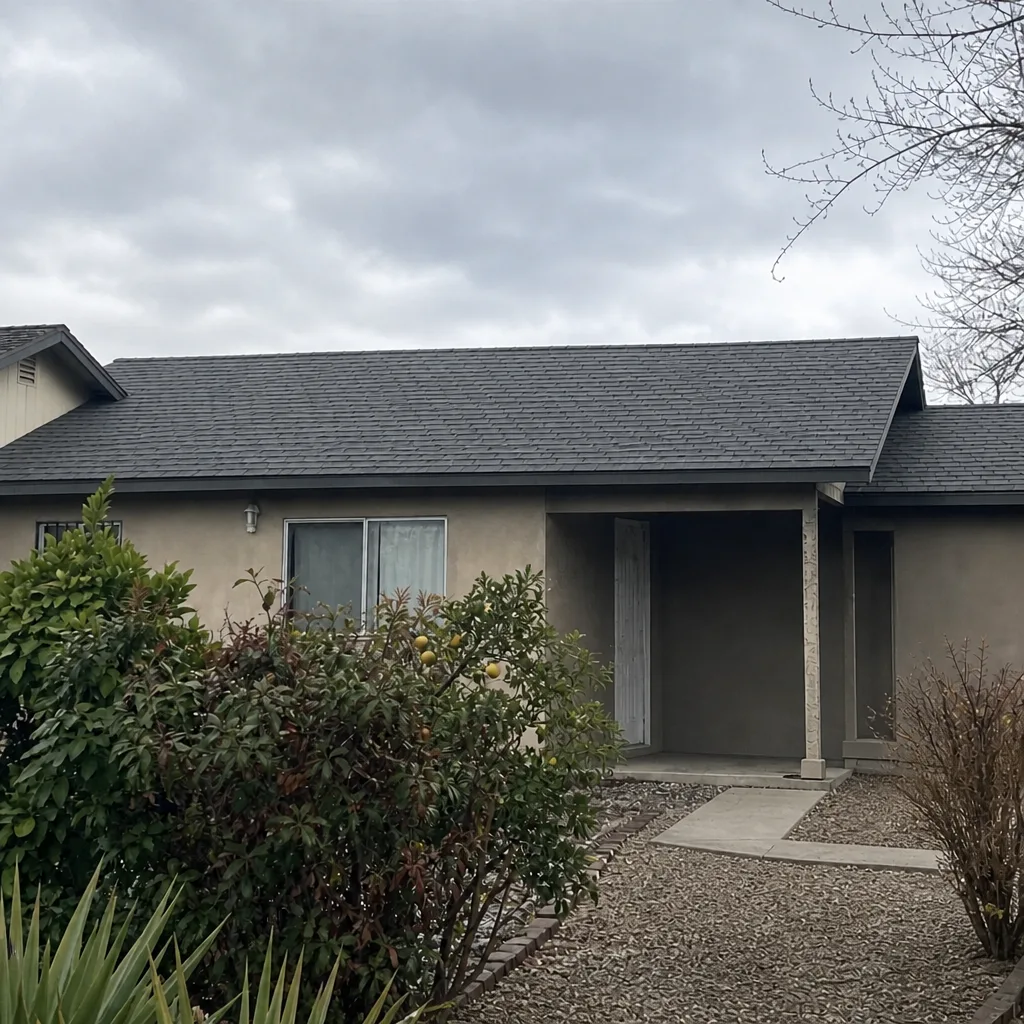 After
When to Call a Professional
Some inspections you can do from the ground with a camera and a notepad. Others aren’t safe to handle yourself – any work involving height, steep pitch, or a trip onto the roof deck should go to a trained professional, not a neighbor with a ladder. Call if you see water stains on a ceiling or rafter, granule piles in a gutter run, a lifted or missing shingle after a storm, daylight visible through the attic deck, or sagging fascia where the gutter attaches. Also call if it’s been more than a year since anyone has looked at the roof, or if you’re unsure whether your warranty requirements are being met. Ridgeline Roofing Co. Spring Valley does photo-documented inspections and offers free estimates in Spring Valley – call (855) 908-1590. A background-checked technician will document what’s actually on your roof and give you a written assessment.
Frequently Asked Questions
Within the first 30 days and again at day 90, before the installation warranty window closes. Those early checks catch settling issues while they’re still a warranty matter rather than a repair.
Two documented inspections, an attic check after any heavy rain, and a post-monsoon gutter clear-out in Spring Valley. The focus is on seals, penetrations, and flashing – the parts most likely to develop early issues.
Yes. Most manufacturer warranties require proper ventilation and installation with no unapproved coatings, and documented maintenance is your evidence if a claim comes up. Keep dated photos and service records in one file.
Twice a year, before and after monsoon season, plus a quick check after any heavy storm. Desert heat and summer storms do the most damage here, so timing checks to the seasons gets the most out of each inspection.
It helps. Buyers, inspectors, and appraisers treat a documented roof history as a sign of a well-maintained home, and it can back up a future warranty claim when you need it.
Ground-level checks with a camera are fine for any homeowner. Anything on the roof plane – height, steep pitch, flashing repair – should go to a trained, insured professional. Call (855) 908-1590 for a free estimate and a documented inspection.
The Bottom Line
A new roof doesn’t maintain itself, and the schedule starts on day one, not year one. The first 90 days are your highest-value inspection window – catch settling issues while they’re still covered. After that, twice-yearly checks matched to Spring Valley’s monsoon cycle keep the roof honest through its warranty-active years, and your attention shifts to material aging once it passes year five. Keep the gutters, fascia, and soffit in step with the roof, and file every photo and service record. A documented maintenance history defends the warranty and adds value at resale. Done right – and if it isn’t, we make it right.
Call (855) 908-1590 to schedule your free estimate in Spring Valley. A live person answers every call, and our technicians bring photo-documented inspections and no-hassle upfront pricing – the number on the estimate is the number on the invoice.
Written by the team at Ridgeline Roofing Co. Spring Valley.