
Last updated November 17, 2026
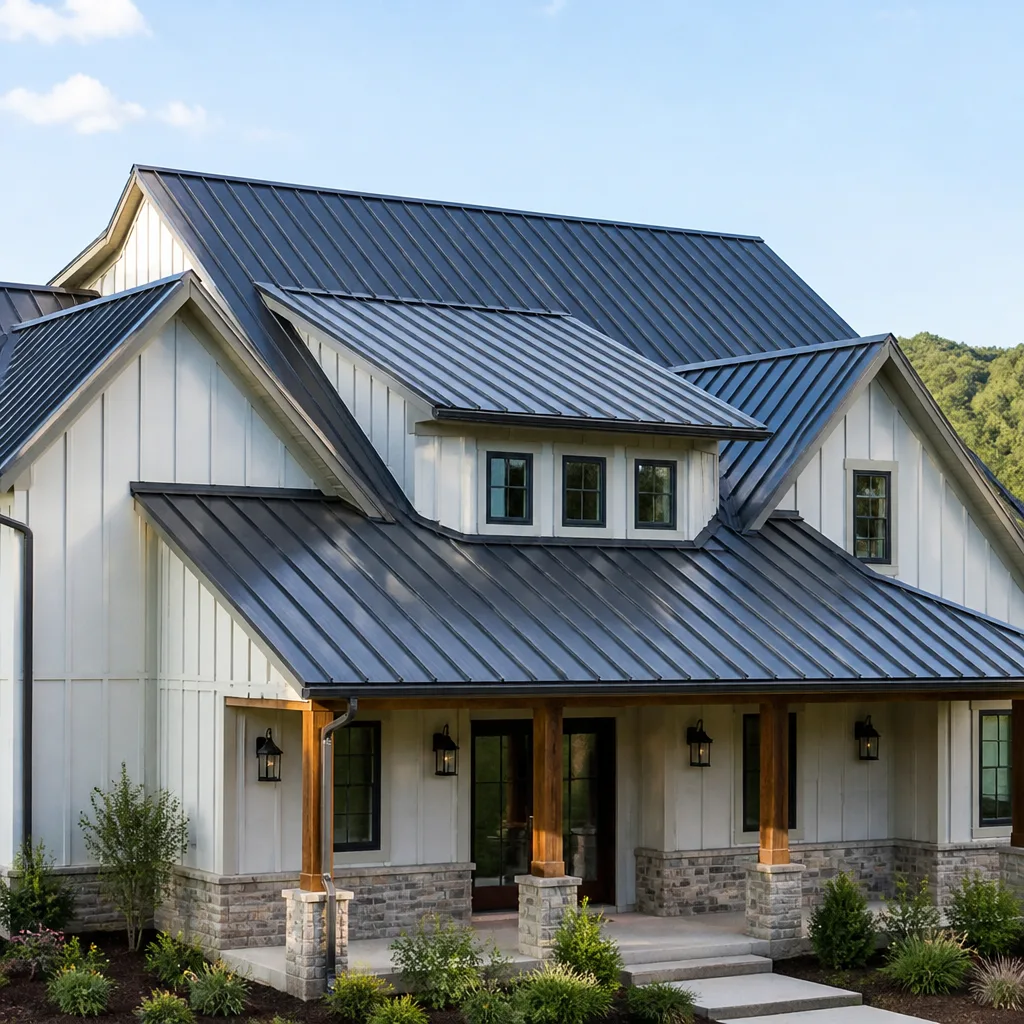 Metal roofing
 Architectural shingles
 Tile roofing
 GAF
 Owens Corning
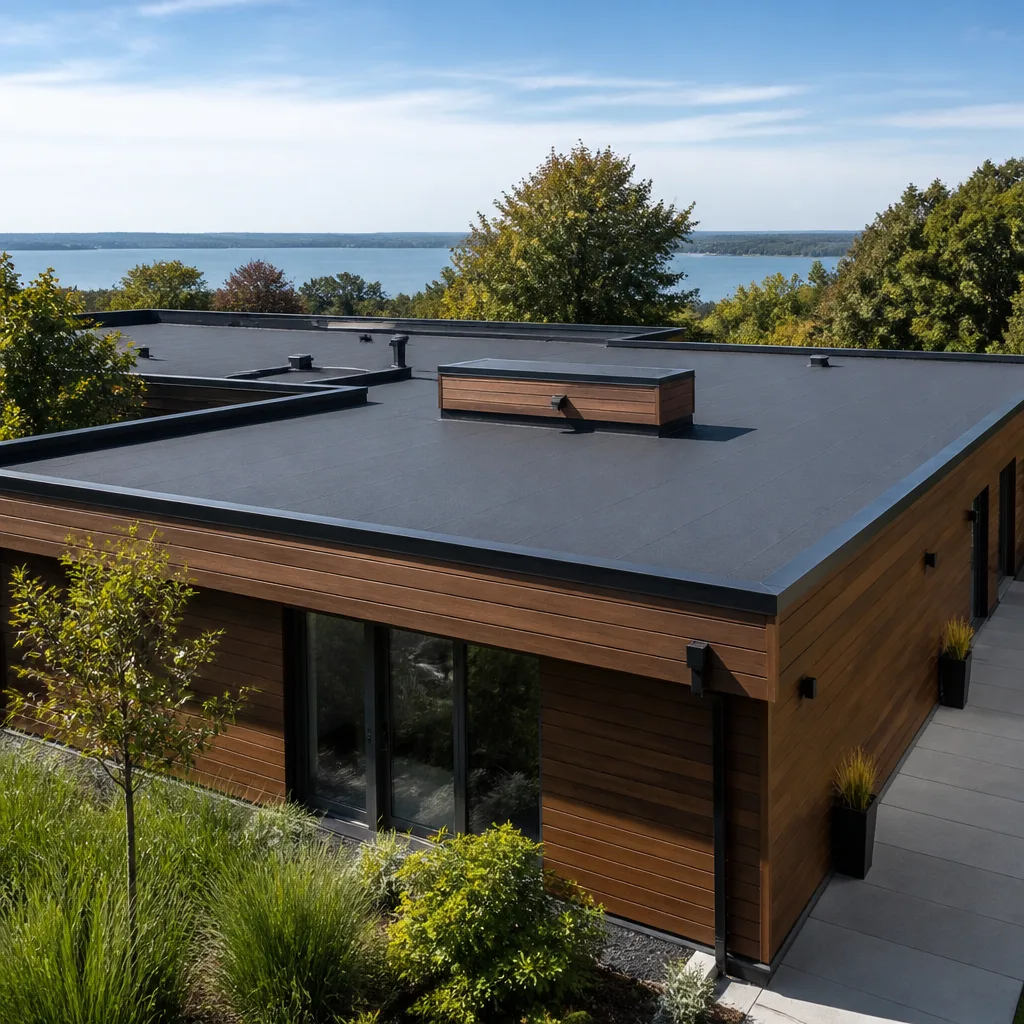 Flat & low-slope
Free roof inspection with deck photos before we talk money - GAF and Owens Corning certified installation
DIY vs Professional Specialty Roofing: What’s Safe to Do Yourself
Walking on the wrong part of a concrete tile to replace one cracked field tile is one of the most common ways homeowners create five new problems while fixing one. The tile system is the structure, and foot pressure is not distributed the way most people assume. A single misplaced step can crack the tile underfoot, shear the batten beneath it, and open a path for water that didn’t exist before you went up. That’s the part nobody tells you. This guide separates the specialty roofing tasks you can genuinely handle yourself from the ones that carry consequences lasting well past the repair, with specific attention to how heat and tile behave here in Spring Valley.
Quick Answer
On specialty roofing, the safe homeowner tasks are the ones that don’t put weight on the roof system or alter its waterproofing: clearing gutters at the roofline, inspecting from the ground with binoculars, and clearing debris from low-slope drainage points without stepping on the membrane. Any task that means walking tile, metal, or membrane, or that changes materials or penetrations, belongs to a trained professional because the hidden cost of a mistake outlasts the repair. Skill is only half the question. The other half is liability, warranty, and what a bad step does to the structure underneath.
Styles & brands we work with
- Architectural shingles
- Metal roofing
- Tile roofing
- GAF
- Owens Corning
- Flat & low-slope
Table of Contents
- Why specialty roofing is a different conversation than asphalt shingles
- The homeowner-safe tasks on tile and metal roofs
- Why tile replacement is higher-risk DIY than it appears
- Flat roof tasks that look simple but carry permit and warranty implications
- The Spring Valley heat hazard for summer DIY roof work
- How to document and communicate what you’ve observed
- Common mistakes to avoid
- When to call a professional
Why specialty roofing is a different conversation than asphalt shingles
Asphalt shingles forgive a lot. A shingle is a fairly tough, flexible piece of material nailed to a deck, and if you step on it wrong the worst case is usually a cracked shingle you can see and replace. Specialty roofing systems don’t behave that way. Concrete tile, clay tile, standing-seam metal, and low-slope membranes are each engineered as a complete assembly, and the roof you see from the street is only the top layer of that assembly.
Here’s what that means in practice. When you walk across a concrete tile roof, your weight doesn’t sit on the tile alone. It transfers through the tile to the batten, then to the underlayment, then to the deck. Tile is designed to shed water and look right, not to be a walking surface. The underlayment underneath does the actual waterproofing, and it’s fragile in ways tile isn’t. A foot placed slightly off the batten can crack the tile supporting your weight and crush the underlayment beneath it, and you won’t see the underlayment damage until the next rain finds it.
That’s the core distinction homeowners wrestle with. The visible result of a bad step is one cracked tile. The invisible result is a compromised waterproofing layer that may not show itself for months. In Spring Valley, where summer monsoon storms arrive fast and hard, that hidden damage tends to announce itself at the worst possible moment. This is why we treat specialty roofing as a separate trade from standard shingle work, and why our Specialty Roofing in Spring Valley work begins with understanding the assembly before anyone touches a tile.
The homeowner-safe tasks on tile and metal roofs
Plenty of roof-related work is genuinely yours to do, and we’d rather you handle it than pay someone to drive out. The line is simple: if the task keeps both feet off the roof surface and doesn’t change any material, it’s probably fair game. Here’s what falls on the safe side.
- Clear gutters from a ladder at the roofline. Standing on the ground and reaching the gutter from a stable ladder lets you clear leaves and debris without putting weight on tile, metal, or membrane. Keep the ladder on firm footing and stay off the roof itself.
- Inspect from the ground with binoculars. A decent pair of binoculars and a slow walk around the house reveals cracked tiles, lifted flashing, and metal seams that have opened. You’ll spot more from the ground than you would teetering at the edge.
- Clear debris from low-slope drainage points without stepping on the membrane. If a flat roof’s scupper or drain is clogged with leaves, you can often clear the debris from a ladder or a stable reach without walking the membrane. Never walk a low-slope roof to do it.
- Keep vegetation and tree limbs clear of the roof edge. Trimming back branches that scrape tile or drop debris onto the roof is straightforward yard work that protects the roof without touching it.
- Note and photograph what you see from the ground. A dated photo of a suspect area gives a contractor real information and shows you’ve been paying attention to the house.
Notice what’s missing: anything that requires you to be on the roof. That’s not coyness. It’s the honest answer. Our technicians have up to 10 years of experience on these systems, and even they move across a tile roof with deliberate care because the margin for a careless step is thin.
Why tile replacement is higher-risk DIY than it appears
Replacing a single cracked field tile looks like the simplest job on the roof. You see the crack, you know the tile, you slide a new one in. In practice, three things make it harder than it looks, and each one carries a hidden cost.
The load path. Tile rests on battens, and battens rest on the deck. A tile isn’t a self-supporting plate; it’s part of a chain. When you lift a field tile to replace it, you’re working inside that chain, and the surrounding tiles are now bearing load differently than they were designed to. Pressure that should distribute across the batten shifts onto neighboring tiles, and one cracked tile becomes three.
Mortar and fastener matching. Many tile systems use mortar or specific fasteners at hips, ridges, and edges. Matching the existing mortar color and mix, or finding the correct fastener for a given tile profile, isn’t something you can eyeball. A mismatched repair is visible, and on some systems it’s weaker than what was there.
The cracked batten underneath. This is the cost nobody budgets for. If the batten beneath a tile is cracked, the replacement tile you just installed has nothing solid to rest on. It may look fine for a season. Then the weight of a monsoon rain or a maintenance visit cracks it again, and now you’ve paid twice for the same tile. This is why our Roof Repair in Spring Valley inspections include checking the substrate under any tile we replace, not just the tile itself.
If a tile roof is nearing the end of its service life, the honest conversation isn’t about one tile. It’s about the assembly. That’s the point where a full Roof Replacement & Installation in Spring Valley plan makes more sense than patching, and it’s a conversation worth having before a small repair turns into a pattern.
Flat roof tasks that look simple but carry permit and warranty implications
A low-slope or flat roof invites DIY in a way a tile roof doesn’t. It’s accessible, it’s flat, and patching a seam with a bit of material seems like something anyone could manage. This is where we see the most expensive kind of well-intentioned mistake.
Most modern flat roofs use a single-ply membrane system, and those systems are installed as a complete assembly with manufacturer approval. That approval extends to the materials used, the fastening method, and the installer. When a homeowner patches a TPO or similar membrane with a product the manufacturer didn’t approve, or applies a patch in a way the system wasn’t designed for, the manufacturer can void the system warranty. That’s true even if the patch itself holds for years. The warranty covers the whole roof, and an unapproved repair is grounds to walk away from it.
There are also permit implications. In Spring Valley, as in most jurisdictions, certain roof repairs and any structural work touch the permit process, and work done without a required permit can complicate a future sale or an insurance claim. A homeowner who patches a flat roof themselves may have created a documentation gap that costs more than a professional repair would have.
None of this means you can’t maintain a flat roof. You can keep the drains clear and the surface free of standing debris. But the moment a repair involves the membrane itself, it’s a professional job with a real warranty consequence. Our team works with CertainTeed and Owens Corning systems among others because approved materials matter on flat roofs in exactly this way.
The Spring Valley heat hazard for summer DIY roof work
This is the section we wish we didn’t have to write, but we’ve seen what summer does to people who underestimate it. Spring Valley summers are brutal on a roof surface, and the heat is a genuine medical risk, not a comfort issue.
Here’s the part most people get wrong. They plan to work early in the morning to beat the heat. On a dark roof surface in Spring Valley, morning hours can still hit 90°F on the surface itself, and by mid-morning that number climbs fast. A concrete tile roof in direct July sun gets hot enough to be painful through a shoe, and the air just above it can be significantly hotter than the air at ground level. The work isn’t the only risk. Dehydration, heat exhaustion, and in the worst case heat stroke can happen before you realize how much trouble you’re in.
There are other heat-specific hazards. Standing on a hot metal roof can cause contact burns through thin soles. Tile that’s expanded in the heat can be more prone to cracking underfoot. And a homeowner working alone, without someone on the ground watching for signs of heat trouble, has no safety net. Our own crews work these roofs with water, shade rotation, and a partner, and we still respect the heat. We’d ask the same of you: if a task puts you on a Spring Valley roof in summer, the honest answer is to leave it to people who do this for a living and know the limits. Our Ridgeline Roofing Co. Spring Valley home page explains how our crews approach scheduled work around the heat.
How to document and communicate what you’ve observed
There’s a real skill to reporting a roof problem to a contractor, and most homeowners accidentally do it badly. The usual mistake is to understate what they’ve seen because they don’t want to seem alarmist or because they’re hoping it’s minor. Often the opposite happens too: a homeowner overstates a problem so the contractor will take it seriously. Both make the job harder.
Here’s a simple way to communicate clearly that helps a contractor give you an accurate estimate:
- Note the location precisely. “Above the kitchen window, second tile row from the eave” is useful. “Somewhere on the back” is not.
- Take dated photos from the ground. Binoculars plus a phone camera get you surprisingly good documentation of a cracked tile or a lifted seam.
- Describe what you see, not what you think it means. “A dark stain on the ceiling in the northwest corner” is better than “the roof is leaking from the chimney.” Let the contractor diagnose.
- Mention any recent weather event. If a monsoon storm passed through three weeks ago and the stain appeared after, that’s relevant context.
- Report the full scope, not the trimmed version. If you’re seeing two separate issues in two places, mention both. A good contractor will prioritize them; a hidden second problem leads to a surprise on the estimate.
We document every inspection with photos taken from your actual roof, not a scary speech in the driveway, so the conversation starts from what’s really there. If you’ve been up on the roof or seen something from the ground, bring it up. It makes the estimate more accurate and can save you a callback.
Common Mistakes to Avoid
- Walking tile without knowing the load path. Tiles crack under foot pressure that doesn’t distribute the way you expect, and one step in the wrong spot damages tiles you didn’t even touch. Stay off the tile unless you’re trained on it.
- Patching a flat roof with unapproved materials. The patch may hold, but it can void the entire system warranty and complicate a future insurance claim. Approved materials aren’t optional.
- Working a Spring Valley roof in summer without a partner. Heat illness can come on quickly, and a lone worker has no one to call for help. Morning hours on a dark surface still reach 90°F.
- Assuming one cracked tile is one repair. The batten beneath may be cracked too, and a replacement tile over a broken substrate fails again within a season. Check the substrate.
- Understating scope when you call a contractor. Describing one problem and hoping the contractor will “just notice the rest” leads to a misleading estimate and a surprise later. Report everything you’ve seen.
- Skipping the permit on flat roof work. A permit gap can surface at sale or claim time, and it’s far cheaper to pull the permit on the front end. This is a professional job even when it looks small.
- Clearing debris from a low-slope roof by walking it. Stepping on the membrane to clear a drain is exactly how a small clog becomes a punctured system. Reach from a ladder instead.
When to Call a Professional
If the task requires you on the roof, changes a material, or touches a membrane or tile system, call a professional. That covers tile replacement, metal seam work, any flat roof repair, flashing repair, and anything that involves a permit. It also covers any work you’d be doing solo in Spring Valley summer heat, where the risk isn’t the roof but you. Ridgeline Roofing Co. Spring Valley offers free estimates in Spring Valley, call (855) 908-1590. We’ll tell you honestly what’s a maintenance item you can handle and what’s a job best left to trained hands, and we back anything we do with our written 90-Day Done Right Promise. If we do the work and it isn’t right, we come back and make it right. No paperwork, no arguing.
See the difference
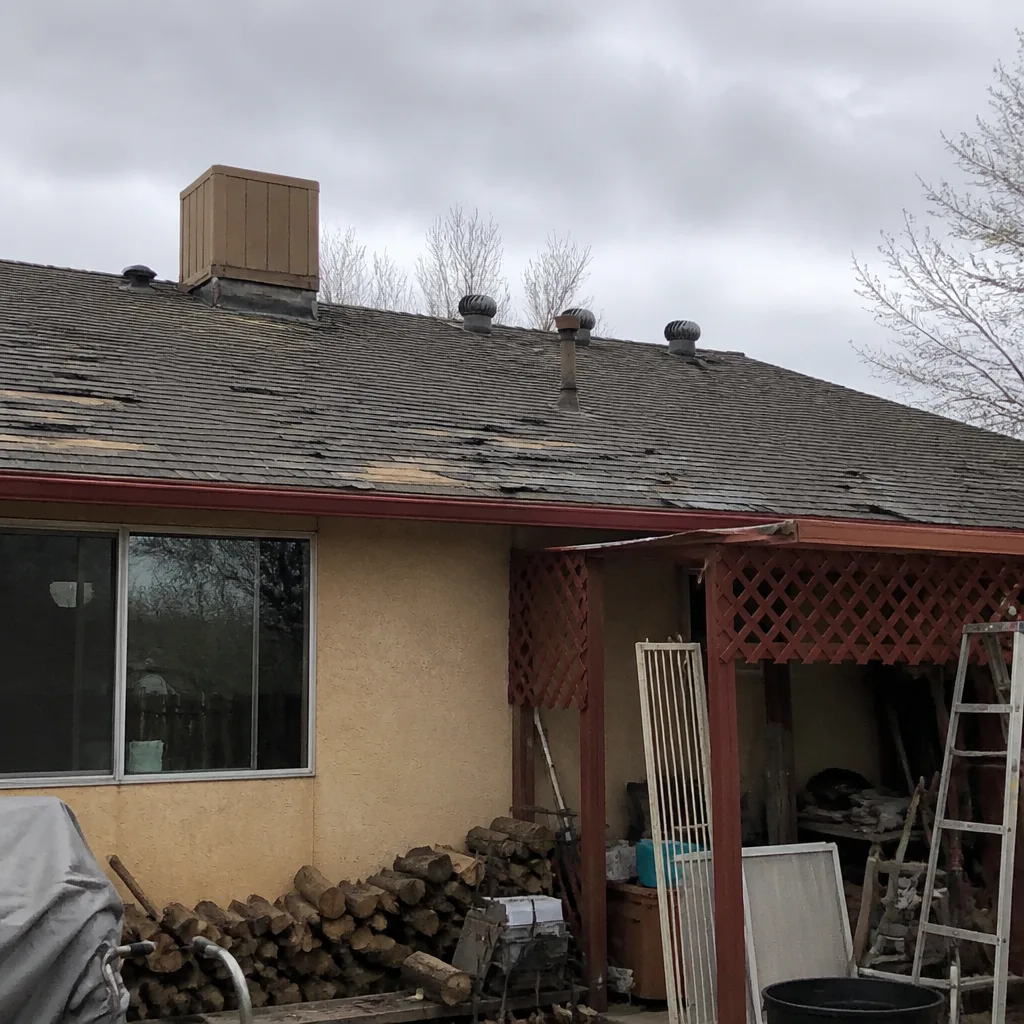 Before
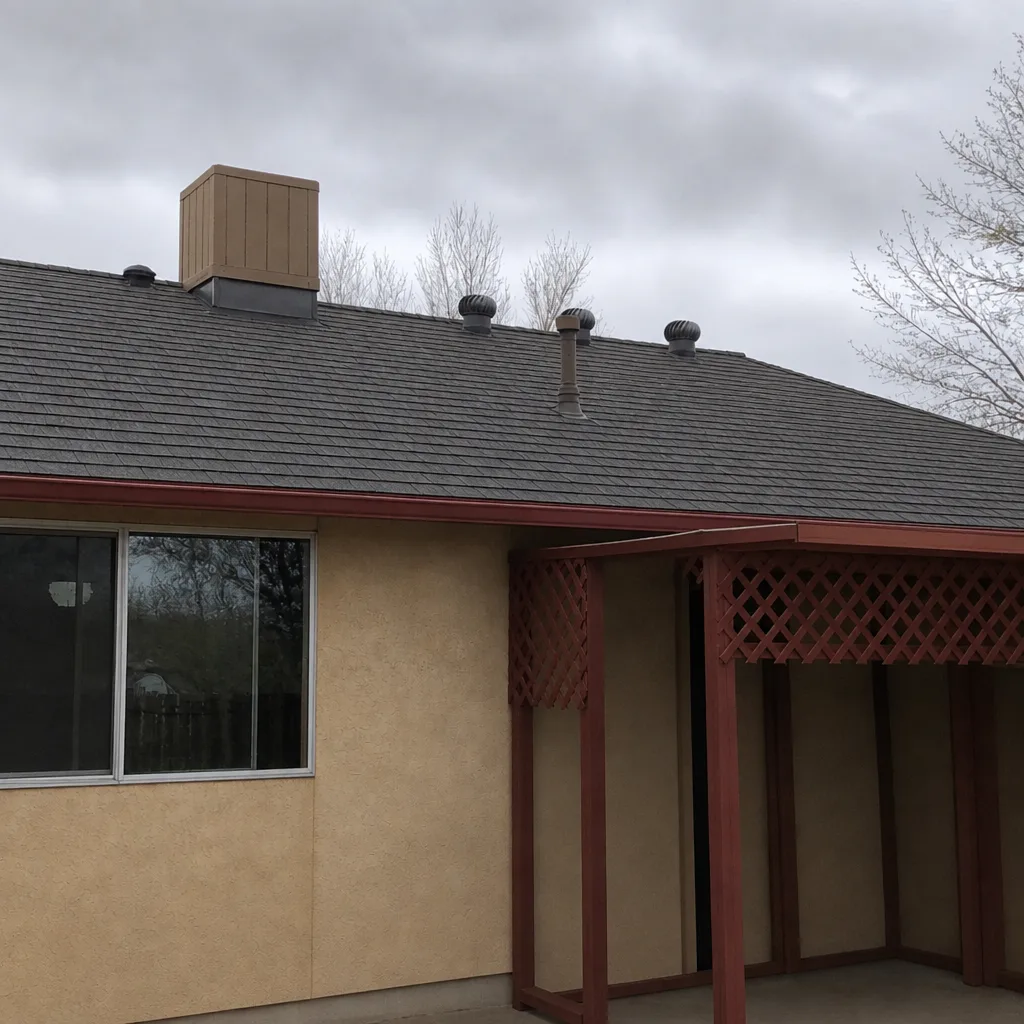 After
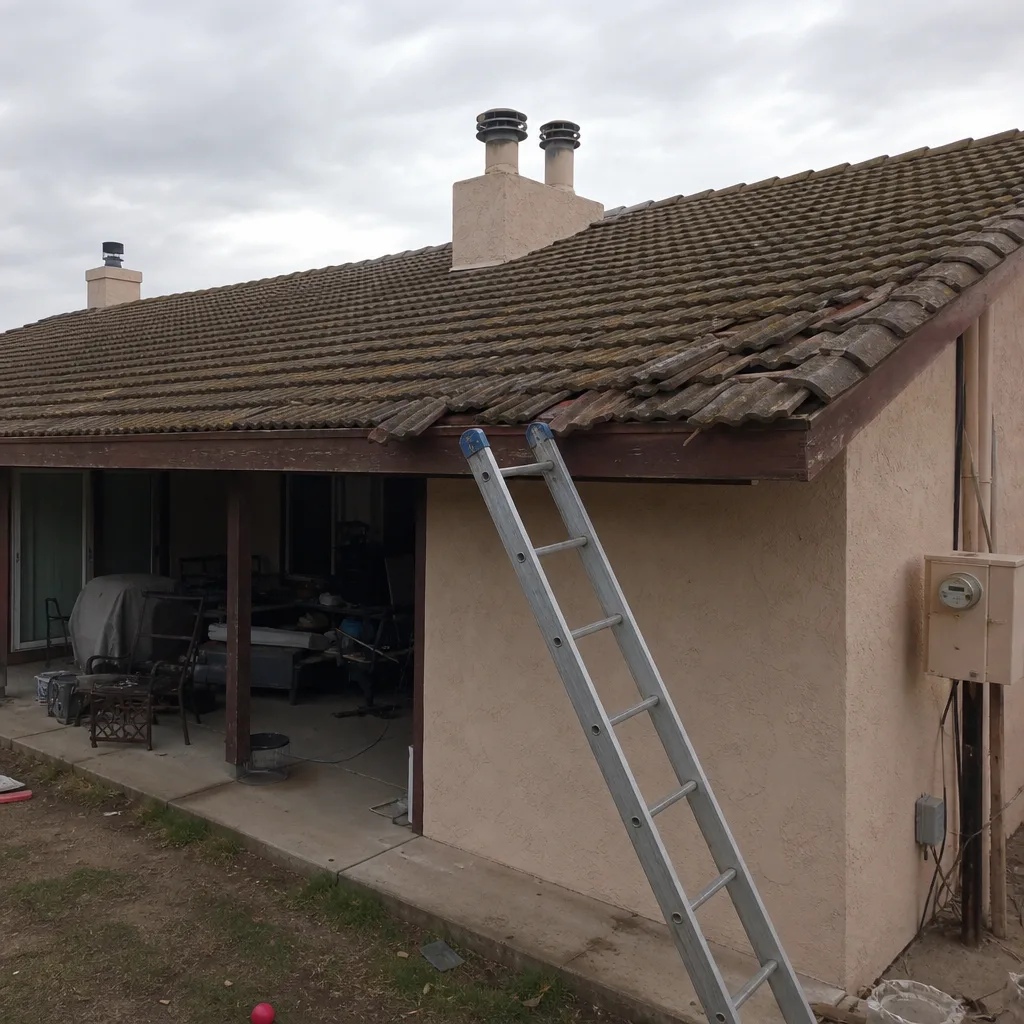 Before
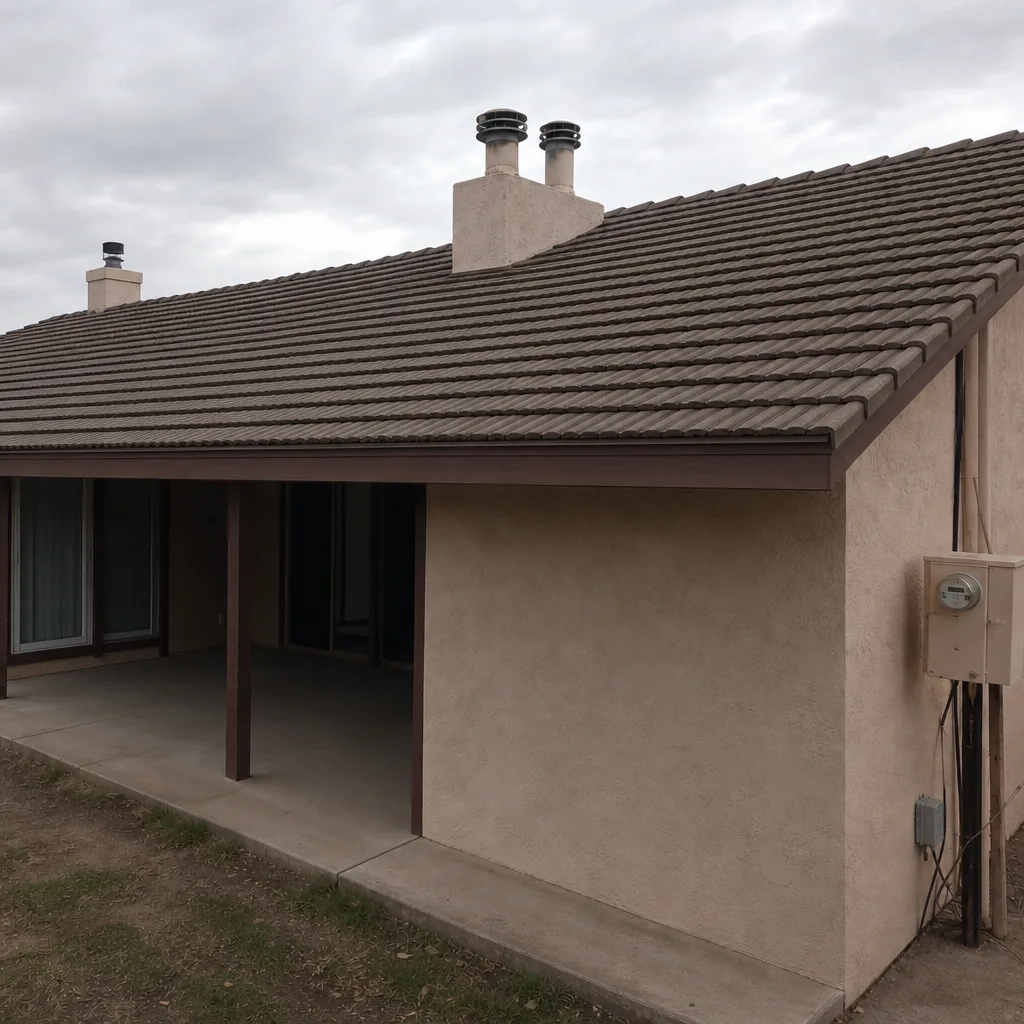 After
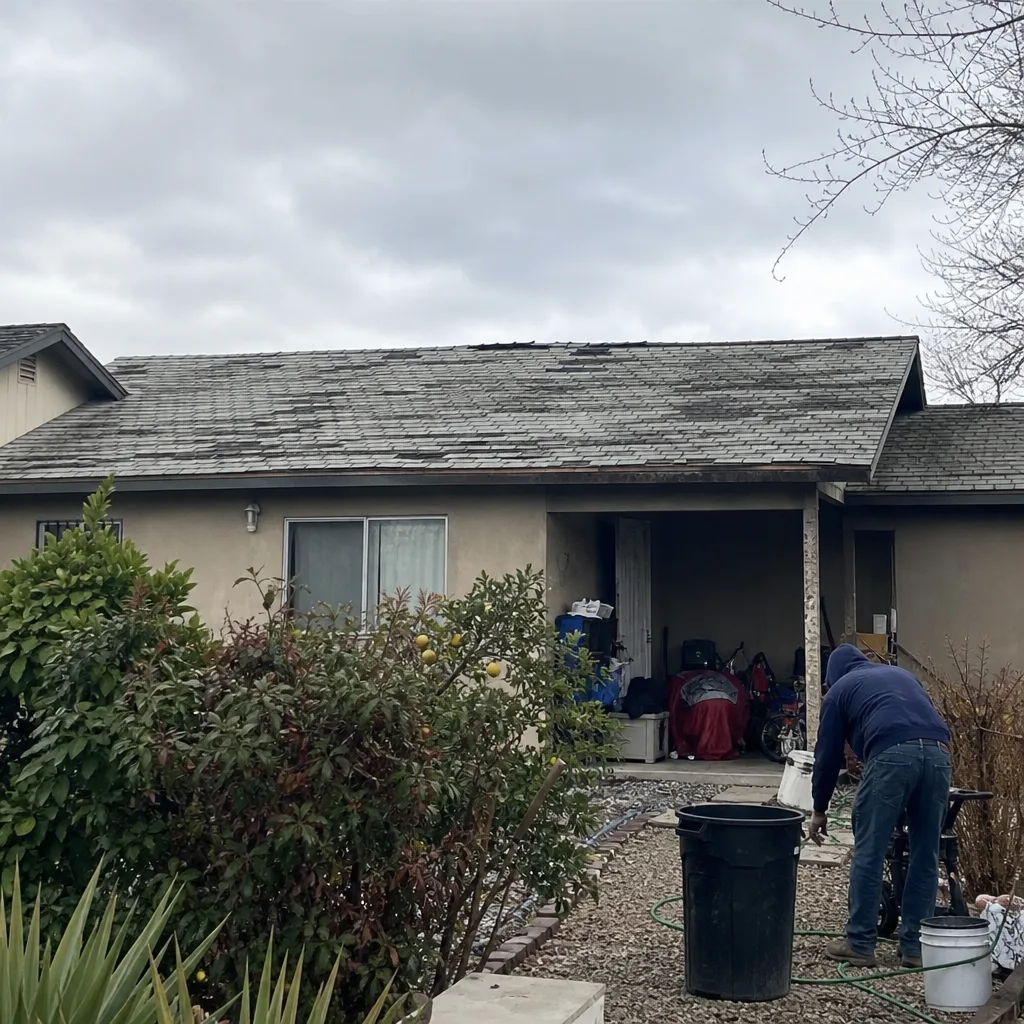 Before
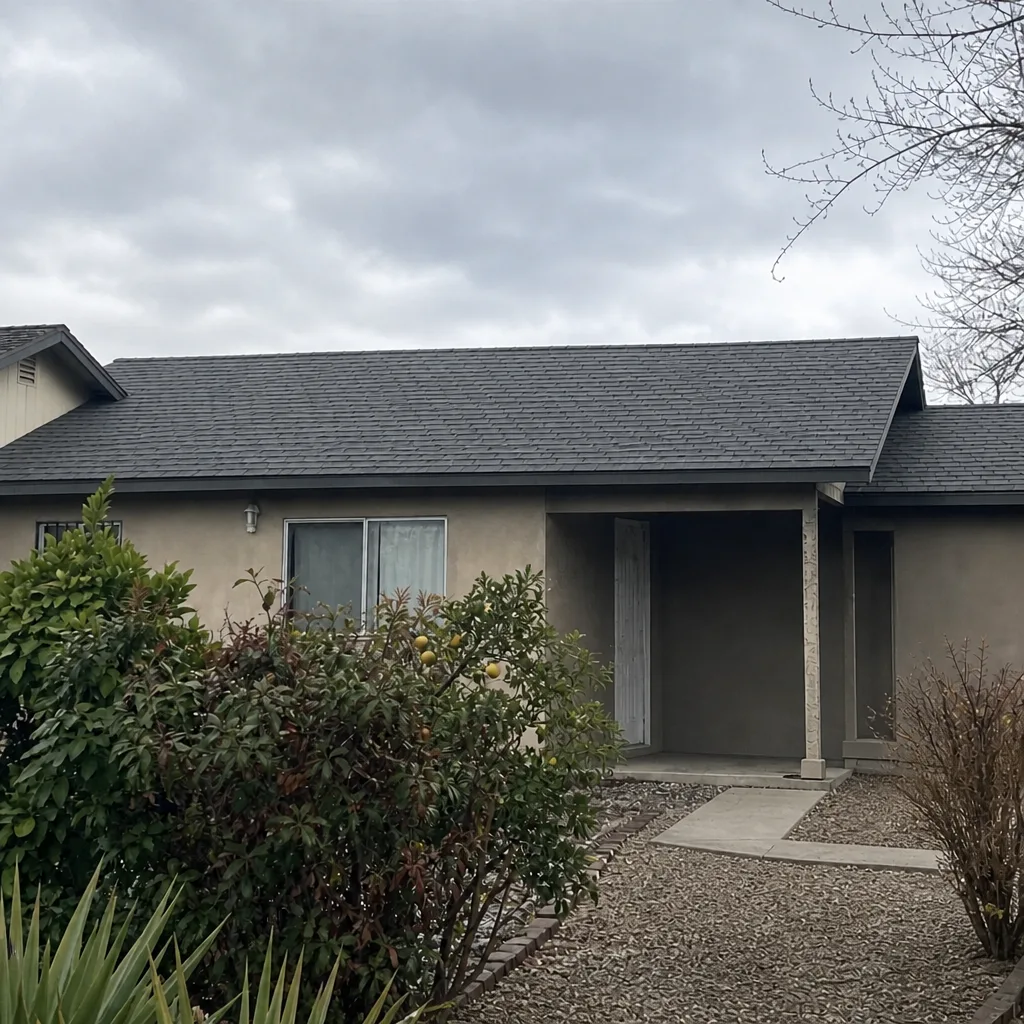 After
Frequently Asked Questions
It depends on the tile system and what’s underneath, but on most concrete and clay tile roofs a single field-tile replacement is riskier than it looks. The tile you didn’t intend to crack, the batten you can’t see, and the underlayment beneath it are all part of the job. A trained technician checks the substrate before replacing a tile. Call (855) 908-1590 for a free estimate if you’re not sure.
You should not walk a low-slope membrane roof to clear a drain. Stepping on the membrane can puncture it or loosen a seam, and the damage often shows up months later. Clear the drain from a stable ladder if you can safely reach it, and leave any repair on the membrane itself to a professional.
Gutter clearing at the roofline, visual inspection from the ground with binoculars, and clearing debris from drainage points without stepping on the roof are all fair game. Anything that puts you on the roof surface or changes a material is not. The Spring Valley heat adds a real medical risk to any summer roof work, even in the morning.
It can. Single-ply membrane systems are warranted as a complete assembly, and an unapproved patch or material can void the whole system warranty even if the patch holds. Use manufacturer-approved materials only, and let a professional handle the repair itself.
Because the tile sits on a batten that rests on a deck, and a foot placed wrong can crack the batten beneath the tile you’re replacing. A new tile over a broken substrate fails again within a season. The honest repair checks the substrate, not just the tile.
Report the location precisely, attach dated photos from the ground, describe what you see rather than what you think it means, and mention any recent weather. Don’t understate scope. A good contractor will prioritize multiple issues rather than hand you a surprise later. Call (855) 908-1590 to schedule a free inspection in Spring Valley.
The Bottom Line
The DIY-versus-professional question on specialty roofing isn’t really about whether you’re handy. It’s about which tasks carry consequences that outlast the repair. Clearing gutters and inspecting from the ground are yours. Walking tile, patching membrane, and working a summer roof in Spring Valley heat are not. The batten under the tile, the warranty on the membrane, and the heat on a dark surface in July all have a way of costing more than the original bid. Get the safe tasks done, and let trained hands handle the rest. A square deal now is cheaper than a repair twice over.
If you’re not sure which side of the line a task falls on, call us. We’ll give you an honest answer, a free estimate, and the photos to back it up.
Reach Ridgeline Roofing Co. Spring Valley at (855) 908-1590 for a free estimate. Live person answers every call, 24/7, and most jobs are completed in a single visit with no-hassle upfront pricing. The number on the estimate is the number on the invoice. If we do the work and it isn’t right, the 90-Day Done Right Promise means we come back and make it right.
Written by the team at Ridgeline Roofing Co. Spring Valley.