
Last updated November 17, 2026
 Architectural shingles
 Metal roofing
 Tile roofing
 GAF
 Owens Corning
 Flat & low-slope
Free roof inspection with deck photos before we talk money - GAF and Owens Corning certified installation
Emergency & Storm Damage Warning Signs Every Homeowner Should Know
A roof can lose enough granules in a single hailstorm to cut its remaining lifespan in half, and then show nothing at all on the ceiling below for eighteen months while moisture quietly saturates the decking. That is the part of storm damage that costs homeowners the most: the long, silent stretch between the event and the leak. Most people only inspect what they can see from the living room, which is why the small signs go unnoticed until real damage has set in. In this guide, we’ll walk through the warning signs you can actually check yourself after a storm in Spring Valley: in the attic, along the roofline, and in the rooms that rarely get a second look.
Quick Answer
The most reliable signs of storm damage on a roof after a storm are granule deposits in your gutters and downspouts, lifted or curled ridge caps, displaced flashing around vents and chimneys, and daylight showing through the attic deck. Inside, watch for water stains on rafters, damp insulation, nail pops near the eaves, and new musty smells in upper rooms. Surface marks alone rarely mean you need a new roof; a breach in the decking or displaced flashing does, and it needs attention right away.
Styles & brands we work with
- Architectural shingles
- Metal roofing
- Tile roofing
- GAF
- Owens Corning
- Flat & low-slope
Table of Contents
- The Morning-After Attic Inspection Protocol
- Ground-Level Warning Signs After a Spring Valley Storm
- Interior Signs Homeowners Dismiss as Unrelated
- Cosmetic vs. Structural Storm Damage
- Why the Second Storm Causes the Leak
- Reading the Roof From the Inside Out
- Getting the Insurance Timeline Right
The Morning-After Attic Inspection Protocol
The attic is where a storm tells the truth. From ground level you can see shape and color, but from inside you can see the consequences, and in Spring Valley’s climate those consequences show up fast because the heat pulls moisture upward and holds it there. A short, careful walk-through the morning after a storm is the single most useful thing you can do for the life of your roof.
Before you go up, know that an attic can be genuinely dangerous: exposed wiring, loose boards, poor footing, and temperatures that climb well past 100 degrees on a summer day. Go in the early morning, bring a strong flashlight, and do not step off joists. If your attic has no safe walkway or you can’t move confidently in tight space, ask a professional to take the look for you.
Here is the protocol we use, and it’s the same one we recommend to homeowners:
- Look for daylight before you look for water. With the lights off, scan the underside of the roof deck. Any pinprick of daylight is a direct opening to the sky, and it means water has a path.
- Check the rafters and sheathing for moisture. Run your hand along a few rafters near the eaves and along the ridge line. Darkened wood, soft spots, or water rings on the deck indicate moisture that has been tracking for some time, not just since last night.
- Inspect the insulation. In Spring Valley, blown insulation is common. Compressed, matted, or darkened insulation near an opening usually means water has soaked it and gravity has flattened it.
- Smell the air. A musty smell in a closed attic is one of the earliest signals of saturation. You’ll notice it before you find the source.
- Photograph everything. Note the date and the storm event. If you end up filing a claim, dated photos taken inside the attic are worth more than any description.
If you find moisture but no visible breach, don’t wait. Moisture on the rafters is the reason some roofs fail two summers later. A free second opinion on any written estimate is one way to have someone qualified confirm what you’re seeing.
Ground-Level Warning Signs After a Spring Valley Storm
The first thing most homeowners in Spring Valley see after a storm is debris on the driveway. That’s fine, but the real information is in the gutters, along the ridge line, and around anything that penetrates the roof. Our valley climate gives us a specific pattern: dry, dusty winters, gusty spring wind events, and summer monsoon rain that arrives hard and fast. Each one leaves a different signature on a roof.
- Granule deposits in gutters and downspout outlets. Granules are the sandpaper-like coat on asphalt shingles; they’re your roof’s first line of defense against the sun. Hail knocks them loose, and the next rain washes them into the gutters. A handful of granules in one gutter after a heavy storm is normal. A visible accumulation at downspout outlets across the whole roof is a hail-damage indicator, and it means the shingles have lost sun protection.
- Lifted or curled ridge cap tabs. Walk to the end of your driveway and look along the ridge line. Ridge caps are the small shingles capping the peak. Wind pushes them up from the ends, and if you can see a shadow line or a gap under those tabs, wind has already broken the seal.
- Displaced flashing collars around vents. The rubber boot around a plumbing vent should sit flat against the shingles. After a hard wind or a hail hit, that collar can lift, shift, or crack. It’s small, but it’s the most common entry point for water on an otherwise healthy roof.
- Dented metal. Check gutters, downspouts, and any metal flashing or vent stack for fresh dents. Dented metal is the easiest way to confirm hail hit your roof, and it gives a professional a baseline reading of the hail size.
- Shingle edges in the yard or driveway. If you find torn shingle pieces or broken tab corners on the ground, something up there is loose and needs to be assessed.
One thing we hear often from homeowners in Spring Valley: “I saw a bit of debris, but the roof looked fine.” Ground-level viewing can miss a great deal. If something looks wrong from the driveway, the answer isn’t a guess; it’s a documented inspection.
Interior Signs Homeowners Dismiss as Unrelated
Most people only check for water stains on the ceiling, and the ceiling is often the last place a storm problem shows up. Interior signs often look like ordinary household wear, which is exactly why they get ignored for months. The following are the ones we see missed most often, and each one points straight up.
Nail pops near the eaves
Small, raised bumps in the drywall along the ceiling near your exterior walls can be a storm reaction. When water gets into roof framing, wood swells slightly and then dries. That movement can push the nails outward, so a row of new nail pops right after a storm is worth taking seriously. Bedroom ceilings and closets near the eaves are where you’ll see them first.
Musty smell in upper rooms
A smell you can’t place in an upstairs bedroom, hallway, or closet is often the smell of moisture in the roof assembly above. If the room hasn’t smelled that way before the storm, and it persists, plan an inspection rather than a bigger air freshener.
Doors and windows sticking that didn’t before
A door-frame that suddenly sticks can be an early sign that moisture has reached the framing around an opening. Not every sticky door means roof damage, and not every roof problem causes a sticky door. But when the sticking appears within days of a storm and stays, it’s worth ruling out the roof.
Water stains that reappear after rain
A stain that fades and then returns with the next rain is the clearest of all signs. It means the entry point is active and the path is still open. If you see a stain spreading or darkening after each storm, the roof needs attention now, not after the season.
We’ve serviced plenty of homes in Spring Valley where a small stain from last spring turned into sagging drywall by fall. The interior signs are early information, and early information is free. Some of the interior work, like checking attic-side framing and flashing, is worth having done as part of a scheduled roof repair in Spring Valley.
Cosmetic vs. Structural Storm Damage
Not every storm mark is a reason to replace a roof. Telling the difference between cosmetic and structural damage is what saves homeowners from panic buying and from neglecting a real problem. In our experience, this distinction matters most in the first week after a big storm, when the temptation is to call a roofer before you call a question.
Cosmetic damage affects longevity but not waterproofing right away. It includes:
- Granule loss across large portions of the roof, especially on slopes facing the storm
- Minor denting on metal flashing, vents, or gutter aprons
- Scuffing or discoloration of shingle surfaces
- Dings in gutter ends and downspout elbows
Cosmetic damage is real. Loss of granules shortens the shingle’s life and leaves the asphalt more vulnerable to sun, and it’s worth documenting for insurance. But it doesn’t usually demand a same-week repair.
Structural damage affects the roof’s ability to keep water out. It includes:
- Breached decking: visible openings, soft or spongy spots, or daylight in the attic
- Displaced or missing flashing around chimneys, vents, and skylights
- Missing or torn-off shingles over a meaningful area
- Lifted ridge cap sections, which open the peak to wind-driven rain
- Broken or sagging roof sheathing
Structural damage needs a response in days, not months. If you’re unsure where your situation falls, an inspection will tell you, and a documented inspection protects you either way. We don’t think anyone should have to guess. That’s part of the reason we treat every inspection as a photo record of what’s actually there, not a sales conversation.
Why the Second Storm Causes the Leak
Here’s a pattern we’ve seen more than any other in Spring Valley: a homeowner gets through a heavy storm without a leak, and then the next moderate storm, sometimes weeks later, produces a visible leak. The natural reaction is to blame the second storm. In most cases, the first storm did the damage and the second one just finished the job.
What typically happens is this. The first storm breaks a seal, cracks a flashing collar, or lifts enough granule-coated shingle surface to let water past the top layer. The roof hasn’t fully failed yet, but the defense is compromised. Water gets into the underlayment or decking and then dries slowly in the heat. No leak reaches the ceiling. The second storm brings more water and less margin, and by then the moisture path is already set. That’s when a ceiling stain blooms overnight.
The insurance implication is straightforward: the date that matters is the date of the first storm. If your claim references only the second event, you may find the adjuster disputes the extent on the basis that one moderate storm couldn’t create that much damage. Document the first event. Save weather records, dated photos, and any debris you collect. If you called someone out to look after the first storm, keep that report.
This is one reason we want the first inspection to be thorough. A picture of your roof taken right after the first storm is the strongest piece of evidence you can have. It’s also why we recommend a full roof replacement & installation in Spring Valley only when the damage justifies it; the honest answer after one storm is often that a repair will hold.
Reading the Roof From the Inside Out
Looking only at the presentation of the roof, from the ground or from a photograph taken at a comfortable distance, will tell you what the surface looks like. It won’t reliably tell you what’s going on beneath. The homes we end up rescuing after a bad storm season are usually the ones where nobody looked inside until water showed up on the ceiling. That’s why we treat the attic and the interior as part of the roof inspection, not a separate step.
What we check, and what you can check yourself:
- Wood condition along the rafters. Water leaves a signature: a darkened band, a water ring, or a soft edge where the wood is failing. On a sound roof, the rafters are dry and stable.
- Sheathing from below. Look up at the roof deck from inside the attic. Fresh water stains, warped edges, and gaps in the sheet goods are all worth noting.
- The path of water, not just the puddle. Water rarely drips straight down. A stain near a ridge can come from a flashing failure on the opposite slope. This is why the roof has to be read as one system.
- Attic vents and ridge vents. Lifted ridge vents are one of the most common wind-damage failures we find, and they’re invisible from the driveway.
If your home needs specialty work on a lower-slope section, a metal panel, or a flat-roof bay, the same principle applies: the inside view is what tells the story. Our specialty roofing in Spring Valley work always starts with a documented look from underneath.
Getting the Insurance Timeline Right
Insurance claims on roofs go sideways for one common reason: the timing of the damage can’t be documented. If your policy covers wind and hail but not wear and tear, the insurer wants to know what happened and when. That’s not a small detail. It can be the difference between a covered repair and a denied claim.
- Record the date and the weather. Note the storm date, and save whatever public weather records you can find for your area.
- Photo-document the interior and the ground-level signs. Timestamped photos of granules in the gutters, dents in metal, and any interior stains are the evidence an adjuster will value.
- Get an independent inspection before you file. A written inspection with photos lets you file with confidence about the scope, and it gives you a baseline if the adjuster’s scope and the reality of the roof don’t match.
- Keep every estimate. If you received an estimate from another contractor, we offer a free second opinion on any written estimate. Two honest numbers is better than one guess.
- Don’t wait on interior signs. If you have a stain that’s actively spreading, get the inspection first and file the claim with real information.
We’ve walked many homeowners through this process, and the ones who come out best are the ones who documented early. For updates on seasonal readiness and what we’re seeing in the field, the Ridgeline Roofing Co. Spring Valley home page is the place to start.
Common Mistakes to Avoid
- Judging the roof from a photo taken in the living room. A ceiling with no stains doesn’t mean the roof is fine. In Spring Valley’s dry heat, moisture can sit in the attic for months before it shows up below. The attic and the roofline are where the evidence lives.
- Treating granule loss as harmless. A scattering of granules is normal wear. A heavy accumulation at downspout outlets after a hail event is not, and ignoring it shortens the roof’s life more than most homeowners realize.
- Blaming the wrong storm on the claim. The first storm usually causes the damage; the second makes it visible. Document both, and reference the first in your claim.
- Hiring whoever shows up in the neighborhood after a storm. Storm-chasing crews move through Spring Valley after big events and are gone by the next season. A local contractor you can call back in the spring is worth more than a lower bid from a truck heading out of town.
- Waiting to see if a leak “settles down.” Leaks in an attic don’t settle. They saturate, dry, and repeat, and the damage compounds with each cycle.
- Skipping the roof inspection when you buy a house after a storm. A house can close after a hailstorm having had no visible damage, and then show interior signs within a year. Always ask about inspection documentation for the roof.
See the difference
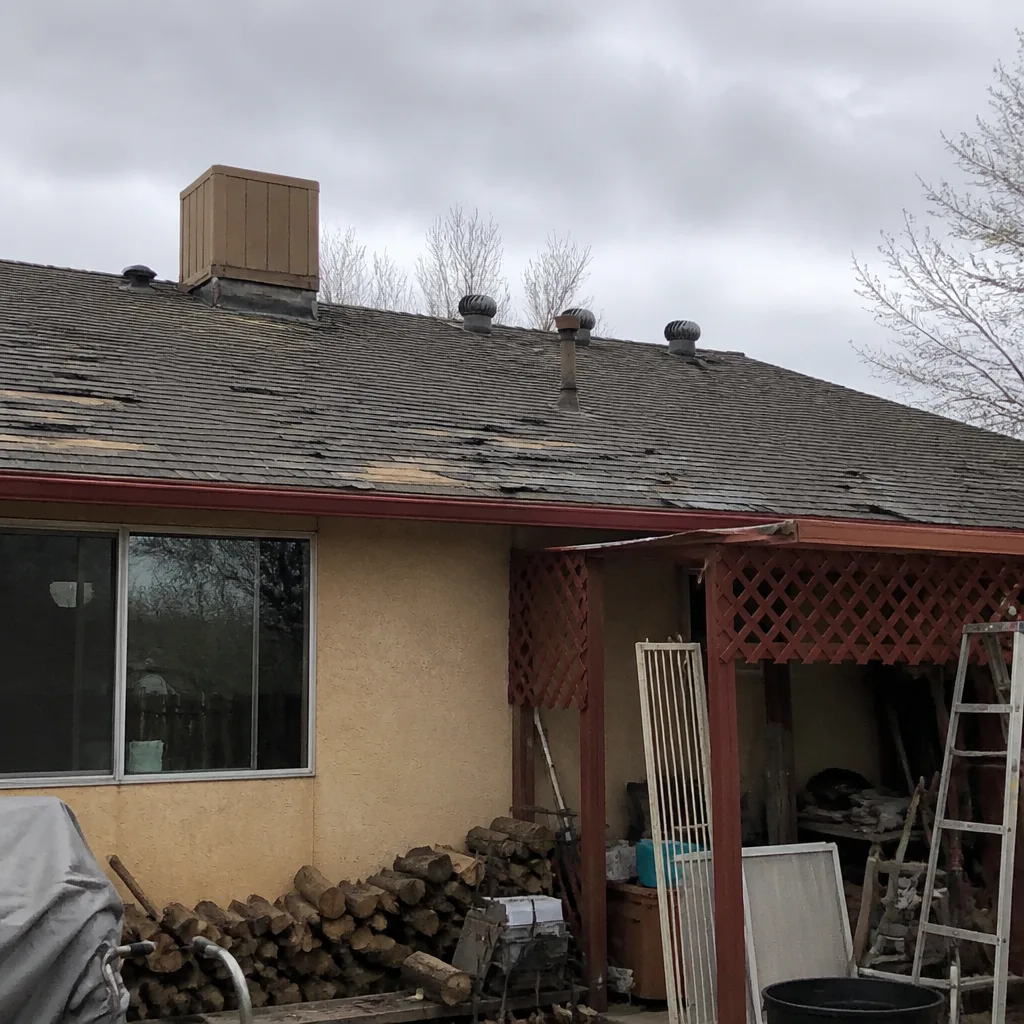 Before
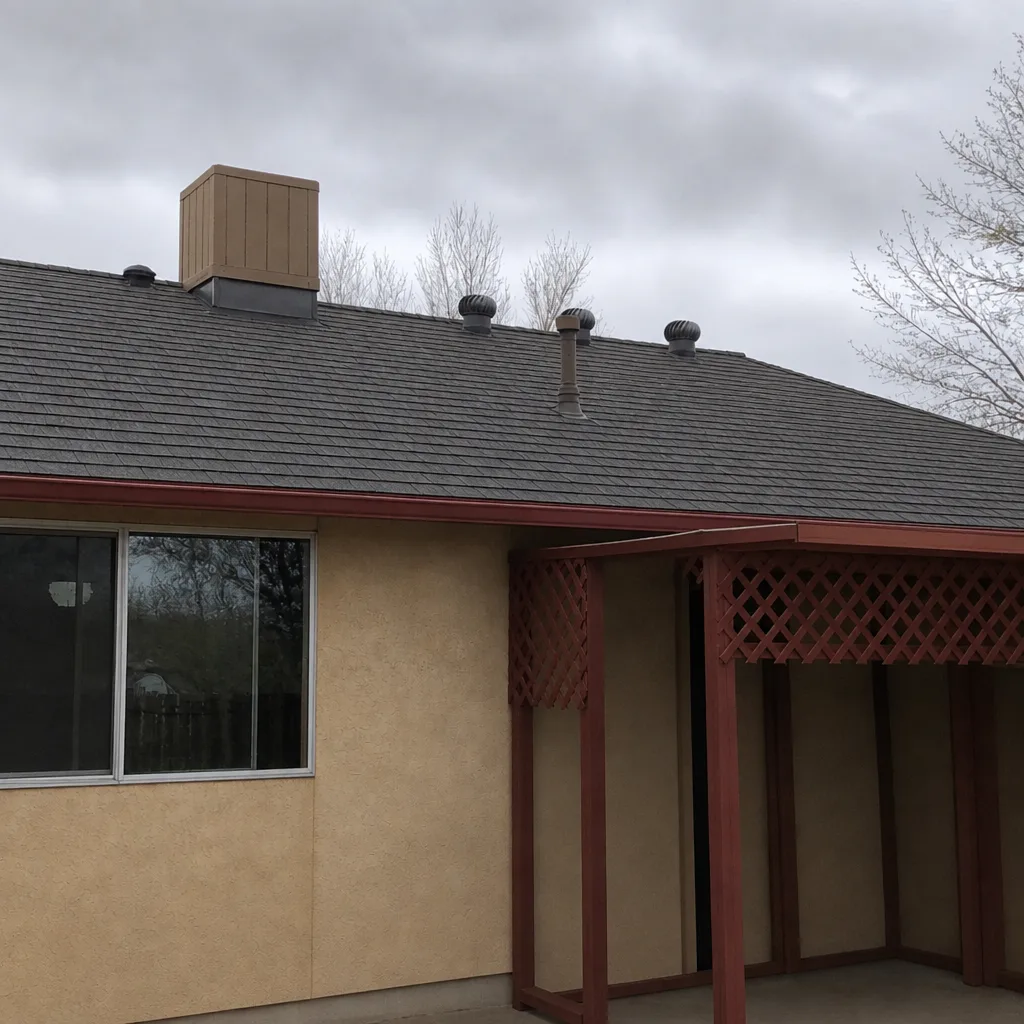 After
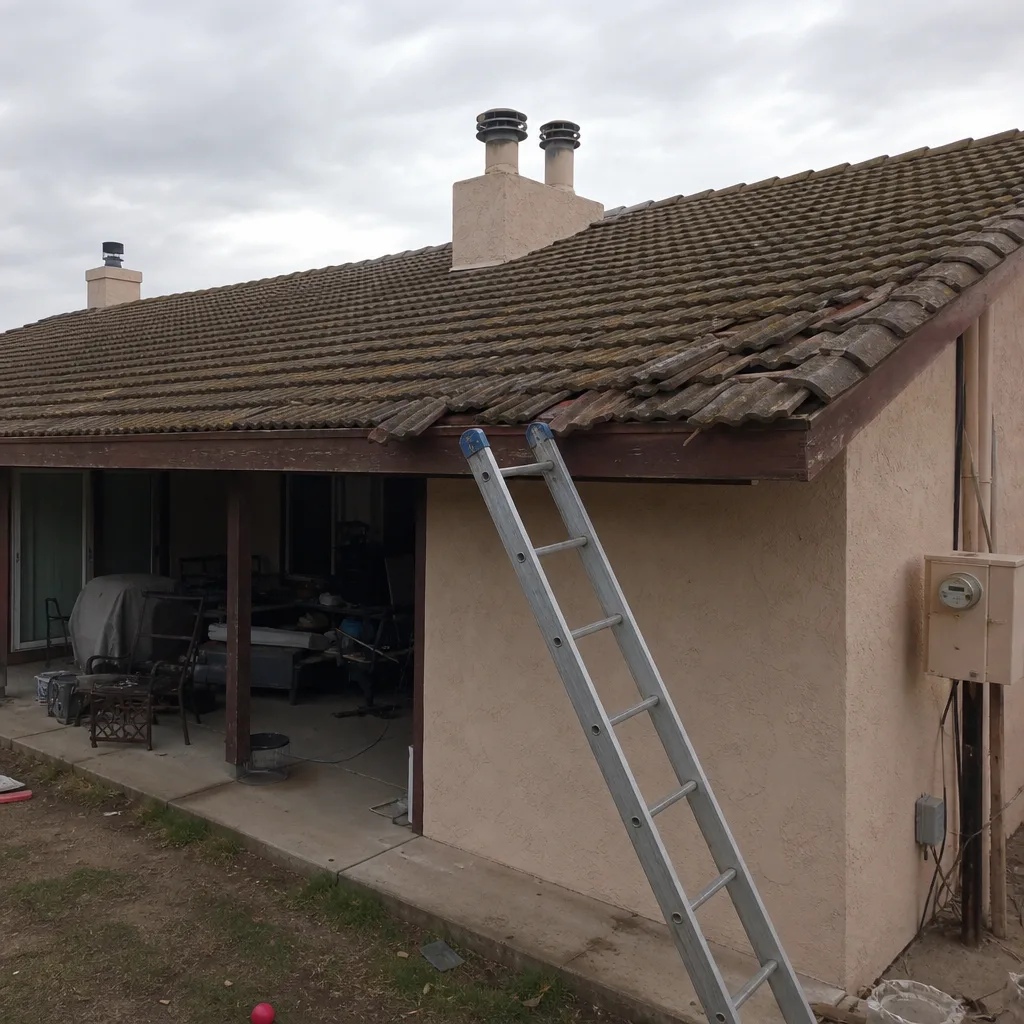 Before
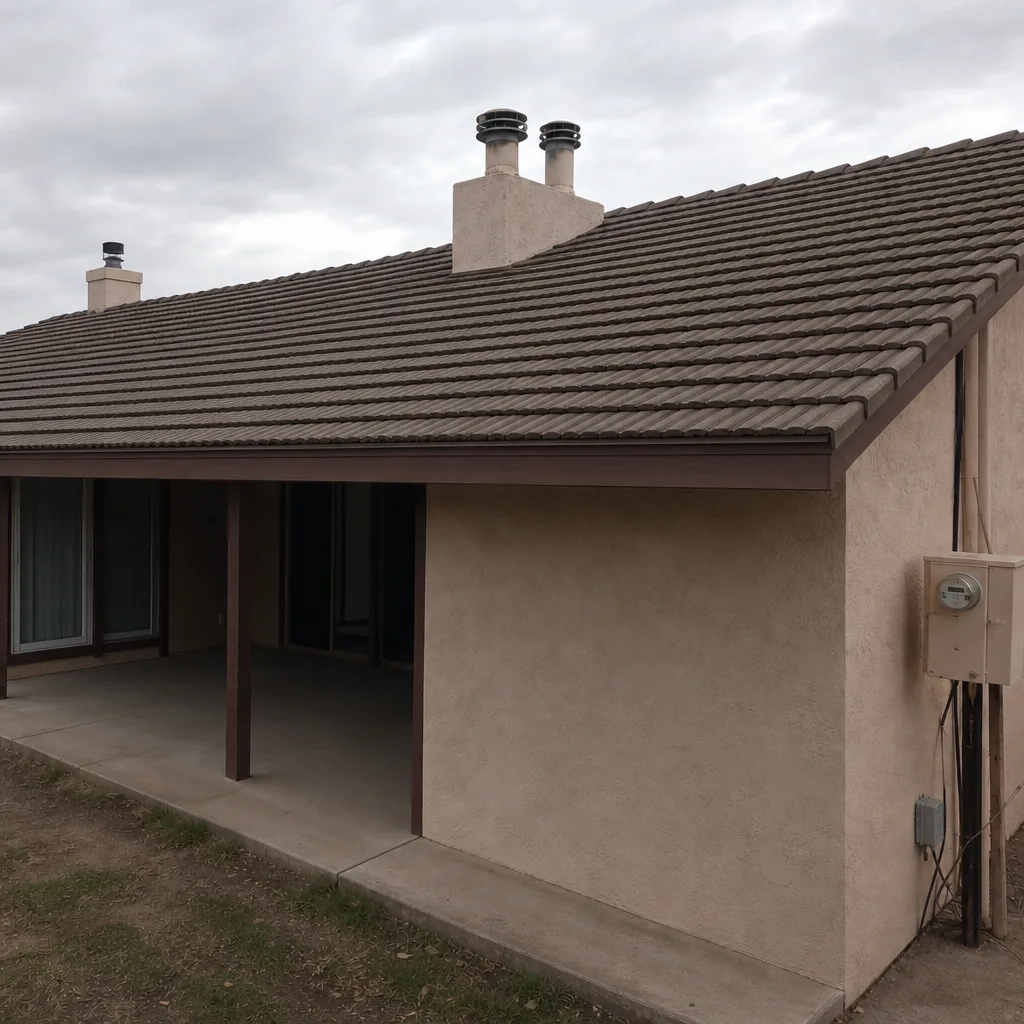 After
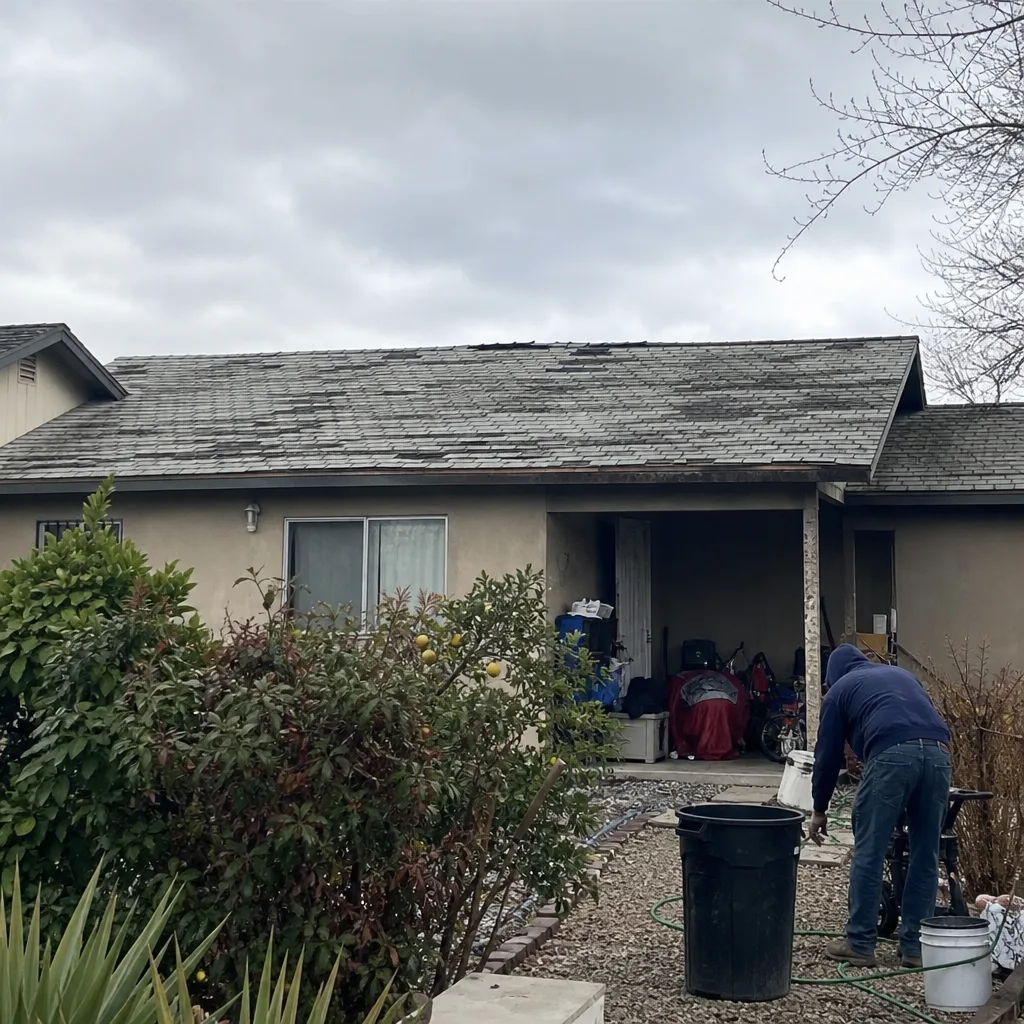 Before
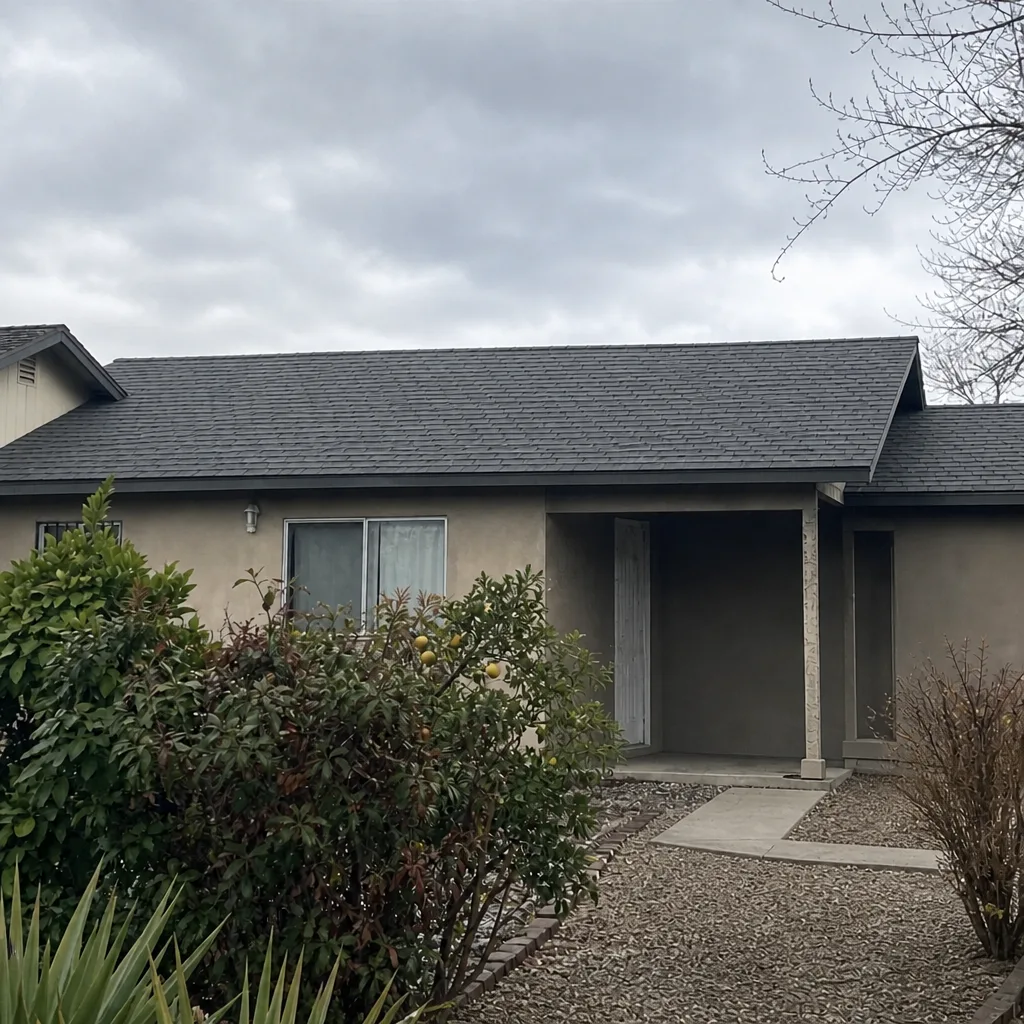 After
When to Call a Professional
Call a professional when you find any of the following: daylight visible in the attic, soft or spongy decking, missing shingles over an area larger than a shingle tab or two, or active water staining that grows with each rain. Also call when your attic has no safe walkway, when the roof is steep or two-story, or when flashing is clearly displaced. Those situations involve real injury risk and require training and proper equipment, not a homeowner with a ladder. In Spring Valley, summer heat is another reason to leave the roof surface to someone equipped for it. A documented inspection with photos is the thing to ask for, no matter who you call. Ridgeline Roofing Co. Spring Valley offers free estimates in Spring Valley. Call (855) 908-1590.
Frequently Asked Questions
Check the gutters and downspout outlets for heavy granule deposits, look along the ridge line from your driveway for lifted or curled ridge caps, check vent flashing collars for displacement, and look in the attic for daylight, water stains on rafters, or damp insulation. Interior signs like nail pops near the eaves, a new musty smell, or sticking doors are worth acting on too. If any of those are present, have the roof documented by a professional. Call (855) 908-1590 for a free estimate.
Hail damage typically shows as heavy granule loss, fresh dents in metal items like gutters and vent stacks, and bruising or cracking on the shingle surface where the hail struck. In Spring Valley, the most reliable early sign is granule buildup at the bottom of your downspouts after the first rain following a hail event. Visible dents on soft metal items like the gutter apron and downspout elbows often correlate with shingle damage above, so they’re worth photographing. Call (855) 908-1590 for an inspection with photos.
Yes, and it often does. A breach in the decking, or a flashing that’s been displaced, can allow moisture in without any visible leak for weeks or months. In a dry climate like Spring Valley, that delay can stretch a lot longer, because the moisture dries between storms and the visible stain waits for a heavier rain. If you had a storm and have any suspicion about the roof, get it documented rather than waiting to see. Call (855) 908-1590 for a free estimate.
Most standard homeowner policies cover sudden storm events like wind and hail, but not wear and tear or lack of maintenance. The key is documenting the date and extent of the damage. An independent inspection with photos, taken soon after the storm, is the strongest record you can hand to an adjuster. We’re happy to give you a second opinion on any written estimate you already have. Call (855) 908-1590 and we’ll set it up.
Go in during the morning, bring a strong flashlight, and stay on the joists or an existing walkway. Attics often have exposed wiring, loose boards, and summer heat that climbs fast, so if there’s no safe path, or if you don’t feel steady in tight space, have a professional take the look. Never climb onto a steep or wet roof yourself. For a documented attic-to-roofline inspection in Spring Valley, call (855) 908-1590.
A repair is the right answer when damage is localized: a displaced flashing collar, a missing shingle, or a small area of lifted ridge cap. A replacement becomes the better call when decking has been breached across a broad area, when multiple flashing points have failed, or when granule loss has shortened the shingle’s remaining life across most of the roof. A documented inspection with photos is what tells you which you’re looking at. For a free estimate and an honest read, call (855) 908-1590.
The Bottom Line
The signs of storm damage that matter most are the ones you can’t see from the living room. Check the attic for daylight and moisture, check the gutters for granules, check the ridge line from the driveway for lifted caps, and take the interior signs seriously, because a new musty smell or a row of nail pops is telling you something. If you act on the early signs and document them, you’ll handle the first storm rather than the second, and the second storm is usually the one that leaves a stain on the ceiling. Ridgeline Roofing Co. is a Spring Valley contractor backed by the 90-Day Done Right Promise: if it isn’t right, we come back and make it right. Call (855) 908-1590 for a free estimate.
Written by the team at Ridgeline Roofing Co. Spring Valley.