
Last updated November 17, 2026
 Architectural shingles
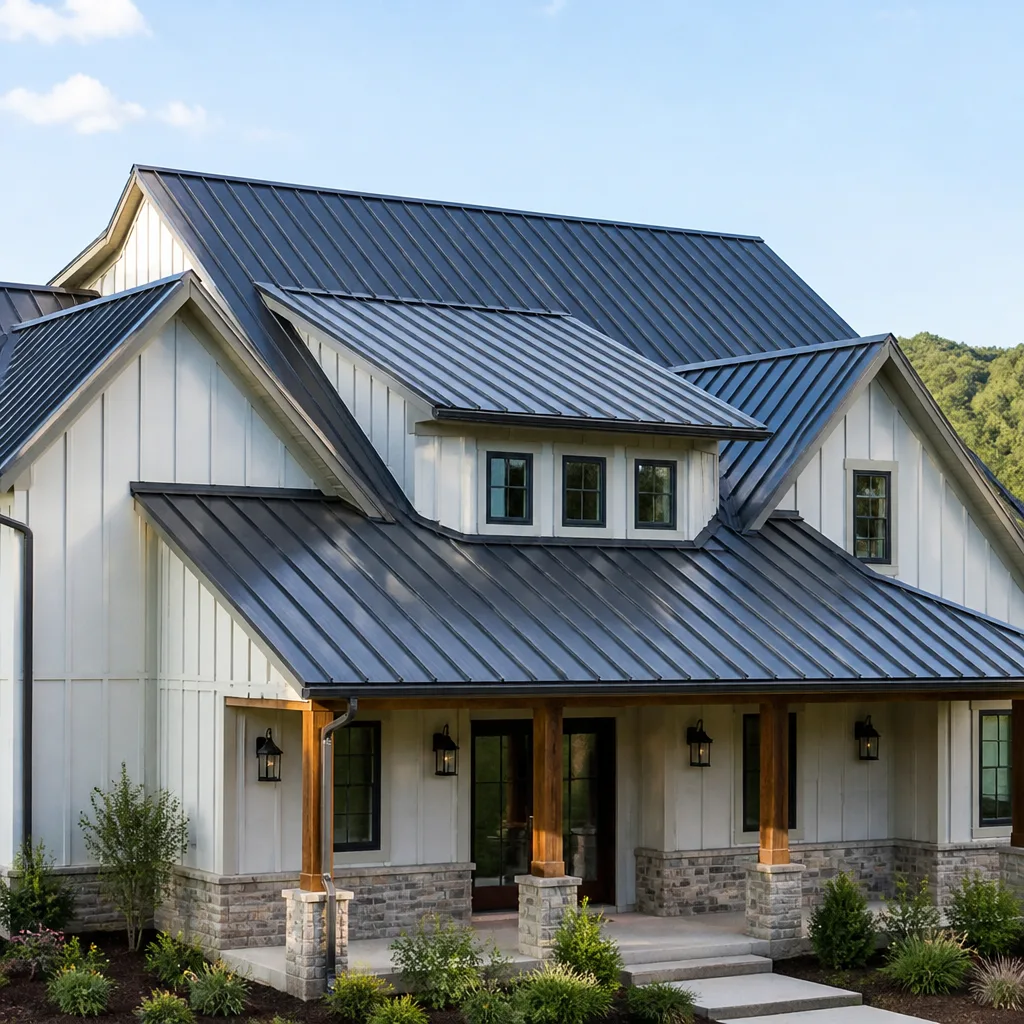 Metal roofing
 Tile roofing
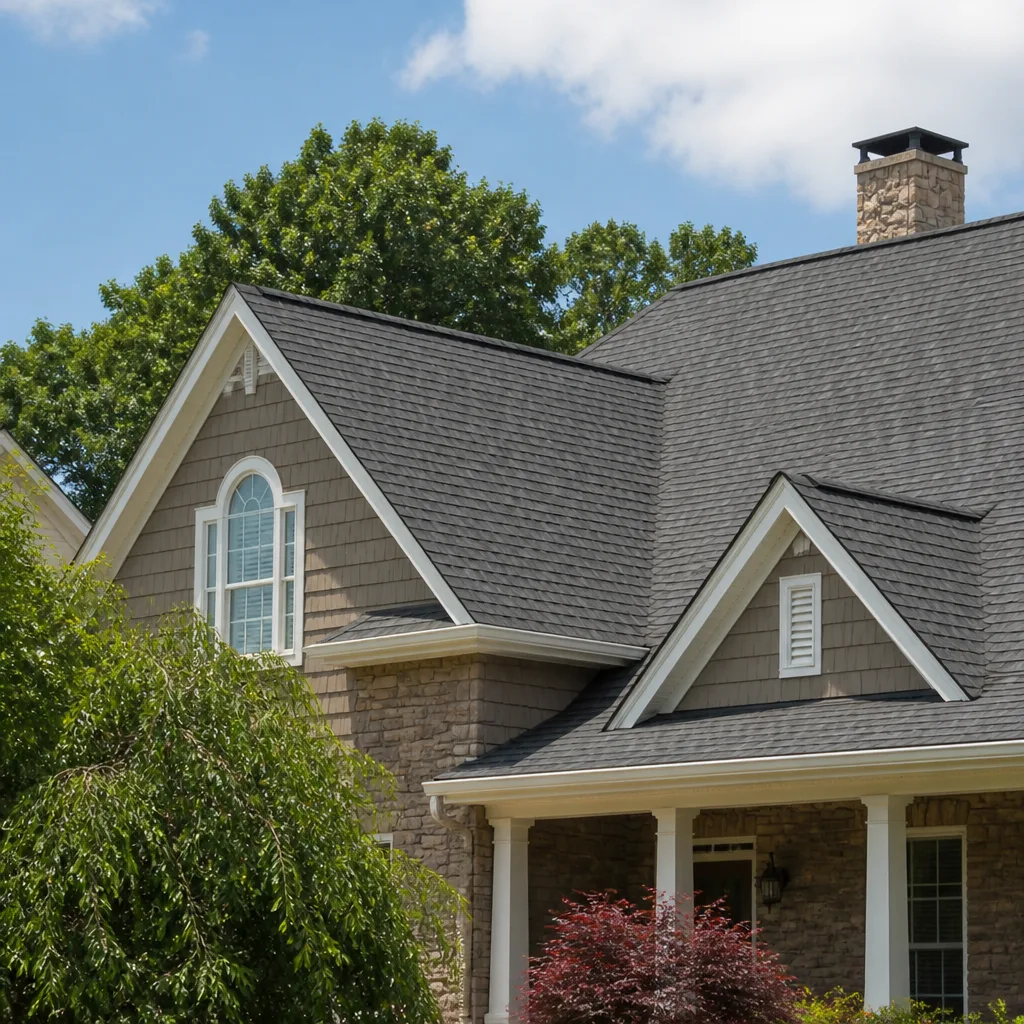 GAF
 Owens Corning
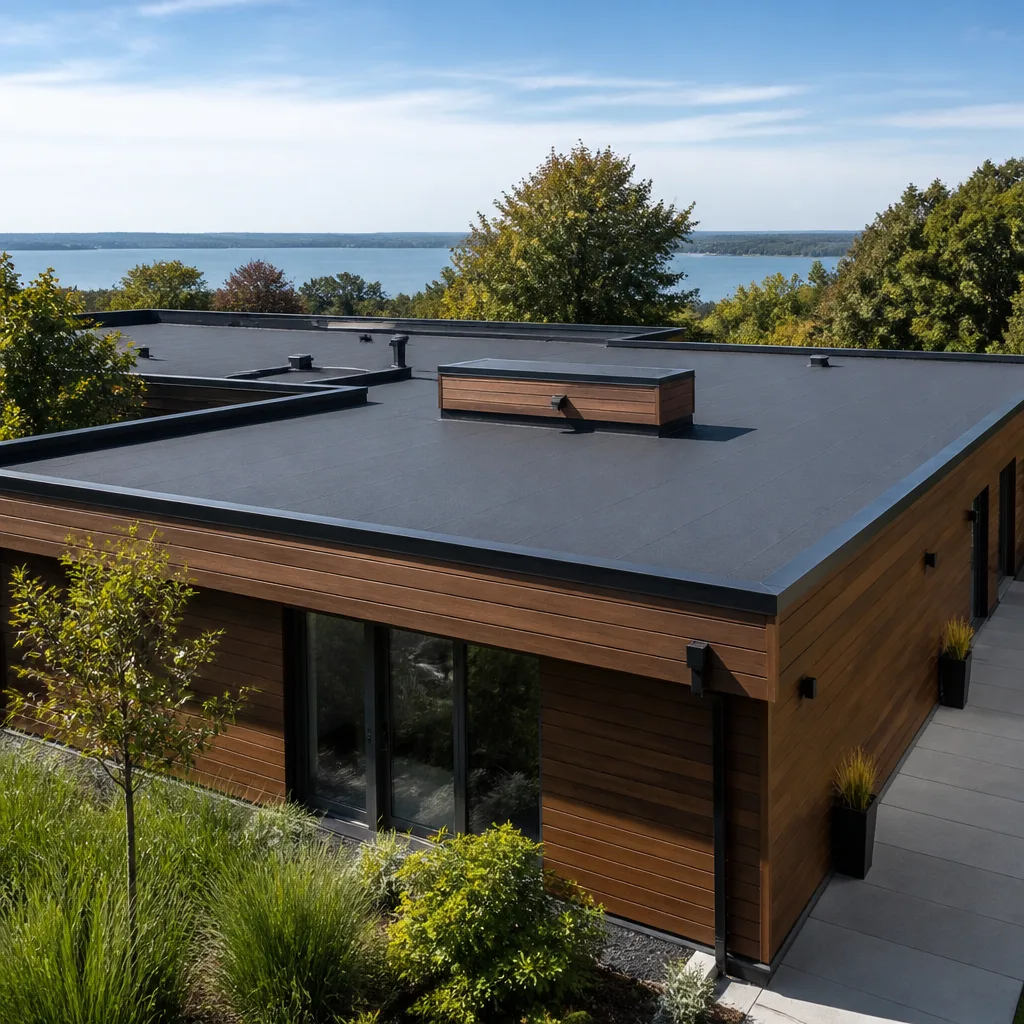 Flat & low-slope
Free roof inspection with deck photos before we talk money - GAF and Owens Corning certified installation
The Complete Roof Repair Guide for Spring Valley Homeowners
Most Las Vegas Valley roofs lose 3 to 5 years of service life compared to the number printed on the manufacturer’s spec sheet. The reason isn’t bad materials. It’s that those spec sheets are written for milder climates, then installed under attic temperatures that hit 115°F and a UV index that rarely drops below 8. Spring Valley sits right in the middle of that gap, and the failures we see here don’t follow the national playbook. This guide teaches you to read your own roof through a desert lens: how heat and thermal cycling wear out sealants, how caliche soil telegraphs cracks up to the roofline, and how to compare repair bids without getting taken once and taken twice.
Quick Answer
Roof repair in Spring Valley usually runs $350 to $900 for sealant, flashing, and fastener work, and $1,100 to $3,500 for partial slope or valley repairs. Most damage starts at flashings and penetrations, not in the field of the roof, and it shows up faster here because Mojave heat and caliche soil move the house’s frame in ways a national warranty never accounted for.
Styles & brands we work with
- Architectural shingles
- Metal roofing
- Tile roofing
- GAF
- Owens Corning
- Flat & low-slope
Table of Contents
- Why a Spring Valley Roof Ages Differently
- Heat, UV, and Thermal Cycling: How Sealants Fail Early
- Caliche Soil and the Cracks That Reach Your Roofline
- Monsoon Wind-Uplift Zones and the Edges That Let Go
- How to Compare Bids With a Written Repair Scope
- The 90-Day Documentation Habit
- What to Check From the Ground
- Common Mistakes to Avoid
Why a Spring Valley Roof Ages Differently
A roof is a system that expands and contracts all day long. Here, the swing is brutal. A shaded soffit might sit at 95°F while the sun-facing slope reads 160°F or hotter. That difference pushes sealant, flashing metal, and tile or shingle fasteners through thousands of small cycles a year, and every cycle works a seam a little looser. We’ve pulled apart roofs in Spring Valley that were only 11 and 12 years old and found sealant baked to the consistency of chalk.
The desert also does something national guides skip: it dries out the wood. When sheathing loses moisture faster than it can recover, fastener heads back out of the deck a fraction at a time. That’s why a Spring Valley homeowner will hear a rattle or a pop on a windy night and find a lifted fastener the next morning. It isn’t a storm problem. It’s a heat problem that a storm exposed.
Two more local realities shape how a Spring Valley roof behaves:
- Low annual rain, high-intensity rain. We get about 4 inches a year, and much of it lands in a handful of monsoon downpours. The roof isn’t tested by steady water; it’s tested by fast water finding the one discontinuity on the roof.
- Dust and age combine. Windblown dust settles in valleys and behind flashings, holds a little moisture after a storm, and works grit into seams. Over years that grit grinds at the sealant.
None of this means a Spring Valley roof is doomed. It means the maintenance calendar and the inspection checklist have to match the climate, not a template written in Ohio. When repairs are done to desert conditions – correct sealant, correct flashing laps, correct fasteners – a roof lasts. The Roof Repair in Spring Valley page covers the repair process in more detail.
Heat, UV, and Thermal Cycling: How Sealants Fail Early
Manufacturer warranties are written around expected UV exposure and temperature ranges. In Spring Valley, we routinely see UV stress that outruns the warranty’s clock. Sealants cured on a south- or west-facing slope can go brittle in 8 to 12 years here instead of the 15 to 20 a spec sheet suggests. Once they crack, water gets behind flashing and under shingle tabs, and the leak shows up somewhere you didn’t expect – a ceiling stain three feet from the actual entry point.
The fix isn’t exotic. It’s getting the right materials in the right places and keeping an eye on the high-stress spots. Here’s what a proper Spring Valley repair scope addresses:
- UV-rated sealant at pipe boots, vents, and counter-flashings, not the general-purpose caulk sold at big-box stores.
- Flashing inspection at every wall, chimney, and skylight, where thermal movement concentrates.
- Fastener audit – back-out on the deck, then replacement with appropriate-length fasteners.
- Valley check for grit build-up and worn metal.
We’ve found that a spring inspection catches most of these before the first monsoon. It also gives you a photo record to compare against next year, which matters more than most homeowners realize. Manufacturers like IKO and Tamko publish exposure guidance, and when their products are matched to a desert install, they hold up well. If you’re weighing repair against replacement, the Roof Replacement & Installation in Spring Valley page walks through the threshold in plain terms.
Caliche Soil and the Cracks That Reach Your Roofline
Caliche is the cemented calcium-carbonate layer under a lot of Las Vegas Valley soil. It’s hard, and it swells and shrinks differently than the fill dirt around it. When a home’s foundation sits on mixed soils, small seasonal movements happen – we’re talking fractions of an inch – and those movements travel up through wall framing. The roof takes the last of it.
What that looks like from the ground:
- Diagonal or stair-step cracks in stucco near corners or above windows.
- Roof plane that reads wavy from the curb.
- Doors and windows that stick in summer and free in winter.
- Hairline cracks in the ceiling near interior wall lines.
None of those mean your roof is failing. They mean your roof plane is being asked to flex, and every flex point is a place water will eventually find. A trained roofer reads those signs together with the roof itself. If a repair crew patches a valley leak without asking why the valley moved, you’ll be calling them back within the season.
In our experience walking Spring Valley roofs, the neighborhoods on older caliche subdivisions show more of this movement than newer builds on engineered pads. That’s a local reality worth knowing before you sign a repair contract. When the movement is severe, a repair alone won’t hold, and that’s the point to call in someone who can look at the whole system. Specialty flashing work often comes into play – the Specialty Roofing in Spring Valley page covers the custom flashing and detail work that ties a moving roof plane back together.
Monsoon Wind-Uplift Zones and the Edges That Let Go
Monsoon season in Spring Valley brings short, concentrated cells with wind gusts that push hard from one direction and then swing around. The damage almost never happens mid-roof. It happens at the edges, because wind curls over the ridge or the rake and lifts the edge course first.
From what we’ve seen on Spring Valley repairs, these are the spots to watch:
- Rake edges on the west- and southwest-facing sides, where monsoon wind hits at speed.
- Ridge caps, where wind spills over and works the cap seam.
- Hip and valley terminations, where two planes meet and wind gets under a lap.
- Eave edges above open driveways or two-story drops, where there’s no windbreak from landscaping.
- Anything patched previously with a short-nail repair, which is the first thing to let go.
The countermeasure is edge-specific: correct nailing pattern, wind-rated underlayment at the edges, and, on tile roofs, a check that the edge closures are intact. We’ve seen Spring Valley homes come through monsoon season with nothing more than a couple of lifted caps, and neighbors on the same street lose whole ridge sections, because the first roof was detailed for wind and the second wasn’t.
Boral roof tile, common on Spring Valley homes, takes wind stress differently than asphalt – the tile itself is durable, but the fastening and edge detail decide whether the wind takes a course of tile or nothing at all.
How to Compare Bids With a Written Repair Scope
A quote is a number. A scope is what that number buys. When three Spring Valley roofers hand you three numbers with three different descriptions, you can’t compare them. A written repair scope fixes that.
- What’s being repaired, by location and measurement. “Valley repair, 14 linear feet” is a scope. “Fix leak” is not.
- Materials by brand and specification. Underlayment type, sealant product, fastener length and type. Brand names should show up – GAF, CertainTeed, Owens Corning, or another named line – not “premium materials.”
- Flashing and edge detail. Does the scope say the flashing will be replaced or reused? This is where the real money lives.
- Permits. In Spring Valley, roof work that includes structural changes or full replacement usually requires a permit. Ask who pulls it. If the answer is “don’t worry about it,” worry.
- Disposal and cleanup. Stated or not?
- Workmanship warranty. Written, with a term and no fine print.
- Photo documentation. Who takes the before-and-after photos, and do you get them?
Put three scopes side by side and the cheapest bid often stops being the cheapest – because what’s missing is the flashing replacement or the permit. Ridgeline Roofing Co. Spring Valley writes every repair scope this way, and we back the work with a written 90-Day Done Right Promise so the scope and the invoice match. Call (855) 908-1590 and we’ll walk through a free second opinion on any written estimate you’ve already got.
The 90-Day Documentation Habit
Here’s a habit we recommend to every Spring Valley homeowner we meet: after any roof repair, spend 10 minutes building a small file. It costs nothing and it pays out twice – once at resale and once at insurance time.
- Photograph the repair on the day it’s done. Wide shot of the roof plane, then close-ups of each repaired area.
- Photograph the same area at 30 days, 60 days, and 90 days. Same angles, same lighting if possible.
- Keep the written scope, the invoice, and any permit paperwork together. A three-ring binder beats a phone gallery when an adjuster or buyer asks.
- Note the weather after each photo. “Photo July 14, after first monsoon” tells a story a plain photo can’t.
- Keep the manufacturer paperwork. GAF, CertainTeed, and other warranties often transfer to the next owner – if there’s a record.
Why 90 days? Because that’s roughly the window in which a repair either holds through a real season or shows you it won’t. If something starts to lift, crack, or stain within 90 days, you want the record to prove timeline. If nothing does, you’ve got a documented, monkey-wrench-free history for the next time someone inspects the roof.
What to Check From the Ground
You can learn a lot about a Spring Valley roof without climbing it. A ground walk every spring and every fall takes 15 minutes and doesn’t require any equipment beyond binoculars and a phone camera.
- Look at the roofline from across the street. Any sag, dip, or wave is a signal.
- Check the valleys with binoculars. Grit buildup and dark streaks in the valley mean water is slow-draining there.
- Look for lifted or missing shingles or tiles at the edges. After any wind event, do a lap.
- Walk the eaves and look up. Staining, sag, or rust on fasteners is early-stage evidence.
- Check the ground below the eaves. Granule loss from asphalt shingles shows up as a gritty trail near downspouts.
- Look at the attic after rains. A flashlight across the underside of the roof deck will show fresh water tracks.
What you should not do is get on the roof yourself. Desert roof surfaces get hot enough to blister skin, tile is slicker than it looks when dust has settled on it, and fall risk on a pitched roof is real. Anything you see from the ground is a signal to call. Our technicians are background-checked, arrive in uniform, and document every inspection with photos taken from the actual roof – call us to schedule one if you’re not sure what you’re looking at. Ridgeline Roofing Co. Spring Valley home has the full list of what we do.
Common Mistakes to Avoid
- Using a general-purpose caulk on a desert roof. The sealant you buy at a hardware store isn’t rated for the surface temperatures a Spring Valley summer produces, and it’ll fail in two or three years.
- Repairing a valley leak without addressing why the valley moved. If caliche-driven movement opened the seam, patching the seam alone reopens it. The scope should name the underlying movement.
- Taking a low bid that skips the flashing replacement. Flashing is where most leaks start. A bid that reuses old flashing is cheaper because it’s not doing the part that matters.
- Letting a contractor talk you into a full replacement when a repair will do. A 20-year-old roof may still have years of life in it if the flashings and edges are sound. Get a written scope and a second opinion.
- Skipping the permit on structural repair. Spring Valley’s code enforcement inspectors care about roofline changes, and unpermitted work can complicate a future sale.
- Climbing up on the roof to “check it” yourself in summer. This is the round of roof repair where we see the most emergency-room visits. Binoculars from the ground work fine.
- Commissioning work from a storm chaser who happens to be in town. If the truck has out-of-state plates and a magnetic door sign, ask why. Local crews have local permits, local insurance, and a reason to be here next year.
See the difference
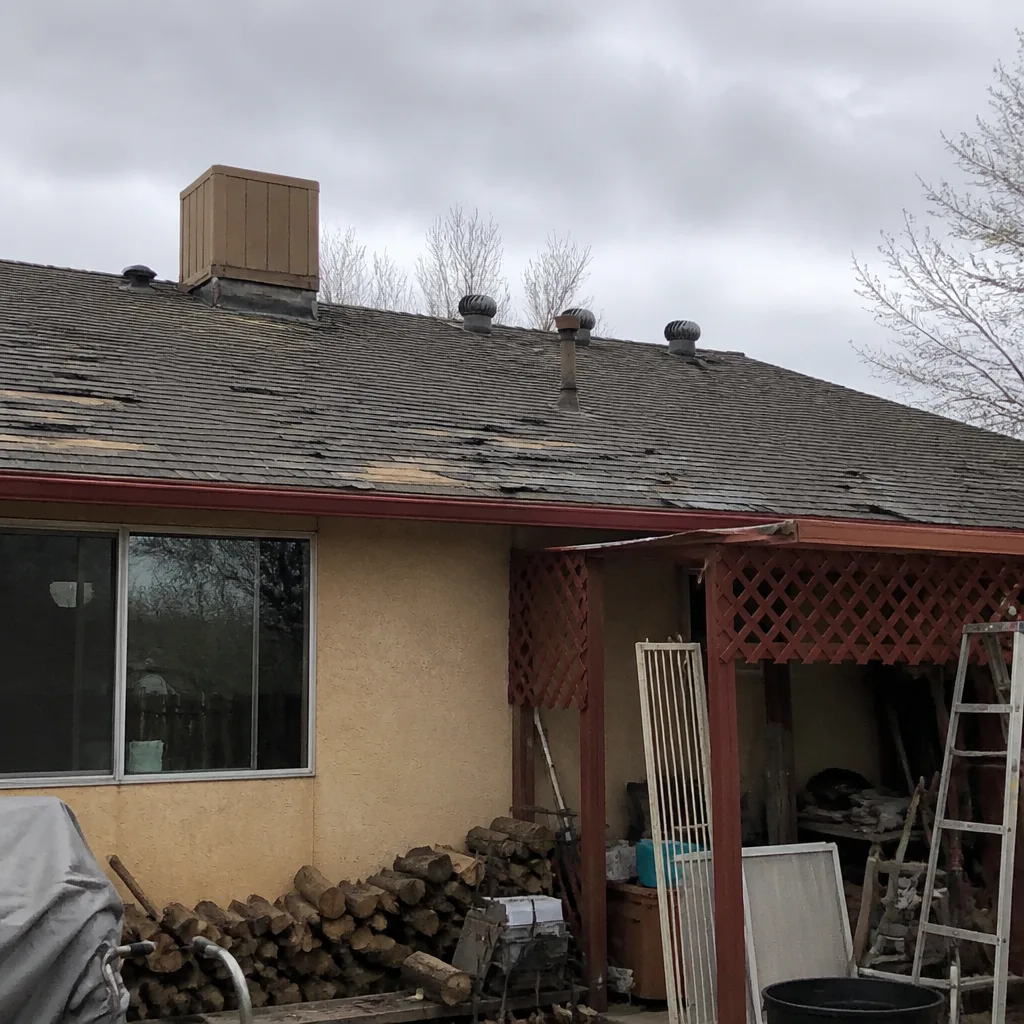 Before
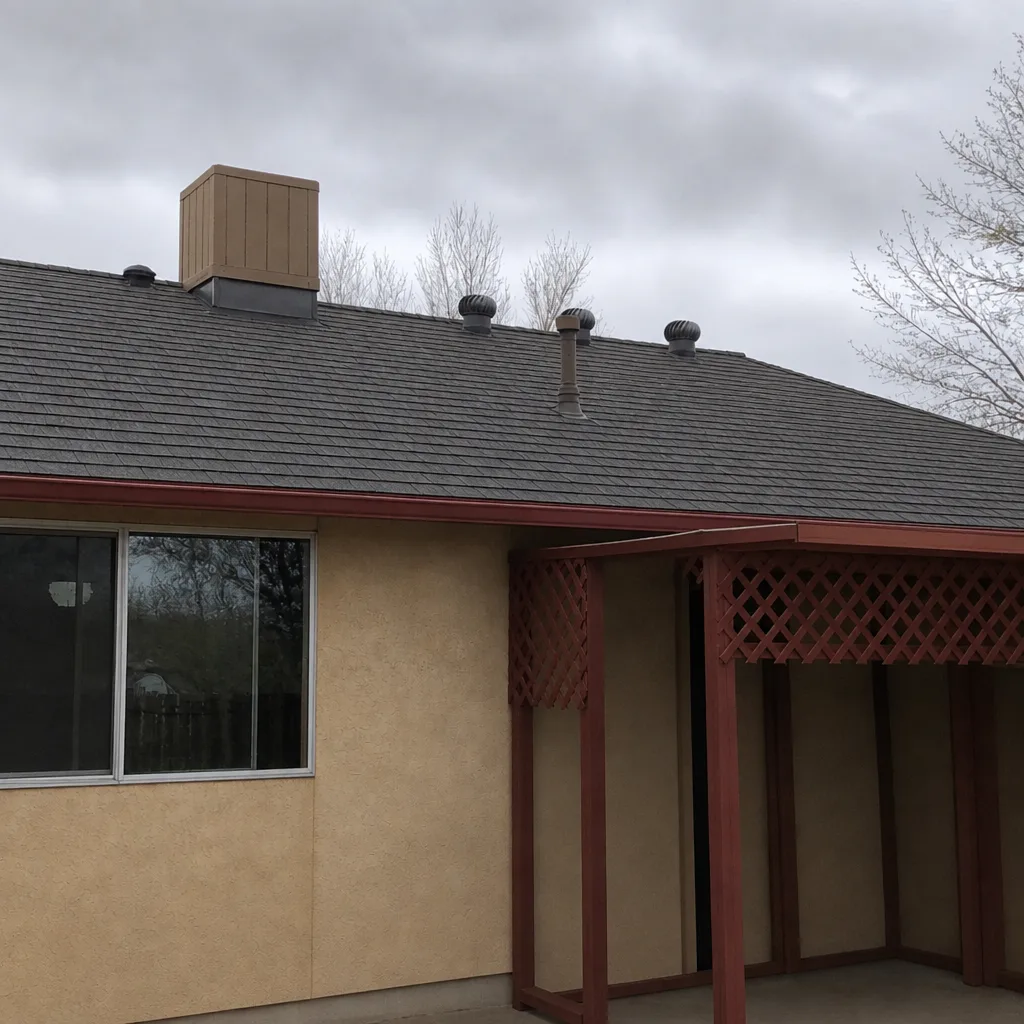 After
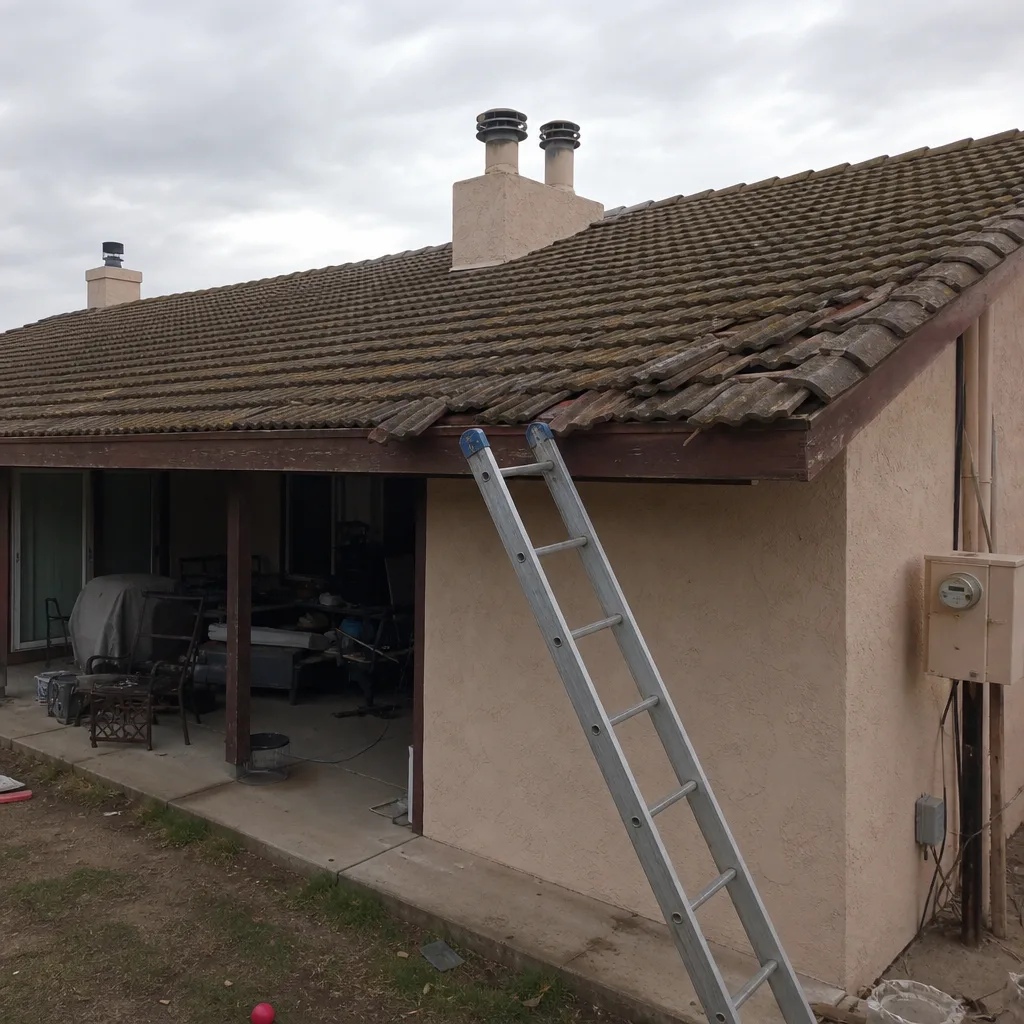 Before
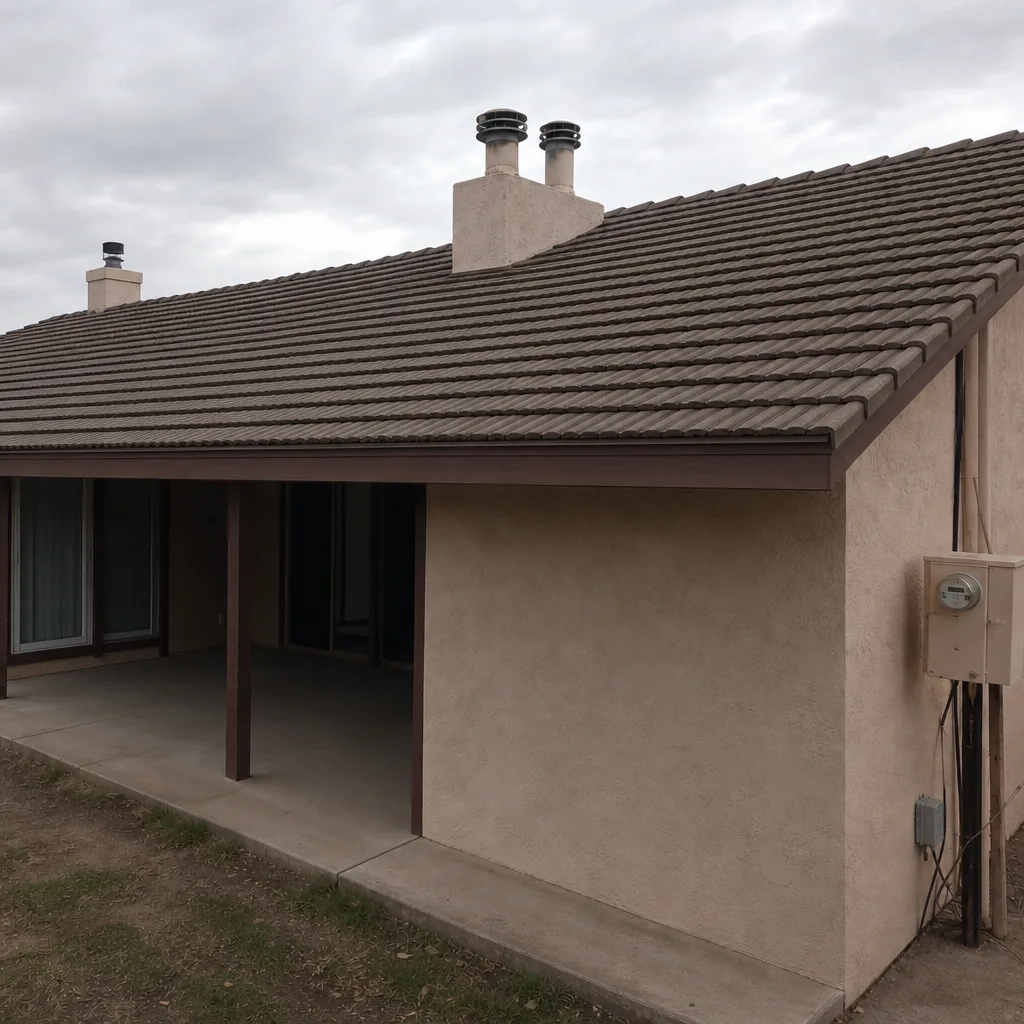 After
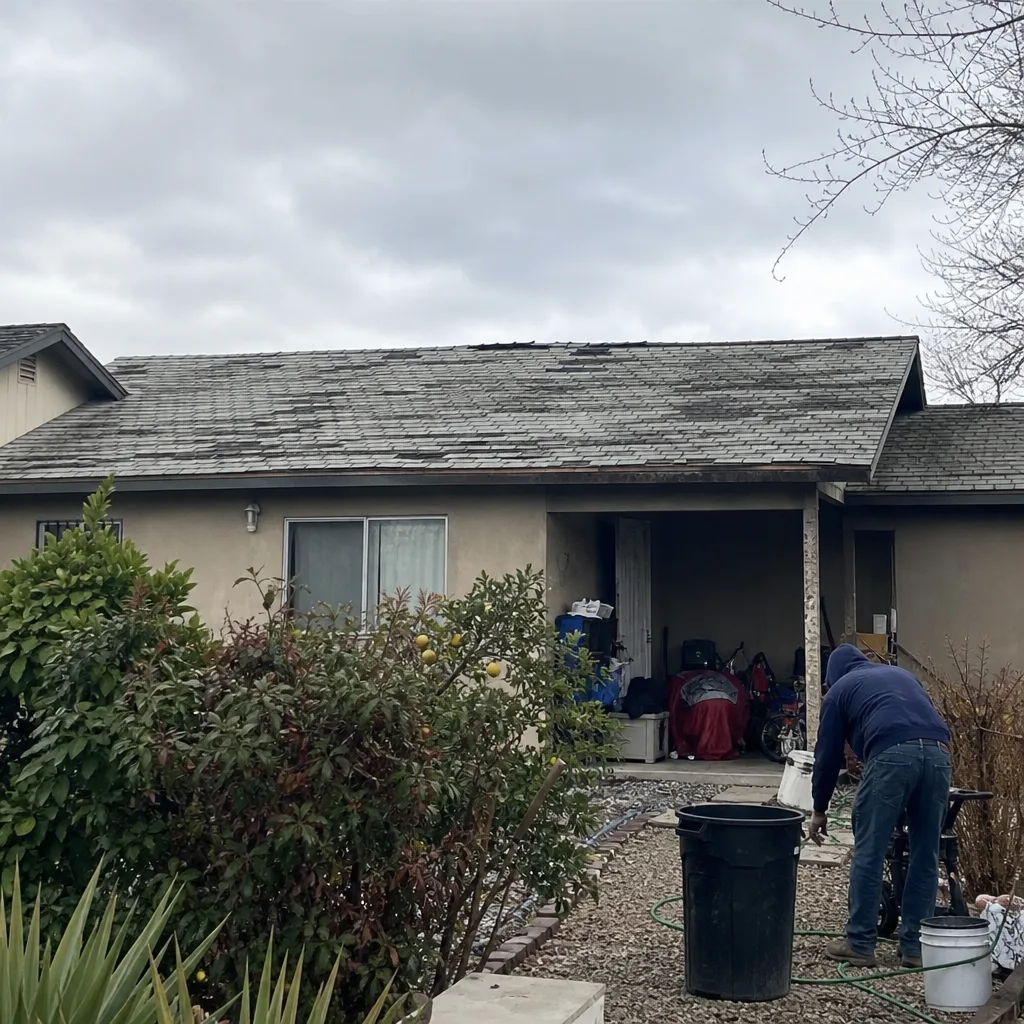 Before
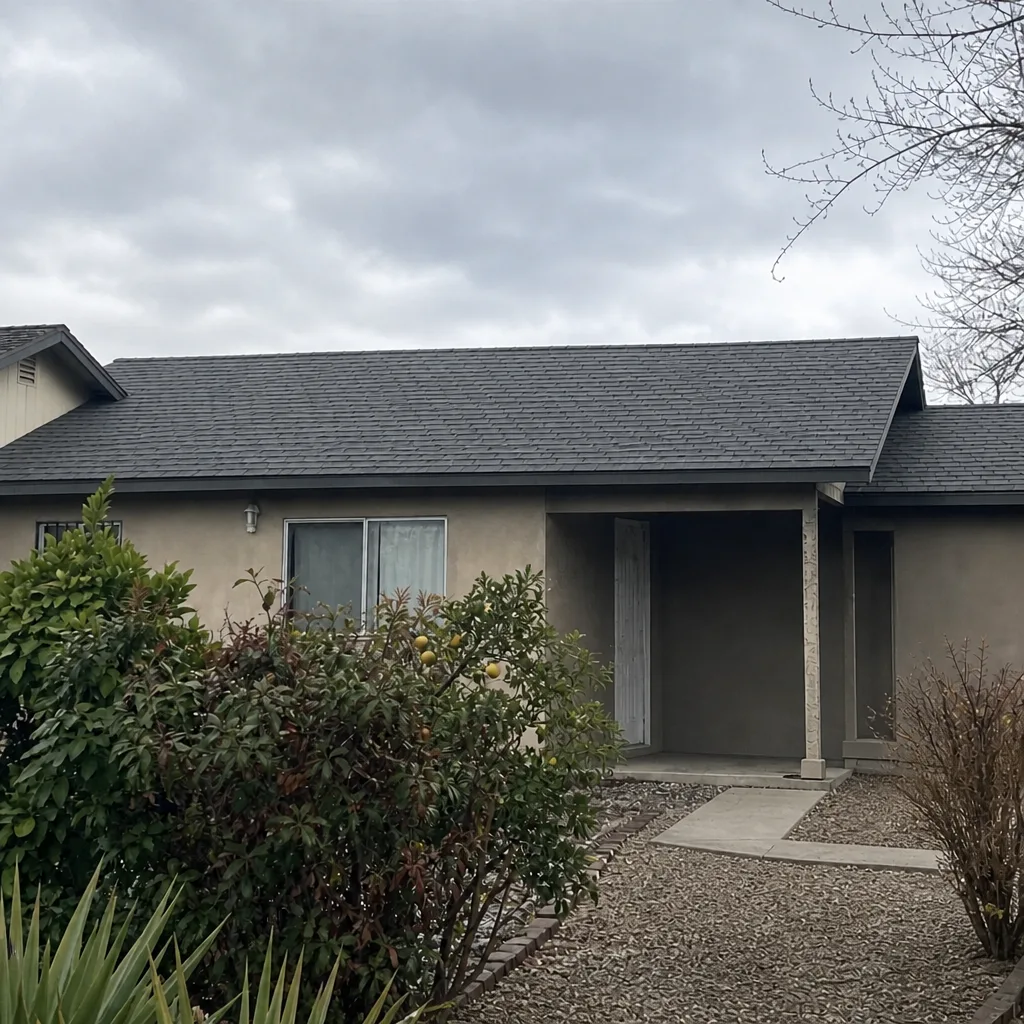 After
When to Call a Professional
Call a roofer when water is showing up where it shouldn’t, when the roof plane has changed shape, when edge tiles or shingles have lifted, or when you’ve had any wind event and want the edges looked at. The parts of a spring Valley roof that fail first – flashings, valleys, and rake edges – are exactly the parts a ground inspection can flag but can’t fix. The other cases that warrant a call: any ceiling stain, any popped fastener you can see, and any repair older than 10 years that hasn’t been looked at. Ridgeline Roofing Co. Spring Valley offers free estimates in Spring Valley – call (855) 908-1590 and we’ll get a technician out to put eyes on the roof and hand you a written scope.
Frequently Asked Questions
Most Spring Valley roof repairs run about $350 to $900 for sealant, flashing, and fastener work, and $1,100 to $3,500 for a partial slope or valley repair. A full section rebuild can run higher. Call (855) 908-1590 for an exact written quote, and the estimate is free.
UV exposure and thermal cycling in the Mojave work at a rate the spec sheet wasn’t written for. Sealants that spec at 15 to 20 years can go brittle in 8 to 12 here, and fastener back-out happens faster because the wood decking dries to a lower moisture content than the climate-mild assumptions. A yearly inspection keeps those failures cheap.
Caliche is a cemented soil layer common in the Las Vegas Valley, and its movement relative to surrounding fill dirt puts small seasonal flex on a home’s framing. That flex telegraphs up to the roof plane and concentrates at valleys and wall intersections, which is where we see most Spring Valley re-leaks. If a repair bid doesn’t address why the seam moved, ask.
Rake edges on west- and southwest-facing slopes, ridge caps, and hip and valley terminations are the wind-uplift hotspots we see most in Spring Valley. Eaves over open driveways or two-story drops also lose detail first. A post-storm ground check with binoculars on those edges takes 10 minutes.
Small repairs usually don’t require a permit; structural changes and full replacements typically do. Ask every contractor you consider who pulls the permit, and get it in writing on the scope. Unpermitted roofline work can complicate a later sale or insurance claim.
Yes, and most of the repairs we scope in Spring Valley are targeted. If the field of the roof is intact and the problems are concentrated at flashings, valleys, or edges, a repair makes sense. If the decking under the repair is soft or the movement is significant, we’ll tell you plainly. Call (855) 908-1590 for a free second opinion on any written estimate.
The Bottom Line
A Spring Valley roof is subject to a different set of pressures than a national guide assumes. Mojave heat and UV age sealants faster than the warranty clock. Caliche soil moves the frame, and the roof takes the last of that movement. Monsoon wind hits the edges first. The right response is boring and effective: a written repair scope instead of a phone-quote number, a ground inspection every spring and fall, a documented photo trail after every repair, and a contractor who shows up in uniform and stands behind the work. That’s how a Spring Valley roof gets a square deal and stops being a worry. Call (855) 908-1590 to schedule your free estimate.
Written by the team at Ridgeline Roofing Co. Spring Valley.