
Last updated November 17, 2026
 Architectural shingles
 Metal roofing
 Tile roofing
 GAF
 Owens Corning
 Flat & low-slope
Free roof inspection with deck photos before we talk money - GAF and Owens Corning certified installation
Emergency & Storm Damage Maintenance Schedule: What to Do and When
A roof that was two years past due for a flashing re-seal before a monsoon isn’t an unlucky roof. It’s a maintenance gap that was always going to cost someone something. In Spring Valley, we’ve watched that arithmetic play out over and over: the homes that come through a storm with a small repair bill are almost never the luckiest ones. They’re the ones with a calendar. Emergency preparedness for storm damage is a maintenance category with its own rhythm, and homeowners who treat it that way spend dramatically less when the wind actually picks up. This guide lays out that calendar in plain terms.
Quick Answer
Storm damage preparedness in Spring Valley runs on a two-window calendar: a June pre-monsoon checklist and an October pre-winter checklist, each focused on flashing, pipe boots, ridge cap fasteners, and gutter attachment. Pair that with a simple photo archive of your roof’s pre-storm condition and a 72-hour post-storm inspection, and you’ve eliminated the vulnerabilities that turn a windy night into a five-figure claim.
Styles & brands we work with
- Architectural shingles
- Metal roofing
- Tile roofing
- GAF
- Owens Corning
- Flat & low-slope
Table of Contents
- Why Storm Damage Is a Calendar Problem, Not an Emergency
- The Pre-Monsoon Checklist: Your June Window
- The Pre-Winter Checklist: Your October Window
- The Four Maintenance Items That Directly Reduce Storm Damage Severity
- Building a Pre-Storm Photo Archive for Insurance
- The 72-Hour Post-Storm Inspection Checklist
- Why Deferred Maintenance Voided More Nevada Claims Than Any Single Factor
- Common Mistakes to Avoid
Why Storm Damage Is a Calendar Problem, Not an Emergency
The word “emergency” does a disservice to how roofs actually fail. A shingle that tears loose in a monsoon was usually already loose. A ceiling stain that appears after a hard rain usually started with a cracked pipe boot months earlier. The storm gets the blame, but the vulnerability was installed long before the wind arrived.
This is why we think of storm damage response as the back half of a maintenance schedule, not a separate service. The front half is the calendar. Homes in Spring Valley sit in a high-desert climate with two distinct threat windows: the summer monsoon, roughly July through September, and the winter wind-and-frost season, roughly November through March. Each window stresses a roof differently. The monsoon brings sudden, heavy rain and wind gusts that find every loose fastener. Winter brings freeze-thaw cycling and the occasional wet snow that loads up a valley roof harder than homeowners expect.
A roof that’s ready for both windows is a roof with fewer places for water to get in. That’s the whole thesis. Our technicians have up to 10 years of experience and we’ve seen this play out across the valley, but the pattern is the same on every roof we inspect. The lead time is what matters. You can’t seal a flashing two hours before the storm. You can seal it in June.
The Pre-Monsoon Checklist: Your June Window
June is the single most valuable month on a Spring Valley roof calendar. The heat is building, the afternoon thunderstorms haven’t started, and crews can work safely and quickly. This is the window where a small investment eliminates the vulnerabilities the monsoon will otherwise exploit.
Here’s the checklist we walk homeowners through each June:
- Inspect flashing at every penetration and wall junction. Chimney flashing, skylight flashing, and the step flashing where a roof meets a wall are the first places monsoon wind-driven rain finds a seam. Look for lifted, cracked, or separated sealant.
- Check pipe boot condition. Pipe boots – the rubber collars around plumbing vents – crack in the desert sun faster than anywhere else in the country. A cracked boot is a direct drip path into your attic.
- Walk the ridge cap fasteners. Ridge caps are the most wind-exposed part of the roof. Loose fasteners there mean the ridge lifts in a gust and every course below it loosens.
- Test gutter attachment points. Gutters that sag or pull away at the hangers will fail completely under a monsoon downpour. Check the hanger spacing and tighten what’s loose.
- Clear debris from valleys and behind chimneys. In Spring Valley, windblown debris collects in valley flashings and behind chimney walls. When the rain comes, that debris dams water against the flashing.
- Photograph everything. We’ll cover this more below, but the June inspection is your best chance to document the roof’s pre-storm condition before the summer weather changes it.
Most of these are small checks. The point of the June window is that you find them when they’re cheap to fix, not on the night the ceiling starts dripping. If you’d rather not get on the roof yourself, our roof repair in Spring Valley team handles these checks as a routine visit.
The Pre-Winter Checklist: Your October Window
The October window is often overlooked because springtime feels like the “roof season.” In Spring Valley, October is actually the more important preparation month for the winter that follows. The monsoon’s damage is fresh but not yet compounded. Winter’s freeze-thaw cycling and wind loading are ahead.
Here’s what belongs on the October list:
- Re-check every seal you made in June. Summer heat is hard on sealant. What held in June may have cracked by October. A second look takes minutes and prevents a winter leak.
- Inspect the ridge cap and the top edge of every slope. Winter wind loads the high side of a roof hardest. A ridge cap that lost fasteners in a summer storm is a winter lift waiting to happen.
- Clear gutters and downspouts completely. A gutter full of summer debris will freeze and back up. In the worst cases, the frozen gutter tears loose from the fascia.
- Look for lifted or missing shingles after the monsoon. One loose shingle on a windward slope invites the next wind event to strip a whole course. Replace it now.
- Check attic ventilation. A roof that can’t vent warm, moist air from below will frost up, melt, and refreeze at the underlayment. Proper ventilation is a maintenance item, not a luxury.
- Confirm the photo archive is current. Add October photos to what you took in June, so your record shows the roof’s condition heading into winter.
The October window also catches something else: any monsoon damage that didn’t show up as a leak yet. We’ve seen more than one roof where a summer wind event lifted a few shingles, the homeowner never noticed, and the first cold snap combined with the next rain produced a leak that a $200 repair would have prevented.
The Four Maintenance Items That Directly Reduce Storm Damage Severity
Not every maintenance task moves the needle equally on storm damage. Of everything on a roof, four items do most of the work. These are the four we’d put on any Spring Valley homeowner’s schedule first.
1. Flashing integrity
Flashing is the metal that seals the junctions – chimney, skylight, wall, valley. It’s where wind-driven rain concentrates, and it’s where the majority of storm leaks start. A flashing seal that’s two years past due is not unlucky when it fails; it’s overdue. The June and October checks should both include a close look at every flashing point.
2. Pipe boot condition
Pipe boots fail earlier than any other single component in our climate because UV exposure here is relentless. A cracked pipe boot is a direct, small leak into the attic that gets much bigger over one monsoon season. Replacing a boot is a minor repair. The water damage it prevents is not.
3. Ridge cap fasteners
The ridge is the ridge for a reason – it takes the wind first. Fastener back-out on a ridge cap is a wind-damage multiplier: one loose cap invites the entire ridge line to lift, and once the ridge lifts, the courses below it lose their wind resistance. Re-snugging fasteners in June is one of the highest-value, lowest-cost things you can do.
4. Gutter attachment points
Gutters fail in storms not because of the water, but because of the water plus debris plus a hanger that had pulled loose a season earlier. A properly attached gutter is your first line of defense for fascia and eaves. If you’re wondering whether your gutters are ready, a specialty roofing in Spring Valley visit includes the gutter and fascia check.
Building a Pre-Storm Photo Archive for Insurance
The single most valuable thing most homeowners are missing is not a repair. It’s a record. When a storm claim comes through, the question the adjuster has to answer is simple: was this damage pre-existing, or did the storm cause it? If you can’t show what the roof looked like before the storm, that question falls to the adjuster’s judgment, and the claim can go sideways.
You don’t need anything fancy. A phone, a sunny morning, and a consistent habit will do it. Here’s the routine we recommend:
- Take the photos in June and October. Tie it to the two maintenance windows so it never gets forgotten.
- Cover the four vulnerability zones. Ridge line, every flashing point, every pipe boot, and the gutter attachment run along the eaves.
- Get one wide shot of each slope so the full roof surface is documented, plus close-ups of anything questionable.
- Log what you saw. A one-line note (“chimney flashing sealant showing hairline cracks, to be monitored”) turns a photo into evidence.
- Keep the archive somewhere off your phone. Cloud storage, an email folder, anywhere you’ll still have it after a storm. Photos that live only on the phone that got rained on aren’t a record.
If you’d rather have a professional record, our photo-documented roof inspections are built for exactly this purpose. Technicians take photos from your actual roof, not the driveway, and you keep the file. See our Ridgeline Roofing Co. Spring Valley home page for how that works.
The 72-Hour Post-Storm Inspection Checklist
The 72 hours after a significant storm are when damage compounds at the highest rate. A flashing that lifted in the storm is a flashing that’s leaking into the attic on the next rain. The goal of the 72-hour window is to catch damage while it’s still small.
Here’s the checklist:
- Walk the property and note anything obvious. Missing shingles, granules in the gutter, lifted ridge caps, torn seals, downed tree limbs. Photograph each finding.
- Check the ceilings and walls inside the house. Any new stain, ring, or damp patch is a signal the water already got in. Photograph with a date.
- Look at the attic if it’s safe to access. Light through the roof deck, damp plywood, or wet insulation are the earliest evidence of a leak.
- Check gutter attachment and drainage. A gutter that pulled loose will back up onto the fascia and up under the shingle course.
- Compare to your pre-storm photo archive. Anything that changed is storm-caused. That comparison is what insurance needs.
- Don’t delay the small repair. The single most common post-storm mistake is waiting for the next rain to “see if it’s a real problem.” By then, the fix is bigger.
If a storm has already hit and you’re not sure what you’re looking at, call. Our phones are staffed by a live person around the clock, and a real person will pick up – not a voicemail tree. Ridgeline Roofing Co. Spring Valley can do a free second opinion on any written estimate if you’ve already had one.
Why Deferred Maintenance Voided More Nevada Claims Than Any Single Factor
We want to be careful here, because insurance decisions are never as simple as one cause. But in our experience across years of Nevada claims, nothing does more damage to a storm-damage claim than a documented pattern of deferred maintenance. The reason is straightforward: a policy covers storm damage, not the damage that a roof’s condition caused on its own.
If the adjuster’s file shows a pipe boot that’s visibly aged and cracked in a pre-storm photo, or a flashing seal that’s separated and weathered, the question becomes whether the storm actually caused the leak or whether the roof was already going to fail. That question is much harder to win than a clean claim on a roof with a documented maintenance history.
This is why the calendar matters so much. A maintenance record is a claim strength, not just a roof habit. If your June and October inspection notes and photos show an inspected, maintained roof, the adjuster sees a well-kept asset and a straightforward storm cause. If they show a roof that hadn’t been looked at in four years, they see a reason to question the file.
The other piece is the storm-chaser problem. We’ve seen more than enough of it. A truck that shows up after a storm, does a fast patch, and is gone before spring is more likely to leave you with a voided warranty and a second bill than a fixed roof. Ridgeline Roofing Co. has stood behind local roofs since 1984 and hires and trains local crews. We plan to be in Spring Valley in thirty years. That’s the difference between a square deal and a cautionary tale.
Common Mistakes to Avoid
These are the specific mistakes we see most often on Spring Valley homes. Each one is a decision that costs money later, not a character flaw.
- Skipping the June window because the roof “looked fine.” Roofs that “look fine” from the driveway are exactly the ones with hidden loose fastener runs. The check is cheap; the miss is not.
- Treating the monsoon as the only threat. Winter wind and freeze-thaw cycles in Spring Valley do more long-term damage than most homeowners realize. The October list matters as much as June.
- Not photographing the roof before the storm. The claim that goes sideways is almost always the one with no pre-storm record. A phone and ten minutes in June fixes this.
- Waiting until the next rain to confirm the damage. Compounding damage is what turns a $300 repair into a $3,000 repair. The 72-hour window is real.
- Hiring a contractor with no local track record after a storm. The lowest bid from a truck that won’t be in town next spring is not a deal. It’s a deferred cost.
- Replacing shingles without checking the flashing and boot condition. A new shingle course over a failing flashing seal leaks in the same place. Fix the source.
- Ignoring the gutter attachment run. Gutters pull loose from the fascia in a season of wind. Once they’re loose, the fascia and eave are exposed to the next rain.
If any of these sound familiar, our roof replacement & installation in Spring Valley team can tell you whether your roof needs a repair, a tune-up, or something larger.
See the difference
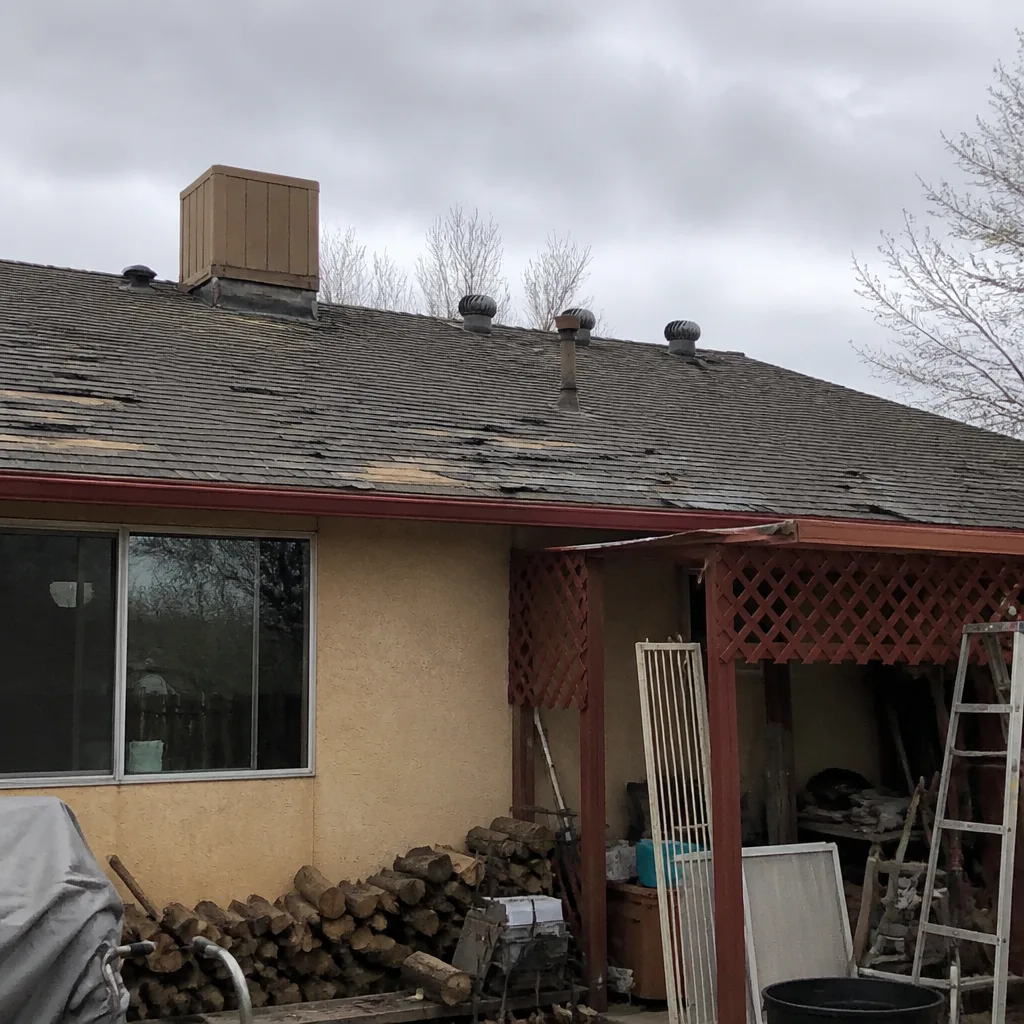 Before
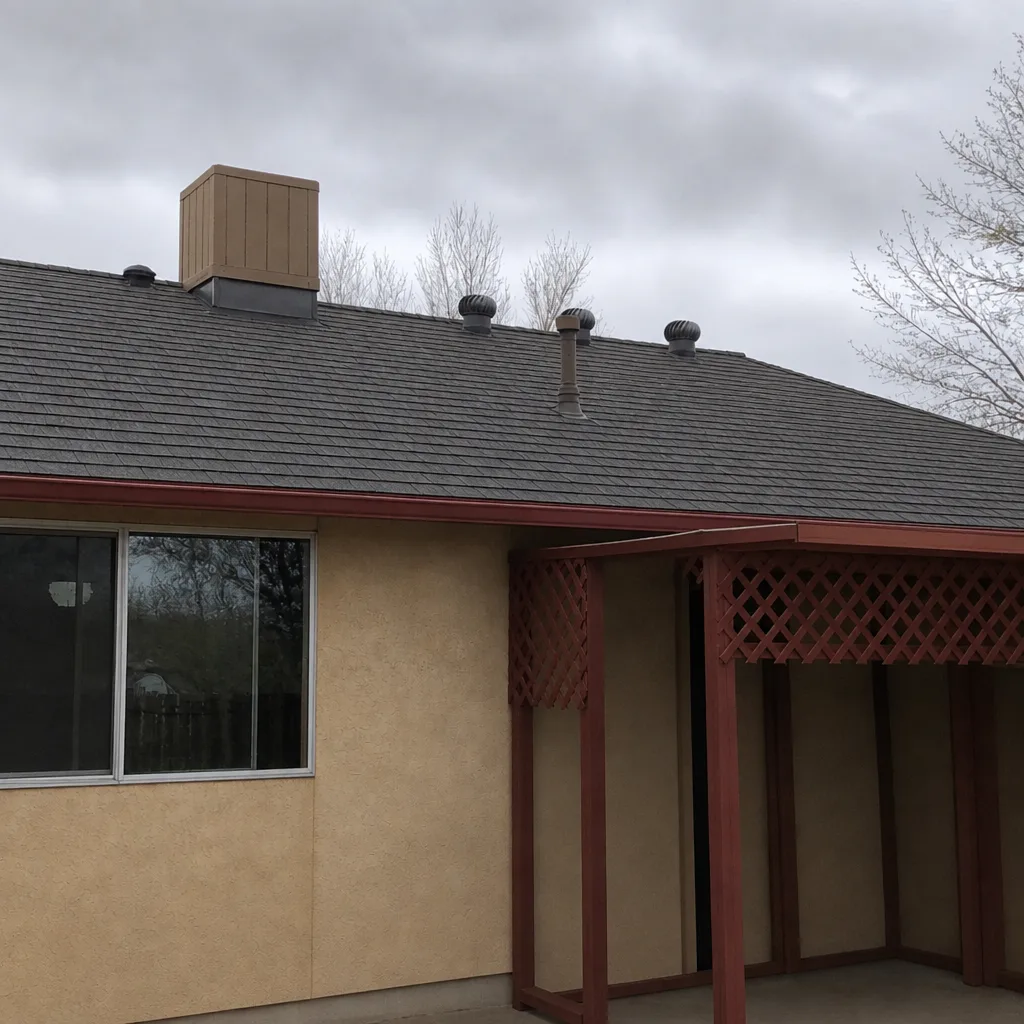 After
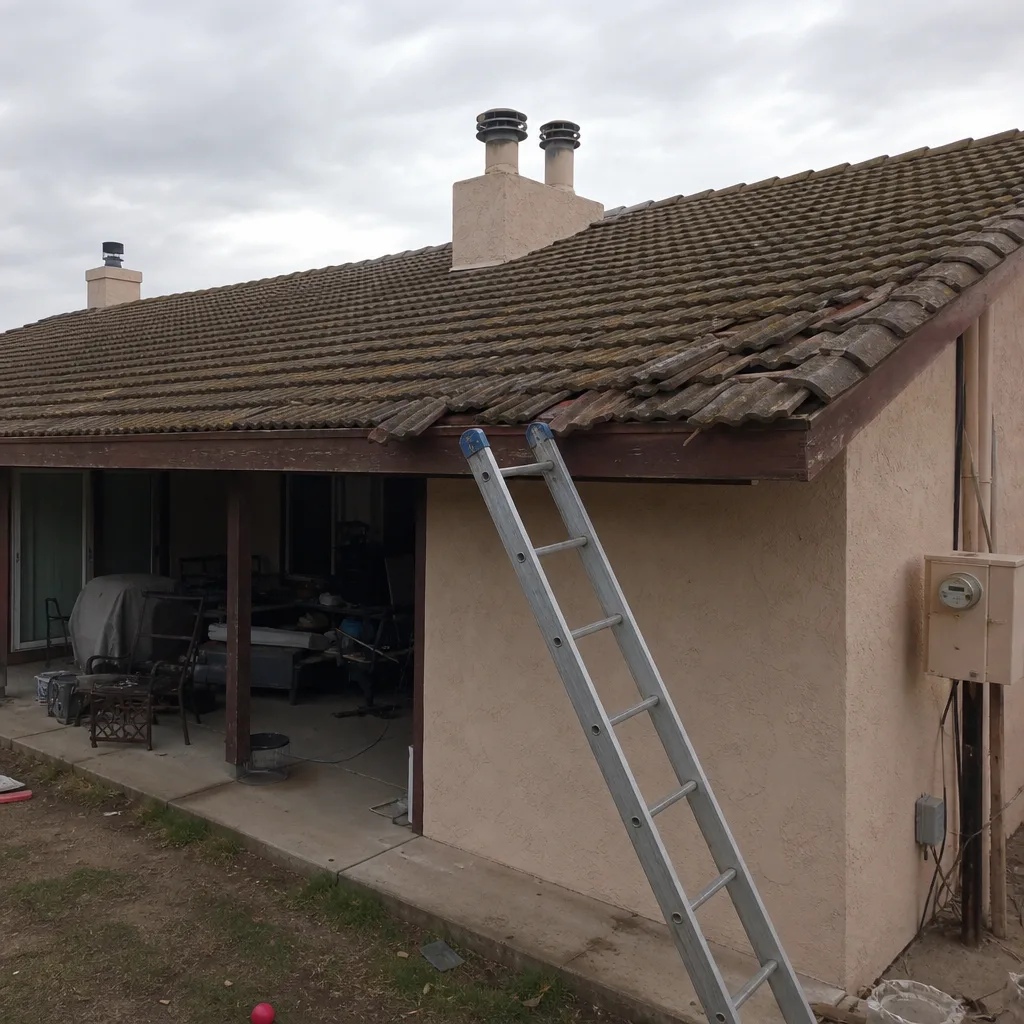 Before
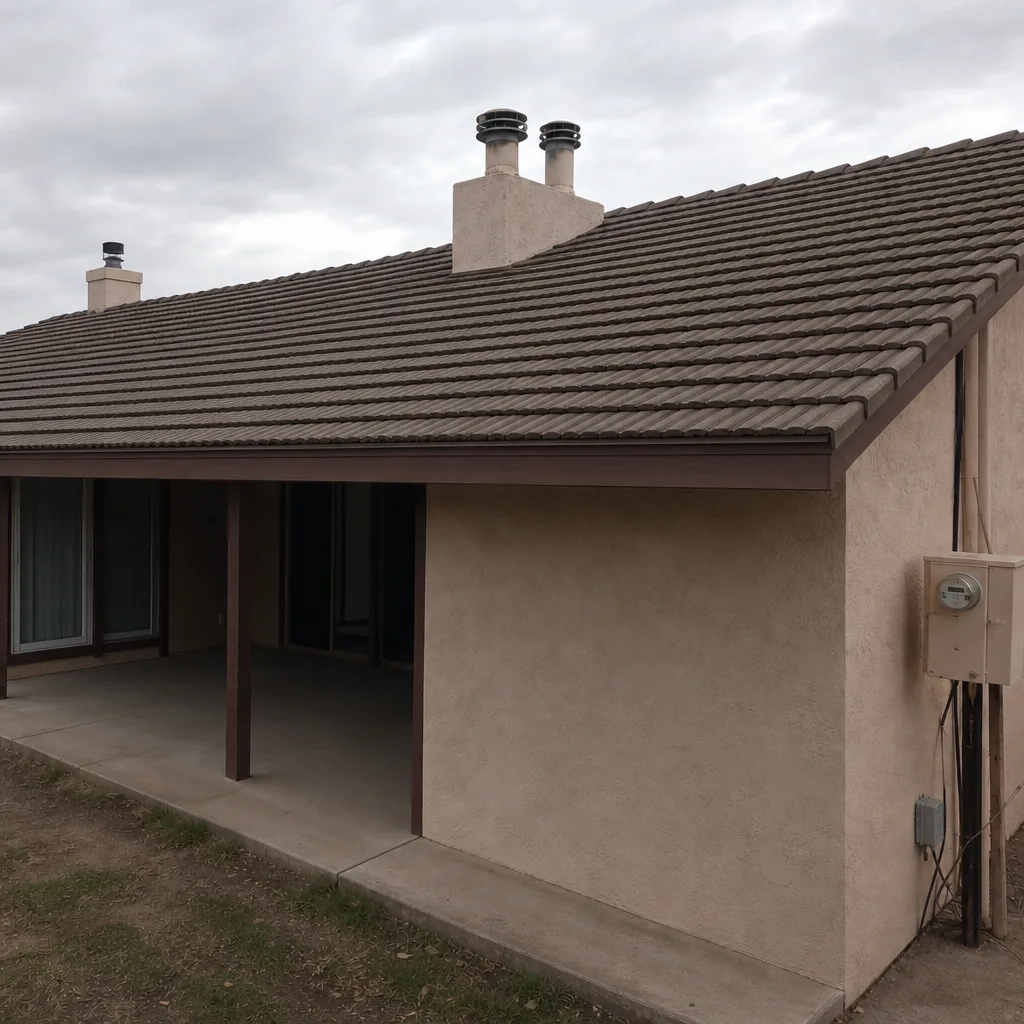 After
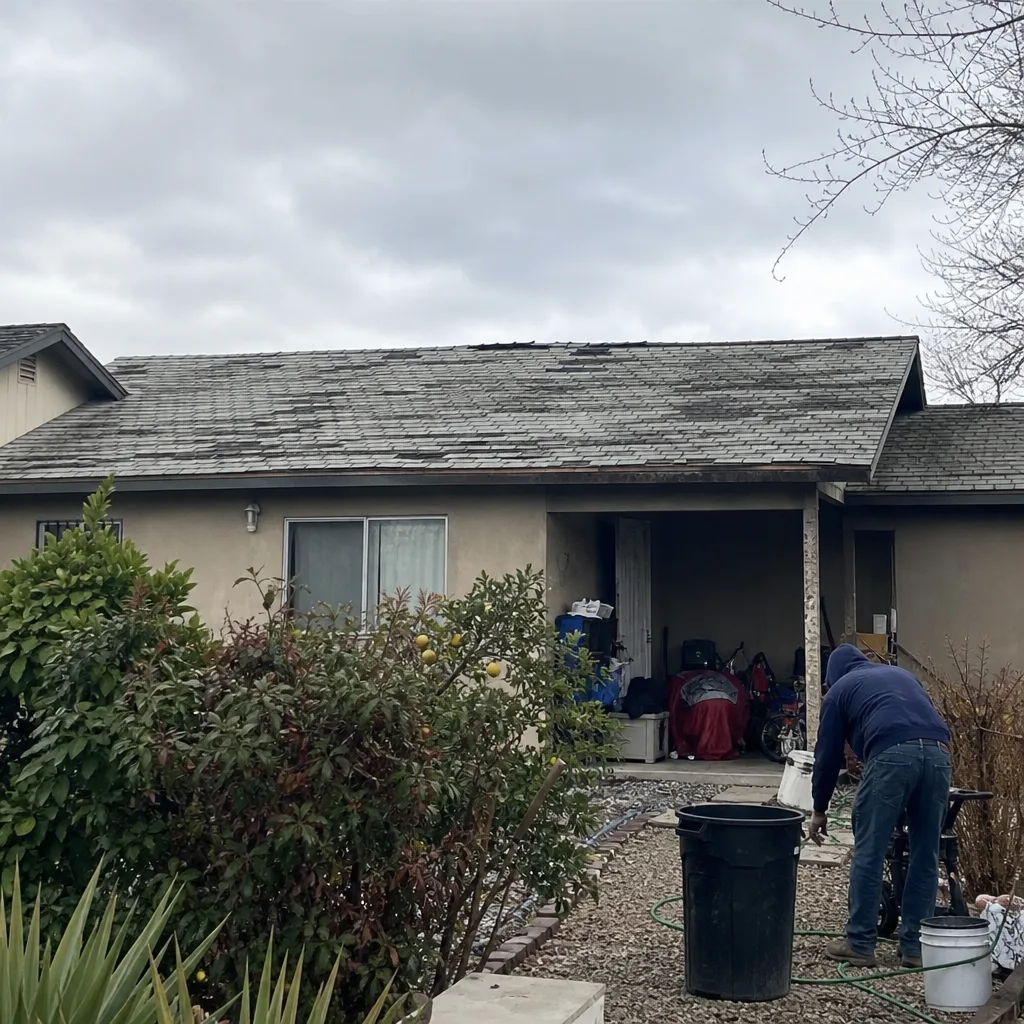 Before
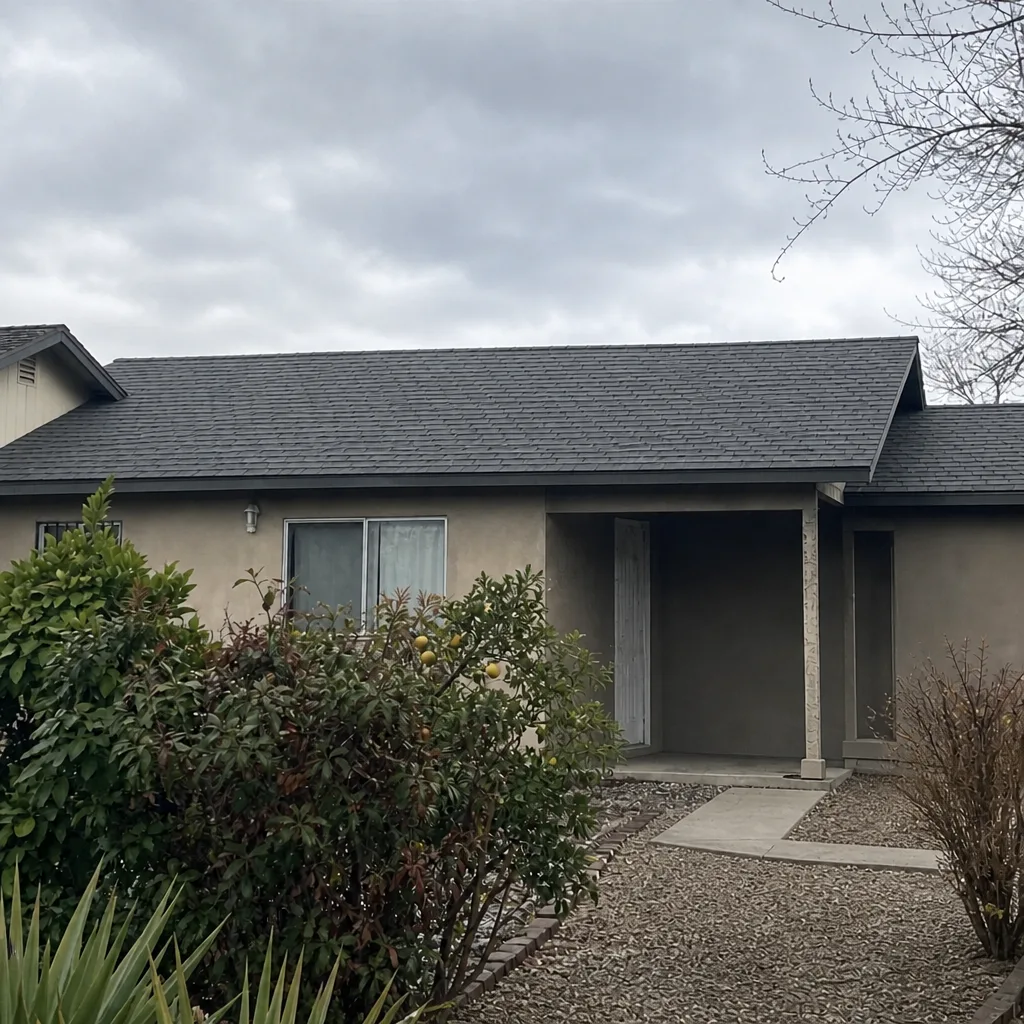 After
When to Call a Professional
Some maintenance you can do yourself. Getting on a high, exposed roof is not one of them, especially in a desert climate where the surface gets hot enough to matter and the fall risk is real. We’d rather you call than climb. The scenarios that clearly warrant a professional visit: any visible leak or ceiling stain, a gutter that’s pulled loose from the fascia, a ridge cap that’s lifted or missing fasteners, a chimney flashing seal that’s separated, or any storm event where you’re unsure what you’re looking at. We also handle the seasonal tune-up visit – a Spring Valley seasonal tune-up is a good habit for a roof that’s more than a few years old.
Ridgeline Roofing Co. Spring Valley offers free estimates in Spring Valley and a free second opinion on any written estimate. Call (855) 908-1590 and a real person will pick up.
Frequently Asked Questions
Twice a year, timed to the two threat windows: once in June before the monsoon and once in October before the winter wind season. A pro inspection twice a year, plus a self-check within 72 hours of any major storm, is the schedule that prevents the most damage in Spring Valley. Call (855) 908-1590 to schedule your visit; estimates are free.
Granules collecting in the gutters, a lifted or missing shingle, a ceiling stain after rain, and a sagging gutter run are the four earliest signs we see. Photograph anything you find and get it looked at within the 72-hour window before the next rain compounds it. Call (855) 908-1590 for a free estimate.
It depends on the specific damage and what the adjuster can document. Storm damage is generally covered, but pre-existing wear is not – and if your roof’s condition points more to wear than to the storm, the claim is harder to win. A record of June and October maintenance and pre-storm photos decisively helps your case. Call (855) 908-1590 for a free second opinion on any written estimate before you assume the answer.
A seasonal tune-up is a focused maintenance visit – clearing debris, checking flashing seals, inspecting pipe boots, and snugging ridge cap fasteners. A full inspection is a documented, roof-level review of the whole system with photos and a written report. For a Spring Valley home, a June tune-up and a post-storm inspection are usually the right pairing. Call (855) 908-1590 to schedule yours.
Both. Emergency and storm damage response is part of what we do, and our phones are answered by a live person 24 hours a day, seven days a week – no voicemail tree, no callback window. If a storm just hit and you’re unsure what you’re looking at, call (855) 908-1590 and we’ll talk through it with you.
We’re an authorized installer of seven manufacturer lines, including GAF, CertainTeed, Owens Corning, IKO, Atlas, Tamko, and Boral, so your repair or replacement uses the proper material with no substitutions. If you’re not sure which is right for your roof, our team will walk you through it. Call (855) 908-1590 for a free estimate.
The Bottom Line
Storm damage preparedness is not a reaction, it’s a calendar. The June pre-monsoon window and the October pre-winter window are where the money is saved – flashing integrity, pipe boot condition, ridge cap fasteners, and gutter attachment are the four items that do most of the work. A simple photo archive makes an insurance claim much easier to win, and the 72-hour post-storm checklist stops small damage from compounding before the next rain. Deferred maintenance closes more storm claims in Nevada than any other factor, and the fix is simple, patient, and calendar-driven. If a June or October visit would be easier than worrying about it, call us.
Call (855) 908-1590 for a free estimate in Spring Valley. We’ll be there when we say, the price on the estimate is the price on the invoice, and every job is backed by the written 90-Day Done Right Promise. A square deal, done right – and if it’s not, we make it right.
Written by the team at Ridgeline Roofing Co. Spring Valley.